Daily Current Affairs 08-July-2025

Share this Post

GENDER INEQUALITY IN MSMES AND CREDIT ACCESS FOR WOMEN

TOPIC: (GS3) ECONOMY: THE HINDU

Recent data shows that despite several schemes, women-led MSMEs face a persistent credit gap and limited support, highlighting deep-rooted gender inequality in India’s business environment.

Status of Women in MSMEs

  • Women’s Share in MSMEs:
    • Women own only 20.5% of MSMEs in India.
    • They represent 18.73% of MSME employees.
    • Only 11.15% of total investment goes to women-led MSMEs.
    • Turnover share is just 10.22%, showing low revenue generation.
  • Credit Gap: Women face a 35% credit gap, while men face a 20% gap. This means over a third of their credit needs are unmet.
  • PM MUDRA Yojana (PMMY): Women hold 64% of loan accounts under PMMY. But they receive only 41% of total loan amount, showing funding disparity.

Challenges for Women Entrepreneurs

  • Access to Credit: Women are often seen as risky borrowers due to lack of collateral. Many businesses are informal and thus not eligible for formal loans.
  • Awareness Gap: Many first-generation women entrepreneurs, especially in rural areas, have low financial literacy. They are often unaware of schemes or lack support in application.
  • Discrimination in Banking: It takes women nearly twice as many bank visits as men to get loans. Banks hesitate to lend due to perceived risk and absence of property ownership.
  • Dependence on Informal Credit: Due to loan rejection or delays, many turn to informal sources, which charge high interest and are risky.

Status of Informal Micro Enterprises (IMEs)

  • Over 70.5% of IMEs are women-led, and 70.8% of IME workers are women.
  • IMEs remain largely excluded from formal credit, despite being registered on the Udyam Assist Portal.

Government Efforts and Shortcomings

  • Schemes like PMMY, Udyam Assist Portal, and PLI have aimed to boost women entrepreneurship.
  • Implementation issues, lack of awareness campaigns, and banking reluctance remain major barriers.

Way Forward

  • Improve credit access with special lending windows and reduced collateral requirements.
  • Expand financial literacy programs targeting rural women.
  • Train bank staff to sensitively handle loan applications from women.
  • Strengthen implementation of schemes with local hand-holding support.

Conclusion

Despite the large number of women-led accounts under government loan schemes, investment and credit gaps remain wide. Bridging these divides is key to ensuring inclusive economic growth and achieving goals under Atmanirbhar Bharat and SDG 5 (Gender Equality).

REMAKING THE NUCLEAR ORDER IN WEST ASIA

TOPIC: (GS2) GOVERNANCE: THE HINDU

Israel recently carried out military strikes on Iran’s nuclear facilities with U.S. support, reshaping the balance of power in West Asia and raising concerns over nuclear deterrence, regional stability, and diplomacy.

Iran-Israel Nuclear Tensions

  • Israel aims to remain the sole nuclear power in West Asia.
  • Iran insists on its right to nuclear technology under the Nuclear Non-Proliferation Treaty (NPT).
  • The 2015 JCPOA (Iran nuclear deal) allowed limited uranium enrichment, which Israel opposed.
  • Recent Israeli strikes, supported by the U.S., targeted Iranian nuclear and military assets.

Why the Conflict Escalated

  • Israel’s Strategy: PM Netanyahu seeks to prevent even peaceful nuclear progress by Iran. The attacks followed domestic pressure in Israel and a weakening of Iran’s regional allies.
  • Iran’s Missteps: Assumed continued U.S. restraint and underestimated Israel’s intelligence reach. Was criticized by IAEA for low cooperation and increasing uranium enrichment.
  • U.S. Role: Initially reluctant but joined after Israel’s initial success. U.S. used heavy aerial weapons to destroy suspected underground Iranian nuclear sites.

Iran’s Nuclear Journey

  • Began a civilian nuclear programme in the 1950s.
  • Developed clandestine enrichment after the Iran-Iraq war.
  • Aimed to be a “threshold nuclear state”—close to weapons but not crossing the line.
  • Now, due to rising threats, a full deterrent is being reconsidered.

Geopolitical Implications

  • Iran’s proxies like Hezbollah and Hamas are weakened.
  • Gulf States feel temporarily safer, but fear long-term instability.
  • Talks between U.S. and Iran are uncertain due to broken trust and halted inspections.

Conclusion & Way Forward

  • A peaceful nuclear solution requires credible diplomacy, not just force.
  • Iran may push harder for nuclear weapons as deterrence, even if regime changes.
  • The U.S. must combine coercion with reassurance if it wants future deals to work.

CLIMATE CHANGE, COASTAL DISPLACEMENT, AND DEMOCRATIC CHALLENGES

TOPIC: (GS3) ENVIRONMENT: THE HINDU

Rising sea levels, extreme weather, and unregulated development are forcing coastal communities in India to migrate, revealing serious gaps in legal protection, rehabilitation, and environmental justice.
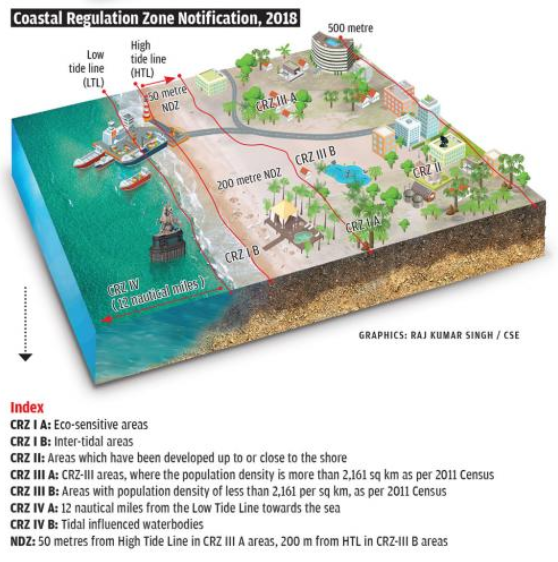
Costal Regulation Zone Notification, 2018

Impact of Climate Change on Coastal India

  • Sea-level rise, saltwater intrusion, and coastal erosion are displacing traditional communities.
  • States like Odisha, Karnataka, Tamil Nadu, Gujarat, and Kerala are witnessing large-scale climate-induced migration.
  • Communities relying on fishing, farming, and coastal resources are the worst affected.

Unregulated Development and Environmental Loss

  • Projects like ports, aquaculture, and tourism under schemes such as Sagarmala are degrading ecosystems.
  • Mangroves, dunes, and wetlands—natural protectors—are being destroyed.
  • Environmental clearances often ignore climate vulnerability and cumulative risk.

Migration and Labour Exploitation

  • Displaced people move to urban areas like Chennai, Bhubaneswar, and Mumbai.
  • Many end up in informal jobs as construction, brick kiln, or domestic workers.
  • Issues include:
    • Debt bondage due to survival-based wage advances.
    • Lack of legal protection under labour laws like BOCW Act, 1996.
    • Women face abuse, underpayment, and trafficking risks.

Legal and Policy Gaps

  • No dedicated law for climate-induced migration in India.
  • Existing laws like the Disaster Management Act, 2005, EPA 1986, and CRZ Notification 2019 focus on environment but not displacement.
  • CRZ 2019 has diluted protections, allowing industrial use in fragile zones.
  • NAPCC and State Plans mention vulnerability but lack clear rehabilitation mechanisms.

Need for Rights-Based Framework

  • Integrate climate migrants into urban planning and labour policies.
  • Amend labour codes to include protections for displaced workers.
  • Restore focus on community-led coastal protection over commercial development.
  • Align policies with SDG Target 8.7 on eliminating forced labour and ensuring decent work.

Grassroots Resistance and Constitutional Values

  • Movements like Save Satabhaya (Odisha), Ennore protests (Tamil Nadu), and Pattuvam Mangrove Protection (Kerala) show strong community resistance.
  • Protesters often face surveillance and intimidation, weakening democratic rights.
  • Upholding Article 21 and environmental justice is vital in climate responses.

CRZ RULES (COASTAL REGULATION ZONE RULES)

CRZ (Coastal Regulation Zone) Rules are regulations issued by the Ministry of Environment, Forest and Climate Change (MoEFCC) under the Environment Protection Act, 1986, to manage and protect India’s coastal environment.

They aim to regulate activities along India’s 7,500 km coastline to: Conserve ecologically sensitive coastal areas, Prevent unregulated development, NBalance environmental protection and economic activity.

CRZ areas are classified into four categories:

  • CRZ-I: Ecologically sensitive areas like mangroves, coral reefs, national parks, etc. No construction allowed, except for essential services.
  • CRZ-II: Urban and developed areas close to the shoreline. Regulated construction allowed, as per town planning norms.
  • CRZ-III: Rural and relatively undeveloped areas, not falling under CRZ-I or II. Limited construction permitted beyond 200 metres from High Tide Line (HTL).
  • CRZ-IV: Water area from Low Tide Line to 12 nautical miles into the sea and tidal-influenced water bodies. Regulates fishing and discharges.

Conclusion:

India must treat climate displacement as a central part of its climate adaptation strategy. Protecting vulnerable communities is not just about environment—it is a constitutional and democratic responsibility.

NIPAH CASE IN PALAKKAD

TOPIC: (GS3) SCIENCE AND TECHNOLOGY: THE HINDU

A woman from Palakkad, Kerala, tested positive for Nipah virus and is in critical condition. The government has started strict containment and surveillance efforts to stop the virus from spreading.

About the Nipah Outbreak in Palakkad

  • This is the first Nipah case in Palakkad district.
  • 173 people identified as contacts:
  • 12 individuals are in isolation; 5 tested negative, and 4 more samples are under testing.

Containment and Monitoring

  • A 3 km area around the patient’s house declared a containment zone. Authorities are focusing on people who had contact with the patient after July 1.
  • Past deaths due to brain issues are also being re-examined.
  • Animal deaths nearby are under close watch.

Government Measures and Public Response

  • Kerala Health Minister warned against spreading misinformation.
  • State is offering social and mental support to quarantined individuals.
  • Kerala had earlier managed Nipah in 2018 and 2023 with relatively low fatality rates.

WHAT IS NIPAH VIRUS?

Nipah virus (NiV) is a zoonotic virus, meaning it spreads from animals to humans. It belongs to the Paramyxoviridae family and the Henipavirus genus.

Natural Host and Transmission

  • The natural host of Nipah is the fruit bat, especially the Pteropus species (also called flying foxes).
  • The virus can spread to humans through:
    • Direct contact with infected bats, pigs, or their body fluids.
    • Eating fruits contaminated by bat saliva or urine.
    • Human-to-human transmission via close contact with infected people.

Symptoms of Nipah Infection

  • Initial symptoms: Fever, headache, muscle pain, vomiting, and sore throat.
  • It can quickly worsen to:
    • Severe respiratory issues
    • Encephalitis (swelling of the brain), which can lead to coma or death.

Diagnosis and Treatment

  • Diagnosed through lab tests like RT-PCR (for virus detection) and ELISA (for antibodies).
  • There is no specific cure or vaccine currently.
  • Patients are given supportive care, like hydration, oxygen, and managing symptoms.
  • Monoclonal antibodies are being tested as experimental treatments.

STUDYING IN MOTHER TONGUE INSTILS STRONG VALUES: CJI

TOPIC: (GS2) INDIAN POLITY: THE HINDU

Chief Justice of India (CJI) recently emphasized the importance of learning in one’s mother tongue, calling it essential for personal growth, strong moral values, and cultural connection.

Background of Language and Education in India

  • India is home to over 1,300 mother tongues and 122 major languages.
  • Traditionally, gurukuls and madrasas used Sanskrit, Pali, Persian, or local dialects.
  • British colonial policies introduced English-based education, creating a linguistic divide.

Present Government Initiatives

  • NEP 2020 and National Curriculum Framework 2023 recommend teaching in the mother tongue or home language at least up to Grade 5, preferably till Grade 8.
  • Supported by:
    • Right to Education Act (2009): Promotes local language use wherever possible.
    • NIPUN Bharat, Vidya Pravesh, NISHTHA FLN: Promote foundational learning in native languages.
    • CBSE language mapping includes 52 Indian languages, even tribal ones like Bhutia and Sherpa.

Benefits of Teaching in Mother Tongue

  • Better Understanding: Kids learn faster when taught in a familiar language.
  • Boosts Confidence: Increases cultural pride and sense of identity.
  • Higher Performance: UNICEF & UNESCO studies show better reading and math outcomes in early grades.
  • Lowers Dropouts: Encourages school participation and reduces early exits.

Challenges and Concerns

  • Global Exposure: Lack of English may reduce access to global education and jobs.
  • Logistical Issues: Too many languages in one area make implementation tough.
  • Lack of Resources: Few teachers and textbooks in local languages.
  • Switching Language Later: Transitioning to English in later classes becomes hard.

Way Forward

  • Bilingual Model: Start with the mother tongue and slowly introduce English.
  • Teacher Training: Train educators in multiple languages.
  • Balanced Approach: Respect diversity while following national standards.

INDIA RANKS 4TH AMONG THE WORLD’S MOST EQUAL SOCIETIES

TOPIC: (GS2) INTERNATIONAL RELATIONS: PIB

The World Bank has ranked India as the 4th most equal country globally based on its Gini Index score of 25.5, indicating low income inequality.

What is the Gini Index?

  • It measures how evenly income or consumption is spread among people in a country.
  • The score ranges from 0 to 100: 0 means perfect equality.100 means complete inequality.
  • A lower Gini Index means better income equality.

India’s Global Ranking and Comparison

  • India ranks 4th globally, behind Slovak Republic, Slovenia, and Belarus.
  • India’s Gini score: 25.5 – considered “moderately low inequality” (score between 25–30).
  • India fared much better than: China: 35.7, USA: 41.8, 167 other countries in the World Bank dataset.

Poverty Reduction in India

  • Extreme poverty fell to 2.3% in 2022–23.
  • 171 million people moved out of extreme poverty from 2011 to 2023.
  • Shows a strong link between poverty reduction and income equality.

Key Government Schemes That Promoted Equality

  • PM Jan Dhan Yojana: Over 55.69 crore bank accounts help direct transfer of benefits.
  • Aadhaar and DBT: Ensures accurate, leak-proof delivery of subsidies and pensions.
  • Ayushman Bharat: Offers ₹5 lakh health coverage per family. Expanded to elderly (70+) under Ayushman Vay Vandana Yojana. Digital Mission: Linked 79 crore health accounts.
  • Stand-Up India: Provides loans for SC/ST and women entrepreneurs (₹10 lakh–₹1 crore).
  • PMGKAY: Free ration to the poor during and after COVID-19.
  • PM Vishwakarma Yojana: Supports traditional artisans with loans, digital tools, and training.

Conclusion

India’s Gini Index score of 25.5 is a sign of significant progress toward equality. With the help of welfare schemes and technology, India has combined economic growth with social fairness.

INVISIBLE HAND IN INDIA’S FOREIGN TRADE

TOPIC: (GS3) ECONOMY: THE HINDU

The Economic Survey 2024–25 highlights a major shift in India’s foreign trade, where invisibles like services exports and remittances now play a bigger role than physical goods.

India’s Growing Service Sector

  • The services sector includes areas like IT, finance, tourism, healthcare, education, communication, and logistics.
  • In FY25, it contributed about 55% of India’s GVA, up from 50.6% in FY14.
  • It consistently grows at over 6% annually, reaching 8.3% post-pandemic.

India’s Global Position in Services

  • India is now the 7th largest exporter of services with a 4.3% global share.
  • In FY25 (Apr–Nov), service exports grew by 12.8%, up from 5.7% in FY24.
  • Computer and business services form about 70% of total services exports.
  • Remittances and IT services help maintain a stable current account deficit.

Strengths and Opportunities

  • India has a strong skilled workforce, especially in knowledge-based services.
  • Government missions like Digital India, Smart Cities, and Clean India support service growth.
  • The sector has the potential to create a multi-trillion-dollar economic opportunity globally.

Key Challenges

  • Digital and physical infrastructure is weaker in rural and semi-urban areas.
  • There’s a lack of skilled workers for high-value service jobs.
  • Complex regulations and limited market access hinder exports.
  • Vulnerable to global economic slowdowns.

Government Measures

  • Champion Sector Action Plan targets 12 focus areas like tourism, aiming for $50.9 billion revenue by 2028.
  • Jan Dhan Yojana promotes financial inclusion with 47 crore+ accounts.
  • FDI limits increased in insurance to boost investment.
  • Support for education, healthcare, and manufacturing through programs like Ayushman Bharat and PLI schemes.

Conclusion

India’s service sector is key for job creation, exports, and growth. Focus on better infrastructure, skill development, regulatory reforms, and global outreach can help India become a global service hub—the true “office of the world.”

INDIA’S FIRST GLOBALLY RECOGNISED EQUINE DISEASE-FREE COMPARTMENT (EDFC)

TOPIC: (GS3) SCIENCE AND TECHNOLOGY: THE HINDU

India has launched its first Equine Disease-Free Compartment (EDFC) at the RVC Centre & College in Meerut, Uttar Pradesh, which has now been recognised by the World Organisation for Animal Health (WOAH).

About Equine Disease-Free Compartment (EDFC)

  • It is a designated area where horses and other equines are kept under strict health protocols to ensure they are free from contagious diseases.
  • This allows safe international movement of equines for events, breeding, or trade.
  • The facility is established at the Remount Veterinary Corps (RVC) Centre & College, under the Indian Army, in Meerut Cantonment.

Global Recognition

  • The EDFC has been officially approved by WOAH (World Organisation for Animal Health).
  • This makes India eligible to export disease-free equines to other countries for the first time with global standards.
  • It boosts India’s reputation in veterinary health management and opens up new avenues in equine sports and trade.

What are Equine Diseases?

  • These affect horses, ponies, donkeys, and their hybrids.
  • They can be caused by viruses, bacteria, parasites, or other sources.
  • Some are infectious and spread quickly, affecting animal health and trade.
  • Key examples include: Equine Influenza, Equine Infectious Anemia, Piroplasmosis, Surra, Glanders

India’s Equine Health Status

  • India has been free of African Horse Sickness since 2014, a major equine viral disease.
  • The setting up of this compartment shows India’s readiness to comply with international health standards.

Significance of EDFC

  • Promotes safe trade and global competitiveness of Indian equines.
  • Encourages participation in international horse events and equestrian sports.
  • Improves biosecurity, animal health infrastructure, and supports rural livelihoods tied to equine rearing.

Write a Review

Your email address will not be published. Required fields are marked *