Daily Current Affairs 28-July-2025

Share this Post

HOW IS INDIA PREPARING AGAINST GLOF EVENTS

TOPIC: (GS3) ENVIRONMENT: THE HINDU

A recent Glacial Lake Outburst Flood (GLOF) in Nepal destroyed key infrastructure and hydro plants, raising alarms across Himalayan nations, including India. This highlights the urgent need for India’s preparedness against GLOF events amid increasing glacial melt due to climate change.

What is GLOF and Why Does It Occur?

  • GLOF (Glacial Lake Outburst Flood) is a sudden release of water from a glacial lake due to the collapse of natural barriers like ice or moraine dams.

GLOF (Glacial Lake Outburst Flood)

  • Causes include:
    • Ice avalanches or landslides into the lake.
    • Weak moraine dams failing due to pressure from excess meltwater.
    • Earthquakes disturbing the dam structure.
    • Rising temperatures leading to glacial melt and lake expansion.

🇮🇳 GLOF Risk in India

  • India has around 7,500 glacial lakes, most located above 4,500 metres in the Indian Himalayan Region (IHR).
  • Two major types of lakes:
    • Supraglacial lakes – form on glacier surfaces, melt rapidly in summer.
    • Moraine-dammed lakes – held by loose rock and ice, prone to bursting.
  • Key Risks:
    • Loss of lives, homes, roads, and bridges downstream.
    • Damage to large infrastructure (e.g., Chungthang dam destroyed in 2023 Sikkim GLOF).
    • Riverbed changes leading to future flood risks (e.g., Teesta river).

India’s Mitigation Strategy

Role of NDMA:

  • The National Disaster Management Authority (NDMA) is focusing on risk reduction rather than just emergency response.
  • Formed the Committee on Disaster Risk Reduction (CoDRR) to coordinate efforts.

National Programme:

  • A ₹165 crore (approx. $20 million) programme launched.
  • 195 high-risk lakes identified and classified under four risk categories.

Key Actions Taken

  • Scientific Expeditions: Surveyed high-risk lakes in J&K, Ladakh, Himachal, Uttarakhand, Sikkim, and Arunachal Pradesh.
  • Early Warning Systems: Automated weather and water stations (AWWS) set up in Sikkim for real-time monitoring. Photos and data sent every 10 minutes to assess lake conditions.
  • Use of Technology: Promoting Indian tools like SAR interferometry for micro-monitoring slope stability. UAVs and satellite imaging to track changes in glacial lakes.
  • Community Involvement: Engaging local people to gain trust and improve access. Involving Indo-Tibetan Border Police (ITBP) for manual alerts in remote areas.

Conclusion

India is now moving from reactive to proactive measures to deal with GLOFs, focusing on monitoring, technology, and local engagement. Strengthening early warning systems and investing in scientific tools will be key to protecting vulnerable Himalayan communities.

CRIMINALISING ADOLESCENT SEX WILL UNDERMINE THE AIM OF THE POCSO ACT

TOPIC: (GS2) INDIAN POLITY: THE HINDU

The Supreme Court is reviewing whether consensual sex between adolescents aged 16 to 18 years should remain criminalized under the POCSO Act. Senior Advocate Indira Jaising, acting as amicus curiae, has recommended legal exemption for such consensual relationships.

POCSO Act and the Debate on Adolescent Consent

  • Enacted in 2012 to protect children (below 18 years) from sexual abuse and exploitation.
  • Under Section 2(d), anyone below 18 is considered a child — making any sexual activity, even consensual, punishable.

Current Legal Framework

  • Consensual sex between teenagers (16–18) is treated as abuse, regardless of mutual consent.
  • Stringent punishments apply under:
    • Section 6 of the POCSO Act (penetrative assault),
    • Child Marriage Act, 2006,
    • Indian Penal Code (IPC) and Bharatiya Nyaya Sanhita (BNS).

Recent Legal Suggestions

  • Indira Jaising’s View: Consensual sex between teens should not be criminalized. Calls for an exception under the POCSO Act and BNS to protect normal adolescent relationships.
  • Law Commission (2023): Opposed lowering the age of consent. Suggested judicial discretion in sentencing consensual cases involving 16–18 age group.

Judicial Precedents

  • Madras High Court (2021) – Vijayalakshmi vs State Rep: Recommended a five-year age gap limit in such cases to avoid exploitation. Emphasized protecting minors from manipulation by older individuals.

Need for Reform

  • Criminalizing consensual acts between adolescents: May cause emotional trauma and criminal records for youth. Distracts from punishing real cases of abuse and exploitation.
  • There’s a need for: Legal reform to prevent misuse.Sexual education to raise awareness among teenagers.

Conclusion

Protecting children from abuse is vital, but the law should not punish consensual, age-appropriate adolescent relationships. A balanced legal approach is needed to uphold justice while ensuring adolescents are not criminalized unfairly.

CITIZENSHIP IN BIHAR POLL ROLL REVISION

TOPIC: (GS2) INDIAN POLITY: THE HINDU

The Election Commission of India (ECI) has started a Special Revision of electoral rolls in Bihar ahead of the upcoming Assembly elections. This led to political criticism questioning the verification of voters’ citizenship status.

Citizenship and Voter Eligibility in India

Why Citizenship Is a Must for Voting

  • Only Indian citizens can vote in Lok Sabha or State Assembly elections.
  • Article 326 of the Constitution says voting is based on adult suffrage, limited to Indian citizens aged 18 or above.
  • Therefore, non-citizens cannot be included in electoral rolls or contest elections.

Constitutional Provisions

  • Article 324: Empowers the Election Commission to control and supervise elections, including voter list preparation.
  • Article 326: Grants the right to vote only to Indian citizens.
  • Articles 102 & 191: Disqualify a person from being an MP or MLA if they are not an Indian citizen or hold allegiance to another country.

Legal Provisions Under the Representation of the People Act, 1950

  • Section 16(1)(a): Non-citizens are disqualified from being registered as voters.
  • Section 16(2): If a non-citizen’s name is mistakenly included, it must be removed.
  • Section 21–24: These deal with the revision, correction, inclusion, and appeal process for electoral rolls.
  • No changes to electoral rolls are allowed after the last date of nomination during elections (Section 23(3)).

Citizenship Proof: Aadhaar Is Not Enough

  • Aadhaar Act (2016): States clearly that Aadhaar does not prove citizenship.
  • It is only proof of residency, and even foreigners can get Aadhaar numbers if they live in India for 182 days.

Role and Duty of the Election Commission

  • The ECI must ensure only Indian citizens are listed as voters.
  • If complaints or doubts arise, the ECI is constitutionally bound to verify and delete foreign names.
  • Failing to act violates the constitutional duties under Articles 324 and 326.

Important Supreme Court Observation

  • In Dr. Yogesh Bhardwaj v. State of U.P. (1990), the court ruled that illegal residents are not considered lawful residents, reinforcing that only valid residents and citizens qualify for public benefits or entitlements.

Conclusion

Verifying citizenship during electoral roll revisions is not only legal but a constitutional requirement. Ensuring that only genuine citizens are included strengthens the integrity of Indian democracy and avoids misuse of the electoral process.

INDIA’S FIRST PPP AIRPORT

TOPIC: (GS3) ECONOMY: INDIAN EXPRESS

Cochin International Airport Limited (CIAL), India’s first airport under the Public-Private Partnership (PPP) model, is undergoing a major transformation to integrate green energy, smart infrastructure, and sustainable development. The airport is also setting up the world’s first hydrogen plant at an airport in collaboration with BPCL.

What is the PPP Model?

  • Public-Private Partnership (PPP) is a model where the government collaborates with private companies to finance, build, and operate infrastructure projects.
  • It combines private sector efficiency with public sector oversight.
  • Other PPP Models include:
    • BOT (Build-Operate-Transfer): Private party builds and operates the project for a fixed time before transferring it back (e.g., highways by NHAI).
    • BOOT (Build-Own-Operate-Transfer): Ownership lies with the private party during operation.
    • DBFOT (Design-Build-Finance-Operate-Transfer): All functions are done by the private player; common in roads and metro rail projects.

How PPP Helps Infrastructure-Led Growth

  • Reduces Government Spending: Less financial burden on the exchequer while leveraging private investment.
  • Brings in Innovation & Efficiency: Private players introduce better tech and management practices.
  • Faster Project Completion: Timely delivery and higher quality due to competitive pressure.

Way Forward

  • Replicate CIAL’s model across sectors like railways, logistics, and green energy.
  • Encourage PPP in tier-2 cities to promote regional development.
  • Combine sustainability + smart infrastructure to meet India’s net-zero and development goals.

Conclusion:

Cochin Airport’s PPP-led green and tech-driven expansion sets a model for sustainable infrastructure growth. Replicating such initiatives can boost India’s development while reducing the government’s financial burden.

PUBLIC PROCUREMENT OF GREEN STEEL

TOPIC: (GS3) ECONOMY: PIB

The Indian government is working on a green steel procurement policy that may require 25% of public steel purchases to be from low-emission sources.
This aims to boost demand for eco-friendly steel and support India’s climate commitments.

Need for the Policy

  • Steel is vital for infrastructure, vehicles, and manufacturing but also one of the biggest polluters in heavy industries.
  • The policy intends to encourage production and use of “green steel” while discouraging high-emission alternatives.

What is Green Steel?

  • Green steel is made using low-carbon technologies, such as:
    • Hydrogen-based Direct Reduced Iron (DRI) instead of coal.
    • Electric Arc Furnaces (EAFs) powered by renewable energy.
  • The goal is to cut down carbon emissions during production.

Why Green Steel Matters

  • The steel sector contributes to 10–12% of India’s total CO₂ emissions.
  • Decarbonising steel is vital to meet India’s Net-Zero targets by 2070.
  • As the second-largest steel producer globally, India can become a responsible supplier in the global green economy.
  • Helps build sustainable infrastructure and green manufacturing.

Key Challenges

  • High cost: Green steel is costlier than traditional steel.
  • Technology gaps: Hydrogen-based DRI and carbon capture are still in early stages.
  • Energy needs: Producing green hydrogen requires a large renewable energy base.
  • Low demand: There is no mandatory requirement, so adoption is slow.

Steps Taken by India

  • Greening the Steel Sector Report: Offers a strategy and roadmap for decarbonising the industry.
  • Steel Scrap Policy (2019): Encourages the use of scrap to reduce emissions by up to 58%.
  • Vehicle Scrappage Policy (2021): Boosts domestic scrap availability for steel.
  • National Solar Mission (2010): Promotes renewable energy, aiding green steel efforts.
  • PAT Scheme: Rewards industries, including steel, for improving energy efficiency.

Way Forward

  • Promoting green steel is essential for India’s climate and industrial goals.
  • Strong policies, technology support, and public procurement mandates can make India a global leader in sustainable steel production.

CENTRE BLOCKS 25 OTT PLATFORMS OVER OBSCENE CONTENT

TOPIC: (GS2) INDIAN POLITY: THE HINDU

The Ministry of Information and Broadcasting has ordered the blocking of 25 OTT platforms for hosting obscene and vulgar content, citing concerns over rising indecency on digital platforms. This move highlights the growing tension between content freedom and content regulation in India’s digital space.

Rationale for this move

  • With the fast growth of OTT platforms, unregulated and explicit content has become more common.
  • The government’s recent action aims to safeguard public decency, especially for children and young viewers.

Reasons Behind Rising Obscenity on OTT Platforms

  • Boom in Digital Media: OTTs and social platforms allow quick and wide sharing of explicit content.
  • No Pre-Censorship: OTT content isn’t screened before release, unlike movies in theatres.
  • Weak Self-Regulation: Platforms often fail to monitor or filter content responsibly.
  • Anonymity and Tech Loopholes: Users misuse VPNs, encrypted apps, and anonymous profiles to avoid legal detection.

Legal Provisions Related to Obscene Content

  • IT Act, 2000
    • Section 67: Punishes online sharing of obscene material.
    • Section 67A: Covers sexually explicit content specifically.
  • Bharatiya Nyaya Sanhita (BNS), 2023
    • Section 294: Replaces IPC 292 to cover digital obscenity and illegal distribution.
  • Indecent Representation of Women Act, 1986
    • Prohibits indecent portrayal of women in media and ads.
  • IT Rules, 2021
    • Mandate a Code of Ethics for OTTs.
    • Introduce a three-tier grievance system with oversight by a retired Supreme Court judge-led council.

Committees & Court Rulings

  • Justice for Rights Foundation Case (2018): Supreme Court led to the creation of IT Rules for OTT content.
  • Shyam Divan Committee (2021): Recommended self-regulation with government oversight and content accountability.

Challenges & Impacts

  • Moral Influence: Unchecked content affects youth behavior and public values.
  • Cyber Harassment: Obscenity can lead to online abuse and trafficking.
  • Weak Enforcement: VPNs and mirror sites bypass regulations, making control difficult.
  • Freedom vs Regulation: Difficult to balance free speech with public morality.

Way Forward

  • Stronger Enforcement: Regular checks and swift action against violators.
  • User Awareness: Promote digital literacy, especially among the youth.
  • Content Filtering: OTTs must introduce age gates, ratings, and pre-screening.
  • Respect Due Process: Legal action must protect constitutional rights and avoid misuse.

LEGACY OF CHOLA DYNASTY

TOPIC: (GS1) HISTORY: THE HINDU

Prime Minister Narendra Modi paid tribute to Chola emperors Rajaraja Chola and Rajendra Chola at Gangaikonda Cholapuram, highlighting their legacy he also announced the installation of statues and released a commemorative coin in their honour.

Celebrating Chola Legacy

  • The Chola dynasty was known for its powerful navy, efficient governance, and cultural richness.
  • PM Modi described the Chola empire’s economic and military achievements as a roadmap for India’s development.

Contributions of Rajaraja Chola and Rajendra Chola I
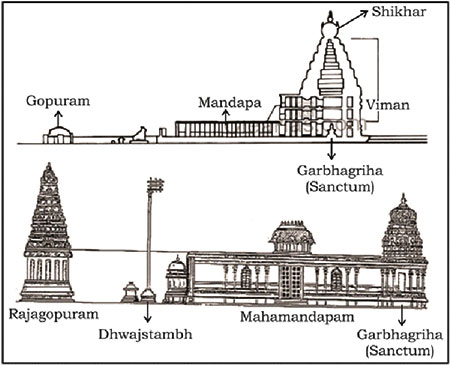
LEGACY OF CHOLA DYNASTY

Rajaraja Chola (985–1014 CE)

  • Military Expansion: Conquered parts of Sri Lanka, the Maldives, and southern India, establishing Chola supremacy in the Indian Ocean region.
  • Architectural Brilliance: Built the Brihadisvara Temple at Thanjavur, a UNESCO World Heritage site and a marvel of Dravidian architecture.
  • Administrative Reforms: Strengthened local self-governance by organizing village assemblies (sabhas) and recording temple donations in inscriptions.

Rajendra Chola I (1014–1044 CE)

  • Naval Expeditions: Led successful naval campaigns to Southeast Asia, including Srivijaya (modern-day Indonesia and Malaysia), projecting Indian influence abroad.
  • New Capital – Gangaikonda Cholapuram: Established a new capital city and built another grand Brihadisvara Temple, inspired by his father’s architectural legacy.
  • Water Management: Constructed the massive Cholagangam Lake, showcasing advanced irrigation and resource management skills.

Relevance to Modern India

  • National Security: PM highlighted India’s strong defense response during Operation Sindoor, drawing parallels with Chola military vigilance.
  • Democratic Legacy: Cholas encouraged participative governance at local levels — a legacy continued by India’s Panchayati Raj system.
  • Water and Ecology: Chola-era water management systems remain relevant for India’s water conservation goals today.
  • Cultural Unity: Programs like Kashi Tamil Sangamam and Saurashtra Tamil Sangamam aim to revive India’s ancient cultural linkages.

Government Initiatives

  • Statues of Chola Kings: Monuments to be erected in Tamil Nadu to honour Rajaraja Chola and Rajendra Chola I.
  • Cultural Repatriation: Since 2014, 600 stolen artefacts have been returned to India; 36 belong to Tamil Nadu.

Conclusion

The Chola empire’s blend of military power, democracy, and sustainable development offers timeless lessons for modern India. Honouring their legacy boosts national pride and strengthens India’s cultural identity.

THOOTHUKUDI PORT CITY

TOPIC: (GS) INDIAN HISTORY: THE HINDU

Prime Minister Narendra Modi recently inaugurated the expanded runway and terminal building at Thoothukudi airport. This development highlights the region’s strategic role in trade, connectivity, and cultural history.

THOOTHUKUDI PORT CITY                    

About Thoothukudi

  • Thoothukudi, also called Tuticorin, is one of Tamil Nadu’s key port cities.
  • Known for pearl fishing, international maritime trade, and nationalist movements, it has historical and economic significance dating back to ancient times.
  • Located on the Coromandel Coast along the Bay of Bengal.
  • Popularly known as the “Pearl City” due to its rich history of pearl fishing.
  • Referred to as the “Sea Gateway of Tamil Nadu” for its thriving port-based economy.
  • In 2011, its port was renamed V.O. Chidambaranar Port Trust after the freedom fighter.

Historical Importance

  • Ancient Trade Links: Along with Korkai, Thoothukudi was a major port from the 6th century BCE. Famous for pearl fisheries and maritime trade with Rome, Greece, and Southeast Asia. Gained prominence under the Pandya and Chola dynasties, fostering naval and trade links.
  • Colonial Era: Controlled successively by the Portuguese (from 1532), then the Dutch and British, who valued its natural harbor.
  • Freedom Struggle Role: Became a centre of Swadeshi Movement in 1906 when V.O. Chidambaram Pillai started the Swadeshi Steam Navigation Company to challenge British control over shipping routes.

Conclusion

Thoothukudi reflects India’s rich maritime legacy and freedom movement spirit.
Its modernization today continues the legacy of a globally connected, economically vital port city.


Write a Review

Your email address will not be published. Required fields are marked *