Table of Contents
ToggleI. Context and Accession
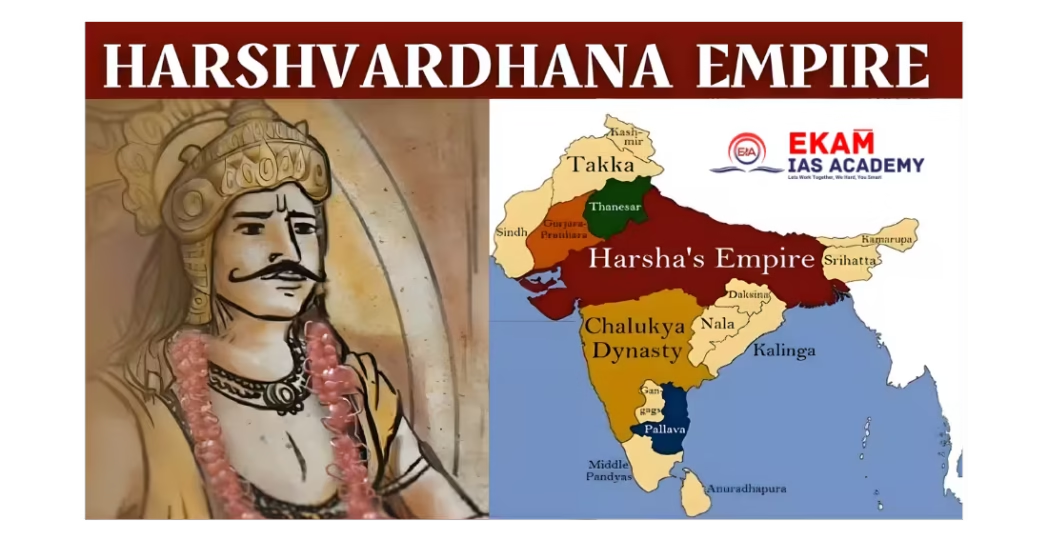
The decline of the Guptas left North India fragmented into several smaller kingdoms. The Pushyabhuti dynasty (also known as the Vardhanas) emerged in Thanesar (near Delhi).
- Political Crisis: Harsha’s elder brother, Rajyavardhana, was treacherously murdered by Shashanka (the Shaivite king of Gauda/Bengal).
- Ascension: At the age of 16, Harsha ascended the throne in 606 CE. He eventually united the kingdoms of Thanesar and Kanauj, making Kanauj his imperial capital.
II. Sources of History (Crucial for UPSC)
Our detailed knowledge of Harsha comes from three primary pillars:
- Harshacharita: A biography by his court poet Banabhatta. Though eulogistic, it provides vivid details of social and administrative life.
- Si-Yu-Ki (Record of the Western World): The travelogue of the Chinese pilgrim Hiuen Tsang (Xuanzang), who spent about eight years in Harsha’s court.
- Inscriptions:
- Madhuban Plate and Banskhera Inscription: Provide details of Harsha’s genealogy and land grants.
- Aihole Inscription: Written by Ravikirti (court poet of Pulakeshin II), it records the only major defeat of Harsha.
III. Military Conquests and Extent of Empire
Harsha spent the first six years of his reign in constant warfare to consolidate his “Empire of the Five Indies” (Punjab, Kanauj, Bengal, Bihar, and Orissa).
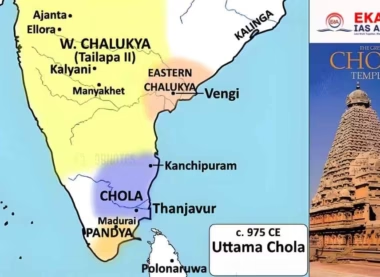
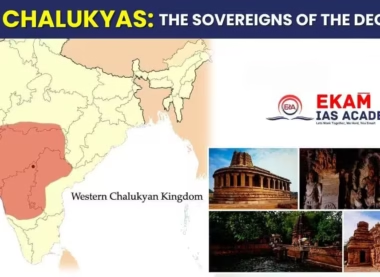
- Conflict with Pulakeshin II: Harsha’s attempt to expand into the Deccan was checked by the Chalukyan king Pulakeshin II on the banks of the Narmada River (c. 618 CE). This established the Narmada as the southern boundary of Harsha’s empire.
- Eastern Campaigns: He eventually defeated Shashanka of Bengal and annexed parts of Odisha.
- Diplomacy: Harsha maintained diplomatic relations with the Tang Dynasty of China, sending an embassy in 641 CE.
IV. Administration: The Feudal Transition
Harsha’s administration was a modified version of the Gupta system but significantly more decentralized and feudal.
- The Feudal Levy: Instead of a standing army paid in cash, Harsha relied on Samantas (feudatories) who provided military contingents when needed.
- Revenue and Taxation:
- Land tax (Bhaga) was 1/6th of the produce.
- The royal income was divided into four parts: one for government expenses, one for salaries of public servants, one for rewarding scholars, and one for charities.
- Law and Order: Hiuen Tsang noted that while the administration was efficient, the roads were not as safe as in the Gupta era; he himself was robbed by brigands several times.
V. Religious Policy and Cultural Patronage
Initially a devotee of Shiva and the Sun, Harsha became a great patron of Mahayana Buddhism under the influence of Hiuen Tsang.
1. The Kanauj Assembly (643 CE)
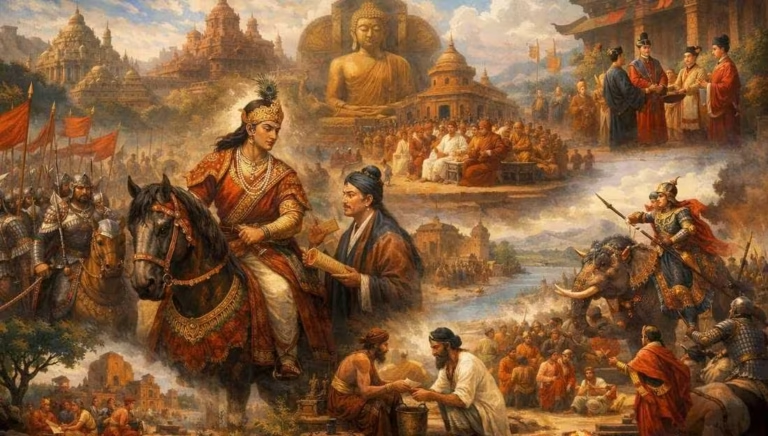
Harsha organized a grand religious assembly at Kanauj to honor Hiuen Tsang and propagate Mahayana doctrines. It was attended by 20 kings, thousands of Buddhist monks, Brahmins, and Jains.
2. The Prayag Assembly (Quinquennial Festival)
Every five years, Harsha held a “Maha Moksha Parishad” at the confluence of the Ganga and Yamuna (Prayag).
- The Act of Giving: He would distribute all the wealth accumulated in the treasury over five years to the poor and religious sects, even giving away his royal garments and jewels.
3. Support for Nalanda University
Harsha was the chief patron of Nalanda University during its peak.
- He remitted the revenues of 100 villages for the maintenance of the university.
- At the time, Nalanda housed 10,000 students and 1,500 teachers, specializing in Mahayana theology, logic, and medicine.
VI. Literature and Education
Harsha was himself an accomplished author, credited with three Sanskrit plays:
- Ratnavali
- Priyadarsika
- Nagananda (which has a strong Buddhist theme)
His court was a center of learning, hosting Banabhatta (author of Harshacharita and Kadambari), Mayura, and Matanga Divakara.
VII. Social and Economic Life
- Caste and Untouchability: The caste system was rigid. Hiuen Tsang mentions that “butchers, fishermen, and executioners” were forced to live outside the city walls.
- Economy: Trade declined compared to the Gupta period. The relative scarcity of gold coins and the rise of land grants suggest a “closed” village economy and the beginning of Indian Feudalism.
VIII. Conclusion: The Legacy of Harsha
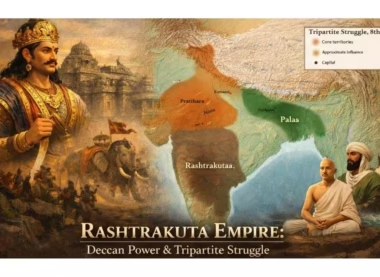
Harshavardhana was the last ruler to maintain a semblance of political unity in North India. His death in 647 CE, without an heir, led to immediate political chaos and the rise of the Tripartite Struggle (between Pratiharas, Palas, and Rashtrakutas) for the control of Kanauj.
UPSC Exam Edge: Comparison with the Guptas
Feature | Gupta Period | Harsha’s Period |
Centralization | High | Low (More Feudal) |
Coinage | Abundant Gold Coins | Scarce (Shift to Land Grants) |
Religious Focus | Puranic Hinduism/Bhagavatism | Mahayana Buddhism (State Patronage) |
Capital | Pataliputra | Kanauj |
UPSC Prelims: PYQs & Practice Questions
Previous Year Questions (PYQs)
Question 1
Q: Which one of the following was the capital of the Pushyabhuti dynasty?
Options:
(a) Pataliputra
(b) Thanesar
(c) Kanauj
(d) Valabhi
Answer: (b)
Explanation: The Pushyabhuti dynasty was originally based in Thanesar (near modern Delhi). Harsha later shifted his capital to Kanauj after merging the two kingdoms.
Question 2
Q: The Chinese traveler Hiuen Tsang (Xuanzang) visited India during the reign of:
Options:
(a) Chandragupta II
(b) Harshavardhana
(c) Chandragupta Maurya
(d) Ashoka
Answer: (b)
Explanation: Hiuen Tsang visited India in the second quarter of the seventh century CE (around 630–645 CE) during Harsha’s reign to study Buddhism and visit shrines.
Question 3
Q: According to Hiuen Tsang, the revenue of the Harsha Empire was divided into how many parts?
Options:
(a) Two
(b) Three
(c) Four
(d) Six
Answer: (c)
Explanation: The royal income was divided into four parts: one for government expenses, one for the salaries of public servants, one for rewarding intellectual attainments, and one for charities to various religious sects.
Practice Questions (Prelims)
Question 1
Q: The battle between Harshavardhana and the Chalukyan King Pulakeshin II took place on the banks of which river?
Options:
(a) Ganga
(b) Yamuna
(c) Narmada
(d) Godavari
Answer: (c)
Explanation: Pulakeshin II defeated Harsha on the banks of the Narmada River, effectively stopping Harsha's southward expansion.
Question 2
Q: Which of the following literary works was NOT written by Harshavardhana?
Options:
(a) Nagananda
(b) Ratnavali
(c) Priyadarsika
(d) Harshacharita
Answer: (d)
Explanation: Harshacharita was a biography of Harsha written by his court poet Banabhatta. Harsha himself wrote the other three plays.
UPSC Mains: Previous Year & Practice Questions
Previous Year Mains Questions (Theme-based)
Question 1
Q: “Harshavardhana’s reign represents a transition from the ancient to the early medieval period in India.” Discuss.
Question 2
Q: Evaluate the socio-economic conditions of India as described by the Chinese pilgrim Hiuen Tsang.
Question 3
Q: Analyze the role of the Kanauj and Prayag assemblies in promoting the religious and social prestige of Harshavardhana.
Question 4
Q: How did the feudal character of Harsha’s administration differ from the centralized bureaucracy of the Mauryas?
Question 5
Q: Examine the contribution of the Pushyabhuti dynasty to the development of Nalanda University.
Mains Practice Questions (Add-ons)
Question 1
Q: “Harsha was a great patron of learning, but his military failures limited his imperial legacy.” Critically evaluate this statement.
Question 2
Q: Discuss the decline of urban centers and the rise of a self-sufficient village economy during the 7th century CE.
Question 3
Q: Analyze the impact of the death of Harshavardhana on the political stability of North India.
The Imperial Guptas: The “Classical Age” of Ancient India - FAQs
What was the "Maha Moksha Parishad"?
This was a grand assembly held by Harsha every five years at the confluence of the Ganga and Yamuna (Prayag). During this festival, Harsha distributed his entire accumulated wealth to the poor and religious institutions of all sects.
Who killed Harsha's brother, Rajyavardhana?
Rajyavardhana was murdered by Shashanka, the king of Gauda (Bengal), who was a rival of the Pushyabhuti and Maukhari dynasties.
What was the status of the "Chandalas" during Harsha's time?
According to Hiuen Tsang, the social system was rigid, and the Chandalas were treated as untouchables who were forced to live outside the city and signal their approach to avoid “polluting” higher castes.
Why is the Aihole Inscription important for Harsha's history?
Composed by Ravikirti (the court poet of Pulakeshin II), it is the primary source that records Pulakeshin II’s victory over Harsha, proving that Harsha was not “the lord of the entire north” as his court poets claimed.
What language did Banabhatta use for his works?
Banabhatta wrote in Sanskrit. His Harshacharita is the first historical biography in Sanskrit literature.