Table of Contents
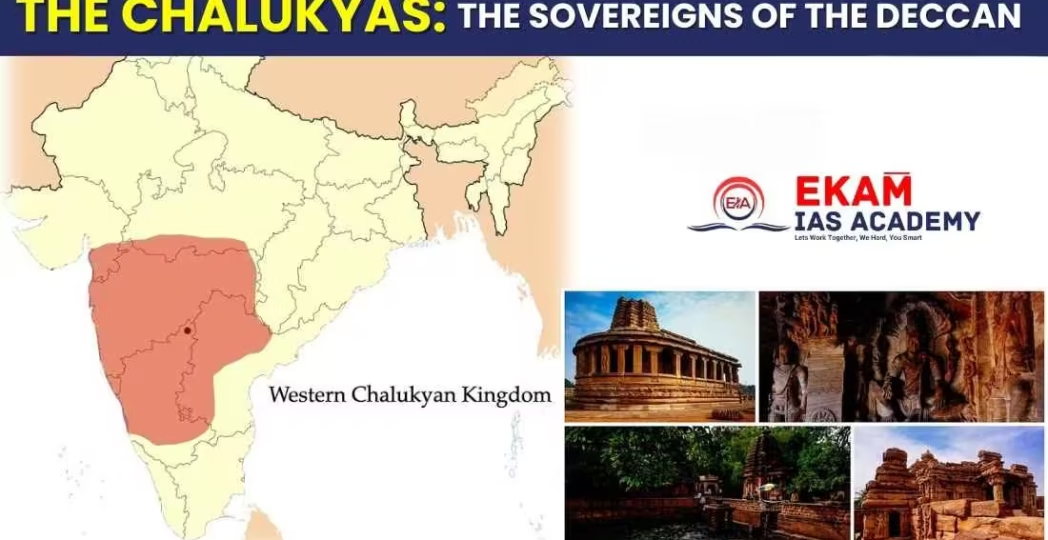
ToggleThe rule of the Chalukyas marks a milestone in Indian history, as they transitioned the political center of gravity from Northern India to the Deccan Plateau. They were the first South Indian power to successfully challenge the hegemony of North Indian emperors (like Harsha) and established a distinct cultural identity through the Vesara style of architecture.
I. The Three Branches of the Chalukyas
Historians categorize the Chalukya dynasty into three distinct but related branches:
- Chalukyas of Badami (Early Chalukyas): The parent branch that ruled from Vatapi (modern Badami, Karnataka) from the mid-6th to the mid-8th century.
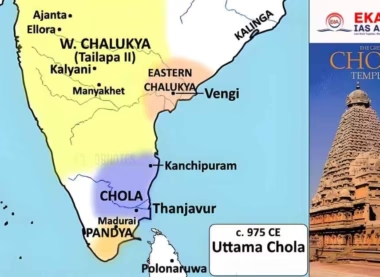
- Eastern Chalukyas (Chalukyas of Vengi): Founded by Kubja Vishnuvardhana (brother of Pulakeshin II), they ruled from Vengi in Andhra Pradesh until the 11th century.
- Western Chalukyas (Chalukyas of Kalyani): Descendants of the Badami branch who revived the dynasty in the late 10th century and ruled from Kalyani.
II. Political History: The Era of Pulakeshin II
The Badami Chalukyas were established by Pulakeshin I in 543 CE, who fortified the hill at Vatapi. However, the dynasty reached its zenith under Pulakeshin II (609–642 CE).
1. Achievements of Pulakeshin II
- The Defeat of Harsha: The most famous event in Chalukyan history was the battle on the banks of the Narmada River, where Pulakeshin II defeated Emperor Harshavardhana of Kanauj. This victory earned him the title Parameswara.
- The Aihole Inscription (634 CE): Composed by his court poet Ravikirti, this Sanskrit prashasti is the primary source of his military conquests, including his victories over the Kadambas, Alupas, and Pallavas.
- Foreign Relations: Pulakeshin II maintained diplomatic ties with the Persian King Khusrau II. This is famously depicted in the Ajanta Cave paintings.
2. The Pallava-Chalukya Conflict
The reign of Pulakeshin II also saw the beginning of a centuries-long rivalry with the Pallavas of Kanchi. While he initially defeated Mahendravarman I, he was later defeated and killed in 642 CE by Narasimhavarman I, who occupied Badami for 13 years.
III. Administration and Economy
Unlike the highly autonomous village administration of the Pallavas, the Chalukyas maintained a more centralized and paternalistic control over their territories.
- Administrative Units: The empire was divided into Maharashtrakas (provinces), further divided into Rashtrakas (Mandala), Vishaya (district), and Bhoga (group of 10 villages).
- Military Strength: The Chalukyan army, referred to in inscriptions as Karnatakabala, was famous for its elephant corps and a powerful navy used to conquer Goa (Revatidvipa).
- Taxation: Revenue was collected through land tax (Siddaya), retail taxes (Kirukula), and taxes on betel leaves (Pannaya).
IV. Art and Architecture: The Vesara Style
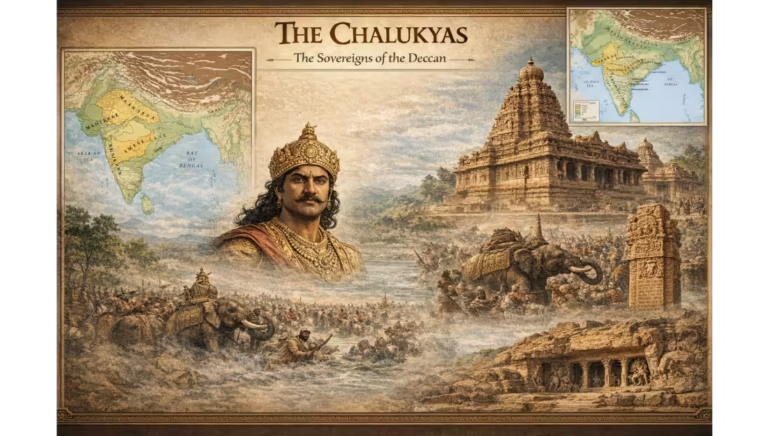
The Chalukyas are credited with evolving the Vesara style (or the Deccan style), which is a “hybrid” of the Northern Nagara and Southern Dravida styles.
Key Sites and Temples
- Aihole (The Cradle of Indian Architecture): Contains over 70 temples. Notable examples include the Durga Temple (with its unique apsidal shape) and the Lad Khan Temple.
- Badami Caves: Four rock-cut shrines—three Hindu and one Jaina. Cave No. 3 is the most ornate, featuring impressive relief sculptures of Vishnu’s incarnations like Varaha and Narasimha.
- Pattadakal (UNESCO World Heritage Site): Represents the high point of Chalukyan art.
- Virupaksha Temple: Built by Queen Lokamahadevi to commemorate Vikramaditya II’s victory over the Pallavas; it is a masterpiece of the Dravidian style.
- Papanatha Temple: A significant example of the fusion of Northern and Southern styles.
UPSC Prelims: PYQs & Practice Questions
Previous Year Questions (PYQs)
Question 1
Q: Which of the following inscriptions provides information about the victory of Pulakeshin II over Harshavardhana?
Options:
(a) Allahabad Pillar
(b) Aihole Inscription
(c) Junagarh Inscription
(d) Mehrauli Pillar
Answer: (b)
Explanation: The Aihole Inscription, composed by Ravikirti, explicitly mentions the defeat of Harsha by Pulakeshin II.
Question 2
Q: The 'Vesara' style of architecture, which developed under the Chalukyas, is a combination of:
Options:
(a) Indo-Islamic and Nagara
(b) Nagara and Dravida
(c) Gandhara and Mathura
(d) Dravida and Amaravati
Answer: (b)
Practice Questions (Prelims)
Question 1
Q: Consider the following statements regarding Chalukyan administration:
Statements:
1. The army of the Chalukyas was known as ‘Karnatakabala’.
2. They introduced the system of ‘Sabha’ for autonomous village governance similar to the Cholas.
Options:
(a) 1 only
(b) 2 only
(c) Both 1 and 2
(d) Neither 1 nor 2
Answer: (a)
Explanation: The Chalukyan army was referred to as Karnatakabala. However, unlike the Cholas or Pallavas, the Chalukyas followed a more centralized administrative system and did not establish autonomous village assemblies like the Sabha.
UPSC Mains: Previous Year & Practice Questions
Previous Year & Theme-based Mains Questions
Pulakeshin II
Question: “Pulakeshin II was the architect of the first pan-Deccan empire.” Evaluate his military and diplomatic achievements.
Chalukyan Architecture
Question: Discuss the unique features of Chalukyan temple architecture and how it served as a precursor to Hoysala art.
Pallava–Chalukya Rivalry
Question: Analyze the impact of the long-standing Pallava-Chalukya rivalry on the political and economic stability of South India.
Brahmins and Land Grants
Question: How did the socio-economic position of Brahmins change under the Chalukyas, particularly with reference to Agraharas and Ghatikas?
Mains Practice Questions (Add-ons)
Maritime Power
Question: “The Chalukyas of Badami were great maritime powers.” Elaborate on their naval conquests and trade relations.
Pattadakal Architecture
Question: Explain the significance of the UNESCO site of Pattadakal as a melting pot of North and South Indian architectural styles.
The Chalukyas: The Lords of the Deccan - FAQs
What is the meaning of the title 'Vatapikonda'?
This title means “Conqueror of Vatapi.” It was taken by the Pallava King Narasimhavarman I after he defeated Pulakeshin II and burned the Chalukyan capital.
Who wrote the 'Kavirajamarga'?
It is the earliest available work on rhetoric and poetics in the Kannada language, attributed to the Rashtrakuta King Amoghavarsha I, though it reflects the cultural landscape inherited from the Chalukyas.
Did the Chalukyas support Buddhism?
Yes. Although they were primarily Brahmanical Hindus, they were religiously tolerant. Hiuen Tsang noted that there were many Buddhist monasteries in the Chalukyan kingdom during his visit in 641 CE.
What is the 'Stellate' plan in Chalukyan temples?
It is a star-shaped ground plan used in later Chalukyan and Hoysala temples to create more wall space for intricate sculptures.
Who was the last ruler of the Badami Chalukyas?
Kirtivarman II, who was defeated by Dantidurga (the founder of the Rashtrakuta dynasty) in 753 CE.