Table of Contents
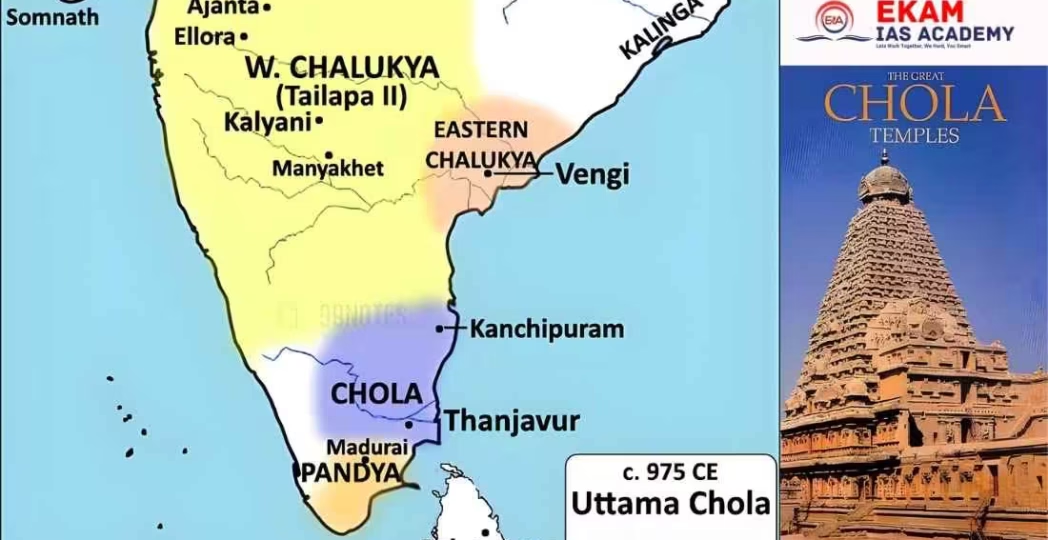
ToggleThe Chola Dynasty, one of the three “Crowned Kings” (Muvendhar) of Tamilakam, rose from the ruins of the Pallava and Pandya conflict in the 9th century to establish a transcontinental empire. Under the leadership of visionaries like Rajaraja I and Rajendra I, the Cholas transformed the Bay of Bengal into a “Chola Lake,” leaving a legacy of grassroots democracy and architectural marvels that endure today.
I. Political Resurgence and Imperial Zenith
The “Imperial” phase began when Vijayalaya (a former Pallava feudatory) captured Thanjavur in 850 CE.
- Parantaka I (907–955 CE): He expanded the kingdom by defeating the Pandyas and capturing Madurai, earning the title Madurai-konda. His reign is most famous for the Uttiramerur Inscriptions, which detail the village administration.
- Rajaraja I (985–1014 CE): The true architect of the empire. He destroyed the Chera navy at Trivandrum, conquered northern Sri Lanka, and annexed the Maldives. He constructed the iconic Brihadisvara Temple at Thanjavur.
- Rajendra I (1014–1044 CE): He completed the conquest of Sri Lanka and led a daring expedition to the Ganges, assuming the title Gangaikonda. His naval strike against the Srivijaya Kingdom (Indonesia/Malaysia) in 1025 CE remains the most sophisticated maritime operation in ancient Indian history.
- Kulothunga I: A diplomat and reformer who abolished internal tolls, earning the title Sungam Tavirtta.
II. Administration: The Chola Model of Governance
The Chola state was a unique blend of centralized monarchy and extreme local autonomy.
- Central Government: The King was the supreme authority, often taking titles like Chakravartigal. He was assisted by a bureaucracy divided into Perundanam (higher officials) and Sirutanam (lower officials).
- Territorial Subdivisions: The empire was divided into Mandalams (provinces), further subdivided into Valanadus and then Nadus (districts).
- Revenue System: The Puravuvari-tinaikkalam was the department of land revenue. Land was meticulously surveyed (notably under Rajaraja I), and tax was typically 1/3rd of the produce, often collected in kind as paddy (Kalam).
III. Local Self-Government: The Sabha and Kudavolai
The “Golden Age” of local governance was achieved through village assemblies.
- Types of Assemblies:
- Ur: General assembly of tax-paying residents in common villages.
- Sabha (Mahasabha): Exclusive assembly of Brahmins in Agrahara villages.
- Nagaram: Assembly of merchants in commercial towns.
- The Kudavolai System: As per the Uttiramerur Inscription, members were chosen by a draw of lots.
- Qualifications: Candidates had to own land, have a house on their own site, be aged 35–70, and be well-versed in the Vedas.
- Committees (Variyams): Specialized committees managed tanks (Eri-variyam), gardens (Totta-variyam), and justice.
IV. Economy and Maritime Prowess
Agriculture was the pivot of the economy, supported by massive irrigation projects like the Cholagangam tank.
- Merchant Guilds: Trade was dominated by powerful guilds like the Anjuvannattar (maritime traders) and Manigramattar (inland traders).
- Navy: The Cholas maintained the most advanced navy of the time, protecting merchant vessels from piracy and projecting power across the Indian Ocean to secure trade routes to China and Arabia.
V. Art and Architecture: The Dravidian Zenith
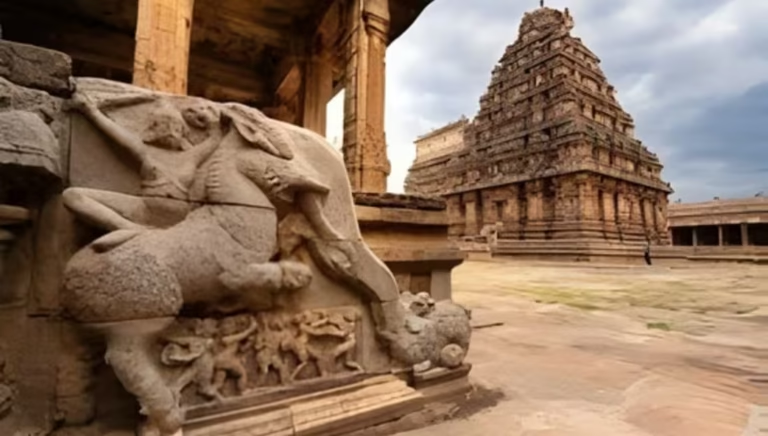
Chola architecture is characterized by the massive Vimana (temple tower) and exquisite bronze casting.
- Temple Style: Transitioned from early brick structures to fully granite monuments.
- Brihadisvara Temple (Thanjavur): Features a 216-foot Vimana and a monolithic Nandi.
- Gangaikondacholapuram: Built by Rajendra I to mirror his father’s achievement but with more delicate contours.
- Bronze Sculptures: The Chola artists perfected the Lost-Wax (Cire Perdue) technique. The Nataraja (Dancing Shiva) is considered the pinnacle of world bronze art, symbolizing the cosmic cycle of creation and destruction.
VI. UPSC Exam Edge: Quick Reference
Category | Key Detail |
Inscription | Uttiramerur (Village administration) |
Greatest Naval Victory | Expedition against Srivijaya (1025 CE) |
Land Classification | Vellanvagai (Peasant land), Brahmadeya (Brahmin land) |
Military Units | Velaikkarar (King’s personal guards) |
UPSC Prelims: PYQs & Practice Questions
Previous Year Questions (PYQs)
Question 1
Q: Which of the following was the famous center of learning during the Chola period? (Based on historical patterns)
Options:
(a) Kanchi
(b) Ennayiram
(c) Madurai
(d) Vallabhi
Answer: (b)
Explanation: The Cholas were great patrons of education. Vedic colleges flourished at Ennayiram (in Villupuram district), Tribhuvani, and Tirumukkudal.
Question 2
Q: With reference to Chola administration, the term 'Kudavolai' refers to:
Options:
(a) A type of land tax
(b) A military rank
(c) A method of electing village council members
(d) A religious ritual
Answer: (c)
Explanation: The Kudavolai system was a unique method where names of eligible candidates were written on palm leaves and put into a pot, from which a boy would draw lots to select the village committee members.
Practice Questions (Prelims)
Question 1
Q: Consider the following statements regarding Chola administration:
Statements:
1. The empire was divided into 'Mandalams', which were further subdivided into 'Valanadus' and 'Nadus'.
2. 'Taniyurs' were large villages that were treated as separate administrative units.
Options:
(a) 1 only
(b) 2 only
(c) Both 1 and 2
(d) Neither 1 nor 2
Answer: (c)
Explanation: Both statements accurately describe the hierarchical administrative structure and the special status of large villages (Taniyurs) in the Chola system.
Question 2
Q: The Chola king who performed a naval expedition against the Srivijaya kingdom was:
Options:
(a) Rajaraja I
(b) Rajendra I
(c) Kulothunga I
(d) Parantaka I
Answer: (b)
UPSC Mains: Previous Year & Practice Questions
Previous Year Mains Themes
Village Administration
Question: “The Chola village administration was a unique system that balanced grassroots democracy with imperial oversight.” Discuss with reference to the Uttiramerur inscription.
Temple Architecture
Question: Evaluate the contribution of the Cholas to the development of Dravidian temple architecture.
Maritime Power
Question: “The Chola navy made the Bay of Bengal a ‘Chola Lake’.” Analyze the maritime achievements and trade links of the Chola Empire.
Land Revenue System
Question: Discuss the socio-economic significance of the ‘Brahmadeya’ and ‘Vellanvagai’ land classifications in the Chola period.
Chola Bronzes
Question: Examine the artistic excellence of Chola bronze sculptures, particularly the Nataraja icon.
Mains Practice Questions (Add-ons)
Imperial Administration
Question: “Rajaraja I and Rajendra I were not only great conquerors but also efficient administrators.” Justify this statement.
Merchant Guilds
Question: Explain the role of merchant guilds like ‘Manigramam’ and ‘Ayyavole-500’ in the Chola economy.
Cultural Expansion
Question: Analyze the impact of Chola cultural influence on the countries of Southeast Asia.
The Imperial Cholas - FAQs
What is the historical importance of the Uttiramerur Inscription?
It is the most detailed record of the Sabha (Brahmin village assembly) and the qualifications and disqualifications for its members, providing a blueprint for early local self-government.
Who built the Brihadisvara Temple at Thanjavur?
It was built by Rajaraja I (completed around 1010 CE). It is famous for its massive Vimana and its status as a UNESCO World Heritage site.
What was the title taken by Rajendra I after his northern expedition?
He took the title ‘Gangaikonda’ (The conqueror of the Ganges) and built a new capital called Gangaikondacholapuram to commemorate his victory.
Did women hold positions in Chola administration?
While most administrative roles were held by men, royal women like Sembiyan Mahadevi and Kundavai were highly influential patrons of art, temples, and charities.
What was the primary source of revenue for the Chola state?
Land revenue (Kanikadan) was the main source. The state conducted systematic land surveys to assess tax, which was usually one-third of the produce.