Table of Contents
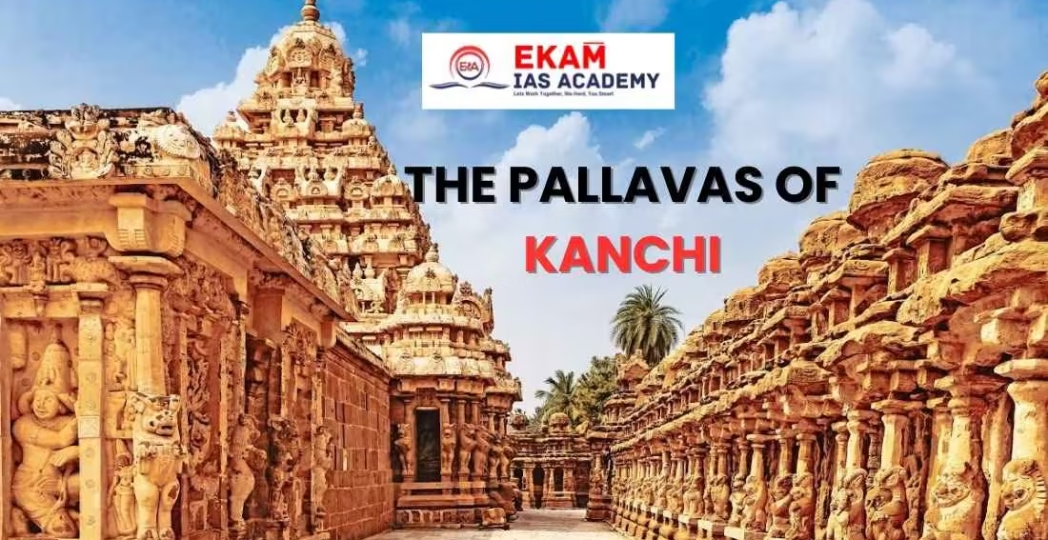
ToggleThe Pallava Dynasty was a transformative force in South Indian history, acting as a bridge between the ancient and medieval eras. Centered in the Tondaimandalam region with Kanchipuram as their capital, they transitioned South India from rock-cut architecture to grand structural temples and facilitated the “Aryanization” of the South.
I. Political History: From Feudatories to Imperials
The origins of the Pallavas remain a subject of debate, with theories ranging from their being offshoots of the Satavahanas to indigenous Kurumbas.
- Early Pallavas: Issued charters in Prakrit and Sanskrit. Rulers like Sivaskandavarman performed Vedic sacrifices to establish legitimacy.
- Simhavishnu (575–600 CE): The “Lion of the Earth.” He revived the dynasty by defeating the Kalabhras and extending the empire to the Kaveri River.
- Mahendravarman I (600–630 CE): A “versatile genius.” Originally a Jain, he converted to Shaivism under the influence of the saint Appar. He authored the Sanskrit farce Mattavilasa Prahasana.
- Narasimhavarman I (630–668 CE): Also known as Mamalla (Great Wrestler). He avenged his father’s defeat by killing the Chalukyan king Pulakesin II and taking the title Vatapikonda. He founded the port city of Mahabalipuram.
- Narasimhavarman II (Rajasimha): His reign was peaceful, allowing him to focus on grand structural temples like the Shore Temple and Kanchi Kailasanatha Temple.
II. Administration: The Foundation of Local Self-Governance
Pallava administration was characterized by a strong monarchy balanced by autonomous local bodies.
- Administrative Units: The empire was divided into Mandalams, which were further subdivided into Kottams.
- Village Assemblies:
- Ur: A common village assembly of local residents.
- Sabha: An assembly of Brahmin settlements (Agraharas/Brahmadeyas).
- Nagaram: An assembly of merchants and traders in urban centers.
- Taxation: The state derived revenue through land taxes and professional taxes on weavers, potters, and smiths.
III. Cultural Contributions: Art, Architecture, and Literature
| Stage | Style Name | Key Features | Examples |
|---|---|---|---|
| I | Mahendra Style | Rock-cut cave temples with pillared halls. | Mandagapattu, Pallavaram |
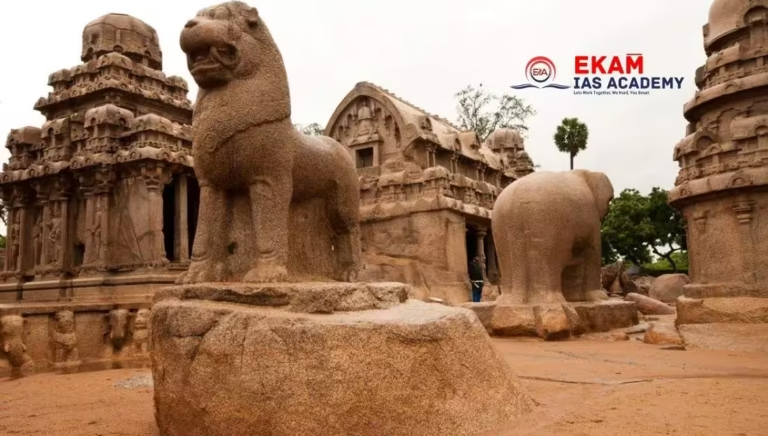
| II | Mamalla Style | Monolithic Rathas (chariots) and Mandapas. | Pancha Rathas (Mahabalipuram) |
| III | Rajasimha Style | Transition to grand structural temples. | Shore Temple, Kanchi Kailasanatha |
| IV | Nandivarman Style | Smaller, highly ornamented structural temples. | Vaikuntha Perumal Temple |
Literature and Learning
- Ghatikas: These were Vedic colleges attached to temples. The Ghatika of Kanchi was famous throughout India, attracting scholars like Mayurasarman (founder of the Kadambas).
- Scholars: Bharavi (wrote Kiratarjuniya) and Dandin (wrote Dashakumaracharita) adorned the Pallava courts.
- Bhakti Movement: The reign saw the rise of the Nayanmars (Shaiva) and Alwars (Vaishnava) saints who composed devotional hymns in Tamil, challenging Jainism and Buddhism.
UPSC Prelims: PYQs & Practice Questions
Previous Year Questions (PYQs)
Question 1 (2020)
Q: Which of the following kings was responsible for initiating rock-cut cave architecture in South India?
Options:
(a) Mahendravarman I
(b) Narasimhavarman II
(c) Rajaraja I
(d) Simhavishnu
Answer: (a)
Explanation: Mahendravarman I was the pioneer of rock-cut architecture in the South, creating cave temples like those at Mandagapattu.
Question 2
Q: With reference to the history of India, the terms 'Ur', 'Sabha', and 'Nagaram' refer to:
Options:
(a) Types of weapons
(b) Village and merchant assemblies
(c) Revenue officers
(d) Religious sects
Answer: (b)
Explanation: These were autonomous local bodies during the Pallava and Chola periods.
Practice Questions (Prelims)
Question 1
Q: The title "Vatapikonda" was assumed by which Pallava ruler?
Options:
(a) Mahendravarman I
(b) Narasimhavarman I
(c) Rajasimha
(d) Aparajita
Answer: (b)
Explanation: Narasimhavarman I took the title Vatapikonda after defeating Pulakesin II and destroying the Chalukyan capital, Vatapi.
Question 2
Q: Consider the following pairs of Literature and Author:
1. Mattavilasa Prahasana : Mahendravarman I
2. Kiratarjuniya : Dandin
Which of the above is/are correctly matched?
Options:
(a) 1 only
(b) 2 only
(c) Both 1 and 2
(d) Neither 1 nor 2
Answer: (a)
Explanation: Pair 2 is incorrect. Kiratarjuniya was written by Bharavi, while Dandin authored Dashakumaracharita.
UPSC Mains: Previous Year & Practice Questions
Previous Year Mains Questions
Pallava Culture and Architecture
Question: Examine the role of Pallava kings in the development of South Indian culture and temple architecture. (2021)
Temple Architecture Transition
Question: “The Pallava period witnessed a transition from rock-cut to structural temples.” Elaborate.
Tamil Bhakti Tradition
Question: Analyze the contribution of the Pallavas to the growth of Tamil Bhakti literature.
Pallava Administration
Question: Discuss the administrative structure of the Pallavas with special reference to local self-government.
Southeast Asian Influence
Question: Evaluate the influence of Pallava art and architecture on the cultural landscape of Southeast Asia.
Mains Practice Questions (Add-ons)
Mahendravarman I
Question: “Mahendravarman I was more of a scholar-king than a warrior.” Critically analyze.
Kanchi Ghatika
Question: Examine the significance of the Kanchi Ghatika as a center of higher education in ancient South India.
Pallava–Chalukya Conflict
Question: “The Pallava-Chalukya conflict was not just political but also a struggle for resource control.” Discuss.
The Pallavas of Kanchi - FAQs
Who were the Pallavas and why are they important in South Indian history?
The Pallavas of Kanchi were a major South Indian dynasty that bridged the ancient and medieval periods, pioneering Dravidian temple architecture, local self-governance, and Bhakti traditions.
Why is Kanchipuram called the capital of Pallava culture?
Kanchipuram was the Pallava capital and a major religious-educational hub, housing famous Ghatikas, grand temples like Kailasanatha, and attracting scholars from across India.
What was the contribution of Pallavas to Dravidian architecture?
The Pallavas pioneered Dravidian architecture, evolving from rock-cut caves to structural temples, exemplified by Mahabalipuram Rathas and the Shore Temple.
Who was Narasimhavarman I and why is he famous?
Narasimhavarman I (Mamalla) defeated the Chalukyan king Pulakesin II, took the title Vatapikonda, and founded Mahabalipuram, a UNESCO-listed architectural site.
How did Pallava administration promote local self-government?
The Pallavas institutionalized village assemblies like Ur, Sabha, and Nagaram, laying the foundation for decentralized governance later perfected under the Cholas.