

...
Daily Current affairs 02 April 2026

Daily Current Affairs 02-April-2026

Share this Post

CONTEMPT OF COURT AND CRITICISM

TOPIC: (GS2) POLITY: THE HINDU

The Supreme Court raised concerns over an NCERT Class 8 textbook’s portrayal of the judiciary, suspended its use, and set up a new expert committee to review and decide appropriate content for students.

Contempt of Court

  • Civil Contempt: Disobedience of a court order.
  • Criminal Contempt: Acts that obstruct justice, prejudice proceedings, or scandalize the court by lowering its authority.
  • Purpose: Protects public confidence in the judiciary, not individual judges’ pride.
  • Foundation of Judicial Power: Courts rely on public trust and goodwill, not force or money.

NCERT Class 8 Textbook

  • Portrayal of Judicial Corruption: The chapter suggested that corruption was widespread in the judiciary, creating a perception that courts were deeply compromised. This depiction was seen as biased and irresponsible.
  • Undermining Judicial Credibility: The content implied that judicial decisions were influenced by external pressures rather than law and justice, eroding public trust in the judiciary as an institution.
  • Motivated Narrative: The Supreme Court observed that the material appeared to be motivated and reckless, NCERT later issued an unconditional apology and withdrew the textbook.

Criticism and Judicial Dignity

  • Judges Accept Criticism: Many Chief Justices have acknowledged shortcomings and welcomed constructive critique.
  • Caution in Using Contempt: CJI Gajendragadkar stressed restraint, fairness, and dignity in exercising contempt powers.
  • Broad Shoulder Approach: CJI Bharucha noted courts should be strong enough to ignore harsh comments.
  • Global Perspective: Lord Denning emphasized freedom of speech and fair comment; dignity rests on judicial conduct, not suppression of criticism.

Limits of Criticism and Contempt of Court

  • Fact-Based Criticism: Any criticism of the judiciary must be grounded in accurate facts and presented responsibly.
  • Protection Against Malicious Attacks: Hostile or ill-motivated remarks aimed at eroding public trust in the judiciary can invite criminal contempt.
  • Judicial Review and Public Faith: The judiciary’s strength lies in public confidence, which sustains its power of judicial review.
  • Balancing Free Speech and Integrity: Courts must carefully balance freedom of expression and academic independence with the need to protect institutional dignity.

Way Forward

  • Due Process: Authors could be given notice and chance to clarify before punitive action.
  • Educational Role: Textbooks should highlight judiciary’s role in safeguarding fundamental rights and constitutional values.
  • Judicial Challenges: Address corruption, infrastructure gaps, and delays to strengthen credibility.
  • Reform Needed: Stronger mechanisms beyond impeachment or transfers to deal with judicial misconduct.

Conclusion

The NCERT textbook controversy underscores the delicate balance between criticism and contempt. Courts must protect their authority while upholding free speech and academic freedom.

ENDING NAXALISM AND PATH TO INCLUSIVE DEVELOPMENT

TOPIC: (GS1) SOCIAL ISSUES: THE HINDU

On March 30, 2026, the Home Minister declared India free from Left Wing Extremism (LWE) after intensive paramilitary operations, marking a major internal security milestone.

Background of LWE

  • At its peak, Maoist influence spread across 180 districts in states like Bihar, Jharkhand, Chhattisgarh, Odisha, Andhra Pradesh, and Maharashtra.
  • Earlier governments adopted a cautious approach (e.g., Operation Green Hunt, 2009–10).
  • Current strategy combined dialogue and rehabilitation for surrenders with strict action against armed resistance.

Operational Achievements

  • Surrenders: 4,839 Maoists laid down arms.
  • Arrests: 2,218 individuals detained.
  • Neutralised: 706 insurgents in encounters.
  • Impact: Military capabilities of Maoists significantly weakened, enabling state presence in remote tribal and forested regions.

Developmental Measures Initiated

  • Campaigns to establish schools in every village.
  • Distribution of Aadhaar and ration cards in previously inaccessible areas.
  • Focus on basic services and governance outreach.

Challenges Ahead

  • Maoists oppose parliamentary democracy ideologically, not merely due to lack of development.
  • Risk of crony capitalist exploitation of mineral-rich tribal lands after insurgency decline.
  • Need to ensure tribal rights, participation in democracy, and accountability in resource extraction.
  • Human rights concerns must be addressed to avoid alienation of local communities.

Way Forward

  • Inclusive Development: Prioritize education, healthcare, livelihood, and infrastructure in tribal regions.
  • Political Reconciliation: Build trust through dialogue, participation, and empowerment.
  • Safeguarding Rights: Protect land, forest, and resource rights of tribal communities.
  • Transparent Governance: Ensure resource extraction benefits locals and avoids exploitation.

Conclusion

The government must now transform the “opportunity corridor” into a pathway for tribal empowerment and sustainable development, ensuring that security gains translate into social justice and stability.

POLITICISATION OF ANTI-CORRUPTION BODIES

TOPIC: (GS2) GOVERNANCE: THE HINDU

The Delhi excise policy case, once projected as a major corruption scandal, collapsed in court with no charges framed, raising questions about the credibility and politicisation of India’s investigative agencies.

Background of the Case

  • Allegations of ₹100 crore kickbacks linked to Delhi’s excise policy.
  • Investigated by CBI and ED, leading to arrests of political leaders including the then Chief Minister and Deputy CM.
  • Case dominated media and electoral narratives for months.
  • Trial court later found no prima facie evidence of conspiracy or bribery.

Why Investigative Agencies Should Work Independently

  • Ensure Rule of Law: Independent agencies uphold justice based on evidence, not political influence.
  • Prevent Misuse of Power: Keeps criminal law from being used as a tool for partisan battles.
  • Build Public Trust: Citizens gain confidence when investigations are impartial and fair.
  • Strengthen Democracy: Independent institutions act as checks on the executive, protecting democratic values.
  • Improve Conviction Rates: Evidence-based investigations lead to stronger cases and successful prosecutions.
  • Safeguard Reputation: Prevents wrongful arrests and reputational damage caused by politically motivated cases.

Institutional Concerns

  • Weak Evidentiary Basis: FIRs in politically sensitive cases carry huge consequences; arrests without strong evidence damage reputations.
  • Investigative Pressure: Collapse of high-profile cases suggests possible extraneous or political influence.
  • Need for Forensic Capacity: India’s agencies rely heavily on witness statements rather than advanced tools like forensic accounting, data analytics, and tracing financial flows.

Judicial Threshold

  • Corruption cases are complex, often involving shell companies, contracts, and regulatory favours rather than direct cash.
  • Courts require clear evidence of dishonest intent and personal gain; policy decisions alone cannot be criminalised.
  • Supreme Court has repeatedly upheld this principle to prevent misuse of criminal law.

Political Dilemma

  • Public Demand: Citizens expect serious investigation into corruption allegations.
  • Risk of Misuse: If prosecutions are seen as political weapons, trust in institutions erodes.
  • Conviction Record: While trap cases succeed, large policy-level corruption cases rarely end in convictions, deepening public cynicism.

Way Forward

  • Strengthen Investigative Capacity: Build expertise in financial forensics and cross-border money trails.
  • Ensure Evidentiary Rigor: Prosecutors must present robust cases before courts.
  • Depoliticise Agencies: Safeguard institutions from executive misuse.
  • Credible Prosecutions: Successful trials in major corruption cases would restore public confidence.

Conclusion

India needs stronger investigative tools, impartial agencies, and credible prosecutions to ensure corruption is punished fairly, without turning criminal law into a partisan weapon.

CENSUS 2027 — SELF-ENUMERATION PORTAL

TOPIC: (GS2) POLITY: THE HINDU

On the first day of the Census 2027 self-enumeration portal, around 55,000 households registered online, marking India’s first large-scale digital participation in census operations.

Self-enumeration portal

  • Launch: Portal opened in eight States/UTs — Andaman & Nicobar Islands, Goa, Karnataka, Lakshadweep, Mizoram, Odisha, Sikkim, NDMC area, and Delhi Cantonment.
  • Participation: 55,000 households submitted details on day one.
  • Leadership Example: President, Vice-President, Prime Minister, and Home Minister were among the first to register.
  • Process:
    • Covers House Listing Operations (HLO) with 33 questions.
    • Portal opens 15 days before fieldwork begins.
    • Enumerators will verify online entries during door-to-door visits.
  • Access: One mobile number can register only one household.
  • Languages: Available in 16 regional languages for inclusivity.
  • Verification: A unique Self-Enumeration ID (SE ID) is generated and shared with enumerators for confirmation.

Timeline

  • First phase (HLO): April 16 – May 15, 2026 in pilot States/UTs.
  • Other States: To finish first phase by September 30, 2026.
  • Snow-bound regions (Ladakh, J&K, Uttarakhand, Himachal): Both phases by September 30.
  • Second phase (Population Enumeration): Scheduled for February 2027.

Significance

  • First time households can self-enumerate online before field verification.
  • Enhances efficiency, transparency, and convenience in census operations.
  • Marks a step toward digital governance and citizen participation in national data collection.

STATE OF WORKING INDIA 2026 REPORT

TOPIC: (GS1) SOCIAL ISSUES: THE HINDU

State of Working India 2026 report highlights that while enrolment and institutions have grown, faculty strength has not kept pace, leading to concerns about quality in higher education.

Expansion of Institutions

  • Colleges/universities: 1,600 (1950) → 69,000+ (2022).
  • College density: 29 per lakh youth (2010) → 45 (2021).
  • Expansion largely driven by private providers.
  • Regional disparities: Northern and eastern districts often have fewer than 18 colleges per lakh youth.

Student–Teacher Ratio (STR)

  • Recommended: 15–25 students per teacher.
  • Actual:
    • 2010: 24:1
    • 2016: 35.4:1
    • 2021: 32:1 (Ministry of Education data).
  • Northern districts report highest ratios, despite institutional growth.
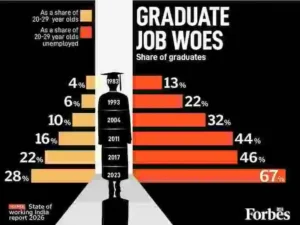
State of Working India 2026 report

Enrolment Trends

  • Gross Enrolment Ratio (GER): 16% (2011) → 28% (2022).
  • Gender parity: Male and female enrolment nearly equal.
  • Social inclusion: SC enrolment: 11% → 26% (2011–2022). ST enrolment: 8% → 21% (2011–2022).
  • Persistent inequality: Graduates still concentrated among wealthier households.
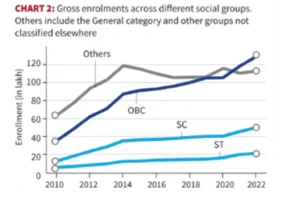

Working report

Cost Barriers

  • Professional courses expensive: Medicine: ~₹97,400 annually. Engineering: ~₹72,600 annually.
  • Poorer households often restricted to humanities/commerce, as fees exceed average consumption expenditure.

Why More Teachers Are Needed

  • Quality of Learning: Smaller classes allow better mentoring and skill development.
  • Regional Equity: High STR in poorer districts worsens inequality.
  • Employability: Strong faculty base improves graduate readiness for jobs.
  • Research Output: Adequate faculty ensures innovation and global competitiveness.

How to Improve Teacher Quality

  • Recruitment Drives: Fill vacancies promptly, especially in underserved regions.
  • Faculty Development Programs: Continuous training in pedagogy, digital tools, and research.
  • Incentives: Better pay, housing, and career growth to attract talent.
  • International Collaboration: Exchange programs and joint research to raise standards.
  • Digital Platforms: Use online teaching tools to supplement faculty shortages.

Initiatives Needed

  • Bridge Regional Gaps: Targeted funding for northern/eastern districts.
  • Scholarships & Fee Regulation: Reduce cost barriers for professional courses.
  • Public Investment: Strengthen state universities and colleges.
  • Private Sector Accountability: Ensure private institutions maintain faculty standards.
  • National Mission on Faculty Quality: Similar to NEP 2020 goals, focusing on training and recruitment.

Conclusion

The next phase must prioritize faculty capacity, regional balance, and cost reduction, ensuring higher education translates into economic opportunity and social mobility.

e-GRAMSWARAJ PORTAL

TOPIC: (GS2) GOVERNANCE: THE HINDU

India’s Gram Panchayats have routed over ₹3 lakh crore in payments through the eGramSwaraj portal, marking a major step in strengthening digital governance at the grassroots level.

About the Portal

  • Launched in 2020 by the Ministry of Panchayati Raj (MoPR).
  • Developed under the e-Panchayat Mission Mode Project.
  • Integrated with the Public Financial Management System (PFMS) for real-time fund transfers.
  • Aim: Enhance transparency, accountability, and efficiency in Panchayati Raj Institutions (PRIs).

Key Features

  • Single Digital Platform: Covers planning, budgeting, accounting, monitoring, asset management, and online payments.
  • Annual Plans: Enables Panchayats to prepare and upload Gram Panchayat Development Plans (GPDPs) online.
  • Transparency: Citizens can access detailed reports on local governance activities.
  • Efficiency: Real-time payments to vendors/service providers reduce delays.
  • Decentralized Planning: Supports bottom-up development with progress reporting and work-based accounting.

Significance

  • Strengthens credibility of Panchayats, encouraging greater devolution of funds.
  • Promotes digital planning and monitoring at the village level.
  • Ensures proper utilization of funds and empowers citizens with accessible information.
  • Facilitates inclusive governance by bringing accountability and transparency to rural development projects.

Conclusion

The eGramSwaraj portal empowers local bodies to plan, monitor, and execute development projects effectively, aligning with India’s vision of Digital India and grassroots democracy.

NATIONAL COMMISSION FOR BACKWARD CLASSES (NCBC)

TOPIC: (GS2) POLITY: THE HINDU

Niranjan Jyoti has taken charge as Chairperson and Kiran Umesh Mahalle as Member of the National Commission for Backward Classes (NCBC), a constitutional body for SEBC welfare.

About NCBC

  • Established: Initially statutory (1993), given constitutional status by the 102nd Amendment Act, 2018.
  • Constitutional Basis: Article 338B of the Indian Constitution.
  • Operates alongside NCSC (Article 338) and NCST (Article 338A).

Composition

  • Five members: Chairperson, Vice-Chairperson, and three others.
  • Appointment: By the President of India.
  • Tenure: 3 years; generally not more than 2 terms.
  • Representation: At least two members from SEBCs and one woman member.
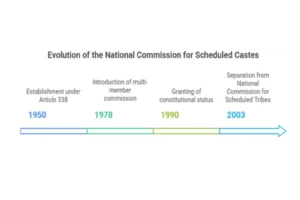
NCBC

Functions

  • Investigate & Monitor: Safeguards for SEBCs under Constitution/law.
  • Inquiry: Complaints of rights deprivation.
  • Advisory Role: Recommend socio-economic development measures.
  • Reporting: Annual reports submitted to the President.
  • Quasi-Judicial Powers: Same as a civil court — summon witnesses, demand documents, receive affidavits.

Related Amendments

  • 102nd Amendment (2018): Gave NCBC constitutional status; inserted Article 338B & 342A.
  • 105th Amendment (2021): Restored State Governments’ power to maintain their own OBC lists.

Significance

  • Strengthens grievance redressal for backward classes.
  • Ensures consultation on policy matters affecting SEBCs.
  • Enhances social justice and inclusion in governance.

Constitutional Body

  • Created by the Constitution: A constitutional body is established directly under provisions of the Indian Constitution, unlike statutory bodies which are created by Acts of Parliament.
  • Independent Authority: It enjoys autonomy and has powers defined in the Constitution to safeguard rights, ensure accountability, and advise the government.

Examples: Election Commission (Article 324), UPSC (Article 315), NCBC (Article 338B), NCSC (Article 338), and NCST (Article 338A).

Conclusion:

The NCBC plays a vital role in safeguarding the rights of backward classes and ensuring social justice. Strengthening its independence is essential for building a more inclusive and equitable democracy.

BIO-BITUMEN

TOPIC: (GS3) SCIENCE AND TECHNOLOGY: THE HINDU

Why in News 
The Council of Scientific and Industrial Research (CSIR) recently organised a Technology Transfer Event in New Delhi for its innovation “Bio-Bitumen from Lignocellulosic Biomass,” promoting large-scale industry adoption.
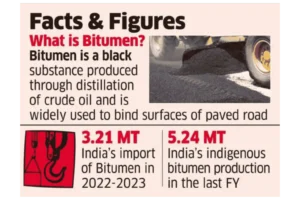
Bio-bitumen

About Bio-Bitumen

  • Developed from renewable, non-petroleum resources such as vegetable oils, agricultural waste, and lignocellulosic biomass.
  • Undergoes special processing to create a binder similar to traditional bitumen.
  • Serves as an eco-friendly substitute for petroleum-based bitumen used in roads and construction.

Key Materials Used

  • Plant-based oils.
  • Agricultural residues (farm waste, biomass).
  • Synthetic polymers (in some processes).

Advantages

  • Sustainability: Produced from renewable resources, reducing reliance on fossil fuels.
  • Lower Carbon Footprint: Organic materials absorb CO₂ during growth, making the product climate-friendly.
  • Environmental Safety: Contains fewer heavy metals and pollutants compared to petroleum bitumen.
  • Versatility: Can be used in road paving, roofing, waterproofing, and construction projects.
  • Reduced Import Dependency: Helps India cut down on petroleum imports.

Why More Adoption is Needed

  • Energy Security: Reduces dependence on imported crude oil.
  • Climate Goals: Supports India’s commitment to net-zero emissions by 2070.
  • Waste Utilisation: Converts farm residue into valuable infrastructure material, reducing stubble burning.
  • Economic Benefits: Encourages rural industries and creates new green jobs.

Initiatives Required

  • Policy Support: Government incentives for bio-bitumen production and usage.
  • Industry Collaboration: Partnerships between CSIR, road construction firms, and state governments.
  • Research & Development: Improve durability and large-scale production efficiency.
  • Awareness Campaigns: Promote adoption among contractors and local bodies.

Conclusion

By turning farm residue into roads, India can achieve sustainable infrastructure growth, reduce pollution, and strengthen its path toward self-reliance and climate resilience.


Write a Review

Your email address will not be published. Required fields are marked *

Seraphinite AcceleratorOptimized by Seraphinite Accelerator
Turns on site high speed to be attractive for people and search engines.