

Daily Current affairs 02 March 2026

Daily Current Affairs 02-March-2026

Share this Post

DARK SKY PARK – TAMIL NADU’S FIRST INITIATIVE

TOPIC: (GS3) SCIENCE AND TECHNOLOGY: THE HINDU

Why in News?

The Government of Tamil Nadu has inaugurated the State’s first Dark Sky Park at Ariyur Shola Reserve Forest in Kolli Hills at an estimated cost of ₹1 crore.
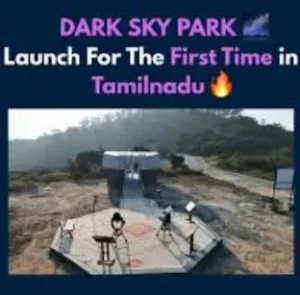
Dark Sky Park                                 

Concept of Dark Sky Park

  • A light-controlled zone with minimal human-induced illumination.
  • Ensures clear atmospheric visibility, usually in elevated and dry regions.
  • Encourages scientific observation, astro-tourism, and environmental conservation.
  • Requires implementation of sustainable lighting policies in surrounding areas.

Tamil Nadu’s First Dark Sky Park

Location

  • Situated in Ariyur Shola Reserve Forest, located in Kolli Hills, Namakkal district.
  • Kolli Hills selected due to its high elevation, forest cover, and low urban light interference.

Operational Features

  • The site offers clear sky visibility for about six months annually.
  • It will function from January 15 to June 15 and remain closed during the monsoon season.
  • A 1.5 km radius around the core zone has been declared a light-free area.

Infrastructure

  • Equipped with three advanced telescopes for structured observation sessions.
  • Powered partly through solar energy, promoting sustainable operations.
  • Will operate during daytime as well to promote astronomy education for students and researchers.

Importance and Benefits

Environmental Significance

  • Protects nocturnal species from disruption caused by artificial lighting.
  • Helps maintain the natural biological cycles of flora and fauna.

Cultural & Scientific Value

  • Preserves the traditional heritage of star-filled night skies.
  • Encourages interest in space science and observational astronomy.

Economic & Tourism Potential

  • Promotes responsible eco-tourism.
  • Generates livelihood opportunities for local communities.
  • Aligns with India’s push for sustainable tourism models.

Dark Sky Initiatives in India

  • Pench Tiger Reserve (Maharashtra) is recognized as India’s first Dark Sky Park and among the earliest in Asia.
  • Hanle Dark Sky Reserve (Ladakh) is India’s first Dark Sky Reserve, centred around the Indian Astronomical Observatory.

Types of International Dark Sky Places (IDSPs)

  1. International Dark Sky Parks – Protected areas with public access and strict lighting norms.
  2. Dark Sky Reserves – Core dark zones with surrounding buffer communities committed to light control.
  3. Dark Sky Sanctuaries – Remote and ecologically fragile regions with extremely dark skies.

Conclusion

Tamil Nadu’s initiative marks a significant step toward balancing scientific progress with environmental conservation. Expanding such projects across India can strengthen astro-tourism, biodiversity protection, and climate-sensitive planning.

SKILL INDIA CHALLENGES AND BLUNDERS

TOPIC: (GS3) ECONOMY: THE HINDU

Despite the demographic dividend opportunity till 2040, weak vocational education enrolment, poor fund utilisation, have raised concerns about the effectiveness of the Skill India mission programme.

Current Status of Vocational Education

  • In countries such as Germany and China, nearly 50% of secondary students are enrolled in vocational streams, while in India the figure is only 1.3%, reflecting neglect of vocational education.
  • The National Education Policy (NEP) 2020 promised that by 2025, half of all learners would be exposed to vocational education, but the term “exposed” itself shows a lack of seriousness in integrating skills into mainstream education.
  • India spends only around 2% of its education budget on vocational training, compared to 11% in China and Germany.
  • Fragmented schemes across ministries and poor data transparency have weakened accountability.

Audit Findings and Implementation Gaps

  • The Comptroller and Auditor General (CAG) in 2025 highlighted serious lapses in the flagship Pradhan Mantri Kaushal Vikas Yojana (PMKVY).
  • Reports revealed that 94.5% of trainee bank accounts were invalid, and only 41% of shortterm trainees secured placements.
  • Earlier audits in 2015 had already flagged delays in financial reporting and weak accountability, showing little progress over a decade.
  • Internship schemes announced in recent budgets have failed, with only 5% of allocated funds utilised in FY 2026.

Alternative Financing Models

  • Skill Loans: Instead of grants, funds could be extended as loans to students, similar to education loans, encouraging competition among institutions and demanddriven training.
  • Skill Vouchers: Providing vouchers directly to trainees would give them purchasing power, improve accountability, and promote lifelong learning. Countries like Singapore and Croatia have successfully implemented such models.
  • Skill Levies: Over 90 countries use industry levies to finance skills. A reimbursable contribution system could make employers responsible for training, ensuring stable funding insulated from political cycles.

Data and Labour Market Information

  • Current skill planning is supplydriven and disconnected from real demand.
  • Periodic skill gap studies are insufficient; instead, realtime labour market data must feed into policy.
  • Mandating online job boards to share anonymised data and integrating it into the National Career Service portal could help build a robust labour market information system.
  • Use of AIbased modelling and data mining can provide accurate forecasts for emerging skill needs in areas like AI, digital, and green jobs.

Way Forward

  • Increase budgetary allocation for vocational education to match global benchmarks.
  • Shift from supplydriven schemes to demanddriven financing models like skill loans, vouchers, and levies.
  • Ensure strict accountability and transparency in fund utilisation through independent audits.
  • Align skill development with emerging sectors such as AI, digital technologies, renewable energy, and foreign language training for global labour markets.

Make in India

  • Launch Year: The initiative was launched in September 2014 by the Government of India.
  • Objective: To transform India into a global manufacturing hub, attract foreign investment, and boost domestic production.
  • Logo & Symbolism: The logo features a lion made of cogs, symbolising strength, manufacturing, and innovation.
  • Focus Sectors: Initially targeted 25 priority sectors such as automobiles, defence, aviation, biotechnology, chemicals, IT & BPM, textiles, and renewable energy.
  • Ease of Doing Business: Emphasis on simplifying regulations, reducing red tape, and improving India’s ranking in the World Bank’s Ease of Doing Business Index.
  • FDI Reforms:

Conclusion

India’s demographic dividend offers a onceinalifetime opportunity, but the Skill India mission has been weakened by poor financing, weak design. with stronger industry ownership, innovative financing models, make India the skill capital of the world.

JUDICIARY AND NCERT TEXTBOOK CONTROVERSY

TOPIC: (GS2) POLITY: THE HINDU

The Supreme Court recently objected to references in an NCERT Class 8 textbook that mentioned judicial corruption and case pendency.

Judiciary’s Reaction to Textbook References

  • The Supreme Court Bench strongly objected to textbook passages that described corruption and delays in the judiciary, calling them a conspiracy to tarnish its image.
  • The judiciary may not have reacted similarly to criticism in other contexts, textbooks are seen as authoritative sources, which made the Court more sensitive.
  • However, corruption and pendency are real issues, and censoring textbooks does not address the underlying problems.

Nature of Textbook Content

  • The controversial passages included statements such as “people do experience corruption at various levels of the judiciary,” along with explanations of complaint mechanisms.
  • Similar critical references were made in chapters on elections and governance, where issues like bribery and misuse of power were highlighted.
  • The intention of textbook writers was likely to encourage critical thinking among students rather than provide bland civic lessons.
  • However, other chapters also show bias, such as glorifying medieval Hindu kingdoms while portraying Muslim rulers largely negatively, and presenting colonial exploitation without balanced context.

Selective Targeting by Judiciary

  • The problem is not that textbooks criticise institutions, but that the judiciary reacts strongly only when it is criticised.
  • References to corruption in the executive or legislature have not provoked similar judicial outrage.
  • This selective sensitivity raises concerns about judicial overreach and the suppression of critical discourse.

Challenges

  • Judicial sensitivity to criticism risks undermining free expression and academic freedom.
  • Political interference in textbook writing creates biased narratives and weakens credibility.
  • Lack of balanced representation in history and civics content fosters selective awareness among students.
  • Overemphasis on censorship prevents constructive debate on real issues like corruption and pendency.

Way Forward

  • Encourage balanced and critical content in textbooks that highlights both strengths and weaknesses of institutions.
  • Strengthen academic independence by insulating textbook committees from political and judicial pressures.
  • Address real issues of judicial delays and corruption through reforms rather than censorship.
  • Promote transparent review mechanisms for textbooks to ensure accuracy without suppressing critical perspectives.
  • Foster a culture of constructive criticism where institutions accept scrutiny as part of democratic accountability.

MPLADS FUNDS AND OUTOFSTATE SPENDING

TOPIC: (GS2) POLITY: THE HINDU

An analysis of the Members of Parliament Local Area Development Scheme (MPLADS) shows that over 84% of all outofState spending between 2023 and 2026 went to districts in Uttar Pradesh.

Nature of MPLADS and Rules

  • Under MPLADS, Lok Sabha MPs can recommend works in their constituency districts, while Rajya Sabha MPs can recommend works within their State.
  • Nominated MPs are allowed to recommend works anywhere in the country.
  • Exceptions permit MPs to spend up to ₹50 lakh annually outside their usual area (raised from ₹25 lakh in 2023) and up to ₹1 crore per year for rehabilitation in areas affected by severe natural calamities.
  • Despite these rules, a small group of MPs accounted for all outofState spending, with Uttar Pradesh receiving the largest share.

Findings of the Analysis

  • Out of 530 MPs with available data, only 21 MPs recommended works outside their usual constituencies or States.
  • Of the ₹18 crore spent on such works, 84% went to Uttar Pradesh, while Bihar received about 6%.
  • Examples include MPs from Rajasthan, Goa, Jharkhand, and Maharashtra directing large sums to projects in Uttar Pradesh.
  • Some MPs admitted limited knowledge of the specific projects, indicating weak oversight and reliance on staff for fund recommendations.

Patterns of Spending

  • Lok Sabha MP Mala Rajya Laxmi Shah from Uttarakhand spent more than half of her MPLADS funds on projects in Agra district, Uttar Pradesh.
  • Rajya Sabha MPs such as Chunnilal Garasiya (Rajasthan) and Sarfraz Ahmad (Jharkhand) directed 80–90% of their completed works spending to Uttar Pradesh.
  • Gulam Ali Khatana, nominated from Jammu & Kashmir, spent nearly ₹12 crore (95% of his MPLADS funds) in Uttar Pradesh, despite his strong association with J&K.
  • In contrast, nominated MPs like P.T. Usha and Veerendra Heggade restricted their spending to their home States, Kerala and Karnataka respectively.

Challenges

  • Regional imbalance: Uttar Pradesh already receives the largest share of MPLADS funds due to its high number of MPs, and outofState spending further skews distribution.
  • Weak accountability: Some MPs admitted lack of awareness about projects, showing poor monitoring of fund use.
  • Political influence: Concentration of funds in one State raises concerns about political motivations behind recommendations.
  • Neglect of home States: States with lower per capita incomes, such as Jammu & Kashmir, received negligible MPLADS funds despite MPs being associated with them.

Way Forward

  • Ensure greater transparency by publishing detailed records of MPLADS spending, including reasons for outofState allocations.
  • Strengthen oversight mechanisms so MPs remain accountable for the projects they recommend.
  • Introduce clearer guidelines to prevent excessive concentration of funds in one State.
  • Encourage MPs to prioritise projects in their own constituencies or States, especially in regions with limited development.
  • Consider reforms to make MPLADS more equitable and demanddriven, ensuring that funds reach underserved areas.

MPLADS

  • Launch and Purpose Started in 1993, MPLADS allows Members of Parliament to recommend local development works such as roads, schools, drinking water, and health facilities in their constituencies or States.
  • Annual Allocation Each MP gets ₹5 crore per year under the scheme. Lok Sabha MPs recommend works in their constituency districts, Rajya Sabha MPs within their State, and nominated MPs anywhere in India.
  • Implementation Funds are released by the Ministry of Finance to district authorities, who execute the projects. MPs only recommend works; they do not handle money directly.

Conclusion

The MPLADS analysis highlights how a handful of MPs directed disproportionate funds to Uttar Pradesh, raising concerns about fairness and accountability. Stronger transparency, oversight, and equitable distribution are essential to restore credibility.

UGC RULES AND QUICK JUSTICE IN HIGHER EDUCATION

TOPIC: (GS2) POLITY: THE HINDU

The University Grants Commission (UGC) regulations in 2026 have been challenged in the Supreme Court for being vague and potentially misused.

Background of the Regulation

  • The regulation was introduced to address rising cases of caste, gender, and religionbased discrimination in universities.
  • Traditional grievance mechanisms were slow, discretionary, and often symbolic, leaving marginalised students without meaningful relief.
  • The new rules mandate immediate acknowledgement of complaints, quick committee meetings, and strict timelines for inquiries.
  • Institutions face penalties such as loss of recognition or degreeawarding powers if they fail to act swiftly.

Concerns About Speed and Fairness

  • While urgency is important, critics argue that speed may compromise fairness and due process.
  • Quick timelines without clear standards risk replacing careful judgment with hasty decisions.
  • Institutions may act out of fear of penalties or reputational damage, leading to unfair outcomes.
  • The regulation assumes that delays are always due to inertia, ignoring the need for thorough investigation.

Vagueness in Process

  • The rules do not clearly define offences, penalties, or evidentiary standards.
  • Authority is delegated to internal equity committees, which may lack consistency and transparency.
  • Universities may prioritise visible action over careful adjudication, creating fear rather than justice.
  • Experiences from U.S. universities show that vague and rushed processes can lead to judicial pushback and loss of trust.

Social Reality and Unequal Access

  • Students from rural areas or linguistic minorities often struggle to document discrimination in formal language.
  • Those with greater exposure and institutional fluency, sometimes from dominant subcastes, are better able to use the system.
  • This creates a paradox where rules meant to empower marginalised voices may end up benefiting the already privileged among them.
  • Faculty may respond by avoiding critical feedback or difficult conversations, leading to “compliance theatre” where institutions show reform without addressing deeper hierarchies.

Challenges

  • The absence of clear definitions and procedures in the regulation creates scope for misuse and arbitrary decisions.
  • Institutions may adopt feardriven compliance, focusing on speed rather than genuine justice.
  • Students from rural or marginalised backgrounds often face unequal access to grievance mechanisms compared to those with greater exposure.
  • Strict monitoring without clarity risks diluting academic freedom, discouraging open discussions and critical evaluation in classrooms.

Way Forward

  • Regulations must strike a balance between speed and fairness, ensuring due process is not compromised.
  • Offences, penalties, and rights of response should be clearly defined to prevent ambiguity and misuse.
  • Universities should be strengthened through capacity building and training to handle complaints effectively.
  • Mechanisms must be designed to provide equal access for students from diverse social and linguistic backgrounds.
  • Justice in higher education should be treated as a continuous dialogue and reform process, not merely a race for quick responses.

Conclusion

The UGC’s 2026 regulation reflects an urgent attempt to address discrimination in higher education. However, speed without clarity risks undermining fairness and trust. A balanced approach that combines urgency with precision, inclusivity, and procedural safeguards is essential to ensure equity in universities.

ASTRONAUT REENTRY AND SURVIVAL

TOPIC: (GS3) SCIENCE AND TECHNOLOGY: THE HINDU

India’s upcoming Gaganyaan mission has brought attention to how astronauts safely return from space and survive the extreme conditions of atmospheric reentry.

Thermal Protection and Heatshield

  • More than 98% of reentry energy is dissipated into the atmosphere as heat.
  • Capsules are protected by heatshields with thermal protection systems.
  • Two methods are used: ablation, where the shield chars and erodes to carry heat away, and insulation, which prevents heat from reaching the capsule’s structure.

Reentry Corridor

  • To return, the capsule performs a deorbit burn, reducing speed so gravity pulls it back into the atmosphere.
  • The reentry corridor is a narrow atmospheric window: Too shallow an angle makes the capsule skip off the atmosphere back into space.
  • Precise guidance ensures the capsule stays within safe limits.

Challenge of Reentry

  • Reentry is the reverse of launch: instead of fighting gravity, the spacecraft must shed immense orbital velocity.
  • Scientists initially feared reentry would be impossible because the kinetic energy converts into extreme heat that could melt any material.
  • The breakthrough came with the blunt body theory, which showed that rounded capsules deflect most heat into the surrounding air rather than absorbing it.

SemiBallistic Flight

  • A purely ballistic body falls like a stone, but a semiballistic body uses an offset centre of gravity to fly at an angle of attack.
  • This creates aerodynamic lift in addition to drag, allowing the capsule to steer and glide.
  • Controlled manoeuvres help guide the capsule toward the targeted landing zone.

Communication Blackout

  • During reentry, extreme heat ionises air molecules, forming a plasma sheath that blocks radio signals.
  • This causes a temporary communication blackout between astronauts and ground control.
  • Engineers reduce this risk by using relay satellites and highfrequency signals that can pass through thinner plasma regions.

Parachute Deployment

  • Aerobraking slows the capsule, but at lower altitudes the speed is still too high for safe landing.
  • A multistage parachute system is deployed to further reduce velocity.
  • This ensures a soft landing, usually in the sea, where recovery teams can reach the astronauts.

Gaganyaan Reentry

  • ISRO validated reentry technology through the 2007 Space Capsule Recovery Experiment (SRE) and the 2014 CARE mission.
  • In Gaganyaan, the service module will perform the deorbit burn and then separate, burning up during reentry.
  • The crew module will reenter as a semiballistic body, guided by thrusters to stay within the corridor.
  • A threestage parachute system will ensure safe splashdown in the Bay of Bengal, the designated landing zone.

Conclusion

Surviving reentry requires precise engineering, robust heatshields, careful navigation, and controlled landing systems. ISRO’s Gaganyaan mission will demonstrate India’s ability to safely return astronauts from orbit, marking a major milestone in human spaceflight capability.

SUSTAINABLE COCONUT CULTIVATION AND PRODUCTIVITY

TOPIC: (GS3) ENVIRONMENT: THE HINDU

The Union Budget 202627 announced a Coconut Promotion Scheme to rejuvenate old gardens and expand plantations.

Current Status of Coconut Cultivation

  • India is the largest producer and consumer of coconuts, yet domestic prices remain much higher than international levels.
  • Productivity per palm in India is already higher than in countries like Sri Lanka, Indonesia, and the Philippines.
  • Hybrid varieties such as Dwarf × Tall palms in Tamil Nadu can yield 250–300 tender coconuts per tree.
  • The Coconut Development Board has expanded cultivation into nontraditional areas like Gujarat and Assam, partly offsetting losses in Kerala and Tamil Nadu due to disease.

Climate and Disease Challenges

  • Research by CPCRI projects that plantation regions may face temperature rises of 1.6–2.1°C by 2050 and up to 3.2°C by 2070, intensifying drought stress.
  • Large parts of interior peninsular India, including Karnataka, Andhra Pradesh, and Tamil Nadu, may become less suitable for coconut cultivation.
  • Traditional belts such as Kerala and western Tamil Nadu remain viable but are severely affected by root wilt disease, which has devastated landscapes in districts like Alappuzha and Pollachi.

Scope of the New Scheme

  • The scheme should prioritise climateresilient and wilttolerant varieties rather than only distributing highyield seedlings.
  • State horticulture departments and universities can establish mother palm gardens to massproduce resilient seedlings.
  • Institutions like CPCRI and Tamil Nadu Agricultural University must be strengthened to breed heattolerant, droughtresistant, and diseaseresistant genotypes.
  • Farmer Producer Organisations (FPOs), cooperatives, and private nurseries should be enabled to produce and distribute quality seedlings.
  • Direct benefit transfers should replace substandard input distribution, allowing farmers to decide their own needs for irrigation, soil amendments, or rejuvenation.

Value Addition and Market Issues

  • Domestic demand for coconuts is strong, and prices have tripled since 2024, leaving little surplus for value addition.
  • Past schemes like the Cluster Development Programme failed due to high investment barriers and weak participation from FPOs and cooperatives.
  • Smaller, cooperativebased pilot projects with partnerships from FMCG companies like Amul or ITC could provide better lessons than large, centrally designed clusters.

Challenges

  • Climate stress and diseases such as root wilt are major threats to the longterm sustainability of coconut farming.
  • Poor implementation of earlier schemes has weakened farmer confidence and reduced trust in government interventions.
  • Inadequate marketing support leaves Farmer Producer Organisations (FPOs) vulnerable to financial risks when investing in processing units.
  • Excessive focus on productivity overlooks the urgent need for resilience against climate change and disease outbreaks.

Way Forward

  • Develop and distribute climateresilient and wilttolerant coconut varieties suited to different regions.
  • Strengthen research institutions and agricultural universities to breed improved, diseaseresistant genotypes.
  • Use direct benefit transfers (DBTs) to empower farmers to decide their own input and infrastructure needs.
  • Promote smaller, cooperativebased pilot projects with strong marketing partnerships from experienced FMCG companies.

Conclusion

India’s leadership in coconut cultivation can be sustained by prioritising resilience over productivity. Climate change and root wilt disease are the real threats, and the Coconut Promotion Scheme must address them through research.

LIGHT COMBAT HELICOPTER (LCH) PRACHAND

TOPIC: (GS3) SCIENCE AND TECHNOLOGY: THE HINDU

Recently, the President of India undertook a sortie in the indigenously developed Light Combat Helicopter (LCH) Prachand at Air Force Station Jaisalmer, Rajasthan.

LCH Prachand

  • The LCH Prachand is an indigenously designed and developed combat helicopter by Hindustan Aeronautics Limited (HAL).
  • It is the only attack helicopter in the world capable of taking off and landing at altitudes of up to 5,000 metres (16,400 ft), making it suitable for highaltitude operations.
  • It has been customised to meet the operational requirements of the Indian Air Force and Army in both desert terrains and mountainous regions.

Key Features

  • Powered by a 5.8tonne twin Shakti engine, designed for deployment in highaltitude areas.
  • Maximum speed: 268 km/h; Range: 550 km; Endurance: over three hours.
  • Equipped with stealth features, armoured protection, crashresistant landing gear, and advanced radar/infrared signature reduction systems.
  • The pressurised cabin provides safety against nuclear, biological, and chemical threats.
  • A countermeasure dispensing system protects against enemy radars and missile seekers.

Weapon Systems

  • Armed with a 20 mm nose gun capable of firing 800 rounds per minute with an effective range of up to 2 km.
  • Designed for multirole operations, including close air support, antiarmour missions, and combat in highaltitude sectors.
  • Darkmode attack capability enhances survivability in hostile environments.

Significance

  • Strengthens India’s selfreliance in defence manufacturing under the Make in India initiative.
  • Provides the armed forces with a versatile platform for mountain warfare and desert operations.
  • Enhances India’s ability to secure borders in challenging terrains such as the Himalayas.

Conclusion

The LCH Prachand represents a major milestone in India’s defence indigenisation efforts. With its advanced features, highaltitude capability, and multirole combat systems, it is set to play a crucial role in strengthening India’s aerial combat readiness.


Write a Review

Your email address will not be published. Required fields are marked *