

Table of Contents
ToggleSUPREME COURT AND HATE SPEECH IN INDIA
TOPIC: (GS2) POLITY: THE HINDU
Why in News?
Recently, the Court observed that it cannot monitor every instance of hate speech and that existing legal mechanisms should be used effectively.
About hate speech
Hate speech refers to expressions that promote hostility, discrimination or violence against individuals or groups based on religion, caste, ethnicity, gender or other identities.
Constitutional and Legal Framework
1. Freedom of Speech and Reasonable Restrictions
- Article 19(1)(a) guarantees freedom of speech and expression to citizens.
- However, Article 19(2) allows reasonable restrictions on grounds such as:
- Public order
- Decency and morality
- Security of the State
- Incitement to an offence.
Thus, speech that promotes hatred or violence can be legally restricted.
2. Existing Legal Provisions
Several laws address hate speech in India:
- Sections 153A and 505 IPC – Punish actions promoting enmity between communities.
- Section 295A IPC – Penalises deliberate acts insulting religious beliefs.
- Representation of the People Act, 1951 – Restricts hate speech during elections.
- SC/ST (Prevention of Atrocities) Act, 1989 – Protects marginalized communities from abusive speech.
Supreme Court’s Role in Tackling Hate Speech
1. Interpreting Free Speech and Limits
- The Supreme Court has clarified that free speech does not include speech that incites hatred or violence. Courts have emphasized that hate speech cannot be treated as a fundamental right.
2. Important Judicial Decisions
Some important judgments include:
- Pravasi Bhalai Sangathan v. Union of India (2014)
- Court held that existing laws are sufficient, but implementation is weak.
- Directed authorities to enforce laws more effectively.
- Amish Devgan v. Union of India (2020)
- Court analysed global jurisprudence and defined hate speech as speech that targets a group and may provoke violence or discrimination.
- Shreya Singhal v. Union of India (2015)
- Court struck down Section 66A of the IT Act for violating free speech but clarified that incitement to violence can be restricted.
These judgments show the Court’s attempt to balance liberty with social harmony.
Limitations in the Supreme Court’s Approach
1. Lack of a Clear Definition
- India still lacks a comprehensive statutory definition of hate speech.
- This creates ambiguity in enforcement and interpretation.
2. Dependence on Executive Enforcement
- The Court often states that implementation of laws is the responsibility of police and governments.
- This sometimes leads to delayed action against offenders.
3. Reluctance to Issue Detailed Guidelines
- The Court has avoided entering the legislative domain by creating new laws or strict monitoring systems.
4. Rising Digital Hate Speech
- Social media platforms have increased the speed and reach of hate speech, making regulation more complex.
Challenges in Tackling Hate Speech
- Political misuse during elections
- Difficulty distinguishing hate speech from legitimate criticism
- Weak enforcement by authorities
- Rapid spread through social media and messaging platforms
- Balancing free speech with public order in a democracy
Way Forward
- Clear Legal Definition: Parliament should adopt a precise statutory definition of hate speech based on the Law Commission’s recommendations.
- Stronger Enforcement: Police and administrative authorities must strictly implement existing laws.
- Accountability in Politics: The Election Commission should take stronger action against leaders making hateful speeches during campaigns.
- Regulation of Digital Platforms: Social media companies should adopt transparent moderation systems to remove harmful content.
- Public Awareness: Promoting constitutional values, tolerance and pluralism is essential to reduce hate speech.
Conclusion
A balanced approach combining judicial vigilance, strict law enforcement, and political accountability is necessary to effectively curb hate speech. Strengthening institutional coordination and promoting constitutional values of tolerance and fraternity will help safeguard India’s unity and democratic fabric.
LEGAL FRAMEWORK GOVERNING MARITIME CONFLICT
TOPIC: (GS3) SECURITY: INDIAN EXPRESS
Why in News?
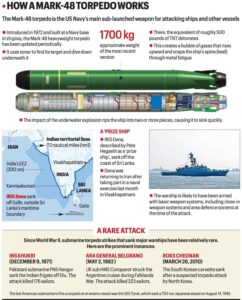
A recent naval incident involving the sinking of an Iranian warship near Sri Lanka has triggered debates about the international legal rules governing naval warfare and maritime conflict.
Key Legal Regimes Governing Maritime Conflict
1. United Nations Convention on the Law of the Sea (UNCLOS)
- UNCLOS (1982) is the main treaty governing maritime zones and navigation rights.
- It provides a legal framework for ocean governance, including territorial waters, Exclusive Economic Zones (EEZs), and high seas.
- Key principles include:
- Freedom of navigation on the high seas.
- Ships in international waters fall under the jurisdiction of their “flag state”.
- Warships enjoy immunity from the jurisdiction of other states on the high seas.
Thus, UNCLOS sets the basic maritime governance structure, even during geopolitical tensions.
2. International Humanitarian Law (IHL)
- Maritime conflict is also governed by International Humanitarian Law (laws of armed conflict).
- These laws regulate how force can be used during war at sea and aim to protect civilians and neutral states.
Important principles include:
- Distinction – Combatants must distinguish between military targets and civilian vessels.
- Proportionality – Military actions should avoid excessive civilian damage.
- Military necessity – Force can only be used if it is required for legitimate military objectives.
For example, merchant ships are considered civilian objects and cannot be attacked unless they are directly used for military purposes.
3. Law of Naval Warfare
Specific naval rules govern hostilities at sea.
Key features
- Enemy warships can be legitimate military targets during armed conflict.
- Blockades, exclusion zones, and interception of ships may be permitted under international law.
- However, states must ensure:
- Protection of neutral ships
- Search and rescue obligations after attacks
- Respect for neutral waters and territorial seas
These rules are summarized in international guidelines such as the San Remo Manual on International Law Applicable to Armed Conflicts at Sea (1995).
4. Rules for Submarine Warfare
Submarines must follow the same legal obligations as surface naval vessels when engaging ships.
- The London Naval Treaty rules state that submarines must comply with international law applicable to warships.
- They cannot attack merchant vessels without ensuring the safety of passengers and crew, except under exceptional wartime circumstances.
Maritime Zones
Understanding maritime conflict also requires knowledge of different ocean zones:
- Territorial Sea (up to 12 nautical miles) – Full sovereignty of the coastal state.
- Exclusive Economic Zone (EEZ – up to 200 nautical miles) – State has resource rights but not full sovereignty.
- High Seas – No state ownership; open to all nations.
Naval conflicts occurring in these zones involve different legal responsibilities and jurisdictional rules.
Challenges in Regulating Maritime Conflict
- Ambiguity in international law during active conflicts.
- Difficulty distinguishing civilian ships from military logistics vessels.
- Growing use of submarines, drones, and cyber operations at sea.
- Risk of escalation affecting global trade routes, such as the Strait of Hormuz, which carries a large share of global energy supplies.
Importance for India
- India lies close to major maritime trade routes in the Indian Ocean.
- Stability at sea is essential for energy security and trade flows.
- India also participates in multilateral naval exercises and maritime security initiatives to uphold freedom of navigation.
Way Forward
- Strengthen international cooperation for maritime security.
- Promote clear norms for naval warfare and protection of civilian shipping.
- Enhance monitoring of strategic sea lanes and conflict zones.
- Encourage adherence to UNCLOS and international humanitarian law.
Conclusion
The legal framework governing maritime conflict combines UNCLOS, international humanitarian law, and naval warfare rules to regulate military actions at sea. Effective adherence to these norms is essential to protect global trade routes, ensure maritime security, and prevent escalation of conflicts in international waters.
SYSTEMIC INVISIBILITY OF WOMEN’S MIDLIFE HEALTH
TOPIC: (GS2) SOCIAL JUSTICE: THE HINDU
Why in News?
The issue of neglect of women’s midlife health, particularly during perimenopause and menopause, has been highlighted in recent discussions on gender-sensitive healthcare.
What is Midlife Health?
- Refers to the health conditions experienced by women roughly between 40–60 years.
- It includes the transition stages of:
- Perimenopause – the period before menopause when hormonal changes begin.
- Menopause – the end of menstrual cycles due to declining reproductive hormones.
- Post-menopause – the phase after menopause when long-term health risks may increase.
Major Health Issues
Women in this stage may experience:
- Hot flashes, fatigue, sleep disturbances
- Mood disorders such as anxiety and depression
- Bone density loss leading to osteoporosis
- Higher risk of cardiovascular disease and diabetes
Decline in oestrogen levels during menopause can increase the risk of chronic diseases such as heart disease, hypertension and osteoporosis.
Why Midlife Women’s Health Remains Invisible
1. Policy Focus on Reproductive Health
- Government programmes mainly target maternal and child health.
- Health schemes like Janani Suraksha Yojana and POSHAN Abhiyaan prioritize pregnancy and nutrition but rarely address midlife conditions.
2. Social Stigma and Cultural Silence
- Menopause and ageing are often taboo subjects in many societies.
- Many women feel uncomfortable discussing symptoms even with family or doctors.
3. Limited Medical Research
- Medical studies often focus on younger women and reproductive health.
- As a result, clinical guidelines and awareness about menopause are limited.
4. Healthcare System Gaps
- In India, healthcare infrastructure is uneven and concentrated in urban areas, limiting access for many women.
- Midlife women often receive delayed diagnosis and inadequate treatment.
5. Gender Bias in Healthcare
- Women’s symptoms are sometimes dismissed as normal ageing instead of being treated medically.
- Gender disparities in healthcare access further worsen the problem.
Implications of Ignoring Midlife Health
1. Public Health Impact
- Women may spend many years living with untreated chronic diseases.
- Studies indicate that menopause-related health problems can significantly affect quality of life and well-being.
2. Economic Consequences
- Women in their 40s and 50s often hold key roles in the workforce and family.
- Poor health during this stage may reduce productivity and economic participation.
3. Gender Inequality
- Lack of support reinforces gender disparities in healthcare and workplace policies.
- Women may leave jobs or reduce participation due to untreated symptoms.
Global Trends and Emerging Responses
Several countries have started recognizing menopause and midlife health as an important public health and workplace issue.
Examples:
- United Kingdom – Many organizations have introduced menopause workplace policies, flexible work options, and awareness training to support women employees.
- Japan – The government and companies provide health consultations and workplace support programmes for women experiencing menopausal symptoms.
- Australia – National health guidelines promote menopause awareness campaigns and specialized healthcare services for midlife women.
- United States – Growing emphasis on medical research, digital health platforms, and workplace health benefits related to menopause care.
Way Forward
1. Integrate Midlife Health into Public Health Policy
- Include menopause care in national health programmes.
2. Improve Research and Data
- Encourage medical research and gender-sensitive health data on midlife women.
3. Strengthen Primary Healthcare
- Provide screening for osteoporosis, cardiovascular diseases, and mental health issues in women over 40.
4. Workplace Support
- Introduce flexible work policies and health support systems for women experiencing menopause.
5. Awareness and Education
- Promote public awareness campaigns to reduce stigma and encourage women to seek medical help.
Conclusion
Recognizing women’s midlife health as a major public health issue is essential for building a gender-responsive healthcare system. Integrating awareness, research, and targeted health services will ensure that women remain healthy and productive throughout their lives.
ANDHRA PRADESH DRAFT POPULATION MANAGEMENT POLICY
TOPIC: (GS2) POLITY: THE HINDU
Why in News?
The Government of Andhra Pradesh has released a draft Population Management Policy that proposes financial and welfare incentives for couples having a third child.
Demographic Context of Andhra Pradesh
1. Declining Fertility Rate
- The Total Fertility Rate (TFR) in Andhra Pradesh has fallen sharply over the last three decades.
- It declined from around 3.0 in the early 1990s to nearly 1.4–1.7 in recent years, which is below the replacement level of 2.1.
2. Ageing Population Risk
- A declining birth rate can lead to:
- Ageing population
- Shrinking workforce
- Increased burden on social security systems.
3. Economic Implications
- Lower population growth may affect economic productivity, labour supply, and long-term development.
- Many countries like Japan and South Korea already face similar demographic challenges.
Key Features of the Draft Population Policy
The policy aims to encourage families to have more children, particularly a third child, through various incentives.
1. Financial Incentives
- Couples having a third child may receive a financial incentive of about ₹25,000 from the government.
- The policy also proposes monthly nutrition assistance for the third child during early childhood.
2. Education Benefits
- The third child may receive free education up to 18 years in government or residential schools.
3. Support for Working Parents
- Government employees may receive:
- Extended maternity leave for childbirth.
- Paternity leave for fathers, encouraging shared parental responsibilities.
4. Childcare and Workplace Support
- The policy proposes:
- Establishment of childcare centres and working women’s hostels.
- Measures to improve women’s workforce participation.
5. Fertility and Health Support
- Subsidized IVF treatment and reproductive health services are proposed to help couples facing infertility.
Rationale Behind the Policy
1. Ensuring Future Workforce
- A larger young population helps maintain economic growth and productivity.
2. Addressing Demographic Imbalance
- Balanced population growth prevents rapid ageing of society.
3. Political and Representation Concerns
- Some southern states fear that declining population growth may affect parliamentary representation after delimitation.
Concerns and Criticisms
1. Fiscal Burden
- Providing incentives and welfare schemes could increase financial pressure on state budgets.
2. Gender and Social Concerns
- Policies encouraging larger families must ensure they do not reinforce gender bias or pressure women.
3. Regional Population Imbalance
- Population growth policies may create demographic differences across states.
4. Environmental and Resource Pressure
- Rapid population growth may strain natural resources, infrastructure, and urban services.
Way Forward
- Adopt a balanced population policy focusing on both demographic stability and human development.
- Improve healthcare, childcare facilities, and women’s employment opportunities.
- Encourage responsible parenthood and gender equality.
- Integrate population planning with education, nutrition, and economic policies.
Conclusion
The Andhra Pradesh draft Population Management Policy reflects a shift from population control to addressing declining fertility and demographic imbalance. If implemented carefully with gender sensitivity and economic planning, it can help ensure sustainable population growth and long-term development.
MUSA SIKKIMENSIS
TOPIC: (GS3) ENVIRONMENT: THE HINDU
Why in News?
Researchers from Nagaland University recently highlighted the genetic potential of Musa sikkimensis, a wild banana species, for climate-resilient agriculture.

Distribution and Taxonomy
- Scientific name: Musa sikkimensis
- Family: Musaceae
- Common names: Sikkim banana or Darjeeling banana
Native regions
- Sikkim and Darjeeling region
- Northeast India
- Parts of Bhutan and Eastern Himalayas
Physical Characteristics
- It is a tall evergreen perennial plant.
- Leaves are large and paddle-shaped, reaching up to 3 metres long.
- It produces deep maroon pendulous flowers.
- Fruits contain large seeds and are generally not cultivated commercially.
Climatic Requirements
The species thrives under:
- High humidity (around 50–60%)
- Warm temperatures between 20°C and 30°C
- It can tolerate cooler conditions but not temperatures below 10°C.
Agricultural Significance
- Genetic Resource for Crop Improvement: Provides genes for disease resistance and stress tolerance.
- Climate Adaptation: Can survive in diverse environmental conditions.
- Banana Breeding: Used by scientists to develop improved banana varieties.
- Biodiversity Conservation: Protecting wild species ensures future food security.
NEWLY DISCOVERED EARTHWORM SPECIES
TOPIC: (GS3) ENVIRONMENT: THE HINDU
Why in News?
Scientists recently discovered two new earthworm species named Moniligaster girishi and Drawida reynoldsi in India.

About Moniligaster girishi
- It belongs to the family Moniligastridae.
- Found in tropical wet evergreen forests of the Western Ghats.
- Named after P. Girish Kumar, a scientist from the Zoological Survey of India.
- It belongs to the gravelyi species group and is identified by unique reproductive gland structures.
About Drawida reynoldsi
- Found in montane grasslands of the Western Ghats.
- Named after John Warren Reynolds, a Canadian earthworm expert.
- It belongs to the robusta species group and has distinctive bilobed reproductive structures.
Key Facts About Earthworms
- Earthworms belong to Phylum Annelida and Class Oligochaeta.
- They are terrestrial worms that live in moist soils.
- The genus Lumbricus includes several commonly known earthworms.
Ecological Importance
- Soil Fertility: Earthworms convert organic matter into nutrient-rich humus.
- Soil Aeration: Their burrowing creates channels that improve airflow and water movement.
- Nutrient Cycling: Earthworm castings provide essential nutrients for plants.
- Soil Structure Improvement: Their activities enhance soil texture and productivity.
Significance of the Discovery
- Helps expand knowledge about biodiversity of the Western Ghats.
- Supports scientific research and conservation planning.
- Highlights the importance of protecting soil ecosystems.
CASSAVA BROWN STREAK DISEASE (CBSD)
TOPIC: (GS3) ENVIRONMENT: DTE
Why in News?
A recent scientific study has warned that over one-third of Africa’s cassava-growing regions are at risk of Cassava Brown Streak Disease (CBSD).

About Cassava
- Scientific name: Manihot esculenta
- It is a drought-tolerant tropical crop widely grown in Africa, Asia, and Latin America.
- Cassava roots are rich in carbohydrates and serve as a staple food for nearly 800 million people worldwide.
Cause of the Disease
CBSD is caused by two plant viruses:
- Cassava Brown Streak Virus (CBSV)
- Ugandan Cassava Brown Streak Virus (UCBSV)
These viruses infect cassava plants and damage both leaves and storage roots.
Distribution
The disease was first reported in East Africa in the mid-20th century. It has since spread across several countries including:
- Tanzania, Kenya, Uganda
- Rwanda, Burundi
- Democratic Republic of Congo
- Malawi, South Sudan and Zambia
Transmission
The disease spreads mainly through:
- Whitefly Vector – The insect Bemisia tabaci carries the virus between plants.
- Infected Plant Cuttings – Farmers unknowingly plant diseased cassava stems.
- Climate Factors – Warmer temperatures support the growth of whitefly populations.
Symptoms
CBSD symptoms appear on leaves, stems and roots.
Common symptoms include:
- Yellowing of leaves (chlorosis)
- Brown streaks on stems
- Rotting and necrosis in cassava roots
Root damage makes the tubers unfit for consumption or sale.
Management Measures
- Use of virus-free planting material
- Development of disease-resistant cassava varieties
- Monitoring and controlling whitefly populations
- Strengthening agricultural surveillance systems
WORLD WILDLIFE DAY (WWD)
TOPIC: (GS3) ENVIRONMENT: THE HINDU
Why in News?
World Wildlife Day is celebrated every year on March 3 to promote awareness about wildlife conservation.
History of World Wildlife Day
- The United Nations General Assembly declared March 3 as World Wildlife Day in 2013.
- The first celebration was held in 2014.
Significance of the Date
March 3 marks the signing of the Convention on International Trade in Endangered Species of Wild Fauna and Flora (CITES) in 1973.
About CITES
- CITES is an international agreement that regulates global trade in wildlife species.
- Its objective is to ensure that wildlife trade does not threaten species survival.
- More than 180 countries are parties to this treaty.
Theme of World Wildlife Day 2026
The theme “Medicinal and Aromatic Plants: Conserving Health, Heritage and Livelihoods” highlights:
- Importance of plant-based medicines
- Protection of traditional knowledge systems
- Role of plants in supporting rural livelihoods
Importance of Medicinal Plants
- Around 70–95% of people in developing countries rely on traditional medicine.
- Many modern medicines are derived from plant compounds.
- Medicinal plants support Ayurveda, Unani, and other traditional systems.
India’s Biodiversity Importance
India is one of the 17 megadiverse countries.
Key facts:
- Around 15,000 medicinal plant species occur in India.
- Nearly 8,000 are used in traditional medicine.
Major biodiversity regions include:
- Western Ghats
- Himalayas
- Northeast India