

Table of Contents
ToggleSOCIAL MEDIA BAN DEBATE
TOPIC: (GS2) POLITY: THE HINDU
The tragic death of three young sisters in Ghaziabad has raised serious concerns about screen addiction and its impact on adolescent mental health, leading to public debate on whether banning social media for children is the right solution.
Social Media Usage in India
- Population: India has about 1.46 billion people. Around 806 million people use the internet (55.3% of the population).
- Social Media Users: Approximately 491 million Indians have social media accounts (33.7% of the population).
- Mobile Connections: About 1.12 billion mobile connections, with mobile penetration at 76.6%.
- Trend: Social media use continues to grow steadily, becoming central to communication, entertainment, and commerce in India.
Why Blanket Bans May Fail
- Technical Loopholes: Adolescents can bypass bans using VPNs or migrate to unsafe, unregulated online spaces.
- Identity Risks: Linking accounts to government IDs could create surveillance concerns.
- Social Lifeline: For rural, marginalized, queer, or differentlyabled youth, social media provides community and support.
- Democratic Deficit: Policies are made without consulting young people themselves.
- Gender Inequality: Restrictions may disproportionately affect girls from lowincome households, worsening digital exclusion.
Concerns with Social Media Use
- Mental Health Risks: Studies show links between heavy social media use and anxiety, depression, selfharm, and body image issues among teenagers.
- Global Responses: Australia banned under16s from major platforms (2025). Spain announced plans for similar restrictions.
- Moral Panic: Such bans are symbolic crackdowns that ignore deeper social and technological complexities.
Alternative Approaches
- Move Beyond Censorship: Shift focus from bans to accountability of tech companies.
- Legislative Tools: Strong digital competition law. Legally enforceable “duty of care” obligations for platforms.
- Research & Evidence: Invest in surveys and longterm studies on social media’s impact across class, caste, gender, and region.
- Youth Participation: Involve adolescents in shaping policies and solutions.
- Consistent Regulation: Extend childsafety frameworks to emerging technologies like AI chatbots, which also pose risks.
Conclusion
A social media ban may offer the illusion of control but fails to address the root causes of harm. India needs a balanced approach that combines platform accountability, evidencebased policy, and inclusive regulation.
WHATSAPP DATA SHARING
TOPIC: (GS2) POLITY: THE HINDU
The Supreme Court of India recently questioned WhatsApp and its parent company Meta over its 2021 privacy policy update, which allowed sharing of user data with Facebook and Instagram.
WhatsApp in India
- Mass Adoption: WhatsApp is used by almost every smartphone owner in India, making it the default platform for messaging, group coordination, and even business communication.
- Network Effect: Its popularity creates a lock-in effect — people cannot easily leave the app because all their contacts are already on it. This dominance reduces user choice, even when policies are controversial.
- Regulatory Action: In 2021, the Competition Commission of India (CCI) fined WhatsApp ₹213.14 crore for forcing users to accept updated privacy terms that allowed data sharing with Facebook and Instagram. Users had to either agree or stop using the service.
- Privacy Concerns: The 2021 update raised alarms about data integration across Meta platforms, sparking debates on user rights and digital competition.
Key Issues
- Data Sharing: WhatsApp’s policy allowed sharing of user data across Meta platforms.
- Ultimatum to Users: Accept new terms or lose access, leaving users with little real choice.
- Competition Concerns: Such practices reduce user autonomy and raise questions of abuse of dominance.
- Alternatives Exist: Apps like Signal, Telegram, and Arattai are available but lack WhatsApp’s universal reach.
Positive Aspects of WhatsApp
- Affordable Communication: Free messaging, calls, and multimedia sharing since 2016.
- Encryption: Adoption of endtoend encryption raised expectations of secure communication in India.
Concerns Raised by Court
- Default Power: Optout options are ineffective at WhatsApp’s scale.
- User Choice: Lack of meaningful alternatives undermines informed consent.
- Need for Regulation: Court stressed the importance of a digital competition law to check monopolistic practices.
Way Forward
- Digital Competition Law: India must expedite legislation to regulate dominant platforms.
- Stronger Oversight: Independent regulators should scrutinize privacy and datasharing policies.
- User Rights: Ensure transparency, consent, and accountability in digital services.
Conclusion
The WhatsApp case highlights the tension between platform dominance and user rights. India’s growing digital ecosystem requires robust competition laws and regulatory frameworks to protect consumers and ensure a fair digital marketplace.
MYANMAR’S MILITARY-SCRIPTED ELECTIONS
TOPIC: (GS2) INTERNATIONAL RELATIONS: THE HINDU
Myanmar conducted elections in December 2025–January 2026, five years after the military coup, with the USDP (military-backed party) emerging victorious.
Elections in Myanmar (2025–26)
- Restricted Polling: Voting was conducted in only 265 out of 330 townships, mainly in urban areas, leaving large rural regions excluded.
- Declining Participation: Voter turnout stood at 55% (13.14 million voters), a sharp fall compared to 70% turnout in 2015 and 2020.
- Suppression of Opposition: Major parties such as the National League for Democracy (NLD) and ethnic-based groups were dissolved; senior leaders including Aung San Suu Kyi were jailed.
- Military-Backed Victory: The Union Solidarity and Development Party (USDP), dominated by serving and retired military officials, claimed majority control.
Conflict Situation
- Since 2021 coup:
- 7,738 killed, over 30,000 arrested; many still detained including Aung San Suu Kyi.
- 91 towns under control of resistance groups like People’s Defence Forces and ethnic armed organisations.
- Large-scale destruction of homes, especially in Sagaing and Magway.
- Elections unlikely to end conflict; resistance continues to grow.
India’s Position
- Diplomatic Stance: Supports democratic transition; insists elections must be free, fair, and inclusive.
- Engagement: Maintains calibrated ties with the junta while avoiding legitimisation.
- Humanitarian Role: Relief teams, medical aid, and Operation Brahma (2025 earthquake assistance).
- High-Level Contacts: PM Modi met Myanmar’s military leader during SCO 2025, stressing inclusive elections.
Implications for India
- Border Security: 1,643 km shared border with four northeastern states; instability fuels refugee inflows (90,100 displaced persons in Mizoram & Manipur).
- Connectivity Projects: Kaladan Multi-Modal Transit and India-Myanmar-Thailand Highway delayed due to conflict.
- Non-Traditional Threats: Rise in narcotics, human trafficking, and cyber scam centres; over 2,165 Indians rescued from cyber slavery networks since 2022.
- Refugee Policy Gap: Lack of national framework burdens state governments.
Way Forward
- Maintain balanced engagement with Myanmar’s regime while supporting democratic principles.
- Strengthen border management and refugee support. Reassess timelines and risks for connectivity projects.
- Enhance cooperation with ASEAN and regional partners to address instability.
Conclusion
Myanmar’s elections highlight the credibility crisis of military rule and the persistence of conflict. For India, the challenge lies in balancing democratic values with strategic interests, ensuring security along its borders while keeping vital connectivity and regional cooperation goals alive.
REGIONAL DISTRIBUTION OF LOK SABHA MAJORITIES
TOPIC: (GS2) POLITY: THE HINDU
The study of 15 Lok Sabha elections shows that the Hindi heartland has had a bigger role in forming parliamentary majorities, while the southern states have often had less representation.
Lok Sabha Majority and Regional Balance
- Majority Requirement: A party or coalition needs 272 seats in the Lok Sabha to form government.
- Regional Origin Matters: The source of MPs influences policy priorities and governance decisions.
- The abrogation of Article 370 in 2019 was decided by a majority where Jammu & Kashmir itself had limited representation.
- Impact on Federalism: Unequal regional distribution of seats affects the spirit of federalism and democratic inclusiveness.
Regional Balance
- North vs South: Analysis of 15 Lok Sabha elections shows the Hindi heartland (north) has been overrepresented in 11 cases, while the south was underrepresented in 9.
- Turnout & Representation: In 1977 and 1989, southern states contributed as little as 2% of seats to ruling benches, highlighting stark regional imbalance.
- Coalition Governments: Tend to have wider geographical spread, ensuring more balanced representation compared to single-party dominance.
- Delimitation Freeze: Seat redistribution was frozen in 1976, extended in 2001, and will be revisited after the 2026 Census. This could further increase the weight of the Hindi heartland due to higher population growth compared to southern states.
Regional Trends in Majorities
- North & West: Often overrepresented in ruling benches.
- South, East & Northeast: Frequently underrepresented compared to their share of seats.
- North had proportional or higher share in 11 of 15 Lok Sabhas. South underrepresented in 9 of 15 Lok Sabhas.
- Exceptions: 1991 → Congress majority concentrated in the south; first PM from southern India.
- 1977 & 1989 → North dominated due to caste/religious conflicts; south contributed only 2% of seats.
Conclusion
With delimitation approaching, India faces the challenge of reconciling regional balance, federal principles, and national representation.
INDIA–MALAYSIA STRATEGIC PARTNERSHIP
TOPIC: (GS2) INTERNATIONAL RELATIONS: THE HINDU
During Prime Minister Narendra Modi’s visit to Kuala Lumpur (Feb 2026), India and Malaysia signed 11 agreements to expand cooperation in defence, semiconductors, trade, and security.
Highlights of the Visit
- Agreements Signed: 11 pacts covering defence, energy, advanced manufacturing, semiconductors, and counter-terrorism.
- Semiconductor Pact: Framework agreement for deeper collaboration in chip manufacturing and technology.
- Trade in Local Currencies: Commitment to settle bilateral trade in rupee and ringgit, reducing dependence on the U.S. dollar.
- Consulate General: India announced the establishment of a new Consulate General in Malaysia.
Security & Defence Cooperation
- Counter-Terrorism: Both leaders condemned terrorism in all forms, including cross-border terrorism, and called for zero tolerance.
- Maritime Security: Plans to strengthen cooperation in intelligence sharing and maritime defence.
- Regional Stability: India reiterated support for peace and stability in the Indo-Pacific and ASEAN centrality.
Economic & Strategic Engagement
- Trade & Investment: New opportunities identified in AI, digital technologies, health, and food security.
- CEO Forum: Discussions opened avenues for expanding business partnerships.
- Malaysia’s Support: Expressed backing for India’s bid for permanent UNSC membership.
- ASEAN Linkages: Both sides agreed to expedite review of the ASEAN–India Trade Agreement (AITIGA).
Importance for India
- Maritime Neighbourhood: Shared history and geography strengthen ties.
- Act East Policy: Malaysia seen as a key partner in India’s outreach to ASEAN.
- Global Role: Cooperation enhances India’s standing in Indo-Pacific and supports its push for UNSC reforms.
Conclusion
The visit underlines India’s effort to balance economic growth with strategic security partnerships. By deepening ties in semiconductors, defence, and local currency trade, India and Malaysia are positioning themselves as key partners in shaping Indo-Pacific stability and global governance reforms.
BUDGET AND INDIA’S SPACE RESEARCH
TOPIC: (GS3) SCIENCE AND TECHNOLOGY: THE HINDU
The Union Budget 2026–27 allocated ₹13,416.20 crore to the Department of Space, with emphasis on deep-space exploration and advanced telescope facilities.
Key Allocations
- New Telescope Projects: 30-m National Large Optical-Infrared Telescope. National Large Solar Telescope near Pangong Lake, Ladakh.
- Upgrades: Improvement of control systems at the Himalayan Chandra Telescope (Hanle, Ladakh).
- Science Outreach: Completion of COSMOS-2 planetarium in Amaravati, Andhra Pradesh.
Challenges in Execution
- Underutilisation of Funds: Actual expenditure often falls short of budgetary estimates, slowing project implementation.
- Cancelled Missions: Several proposed space missions were not supported due to resource bottlenecks.
- Need for Streamlining: Experts stress better planning, checks, and balances for large-scale projects.
Global Context
- Limited Access: Only a few large observatories worldwide conduct frontier research; competition for telescope time is intense.
- Restricted Opportunities: National agencies often prioritise domestic researchers, limiting Indian scientists’ access abroad.
- Reliance on Overseas Facilities: India depends heavily on foreign observatories for high-resolution data and specialised equipment.
Strengthening Domestic Capabilities
- Existing Assets: Giant Metrewave Radio Telescope (GMRT) near Pune. AI-driven data processing centres.
- Future Plans: Proposal for a sub-millimetre telescope under the Astronomy & Astrophysics Mega Science Vision 2035.
- Public-Private Partnerships: Growing collaboration between ISRO and startups, supported by the Indian National Space Promotion and Authorisation Centre (IN-SPACe).
Strategic Importance
- Reducing Dependence: Building advanced domestic observatories will cut reliance on foreign facilities.
- Boosting Research: Encourages students to pursue advanced astronomy in India, reducing brain drain.
- National Interest: Proper regulation and governance needed to align private sector innovation with national priorities.
Conclusion
The Budget signals a strong push for India’s space and astronomy ecosystem, especially through new telescope projects and partnerships. However, execution efficiency, resource allocation, and international collaboration will determine whether India can emerge as a global leader in frontier space research.
SEYCHELLES
TOPIC: (GS2) INTERNATIONAL RELATIONS: THE HINDU
India and Seychelles recently held a Business Roundtable in Mumbai to explore cooperation in maritime trade, blue economy, and sustainable development.
About Seychelles
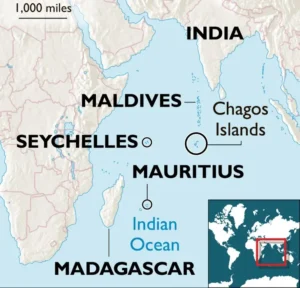
- Location: Archipelagic island nation in the western Indian Ocean, northeast of Madagascar and east of mainland Africa.
- Neighbouring Islands: Comoros and Mauritius (south), Maldives (east).
- Composition: Archipelago of 115 islands, with only 8 permanently inhabited.
- Capital: Victoria.
Geographical Features
- Climate: Tropical oceanic, with minimal seasonal variation.
- Island Groups:
- Mahé Group: Granitic, volcanic islands with narrow coastal strips and hilly interiors.
- Coralline Islands: Flat coral atolls and elevated reefs.
- Plateau: Sits atop the Mascarene Plateau.
- Highest Point: Morne Seychellois.
Strategic Importance
- Maritime Neighbourhood: Located along key Indian Ocean trade routes, making it vital for India’s maritime security and blue economy initiatives.
- Blue Economy: Fisheries, ocean-based tourism, and sustainable marine resource use are central to Seychelles’ economy.
- India–Seychelles Relations:
- Cooperation in maritime security, defence, and sustainable development.
- India supports Seychelles in capacity building and infrastructure projects.
Conclusion
Seychelles holds strategic value for India due to its location in the Indian Ocean, maritime economy, and shared interest in regional stability. Strengthening ties in trade, security, and sustainable development will enhance India’s Indo-Pacific outreach and blue economy partnerships.
SHIPKI LA PASS
TOPIC: (GS1) GEOGRAPHY: THE HINDU
The Government of India informed Parliament that it is in talks with China to open an additional route for the Kailash Mansarovar Yatra through the Shipki La Pass in Himachal Pradesh.
Location and Features
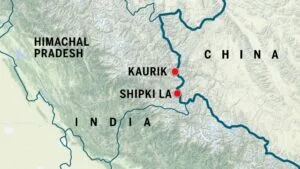
- Geography: High-altitude mountain pass in Kinnaur district, Himachal Pradesh, on the India–China border.
- Altitude: Situated at 3,930 meters, making it one of the highest motorable passes.
- Nearby Settlement: Close to the village of Khab.
- Historic Route: An offshoot of the ancient Silk Road.
- Old Name: Known earlier as Pema La or “Shared Gate/Shared Pass.”
Strategic Importance
- Line of Actual Control (LAC): Declared a frontier post after the 1962 Sino-Indian war; later named Shipki La by the Indo-Tibetan Border Police.
- River Entry Point: The Sutlej River (Langqen Zangbo in Tibet) enters India through this pass.
- Trade Gateway: Functions as the third frontier post for trade with China, alongside:
- Lipulekh Pass (Uttarakhand).
- Nathula Pass (Sikkim).
Significance for India
- Pilgrimage Route: Potential new corridor for the Kailash Mansarovar Yatra, reducing travel difficulties.
- Economic Role: Facilitates cross-border trade and commerce.
- Strategic Value: Enhances India’s connectivity and presence along the sensitive Indo-China frontier.
- Cultural Link: Historically part of trans-Himalayan trade and cultural exchanges.
Conclusion
Shipki La Pass is not only a strategic border crossing but also a potential religious and trade corridor. Opening this route for the Kailash Mansarovar Yatra would strengthen India–China connectivity, while also boosting regional trade and cultural ties.
EURASIAN OTTER
TOPIC: (GS3) ENVIRONMENT: THE HINDU
Why in News?
The Eurasian otter, once thought to have vanished from Jammu & Kashmir, has been recently confirmed in the Sindh River (Ganderbal district), indicating possible recovery of the species in the region.

Taxonomy & Identity
- Scientific Name: Lutra lutra
- Family: Mustelidae
- Common Names: Eurasian otter, European otter, common otter
- Nature: Solitary and elusive mammal, mainly active at dawn and dusk (crepuscular).
Distribution
- Global Range: Widespread across Europe, parts of North and West Africa, through the Middle East, into Central and East Asia, reaching Russia, China, and parts of South Asia.
- In India: Reported from Himalayan rivers and lakes in Jammu & Kashmir, Uttarakhand, Himachal Pradesh; northeastern states; and southern Western Ghats – reflecting varied ecological adaptability.
- Recent sightings from Sindh River (Ganderbal) suggest local populations may persist undetected in remote streams.
Habitat & Ecology
- Habitat Diversity: Inhabits rivers, streams, lakes, marshes, coastal waters, and wetlands—from lowlands to mountainous terrains.
- Aquatic Adaptations:
- Webbed feet for efficient swimming.
- Nostrils and ears that close underwater.
- Dense fur trapping air for insulation in cold water.
- Diet: Mainly fish, but also amphibians, crustaceans, and small mammals.
- Behaviour: Primarily solitary; establishes territories marked by scent glands.
Threats
- Water Pollution: Industrial effluents, pesticides, and sewage degrade habitat quality.
- Habitat Loss: River modification, damming, and human encroachment reduce suitable space.
- Hunting and Fur Trade: Historically targeted for pelts; illegal activities persist in parts.
- Decline in Prey: Overfishing limits food resources.
Conservation Status
- IUCN Red List: Near Threatened — populations declining in many areas due to human pressures.
- CITES: Listed in Appendix I — highest protection against international trade.
- India’s Wildlife Protection Act, 1972: Protected under Schedule II — safeguards from hunting and trade.