

Daily Current affairs 09 March 2026

Daily Current Affairs 09-March-2026

Share this Post

ONE NATION, ONE ELECTION AND SIMULTANEOUS POLLS

TOPIC: (GS2) POLITY: THE HINDU

The One Hundred and Twenty-ninth Constitutional Amendment Bill, 2024 proposes synchronising Lok Sabha and State Assembly elections.

Why ONOE is Considered Important

  • Cost Reduction: Current election costs are about ₹4,500 crore (2015–16), nearly 0.25% of Union Budget and 0.03% of GDP.
  • Administrative Efficiency: Limits prolonged deployment of security forces and reduces disruption caused by the Model Code of Conduct (MCC).
  • Avoids governments being in constant campaign mode, allowing focus on governance.
  • Political Stability: Synchronisation could provide longer policy continuity and reduce political uncertainty.

Economic Impact of Frequent Elections

  • Multiple State Elections: India holds elections almost every year in different states, leading to repeated costs for EVMs, VVPATs, and security forces.
  • GDP Share: Lok Sabha election costs historically range between 0.02%–0.05% of GDP (1957–2014) — small but recurring.
  • Election Commission View: Simultaneous polls would require massive resources upfront (more EVMs, VVPATs, security personnel), but reduce repeated cycles of expenditure.

Concerns

  • Curtailing State Assembly terms undermines federalism and legislative accountability.
  • Mid-term “unexpired-term elections” may weaken voter trust and governance.
  • Risk of prolonged President’s Rule if elections are deferred for synchronisation.

Way Forward

  • Strengthen Electoral Infrastructure: Increase EVM/VVPAT stock, improve logistics, and enhance digital monitoring.
  • Phased Synchronisation: Begin with aligning local body elections with State polls before attempting national-level synchronisation.
  • Consensus Building: Consult States, Election Commission, and political parties to ensure reforms respect federal principles and basic structure doctrine.

Conclusion

ONOE promises cost savings and efficiency, but risks weakening federalism and accountability. India must balance administrative convenience with democratic safeguards, ensuring reforms do not compromise the basic structure of the Constitution.

CANADA–INDIA ECONOMIC ALIGNMENT

TOPIC: (GS3) ECONOMY: THE HINDU

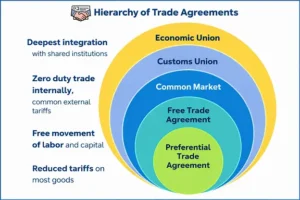
Canadian Prime Minister visit relaunched Comprehensive Economic Partnership Agreement (CEPA) negotiations, aiming to double bilateral trade to $70 billion by 2030.

What is CEPA?

  • A free trade agreement (FTA) that goes beyond goods trade to cover services, investment, intellectual property, and regulatory cooperation.
  • Provides a rules-based framework for bilateral trade and investment between two countries.
Canada-India Economic Alignment

Key Developments

  • CEPA Relaunch: Terms of Reference signed; agreement expected by end of 2026.
  • Trade Benefits:
    • Reduced barriers for Indian exporters.
    • Clearer rules for Indian investors in Canada.
    • Expanded access in technology, pharmaceuticals, and agriculture.
  • Strategic Signal: Invitation extended to PM Modi to visit Canada, showing intent for sustained partnership.

Major Areas of Cooperation

  • Energy & Minerals: Canada supplies uranium, oil, gas, and critical minerals. Example: $2.6 billion uranium supply deal with Cameco.
  • Technology & Innovation: Indian IT firms (e.g., HCL Technologies) investing in Canada’s AI and innovation clusters.
  • Financial Services & Agriculture: Successful joint ventures like Sun Life–Aditya Birla. Canada’s agri-food exports can support India’s food security needs.
  • Infrastructure & Investment: Canadian pension funds have invested over $100 billion in India’s infrastructure and real estate.

Strategic Importance

  • India already has trade deals with Australia, UK, EU, US, and New Zealand.
  • Canada seeks diversification amid global geopolitical uncertainty.
  • Alignment with India strengthens both economies and enhances resilience in global supply chains.

Way Forward

  • Finalize CEPA quickly to provide a rules-based framework for trade and investment.
  • Encourage joint ventures in clean energy, AI, and infrastructure.
  • Promote institutional investment in India’s growth sectors while supporting Indian firms in Canada’s advanced manufacturing and digital infrastructure.

Conclusion

With CEPA negotiations, energy partnerships, and large-scale investments, both nations have an opportunity to build a strategic, long-term economic alignment that benefits businesses and strengthens global resilience

DUTY CUTS ON CANCER DRUGS AND EASING THE FINANCIAL BURDEN

TOPIC: (GS2) SOCIAL JUSTICE AND HEALTH: THE HINDU

The Union Budget proposed full exemption of basic customs duty on 17 cancer-related medicines, aiming to reduce treatment costs.

Background

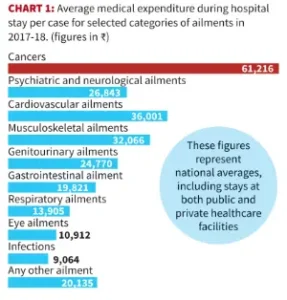
  • Cancer treatment costs are nearly 3 times higher than average hospitalisation expenses.
  • Medicines form the largest share of cancer care costs, especially in public hospitals where doctor fees are minimal.
  • India saw a 26.4% rise in cancer incidence (1990–2023) — among the highest globally.
Duty Cuts on Cancer Drugs and Easing the Financial Burden

Cancer Treatment Costs

  • Cancer Care Is Much Costlier Than General Treatment: Cancer treatment cost: ₹61,000 — nearly 3 times higher
  • Public Hospitals Show Higher Relative Burden
    • Private cancer care: ₹93,305 vs general ₹31,845 → 3x multiplier
    • Public cancer care: ₹22,520 vs general ₹4,452 → 5x multiplier
    • In rural public hospitals, the burden rises to 5.5x, showing deeper impact on poor patients
  • Medicines Drive the Expense
    • Public hospitals: 40–50% of total cost is medicine
    • Private hospitals: 20–25% of total cost is medicine
    • Duty cuts on 17 cancer drugs will directly reduce out-of-pocket costs, especially for rural and low-income patients

Why Duty Cuts Matter

  • Reducing import duties lowers medicine prices, especially for life-saving drugs.
  • Helps poor and rural patients who rely on public hospitals and face high out-of-pocket expenses.
  • Addresses health equity by making cancer care more accessible.

From the Election Commission’s Viewpoint

  • Lower treatment costs reduce economic distress, especially during elections when welfare issues dominate.
  • Enhances public trust in governance and budgetary responsiveness.
  • Supports inclusive healthcare, a key electoral promise across parties.

Way Forward

  • Expand Drug Coverage: Include more essential cancer drugs under duty exemption.
  • Strengthen Public Hospitals: Ensure availability of affordable medicines and diagnostics.
  • Monitor Price Pass-Through: Ensure that duty cuts actually reduce retail prices for patients.

Conclusion

With cancer cases rising and treatment expenses surging, this move can significantly ease the burden on vulnerable patients and promote equitable access to life-saving care.

RECOGNISING VOLUNTEER CARE WORK IN INDIA

TOPIC: (GS2) POLITY: THE HINDU

The Union Budget 2026–27 announced training for 1.5 lakh multi-skilled caregivers under the National Skills Qualification Framework (NSQF).

Background

  • These women form the backbone of India’s welfare system, delivering health, nutrition, and childcare services.
  • Despite their essential role, they receive meagre honorariums, lack formal contracts, paid leave, or maternity benefits.
  • Support is fragmented — small hikes in honorariums by states or limited coverage under schemes like Ayushman Bharat and PM Shram Yogi Maandhan.

Structural Issues

  • Shadow Labour Force
    • Workers are indispensable but treated as “honorary,” limiting protections of formal employment.
    • Creates insecurity and invisibility in India’s welfare architecture.
  • Gendered Nature of Care Work
    • Time Use Survey 2024: Women (15–59 years) spend 140 minutes daily on caregiving vs men’s 74 minutes.
    • Care seen as “natural” to women → undervalued and underpaid.
    • This perpetuates a cycle of informalisation and low wages.
  • Legal Recognition
    • Supreme Court (2025, Dharam Singh vs State of U.P.): Work that is continuous and central cannot be treated as temporary indefinitely.
    • Offers basis to demand conversion of “volunteer” roles into permanent posts.

Budget Paradox

  • While new caregivers will be trained, existing ASHA and Anganwadi workers already perform multi-skilled tasks requiring emotional labour, field coordination, and community knowledge.
  • Yet, they remain excluded from the “care ecosystem” being built.

Way Forward

  • Move Beyond ‘Volunteer’ Label: Recognise existing care workers as formal employees with contracts and fair wages.
  • Integrate with NSQF Training: Extend skill programmes to ASHAs and Anganwadi workers to upgrade their roles.
  • ILO’s 5R Framework: Fulfil commitments of Reward and Represent — ensure proper compensation and give care workers a voice in policy decisions.

Conclusion

India’s welfare system rests on the shoulders of women labelled as “volunteers. Without fair pay and protection, India cannot achieve its ambition of being a global leader in health and social welfare.

CHEETAHS MOVING FROM KUNO TO RAJASTHAN

TOPIC: (GS3) ENVIRONMENT: THE HINDU

The National Tiger Conservation Authority (NTCA) stated that cheetahs moving from Kuno National Park (Madhya Pradesh) to Baran district (Rajasthan) are showing natural territorial behaviour.

Background

  • Since February 2026, two cheetahs have travelled 60–70 km from Kuno into Rajasthan.
  • They are being tracked via satellite and radio collars, monitored by a joint interState team.
  • NTCA noted that long-distance dispersal is natural and anticipated in the Project Cheetah Action Plan.

Project Cheetah

  • Reintroduction Effort: Cheetahs went extinct in India in 1952. Project launched in September 2022 to reintroduce them.
  • Translocations: 29 adult cheetahs brought from Namibia, South Africa, and Botswana since 2022. 9 cheetahs from Botswana (Feb 2026).
  • Survival & Breeding: 9 adults have died due to various causes. 28 cubs born in India, of which 12 have died. Some adults are housed in Gandhi Sagar Wildlife Sanctuary (Madhya Pradesh).
  • Significance of Current Movement: Demonstrates territorial dispersal behaviour, essential for population spread.
  • Reinforces rationale for the proposed 17,000 sq. km Kuno–Gandhi Sagar interState wildlife corridor, spanning districts in Rajasthan and Madhya Pradesh.

Challenges

  • High Mortality Concerns: Significant deaths among translocated adult cheetahs and cubs highlight survival challenges in adapting to Indian habitats.
  • Need for Intensive Monitoring: Continuous satellite tracking, radiocollaring, and veterinary support are essential to ensure health, safety, and longterm survival.
  • InterState Coordination Issues: Effective management of wildlife corridors requires strong cooperation between Madhya Pradesh and Rajasthan, along with clear protocols for dispersal and protection.

Way Forward

  • Build Safe Corridors: Develop the Kuno–Gandhi Sagar landscape so cheetahs can move freely and safely across states without human conflict.
  • Increase Survival Chances: Provide better veterinary care, ensure enough prey animals, and improve habitat quality to help cheetahs live longer.
  • Involve Local Communities: Work with nearby villages and communities to spread awareness, reduce conflicts, and make people active partners in conservation.

Extinction of Cheetahs in India

Timeline

  • 1947: The last three Asiatic cheetahs in India were killed in Koriya (now Chhattisgarh).
  • 1952: The Government of India officially declared the cheetah extinct in the country.

Reasons for Extinction

  • Overhunting and Sport Hunting
    • Cheetahs were widely used by royalty for coursing (hunting with trained cheetahs).
    • Excessive hunting reduced their population drastically.
  • Habitat Loss
    • Expansion of agriculture and deforestation destroyed grasslands, the cheetah’s natural habitat.
    • Decline in prey species further weakened survival chances.
  • Human Pressure
    • Capture for domestication and hunting expeditions.
    • Lack of conservation measures during colonial and early post-independence periods.

Conclusion

The dispersal of cheetahs from Kuno to Rajasthan highlights natural ecological behaviour and validates the vision of Project Cheetah.

STEM EDUCATION TO RESEARCH GAP IN INDIA

TOPIC: (GS3) SCIENCE AND TECHNOLOGY: THE HINDU

Despite India producing the highest number of female STEM graduates globally, women form only 18% of the research and development workforce.

Women in STEM (Science, Technology, Engineering, and Mathematics).

  • Global Picture: Across the world, women form only 35% of STEM graduates and about 30% of the STEM workforce.
  • School-Level Trends Abroad: This early gap reduces the number of women entering higher education and research in STEM fields.
  • India’s Unique Case: Unlike global trends, India has high female participation in science education — girls often make up nearly half of science passouts at Class 12.
  • However, despite strong enrolment, women’s transition into long-term research jobs is limited, with only 18% representation in R&D.

India’s STEM Education Trends

  • High Participation in Science Education: After Class 10, nearly 60% of girls opt for the science stream. Girls make up 46% of Class 12 science passouts, showing strong interest in STEM subjects.
  • Strong Representation in Higher Studies: At the bachelor’s level, women constitute 43% of STEM graduates.
  • At the master’s and doctoral levels, women’s share rises to almost 50%, among the highest globally.
  • Low Transition into Research Careers: Despite high enrolment and graduation rates, women’s presence in research jobs and R&D workforce remains disproportionately low, at only 18%, reflecting India’s unique “leaky pipeline.”

Where Are the Leaks?

  • Entry into Research Jobs: Women Ph.D. holders struggle to secure long-term positions. Most end up in short-term, contractual roles without benefits or career growth.
  • Institutional Representation: Women scientists: less than 30% in national research agencies. 8% faculty are women; IITs: 11–13% scientists are women.
  • Social & Cultural Barriers: Ph.D. completion coincides with family pressures to marry, relocate, and manage childcare. Academic jobs rarely allow remote or flexible work.

Position Gap

  • Women scientists often occupy precarious roles in grant-funded projects or fellowships.
  • Lack of promotions, increments, and benefits leads to limited career advancement.
  • Gender equity initiatives remain piecemeal and poorly enforced.

Way Forward

  • Policy Reform: Relax age cut-offs, expand recruitment drives, and ensure accountability in gender equity schemes.
  • Support Systems: Provide childcare, flexible work options, and relocation support for women researchers.
  • Recognition & Incentives: Create permanent positions, fair wages, and career pathways for women scientists.

Conclusion

India’s leaky pipeline is unique women enter STEM education in large numbers but drop out at the research stage due to social expectations, structural barriers, and systemic gaps. Addressing this position gap is essential for achieving gender parity in science and innovation.

U.S. SUPREME COURT RULING ON TARIFFS

TOPIC: (GS3) ECONOMY: THE HINDU

On February 20, 2026, the U.S. Supreme Court struck down tariffs imposed by President Donald Trump in 2025.

Background

  • Trump relied on IEEPA (1977), which allows the President to regulate economic transactions during a national emergency.
  • Traditionally, IEEPA has been used to freeze assets, block transfers, and impose sanctions — never before for tariffs.
  • In 2025, Trump declared emergencies linked to drug trafficking and trade imbalances, imposing:
    • 25% tariffs on Canada and Mexico,
    • 10% tariffs on China,
    • Reciprocal tariffs of at least 10% on most imports.

Supreme Court’s Reasoning

Congressional Power over Tariffs

  • The U.S. Constitution grants Congress the authority to levy taxes and regulate foreign trade.
  • Tariffs are considered part of this legislative power, not an executive privilege.

Limits of IEEPA

  • The Supreme Court (6–3 ruling) clarified that the International Emergency Economic Powers Act (IEEPA) does not allow Presidents to impose tariffs.
  • Emergency powers under IEEPA are meant for sanctions and asset controls, not taxation.

Requirement of Clear Authorisation

  • Any President must show explicit approval from Congress before imposing tariffs.

Implications for Trump

  • He cannot use IEEPA for tariffs but can rely on other laws:
    • Section 122 (Trade Act, 1974): Temporary tariffs (up to 15%) for 150 days.
    • Section 301 (Trade Act, 1974): Tariffs against unfair trade practices.
    • Section 232 (Trade Expansion Act, 1962): Tariffs on national security grounds.
  • Trump quickly announced a new temporary import duty effective for 150 days.

Impact on Businesses

  • Around $180 billion was collected through nowinvalid tariffs.
  • Over 1,000 companies (including FedEx) have sued for refunds in the U.S. Court of International Trade.
  • No automatic refund mechanism exists yet.

Future Presidential Powers

  • The ruling sets a clearer boundary: emergency powers cannot be stretched to impose tariffs.
  • Future Presidents can regulate trade but must rely on explicit congressional authorisation.

Conclusion

The judgment ensures that sweeping tariff measures must rest on clear legislative backing, reshaping the balance of power in U.S. trade policy.

SOLOMON ISLANDS

TOPIC: (GS1) GEOGRAPHY: THE HINDU

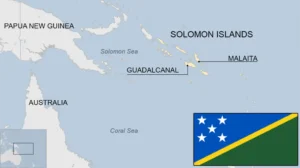
A 6.7 magnitude earthquake recently struck Kirakira in the Solomon Islands.
Solomon Islands

Location & Background

  • Situated in the southwestern Pacific Ocean.
  • Comprises two parallel chains of volcanic islands along with several coral atolls.
  • Lies southeast of Papua New Guinea and northwest of Vanuatu.
  • Formerly a British protectorate, it became an independent republic in 1978.
  • Capital: Honiara, located on Guadalcanal, the largest island.
  • Government: Parliamentary democracy within the Commonwealth, with a unicameral legislature and ministerial system.

Geographical Features

  • Nearly 1,000 islands in total — 6 large islands and over 900 smaller ones.
  • Around 147 islands are inhabited.
  • Terrain: Mostly mountainous and forested, with some broad plains.

Demographics

  • Ethnic composition:
    • Melanesian – 93%
    • Polynesian – 4%
    • Micronesian – 1.5%
    • Others – 1.5%

Conclusion: The Solomon Islands vulnerability to natural disasters like earthquakes makes it geopolitically and environmentally significant.


Write a Review

Your email address will not be published. Required fields are marked *