
Table of Contents
ToggleVIKSIT BHARAT SHIKSHA ADHISTHAN (VBSA) BILL
TOPIC: (GS2) POLITY: THE HINDU
The VBSA Bill, meant to implement the National Education Policy (NEP 2020), is under review by a Joint Parliamentary Committee (JPC), with debates over its impact on higher education governance and federal principles.
What the Bill is About
- Purpose: To implement NEP 2020 through a legal framework, covering regulation, accreditation, and standards in higher education institutions (HEIs).
- Scope: Applies to Central, State-funded, and private universities, including IITs, IIMs, and Inter-University Centres.
- Structure: Establishes multiple councils under Union control for regulation, accreditation, and standards determination.
- Funding: Transfers authority of allocating funds to HEIs from the University Grants Commission (UGC) to the Ministry of Education.
- Governance: Empowers bureaucrats and central councils with wide powers of inspection, recognition, and closure of institutions.
Key Concerns with VBSA Bill
- Constitutional Overreach: Entry 66 of Union List allows Parliament only limited powers for coordination and standards, but the Bill gives wide discretionary authority to Union-controlled councils.
- Centralisation of Power: The Education Ministry gains control over funding, inspections, and regulation, reducing autonomy of universities, IITs, and IIMs.
- Dilution of UGC Role: Consultative provisions under the UGC Act are weakened; inspections can be imposed without university consent.
- Ideological Bias: Promotes “Bhartiya Knowledge” in a prescriptive manner, risking exclusion of multicultural traditions.
- Equity Concerns: No clear provisions for affirmative action, social justice, or regional equity.
- Hyper-Globalisation Focus: Emphasis on global rankings and outputs (patents/publications) rather than innovation, self-reliance, or social outcomes.
Suggested Alternatives
- Shared Responsibility: Balance power between Union councils and State Higher Education Councils (SHECs) with equal weightage.
- Inclusive Governance: Involve students, teachers, and non-teaching staff through senates and academic councils.
- Outcome-Oriented Evaluation: Focus on social justice, innovation, and regional development rather than only global rankings.
- Higher Education Grants Council (HEGC): A separate body to disburse funds fairly, supporting both Central and State universities.
Joint Parliamentary Committee (JPC)
A Joint Parliamentary Committee (JPC) is a special committee of Parliament formed by members from both the Lok Sabha and Rajya Sabha.
- It is set up for a specific purpose, usually to investigate a particular issue, policy, or bill in detail.
- The committee is temporary in nature and dissolves once it submits its report.
Composition
- Members are drawn from both Houses of Parliament.
- The Lok Sabha Speaker appoints members from the Lok Sabha, while the Rajya Sabha Chairman nominates members from the Rajya Sabha.
- The Chairperson of the JPC is usually from the ruling party.
Functions
- Investigative Role: Examines matters of national importance, such as scams, controversial bills, or policies.
- Detailed Scrutiny: Studies documents, hears witnesses, and gathers evidence beyond what is possible in regular parliamentary debates.
- Report Submission: Prepares a detailed report with findings and recommendations, which is presented to Parliament.
- Advisory Nature: Its recommendations are not legally binding but carry significant weight in shaping policy decisions.
Examples of JPCs in India
- JPC on Bofors scandal (1987).
- JPC on Harshad Mehta stock market scam (1992).
- JPC on 2G spectrum allocation (2011).
Conclusion
An amended framework should ensure federal balance, participatory governance, social justice, and outcome-based evaluation, making higher education a shared responsibility for national progress.
SUPREME COURT ON INDIANS FORCED TO FIGHT IN UKRAINE WAR
TOPIC: (GS2) POLITY: THE HINDU
The Supreme Court of India has agreed to hear a plea regarding 26 Indian nationals allegedly trafficked and forced to fight in the Russia–Ukraine war, raising concerns of illegal recruitment and human trafficking.
Background
- Petitioners claim they were lured abroad with promises of jobs, but later had their passports seized and were compelled to join the Russian Army.
- The case highlights the role of illegal overseas recruitment rackets exploiting vulnerable youth.
- The plea has named the Union Government, Indian Embassy in Russia, and several state governments (Rajasthan, Haryana, Punjab, Himachal Pradesh) as respondents.
Supreme Court’s Intervention
- A three-judge Bench led by Chief Justice Surya Kant directed the Solicitor-General to seek details from the Centre.
- The Court noted a possible human trafficking angle and stressed the seriousness of the issue.
- Petitioners requested urgent diplomatic steps to ensure safety, consular access, and repatriation.
Reliefs Sought
- Immediate action by the Ministry of External Affairs through the Indian Embassy in Russia.
- Consular protection and verification of the legal status of affected individuals.
- Safe return to India under international law and bilateral agreements.
Conclusion
The case underscores the risks of illegal recruitment and trafficking of Indian citizens abroad. The Supreme Court’s intervention aims to ensure protection, welfare, and repatriation of those trapped in the conflict zone.
REBUILDING TIES AND INDIA’S DIPLOMATIC PRAGMATISM
TOPIC: (GS2) INTERNATIONAL RELATIONS: THE HINDU
India has recently re-engaged diplomatically with Turkiye and Azerbaijan, reviving Foreign Office Consultations after a period of strained relations following Operation Sindoor (2025).
Background
- During Operation Sindoor (May 2025), India launched strikes on terror sites in Pakistan after the Pahalgam attacks.
- Countries like Turkiye, Azerbaijan, and Malaysia criticised India’s actions, leading to diplomatic tensions.
- India excluded their envoys from briefings and discouraged trade and tourism with them.
- Azerbaijan was believed to have provided technological support to Pakistan, while Turkiye openly backed Islamabad.
- India even promoted alternate evacuation routes through Armenia and Turkmenistan, bypassing Turkiye and Azerbaijan.
Recent Developments
- Secretary (West) in MEA, Sibi George, visited Baku for consultations with Azerbaijani officials.
- India also invited the Turkish Deputy Foreign Minister to New Delhi.
- These moves signal a policy shift towards rebuilding ties, recognising mutual interests in better bilateral relations.
Strategic Context
- India had earlier explored closer ties with Armenia and Greece as a counterbalance to the Turkiye–Azerbaijan–Pakistan grouping.
- The Indian Ocean and West Asian conflicts highlight how modern warfare spans multiple domains, making pragmatic diplomacy essential.
- Escalation through boycotts and online outrage has hurt India’s relations with both adversaries and friendly nations.
Way Forward
- Pragmatic Diplomacy: India should prioritize practical decision-making over emotional reactions in external relations.
- Avoid Bloc Politics: New Delhi must resist being pulled into rigid alliances or “camps” shaped by Pakistan’s partnerships.
- Balanced Engagement: Strategic interests should be harmonized with economic and cultural cooperation, even when dealing with adversarial nations.
- Long-Term Focus: Foreign policy must be guided by enduring national interests rather than short-term anger, rhetoric, or public sentiment.
Conclusion
In a world of fast-escalating conflicts, New Delhi must manage rivalries with greater pragmatism, less emotion, and ensure diplomacy serves national security and development goals.
TRENDS IN INDIA’S FEMALE CREDIT MARKET
TOPIC: (GS3) ECONOMY: THE HINDU
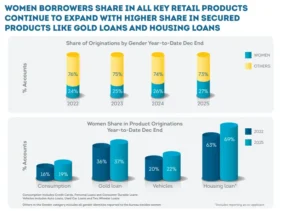
A joint report by NITI Aayog, TransUnion CIBIL, and MicroSave Consulting (MSC) highlights that women are moving beyond basic financial access to becoming key drivers of entrepreneurship and credit growth in India.
Key Highlights of the Report
- Portfolio Growth: Women now hold a credit portfolio worth ₹76 lakh crore, forming 26% of total system credit—a nearly fivefold rise since 2017.
- Business Lending Surge: Loans for business purposes have grown 7.5 times since 2017, now making up 25% of women’s total credit value.
- Credit Penetration: Share of credit-active women doubled from 19% (2017) to 36% (2025), representing 16 crore borrowers.
- Digital Impact: UPI and Aadhaar e-KYC have reduced friction; same-day loan approvals rose from 34% (2022) to 45% (2025).
- Sophisticated Products: Women entrepreneurs are shifting from microfinance to cash credit and overdraft facilities, showing enterprise maturity.
- Regional Trends: South and West India lead in volumes, while Bihar and Uttar Pradesh show high growth (CAGR of 59% and 42%).
- Rural Women Nano-Entrepreneurs (RWNEs): 60–70% use digital payments, but independent usage is limited by time poverty and shared devices.
- Superior Credit Behavior: Women default 30% less than the market average, proving reliability.
Challenges Identified
- Time Poverty: Household responsibilities restrict women’s ability to engage with digital finance independently.
- Limited Autonomy: Many RWNEs lack decision-making power over credit and investments.
- Slow Secured Loan Approvals: Housing loans face delays due to property valuation and collateral checks.
- Microfinance Stress: Rising NPAs and over-indebtedness have led to cautious lending.
- Decline in New-to-Credit Borrowers: Fewer first-time women borrowers since 2023.
- Low Adoption of Complex Products: Only ~4.3% of women-owned businesses use advanced credit facilities.
Recommendations
- Flow-Based Lending: Use digital footprints (UPI, GSTN) for cash-flow-based underwriting.
- Credit Education: Expand programmes like Project Seher to improve awareness and credit scores.
- Gender-Specific Products: Design flexible repayment options aligned with women’s business cycles.
- Peer Collectives: Use SHGs to promote trust in digital tools.
- Digitization of Loan Lifecycle: Speed up secured loan approvals through end-to-end digital processes.
- Data-Driven Policy: Use granular credit bureau data to address regional gaps.
Conclusion
By addressing barriers like time poverty and expanding digital underwriting, India can move from financial inclusion to women-led economic growth, supporting inclusive development goals.
PRADHAN MANTRI MUDRA YOJANA (PMMY)
TOPIC: (GS3) ECONOMY: THE HINDU
The Prime Minister recently praised the success of PMMY on its 11th anniversary, highlighting its role in expanding financial inclusion and entrepreneurship.
About the Scheme
- Launched on 8 April 2015.
- Provides collateral-free loans to non-corporate, non-farm micro and small enterprises (MSEs).
- Implemented by the Department of Financial Services, Ministry of Finance.
- Loans are extended by banks, NBFCs, RRBs, and MFIs.
- MUDRA Ltd., a subsidiary of SIDBI, offers refinance support.
- Credit Guarantee Fund for Micro Units (CGFMU) covers risks for lenders.
- Beneficiaries include individuals, firms, and companies.
- MUDRA Card functions like a RuPay debit card with overdraft facility for working capital.
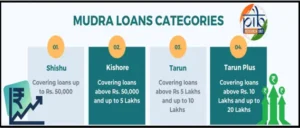
Loan Categories
- Shishu: Up to ₹50,000: for very small businesses.
- Kishor: ₹50,000–₹5 lakh: for expanding early-stage enterprises.
- Tarun: ₹5–10 lakh: for scaling established businesses.
- Tarun Plus: ₹10–20 lakh: introduced in Union Budget 2024–25 for successful units that repaid Tarun loans.
Achievements of Pradhan Mantri MUDRA Yojana
- Massive Credit Outreach: More than 57 crore loans sanctioned, with a total value exceeding ₹40 lakh crore.
- Women Empowerment: Around 67% of beneficiaries are women, making the scheme a driver of Nari Shakti.
- Social Inclusion: Over 51% of loans have gone to SC, ST, and OBC communities, promoting equity.
- First-Time Entrepreneurs: Nearly 12 crore new accounts opened, integrating grassroots entrepreneurs into the formal banking system.
- Peak Performance: In FY 2023–24, a record 6.67 crore loans worth ₹5.41 lakh crore were sanctioned, showing strong momentum.
Challenges in PMMY
- Overdependence on Shishu loans: More than 70% of lending remains in the smallest category, limiting the graduation of micro-units into SMEs.
- Weak capacity building: Lack of financial literacy, business skills, and market access reduces borrowers’ ability to use credit productively.
- Sectoral imbalance: Loans are concentrated in trading and services, with minimal impact on manufacturing and job creation.
- Rising NPAs: Collateral-free lending and inadequate credit checks have led to increasing defaults.
- Debt substitution: A significant share of loans is used to repay informal debt rather than create new assets.
Way forward
- Shift to cash-flow based lending: Use Account Aggregator and GSTN data for dynamic credit assessment instead of collateral reliance.
- Adopt a credit-plus approach: Combine loans with skill training, digital platforms, and market linkages to ensure enterprise growth.
- Deploy AI-driven monitoring: Track loan usage and detect early warning signals to prevent diversion and defaults.
- Encourage micro-manufacturing: Provide targeted incentives and guarantee coverage to promote small-scale manufacturing units.
- Strengthen NBFCs and MFIs: Empower institutions with last-mile connectivity and expertise in grassroots credit delivery.
Conclusion
PMMY has empowered millions through enterprise, earning, and empowerment (3Es). With reforms like Tarun Plus and a credit-plus approach, the scheme can drive sustainable growth, strengthen financial inclusion, and support the vision of Atmanirbhar Bharat.

BOLSTERING DETERRENCE THROUGH SUBMARINE DOMINANCE
TOPIC: (GS3) SEQURITY: THE HINDU
Speculation has grown that the Indian Navy has quietly commissioned INS Aridhaman, the third nuclear ballistic missile submarine (SSBN), strengthening India’s nuclear triad and maritime deterrence.
Background
- India’s SSBN programme began with INS Arihant (2016), followed by INS Arighat (2024).
- INS Aridhaman, launched in 2009, is a larger vessel (~7000 tonnes) with greater missile capacity.
- It can reportedly carry 24 K-15 Sagarika missiles and up to 8 nuclear-tipped K-4/K-5 missiles, compared to Arihant’s 12 K-15 and 4 K-4 missiles.
Strategic Significance
- Strengthens Nuclear Triad: India now has credible nuclear delivery systems from land, air, and sea.
- Sea-Based Deterrence: Critical against adversaries, especially with China’s growing presence in the Indian Ocean.
- No First Use Policy: Reinforces India’s defensive nuclear posture while ensuring credible second-strike capability.
- Modern Warfare Context: Conflicts today spill across domains (land, air, sea), making maritime deterrence vital.
Geopolitical Context
- Rising Chinese activity in the Indian Ocean through dual-use research vessels raises security concerns.
- Regional conflicts (West Asia, Russia-Ukraine) highlight the importance of self-reliance in defence production.
- India’s SSBN programme reduces dependence on external suppliers and strengthens indigenous defence capabilities.
Future Plans
- A fourth Arihant-class SSBN is expected soon.
- India aims to commission its first indigenously designed nuclear attack submarine (SSN) by 2036, with a second by 2038.
- Focus on integrating AI and autonomous systems in submarine design and production.
Challenges
- Balancing resource allocation between submarine upgrades and adoption of new technologies.
- Keeping pace with China’s naval expansion in terms of assets and technological sophistication.
SSBNs
Sea-Based Nuclear Deterrence
- SSBNs are submarines equipped to carry and launch nuclear ballistic missiles.
- They provide a second-strike capability, ensuring survivability even if land or air assets are destroyed.
Stealth and Endurance
- Powered by nuclear reactors, these submarines can remain submerged for months without surfacing.
- Their stealth makes them difficult to detect, enhancing deterrence against adversaries.
Role in Nuclear Triad
- SSBNs complete the nuclear triad (land, air, sea delivery systems).
- Countries like the U.S., Russia, China, France, U.K., and India maintain SSBNs to strengthen strategic security.
Conclusion
Going forward, submarine dominance will remain central to India’s defence strategy, combining self-reliance, technological innovation, and strategic balance in the Indo-Pacific.
MAKHANA (FOX NUTS)
TOPIC: (GS3) ECONOMY: THE HINDU
Exports of makhana (fox nuts) have been hit due to the ongoing conflict in West Asia, leading to a sharp fall in demand and prices.
About Makhana
- Also called Foxnut or Black Diamond (due to its dark seed coat).
- Botanical name: Euryale ferox, belonging to the water lily family.
- Native to South-East Asia and China, but now cultivated widely.
- Recognised under the One District One Product (ODOP) scheme of the Government of India.
Cultivation Conditions
- Grown in stagnant water bodies like ponds, oxbow lakes, swamps, and ditches.
- Climate: Tropical and subtropical.
- Temperature: 20°C–35°C.
- Rainfall: 100–250 cm annually.
- Soil: Smooth loamy soil.
- Major Indian states: Bihar (largest producer), West Bengal, Manipur, Tripura, Assam, Odisha, Rajasthan, Madhya Pradesh, Uttar Pradesh, and Jammu & Kashmir.
Benefits
- Serves as both food and medicine, with wide applications in nutrition and healthcare.
- Rich in protein, fibre, and antioxidants, making it a healthy snack.
- Used in Ayurveda and traditional medicine for its therapeutic properties.
- Contributes to the local economy and provides livelihood opportunities, especially in Bihar.
Conclusion
Makhana is a nutritionally rich and economically significant crop, central to Bihar’s rural economy and India’s export basket. Current challenges due to geopolitical tensions highlight the need for diversified markets and stronger value chains
INDIAN COUNCIL FOR CULTURAL RELATIONS (ICCR)
TOPIC: (GS1) INDIAN ART AND CULTURE: THE HINDU
The Minister of State for External Affairs recently attended a community reception in Yangon, Myanmar, highlighting ICCR’s role in strengthening India’s cultural diplomacy.
About ICCR
- Autonomous body under the Ministry of External Affairs.
- Founded in 1950 by Maulana Abul Kalam Azad, India’s first Education Minister.
- Works to promote India’s external cultural relations through exchanges and cultural centres abroad.
Objectives
- Participate in designing and implementing policies on India’s cultural diplomacy.
- Build mutual understanding and goodwill between India and other nations.
- Promote cultural exchanges through performances, exhibitions, and collaborations.
- Administer scholarship programmes for foreign students, offering over 3,000 scholarships annually under 21 schemes.
- Scholarships cover courses from undergraduate to postdoctoral levels in leading Indian universities.
Significance
- Strengthens India’s soft power and global image.
- Promotes people-to-people connections across nations.
- Supports India’s foreign policy by showcasing its cultural heritage and diversity.
- Encourages international students to study in India, fostering long-term goodwill.
Conclusion
The ICCR plays a vital role in India’s cultural diplomacy, using education, cultural exchanges, and scholarships to deepen ties with other countries. Its initiatives enhance India’s global presence and build bridges of friendship through culture.