

Table of Contents
ToggleRIGHT TO HEALTH ACT IN RAJASTHAN
TOPIC: (GS2) POLITY: THE HINDU
Why in News?
The Rajasthan Health Minister Gajendra Singh Khimsar made remarks in the State Assembly questioning the “need” for a Right to Health law, sparking controversy.
Background: Rajasthan Right to Health Act, 2023
- Rajasthan became the first Indian State to statutorily recognize the Right to Health as a legal entitlement.
- The Act provides:
- Free emergency treatment without prepayment at all public and designated private health institutions.
- Protection from denial of emergency services.
- Establishment of grievance redressal mechanisms.
- State responsibility to ensure accessibility and affordability of healthcare.
Constitutional and Legal Dimensions
1. Right to Health under the Constitution
Although not explicitly mentioned, the Right to Health is derived from:
- Article 21 – Right to Life and Personal Liberty (judicial interpretation includes right to health and medical care).
- Article 47 (DPSP) – Duty of the State to raise the level of nutrition and public health.
2. Important Supreme Court Judgments
- Paschim Banga Khet Mazdoor Samity v. State of West Bengal (1996) – State has constitutional obligation to provide adequate medical facilities.
- Consumer Education and Research Centre v. Union of India (1995) – Health and medical care integral to Article 21.
- State of Punjab v. Mohinder Singh Chawla (1997) – Right to health is fundamental to right to life.
Thus, while not expressly enumerated, Right to Health has strong judicial backing.
Issues Highlighted by the Controversy
- Political Debate over Welfare Laws
- Allegations that the Act was passed ahead of elections.
- Questions over framing of rules and implementation delays.
- Affordability Crisis
- Rising out-of-pocket expenditure (OOPE) continues to push families into poverty.
- India’s public health expenditure remains around 2–2.5% of GDP (target: 2.5% under National Health Policy 2017).
- Centre–State Scheme Coordination
- Overlap between Ayushman Bharat and state schemes requires harmonization.
Significance of Recognizing Right to Health
- Human Development Imperative – Healthy population is essential for demographic dividend.
- Social Justice – Reduces inequalities in access.
- SDG Linkages – Aligns with SDG 3 (Good Health and Well-being).
- Welfare State Principle – Strengthens constitutional morality under DPSPs.
Challenges in Implementing a Right to Health Framework
- Fiscal Burden on State finances.
- Infrastructure Gaps in rural and tribal regions.
- Shortage of Medical Personnel (doctor-population ratio issues).
- Weak Regulatory Oversight of private sector.
- Grievance Redressal Efficiency concerns.
Way Forward
- Increase Public Health Spending to at least 2.5% of GDP.
- Strengthen Primary Healthcare via Health and Wellness Centres.
- Timely Reimbursements to private hospitals for sustainability.
- Digital Health Integration (ABDM platform) for transparency.
- Capacity Building & Monitoring Mechanisms.
- Consensus-Based Political Approach – Health should be treated as a non-partisan issue.
Conclusion
The Rajasthan Right to Health Act reflects the evolving interpretation of Article 21 toward a welfare-oriented, rights-based health framework. Its success will depend on political consensus, adequate funding, and robust implementation mechanisms.
THE SHANTI ACT AND CIVIL NUCLEAR LIABILITY
TOPIC: (GS2) POLITY: PIB
Why in News?
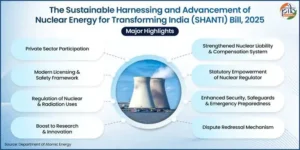
The proposed SHANTI Act seeks to amend India’s civil nuclear liability framework, particularly the Civil Liability for Nuclear Damage Act, 2010 (CLNDA), to open the nuclear power sector to private participation and alter liability provisions.
Background: India’s Civil Nuclear Liability Framework
1. Civil Liability for Nuclear Damage Act, 2010 (CLNDA)
Enacted after the India–US Civil Nuclear Agreement (2008), the CLNDA provides a legal framework for compensation in case of nuclear accidents.
Key Features:
- Operator Liability: The operator (e.g., NPCIL) bears primary liability.
- Right of Recourse (Section 17(b)): Operator can seek compensation from suppliers in case of defective equipment or material.
- Liability Cap:
- Operator’s liability capped at ₹1,500 crore (as per rules).
- Overall liability capped at 300 million SDR (Special Drawing Rights) under international conventions.
- Claims Commissioner and Nuclear Damage Claims Commission mechanism.
India is a signatory to the Convention on Supplementary Compensation (CSC).
What Does the SHANTI Act Change?
- Opening Nuclear Sector to Private Entities
- Ends Union government’s exclusive control over nuclear power generation.
- Allows private participation in nuclear plant operations.
- Indemnification of Suppliers
- Channels liability solely to operators.
- Removes or dilutes supplier liability under Section 17(b).
- Capping Liability Further
- Limits financial exposure of suppliers and operators.
- Intended to attract foreign and domestic investment.
Key Issues Raised
1. Why are Suppliers Indemnified?
- International nuclear vendors (e.g., US, France, Russia firms) have been reluctant due to India’s unique supplier liability clause.
- Global norm under CSC channels liability exclusively to operators.
- However, critics argue that removing supplier accountability reduces incentives for safety compliance.
2. Moral Hazard Concern
- Capping liability may encourage cost-cutting in safety measures.
- In case of catastrophic accidents (e.g., Fukushima, 2011), damages far exceed capped amounts.
- Public exchequer ultimately bears residual liability.
3. Safety and Accountability
- Nuclear accidents have long-term environmental and health impacts.
- Lessons from Bhopal Gas Tragedy (1984) highlight dangers of weak corporate liability regimes.
- Strong liability provisions act as deterrence against negligence.
Nuclear Energy in India
- Contributes around 3% of total electricity generation.
- Installed capacity: ~7,000+ MW.
- Target: 22,480 MW by 2031–32 (Department of Atomic Energy plans).
- India follows a Three-Stage Nuclear Programme (Homi Bhabha’s vision):
- Pressurized Heavy Water Reactors (PHWRs)
- Fast Breeder Reactors (FBRs)
- Thorium-based reactors
Nuclear energy is low-carbon and supports India’s Net Zero by 2070 commitment.
Economic Significance of the Act
- Could unlock large-scale foreign investment.
- Facilitates technology transfer and private capital infusion.
- May accelerate clean energy transition and reduce coal dependence.
However:
- High capital costs and long gestation periods persist.
- Insurance and compensation frameworks must remain credible.
Challenges
- Balancing investment climate with victim rights.
- Ensuring independent regulatory oversight (strengthening AERB; Nuclear Safety Regulatory Authority Bill pending).
- Maintaining public trust in nuclear expansion.
- Harmonizing domestic law with international conventions without diluting safety.
Way Forward
- Retain limited supplier liability for willful negligence or latent defects.
- Establish a robust nuclear insurance pool.
- Strengthen transparency and safety audits.
- Create a truly independent nuclear regulatory authority.
- Increase public consultation and risk communication.
Conclusion
While the SHANTI Act aims to boost private participation and clean energy expansion, excessive dilution of liability risks undermining safety and public trust. A balanced framework that protects victims while ensuring investment viability is essential for sustainable nuclear growth in India.
DAL LAKE RESTORATION PLAN SHELVED
TOPIC: (GS3) ENVIRONMENT: THE HINDU
Why in News?
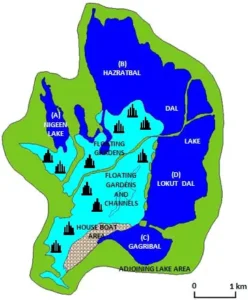
The Jammu & Kashmir government has shelved the earlier ₹4,716.72 crore restoration and relocation-based plan for Dal Lake and instead proposed an in-situ conservation model.
Background
Dal Lake, located in Srinagar, is an ecologically fragile urban lake and a key economic asset due to tourism and houseboat livelihoods. Over the past four decades, it has witnessed severe ecological degradation due to anthropogenic pressures.
Earlier (2009) restoration plan approved by the Union Government envisaged:
- Relocation of ~9,000 families from lake periphery.
- Rehabilitation in Rakh-e-Arth township.
- Large-scale dredging and infrastructure works.
However, only ~1,800 families were reportedly rehabilitated, and conservation outcomes remained minimal.
Environmental Pressures on Dal Lake
- Urban Encroachment
- Expansion of settlements and illegal constructions within lake boundaries.
- Shrinkage of lake area (from ~25 sq km historically to much lower effective water spread).
- Untreated Sewage & Effluents
- Direct discharge of domestic sewage from houseboats and nearby habitations.
- Inadequate Sewage Treatment Plants (STPs).
- Eutrophication
- Nutrient enrichment (nitrates & phosphates) from agriculture runoff.
- Excessive weed growth and algal blooms.
- Solid Waste & Tourism Pressure
- Plastic waste accumulation.
- Overcrowding due to tourism without carrying capacity regulation.
- Sedimentation & Siltation
- Catchment degradation and deforestation increase silt inflow.
- Reduced depth and impaired water circulation.
- Invasive Species & Biodiversity Loss
- Proliferation of invasive macrophytes.
- Decline in native aquatic biodiversity.
Why Was the Earlier Plan Shelved?
- Limited Tangible Outcomes
- Only ~2% of conservation targets reportedly achieved.
- Relocation model faced delays and rehabilitation issues.
- High Financial Outlay with Low Ecological Impact
- Massive capital expenditure without measurable water quality improvement.
- Socio-Political Sensitivity
- Resistance from lake dwellers dependent on fishing and tourism.
- Livelihood-security concerns.
- Shift Towards Ecosystem-Based Management
- Recognition that relocation alone cannot address pollution and hydrological issues.
New Approach: In-Situ Conservation
- Treat lake dwellers as “integral stakeholders.”
- Integrated Dal–Nigeen Lake ecosystem management.
- Dredging interior channels to restore water circulation.
- Catchment area treatment and sewage management.
- Focus on sustainable livelihood integration.
This reflects principles of Integrated Lake Basin Management (ILBM).
Institutional and Policy Context
- Managed by the J&K Lake Conservation and Management Authority (LCMA).
- Supported by schemes under the National Plan for Conservation of Aquatic Ecosystems (NPCA) (MoEFCC).
- Wetland conservation aligns with India’s commitments under the Ramsar Convention (Dal Lake is not Ramsar-listed, but wetland principles apply).
Way Forward
- Strengthen Sewage Infrastructure – 100% interception and diversion of wastewater.
- Catchment Area Afforestation to reduce siltation.
- Carrying Capacity-Based Tourism Regulation.
- Community Participation Model (co-management with lake dwellers).
- Use of Remote Sensing & GIS for encroachment monitoring.
- Scientific Weed Management & Bioremediation Techniques.
- Independent Ecological Audit & Outcome-Based Funding.
Conclusion
The shelving of the relocation-centric restoration plan signals a shift toward ecosystem-based and community-inclusive conservation of Dal Lake. Sustainable revival will require integrated hydrological management, strong governance, and balancing ecology with livelihoods.
SUPREME COURT REFUSAL ON JUNGLE SAFARI PROJECT IN ARAVALIS
TOPIC: (GS3) ENVIRONMENT: THE HINDU
Why in News?
The Supreme Court of India has refused to grant permission to the Haryana government to proceed with its proposed jungle safari project in the Aravalli hills.
Background of the Project
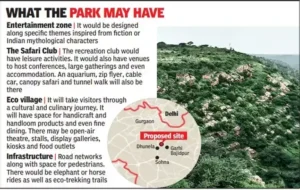
- The Haryana government proposed the Aravali Zoo Safari Project in Gurugram and Nuh districts.
- Initially planned over ~10,000 acres, later revised to ~3,300 acres.
- Aimed to create big cat enclosures and house diverse wildlife species, projected as one of the largest safari parks globally.
- Petition filed by retired Indian Forest Service officers and environmental groups opposing the project.
The Supreme Court decided to consider the safari project alongside the broader matter concerning protection and definition of the Aravalli range.
About the Aravalli Range
- One of the oldest fold mountain systems in the world (Precambrian origin).
- Extends across Gujarat, Rajasthan, Haryana, and Delhi.
- Acts as a natural barrier against desertification from the Thar Desert.
- Crucial for:
- Groundwater recharge in NCR region
- Biodiversity conservation
- Climate moderation
- Prevention of dust storms
The range is already heavily degraded due to mining, urbanisation, deforestation, and encroachments.
Key Legal and Environmental Issues
1. Definition of “Aravalli Range”
- The Court emphasized that expert committees must first clarify the geographical and ecological definition.
- Debate exists over criteria such as 100-metre elevation and 500-metre inter-hill gap norms, which may exclude ecologically sensitive areas from protection.
2. Environmental Sensitivity
- The Aravallis fall under eco-sensitive and forest categories, governed by:
- Forest (Conservation) Act, 1980
- Environment Protection Act, 1986
- Wildlife Protection Act, 1972
- Supreme Court has previously passed orders restricting mining and non-forest activities in Aravallis (e.g., M.C. Mehta cases).
3. Precautionary Principle
The Court’s stance reflects the Precautionary Principle, a core component of environmental jurisprudence under Article 21 (Right to Life).
4. Role of Central Empowered Committee (CEC)
- The CEC assists the Court in forest and wildlife matters.
- Court observed that permission processes must not create a “rosy picture” masking ecological damage.
Constitutional & Jurisprudential Context
- Article 21 – Right to healthy environment (judicially expanded).
- Article 48A – Directive Principle: State shall protect environment and forests.
- Article 51A(g) – Fundamental duty of citizens to protect environment.
Landmark doctrines evolved by Supreme Court:
- Sustainable Development
- Polluter Pays Principle
- Intergenerational Equity
- Public Trust Doctrine
Concerns Regarding the Safari Project
- Fragmentation of fragile ecosystems.
- Increased anthropogenic pressure (tourism, infrastructure).
- Threat to groundwater recharge zones.
- Possible diversion of forest land.
- Risk of greenwashing under eco-tourism label.
Way Forward
- Finalize scientific demarcation of Aravalli eco-sensitive zones.
- Undertake cumulative environmental impact assessment (EIA).
- Prioritize ecological restoration over commercial projects.
- Strengthen NCR regional environmental planning.
- Promote community-based conservation instead of large-scale tourism infrastructure.
Conclusion
The Supreme Court’s refusal underscores the primacy of ecological protection over commercial ventures in fragile landscapes like the Aravallis. Sustainable governance demands scientific clarity, strict regulatory enforcement, and long-term ecological vision.
IDUKKI HYDROELECTRIC PROJECT – 50 YEARS OF POWER GENERATION
TOPIC: (GS3) ECONOMY: INDIAN EXPRESS
Why in News?
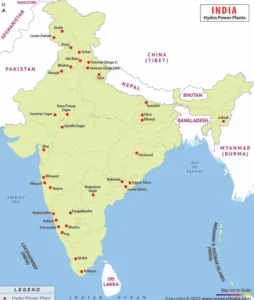
The Idukki Hydroelectric Project, Kerala’s largest hydel power project, has completed 50 years of operation, with the Moolamattom underground power station generating 115,852.672 million units (MU) of electricity over five decades.
Location and River System
- Built across the Periyar River in Idukki district, Kerala.
- The project harnesses the west-flowing Periyar, a major river of Kerala originating in the Western Ghats.
Key Features
- Installed Capacity: 780 MW
- Six generators of 130 MW each.
- Associated Dams:
- Idukki Arch Dam
- Cheruthoni Dam
- Kulamavu Dam
- Engineering Significance:
- Idukki Dam is among the highest arch dams in the world.
- Third highest dam in India after:
- Tehri Dam
- Bhakra Nangal Dam
- First double-curvature arch dam in Asia.
- Built between Kuravanmala and Kurathimala hills.
Significance
1. Energy Security
- Major contributor to Kerala’s power supply.
- Provides peak load management support.
- Reduces dependence on thermal power imports.
2. Renewable Energy Role
- Hydropower is a clean, renewable energy source.
- Supports India’s climate commitments under the Paris Agreement.
3. Strategic and Economic Importance
- Stabilizes grid during high demand.
- Boosts regional development and irrigation benefits indirectly.
Hydropower in India
- India is the 5th largest hydropower producer globally.
- Installed hydropower capacity: ~46 GW (approx.).
- Classified as renewable energy (large hydro included since 2019).
- Key advantages:
- Low operating cost after construction
- Long plant life
- Grid stability support
VALLEY OF THE KINGS
TOPIC: (GS1) HISTORY: INDIAN EXPRESS
Why in News?
Researchers have identified nearly 30 inscriptions in Tamil-Brahmi, Prakrit, and Sanskrit at tomb sites in the Valley of the Kings, Egypt. The discovery suggests possible early cultural or commercial contacts between the Indian subcontinent and ancient Egypt.
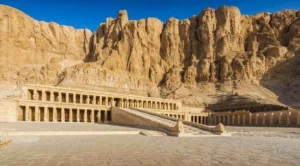
About the Valley of the Kings
- Located in southern Egypt, west of the Nile River, near ancient Thebes (modern Luxor).
- Royal burial site of the 18th, 19th, and 20th dynasties (1539–1077 BCE) during the New Kingdom period.
- Marked the shift from pyramid burials to rock-cut tombs carved into limestone hills.
- Tombs consist of descending corridors leading to burial chambers containing sarcophagi and funerary goods.
- Largest tomb: built for sons of Ramses II.
- Only largely intact tomb discovered: Tutankhamun (discovered in 1922).
- Declared a UNESCO World Heritage Site in 1979 as part of Ancient Thebes.
Significance of the Inscriptions
- Evidence of Early Transnational Links
- Tamil-Brahmi script dates roughly between 3rd century BCE and 3rd century CE.
- Suggests presence of Indian merchants, workers, or visitors in Egypt.
- Indic Trade Networks
- Correlates with Indo-Roman trade (1st century BCE–3rd century CE).
- Trade routes connected South India with Red Sea ports like Berenike and Myos Hormos.
- Commodities: spices, pearls, ivory, textiles, and precious stones.
- Cultural Diffusion
- Presence of Prakrit and Sanskrit inscriptions indicates linguistic diversity.
- Reflects mobility of traders, monks, or artisans across the Indian Ocean.
MINISTRY OF HOME AFFAIRS GUIDELINES ON VANDE MATARAM
TOPIC: (GS2) POLITY: INDIAN EXPRESS
Why in News?
The Ministry of Home Affairs has issued guidelines directing that the national song Vande Mataram be sung or played before the National Anthem when both are performed at official State functions.
Key Guidelines Issued by MHA
1. Order of Performance
- Vande Mataram shall be sung/played before the National Anthem at official events where both are included.
2. Occasions Specified
- Arrival and departure of the President at formal State functions.
- Before and after Presidential addresses to the nation.
- Arrival and departure of Governors/Lieutenant Governors at State functions.
- When the National Flag is brought on parade.
- Other occasions as specified by the Government of India.
3. Official Version
- The official version of approximately 3 minutes and 10 seconds shall be used.
- All six stanzas of Vande Mataram, including the four stanzas set aside by the Congress Working Committee in 1937, are to be played.
Historical Background of Vande Mataram
- Composed by Bankim Chandra Chatterjee in Sanskrit.
- First published in the novel Anandamath (1882), set during the Sanyasi Rebellion and Bengal famine (1769–73).
- First sung at the 1896 session of the Indian National Congress by Rabindranath Tagore.
- Became a rallying cry during the Swadeshi Movement (1905) against Bengal Partition.
- First used as a political slogan on 7 August 1905.
MUMBAI COASTAL ROAD’S “SANGEET MARG” – INDIA’S FIRST MUSICAL ROAD
TOPIC: (GS2) POLITY: INDIAN EXPRESS
Why in News?
Mumbai’s Coastal Road has introduced India’s first musical road, a 500-metre stretch named Sangeet Marg, between Nariman Point and Worli. When vehicles travel at a designated speed (60–80 kmph), the road plays the Oscar-winning song Jai Ho through engineered rumble strips.

How the Musical Road Works
- Specially designed rumble strips are carved into the asphalt at precise intervals.
- As vehicles move over the grooves, tyre-road friction produces vibrations.
- These vibrations generate sound waves at specific frequencies.
- When arranged scientifically, the frequencies combine to recreate a melody audible inside the vehicle.
The concept is inspired by technology first implemented in Hungary, and later adopted in countries like Japan, South Korea, and the UAE.
Broader Significance
India is increasingly investing in smart mobility and intelligent transport systems (ITS) under initiatives like Smart Cities Mission. Musical roads represent low-cost innovation combining safety and public experience.