
CRISIS IN INDIA’S LOWER JUDICIARY
TOPIC: (GS2) POLITY: THE HINDU
The district and subordinate courts due to massive case backlog, procedural delays, weak training, and outdated legal systems, struggle to deliver timely and effective justice.
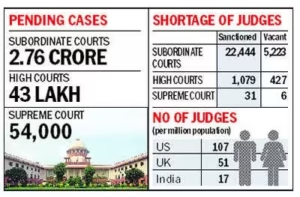
Reasons for Procedural Rigidities
- Repetitive procedural tasks such as issuing summons, recording appearances, and routinely calling every case consume a large share of judicial time.
- Frequent adjournments due to non-appearance or procedural defects slow the pace of case disposal.
- The daily workflow is unorganized, with judges overloaded throughout the day without proper case-flow management.
- A large portion of time is spent on administrative duties and clerical work, leaving limited time for actual hearings and judgments.
Challenges in Capacity and Training
- Many judges enter lower courts directly after graduation and lack courtroom experience or practical exposure.
- There is no structured mentoring system where experienced judges can guide and train new recruits.
- Existing judicial training mostly focuses on theoretical knowledge and ignores essential practical skills such as evidence handling, mediation techniques, settlement facilitation, and courtroom management.
- Judges are rarely trained in modern litigation tools like digital case systems, e-filing, and alternative dispute resolution.
How Poorly Drafted Laws Create Litigation Instead of Resolving It
- Ambiguous and poorly worded laws lead to confusion, inconsistent interpretations, and further litigation.
- Section 12A of the Commercial Courts Act, concerning pre-institution mediation, creates uncertainty about whether it is compulsory or optional.
- In family law, differences in court interpretation regarding the six-month cooling-off period in mutual divorce cases cause delays and legal confusion.
- Disputes frequently arise over whether written statements filed after the 90-day limit should be accepted, creating procedural hurdles.
Outdated Procedural Laws and Their Impact
- Several provisions of the Code of Civil Procedure (CPC) still reflect colonial-era procedures, making them unsuitable for present-day needs.
- Issues related to preliminary and final decrees, timelines for appeals, and unclear limitation periods create unnecessary legal bottlenecks.
- Overuse of adjournments and lack of digital filing and tracking systems further delay case resolution.
Way Forward
- Institutionalize standardized training and judicial mentoring for newly appointed judges.
- Introduce technology-based solutions, digital records, and case-flow management systems to improve court efficiency.
- Reform procedural rules to reduce ambiguity, promote alternative dispute resolution, and discourage unnecessary adjournments.
- Ensure legislative clarity through precise drafting of statutes and harmonized procedural norms across courts.
Conclusion
The problems in the lower judiciary are not incidental but arise from deep structural issues. Meaningful reform through better training, clearer laws, and modernized systems is essential to ensure timely justice and reduce excessive dependence on higher courts.
LOCAL BODIES AND THE 16TH FINANCE COMMISSION?
TOPIC: (GS) POLITY: THE HINDU
The 16th Finance Commission has recently been mandated to review the financial position of Panchayats and Municipalities and recommend new measures to enhance fiscal decentralization.
Constitutional Provisions
- Articles 243-I and 243-Y mandate that State Finance Commissions (SFCs) should be set up every five years to recommend ways to improve finances of rural and urban local bodies.
- Article 280 empowers the Central Finance Commission to advise on the sharing of Central resources with States and local bodies.
- These provisions aim to transfer funds, functions, and functionaries (3Fs) to local governments.
Role and Expectations from Finance Commissions
- The main expectation is to increase the share of local bodies from the divisible tax pool of the Union.
- Improve fiscal autonomy by recommending performance-linked grants.
- Ensure funds support basic services like water supply, education, sanitation, health, and local infrastructure.
Problems with Earlier Finance Commissions
- The 13th FC introduced local government grants but had limited success due to lack of performance tracking.
- The 14th FC reduced conditional grants and focused on basic grants, which weakened reforms.
- The 15th FC returned to lump-sum grants, leading to inequality and poor transparency.
- Previous FCs failed to clearly identify financial needs of local bodies.
- Data gaps and lack of coordination between Union, states, and local bodies led to weak implementation.
Challenges Faced by Local Bodies
- Limited revenue generation powers like property tax, user charges, and local fees.
- Heavy dependency on states and centre for funds.
- Lack of skilled staff, digital systems, and capacity-building mechanisms.
- Political interference and delay in holding SFCs in many states.
What Should the 16th Finance Commission Focus On?
- Introduce needs-based and performance-linked grants.
- Create a uniform fiscal framework for local governments across states.
- Promote transparency, financial accountability, and digital reporting systems.
- Provide funds for climate change, urban governance, and rural development.
- Encourage states to implement SFC recommendations effectively.
FINANCE COMMISSION
- The Finance Commission is a constitutional body that recommends how financial resources should be shared between the Union and the States.
- It helps maintain financial balance in the country by recommending transfers, grants, and sharing of tax revenue.
- It is appointed every five years by the President of India.
- It promotes fiscal federalism, helping weaker states and local bodies get adequate funds.
- It also suggests steps to improve financial stability, transparency, and accountability in government spending.
Functions of the Finance Commission
- Recommend how tax revenues should be shared between the Centre and States (Vertical Devolution).
- Decide how funds should be distributed among different states (Horizontal Devolution).
- Suggest grants-in-aid for states, Panchayats, and Municipalities.
- Recommend measures to improve fiscal discipline and manage government finances.
- Suggest ways to strengthen local bodies and improve financial management of public resources.
Conclusion
Strong financial devolution is essential for true grassroots democracy. The 16th Finance Commission offers an opportunity to strengthen the financial independence of Panchayats and Municipalities, making them more responsive and capable of delivering local development.
SUPREME COURT RECALLS VERDICT ON RETROSPECTIVE ENVIRONMENTAL CLEARANCES
TOPIC: (GS3) ENVIRONMENT: THE HINDU
Recently, the Supreme Court revisited its May 2024 judgment, which had declared retrospective environmental clearances (ex post facto ECs) illegal. By majority judgment (2:1), the SC has now withdrawn that ruling, citing public interest and economic consequences.
What is Ex Post Facto Environmental Clearance?
- It refers to granting environmental approval to a project after it has already started or even completed.
- Earlier, the Supreme Court had termed such clearances “illegal” and “unconstitutional”.
- Now, the court has partially allowed retrospective approvals under strict conditions and public scrutiny.
Why Was the Verdict Recalled?
- Declaring all retrospective ECs illegal would harm ongoing national projects, affecting jobs and public investments.
- Many public sector projects involving healthcare, infrastructure, mining, and defense would suffer losses.
- The court emphasized the precautionary principle, but also highlighted the balance between environmental protection and economic development.
- It argued that not all violations are intentional or harmful; some may be procedural lapses.
Environmental Jurisprudence vs Development
Environmental Law Principles involved:
- Precautionary Principle – prevent environmental harm before it occurs.
- Polluter Pays Principle – violators should pay for environmental damages.
- Sustainable Development – economic development must not destroy ecological balance.
Challenges:
- Balancing economic progress with ecological protection.
- Prevention of misuse of retrospective clearance as a tool for regularizing illegal projects.
- Ensuring accountability and transparent environmental governance.
ENVIRONMENTAL IMPACT ASSESSMENT (EIA)
EIA is a process to study the possible environmental effects of a proposed project (like industries, dams, mining, highways) before it is approved.
It helps in predicting how a project will affect air, water, land, forests, wildlife, and local communities.
Which Ministry Handles it?
- Ministry of Environment, Forest and Climate Change (MoEFCC), Government of India is responsible for EIA policies and notifications.
Which Authority Grants Approval?
- Environmental Clearance (EC) is given by:
- Central Government (MoEFCC) – for large and national-level projects
- State Environment Impact Assessment Authority (SEIAA) – for smaller state-level projects
Main Purpose of EIA
- To balance development and environmental protection
- Reduce pollution, protect natural resources, and prevent ecological damage
- Helps government decide whether a project should be approved, modified, or rejected
Public Participation
- EIA includes a public hearing, where local people can share their concerns about the environmental impact of a project.
Conclusion
This judgment highlights the judiciary’s attempt to balance environmental protection with national development priorities. While the majority supports flexibility in granting clearances under strict watch, the dissent warns of weakening India’s environmental law.
UNESCO’S NEW GUIDELINES ON NEUROTECHNOLOGY
TOPIC: (GS3) SCIENCE AND TECHNOLOGY: THE HINDU
UNESCO has released the world’s first global ethical framework on neurotechnology, aimed at protecting mental privacy, cognitive freedom, and human rights.
What is Neurotechnology?
- Includes technologies that monitor, interpret, or influence neural activity.
- Involves brain-computer interfaces, neuro-imaging, implants, headbands, and wearable devices.
- Uses neurodata, i.e., brain-derived information that can reveal mental states, preferences, or emotions.
- Dual-use nature: Can restore speech or mobility in patients, but can also be misused for surveillance, profiling, or manipulation.
Why has Neurotechnology grown rapidly?
- Heavy investments: Global funding reached $8.6 billion by 2023.
- Private sector involvement: Neuralink, Meta, Microsoft and others pushing brain-interface tech.
- Medical potential: Helps treat paralysis, depression, dementia, and PTSD.
- Commercial interest: Corporates exploring neurodata for marketing, hiring, insurance, and political persuasion.
Key Ethical Challenges
- Mental privacy breach: Ability to decode thoughts and emotions poses deep personal risks.
- Political manipulation: Brain signals could reveal ideological leanings, influencing voters.
- Workplace surveillance: Employees screened for loyalty, stress, or subconscious traits.
- Human autonomy loss: Individuals risk losing control over decision-making and free will.
- Discrimination: Neurodata could be misused to label people as “high-risk”, “unfit” or “unproductive”.
UNESCO’s Guiding Framework (2023)
Principle-based Approach:
- Anchored on human rights, dignity, liberty, and mental privacy.
- Encourages responsible innovation, inspired by OECD principles.
- Promotes inclusion, transparency, and sustainability.
Four Pillars of the Framework:
- Define Scope: Clearly explain what qualifies as neurotechnology and neurodata.
- Set Ethical Principles: Countries must integrate safeguards for mental privacy, equity, and safety.
- Policy Recommendations: Focus on vulnerable groups, medical use, education, child protection.
- Governance Measures: Suggest global cooperation, licensing, data regulation, and IP reforms.
Additional Recommendations:
- Promote Open Science, avoiding monopolies over brain data and interfaces.
- Introduce public participation in policymaking to prevent corporate domination.
- Balance intellectual property rights with public interest and human dignity.
Conclusion
UNESCO’s guidelines mark a turning point by recognizing mental privacy and cognitive freedom as fundamental rights. They aim to ensure that neurotechnology empowers humanity rather than becoming a tool of control, discrimination, or exploitation.
GLOBAL HAPPINESS RANKINGS
TOPIC: (GS3) ECONOMY: THE HINDU
The World Happiness Report 2025 places Finland as the happiest country for the eighth time, while India ranks 118th despite being one of the fastest-growing major economies.
About World Happiness Report
- Published by: The World Happiness Report is released by the UN Sustainable Development Solutions Network (SDSN), in partnership with Gallup World Poll and Oxford Wellbeing Research Centre.
- Criteria for Rankings: Countries are ranked based on factors like GDP per capita, social support, life expectancy, freedom to make life choices, generosity, and perception of corruption.
- Purpose: It measures subjective wellbeing, focusing on how happy people feel about their lives rather than just economic performance.
Limitations of Economic-Based Happiness Metrics
- Happiness rankings are mainly based on GDP per capita, social support, life expectancy, freedom, generosity, and corruption perception.
- However, economic indicators alone cannot capture life satisfaction, emotional resilience, or psychological wellbeing.
- Paradox: Countries like the US and India have shown economic growth, but rising dissatisfaction and stress.
- Higher expectations, intense competition, and social comparison reduce satisfaction even when income increases.
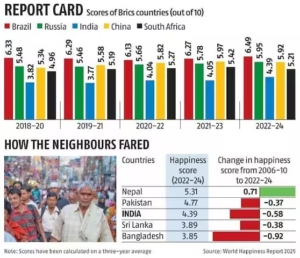
Cultural and Social Differences in Happiness
- Nordic countries score higher due to strong social trust, welfare policies, community networks, and inclusive institutions.
- In India, community bonds and family support play a major role, but rising urbanization and digital life are weakening them.
- Happiness is also influenced by cultural notions of contentment, social harmony, and resilience.
Political and Perceptual Biases in Happiness Reporting
- Happiness rankings often rely on subjective perceptions rather than objective realities.
- In democracies with free media, negative news and criticism reduce perceived happiness.
- In more controlled societies, people often report higher happiness due to lower expectations or social conformity.
- Indian society’s swings in happiness reflect institutional trust, governance effectiveness, and social cohesion.
Lessons for India
- Strengthen social capital: Promote community support, shared spaces, and inter-generational ties.
- Focus on mental health: India spends less than 1% of its health budget on mental health. Preventive care and emotional resilience must be prioritized.
- Better public service delivery: Transparent, efficient governance enhances trust and overall wellbeing.
- Shift from GDP to GNH (Gross National Happiness): Emphasize sustainable development, social trust, and life satisfaction.
- Promote empathy and institutional kindness: Programs like Mann Ki Baat, Tele-MANAS, Mind India promote emotional relevance.
Conclusion
Happiness is not just the outcome of economic success, but the result of social trust, mental health, emotional security, and strong institutions. India’s path to happiness requires balancing growth with empathy, inclusion, and community wellbeing.
EXCESSIVE DEPENDENCE AND INDIA’S TRADE PORTFOLIO
TOPIC: (GS3) ECONOMY: THE HINDU
India’s increasing dependence on specific export markets and import-heavy sectors has exposed vulnerabilities in its trade structure.
Rising Dependence and Export Vulnerability
- India recorded its highest-ever monthly goods trade deficit of $41.68 billion in October, continuing the worsening trend from September.
- There was a sharp drop in exports of labor-intensive sectors like textiles, yarn, garments, engineering goods, and handloom.
- This coincided with the U.S. imposing a 50% tariff, affecting India’s major export market, and a significant increase in gold and precious metal imports.
- The combined effect signals rising external dependency and structural weaknesses in India’s trade portfolio.
Issues in India’s Trade Structure
- Export Concentration: Heavy dependence on the U.S. market, especially for textiles, garments, engineering goods. Declining growth in traditional labor-intensive export sectors.
- Import Surge and Hedging Behavior: Gold imports nearly tripled compared to last year, often seen as a hedge against economic uncertainty. Increase in imports of cheaper intermediate goods due to rupee depreciation, to maintain export competitiveness.
- Tariff Vulnerability: The U.S. tariff hike significantly impacted the export sector, showcasing India’s sensitivity to external policy changes.
- Currency and Portfolio Outflows: The rupee weakened from ₹85.6 to nearly ₹88.4 per dollar. Foreign investors withdrew funds, creating further pressure on trade and economic confidence.
- Supply Chain Realignment Needed: Exporters require time and policy support to reroute supply chains and explore new markets.
Impact on Economy
- Widening trade deficit increases current account deficit, affecting foreign exchange reserves.
- Weakening rupee makes imports costlier, further worsening inflation.
- Declining labor-intensive exports risk job losses, particularly in MSMEs.
- Vulnerability to foreign policy fluctuations undermines strategic economic independence.
Way Forward
- Diversify Export Markets: Reduce reliance on the U.S. by exploring Africa, Latin America, ASEAN, and West Asia.
- Strengthen Domestic Manufacturing: Promote Make in India, logistics infrastructure, and supply chain competitiveness.
- Export Support for MSMEs: Provide credit assistance, export counseling, digital marketing, and technology upgrades.
- Trade Agreements and Tariff Negotiations: Speed up bilateral trade deals and reduce tariff uncertainties.
- Shift to High-Value Exports: Promote exports in electronics, green tech, pharmaceuticals, and services.
Conclusion
India’s current trade deficit highlights not just a temporary imbalance but a deep structural weakness in its export and import pattern. A strategic overhaul of trade policy, with greater diversification and domestic capacity building, is essential for long-term resilience and economic sovereignty.
INTEGRATED FORUM ON CLIMATE CHANGE AND TRADE
TOPIC: (GS3) ECONOMY: THE HINDU
At the 30th Conference of the Parties (COP30) of the UNFCCC, held in Belém, Brazil, on 15 November 2025, countries officially launched the Integrated Forum on Climate Change and Trade (IFCCT).
About IFCCT
- IFCCT is a politically backed platform designed to address the growing tensions between climate policies and international trade measures.
- It aims to bridge gaps between climate ambitions and trade interests, especially helping developing nations gain a stronger voice in shaping future trade-related climate rules.
- The forum will be co-chaired by Brazil and one developed country, and will remain open to all UNFCCC Parties.
- IFCCT will function independently and will not be part of the WTO or UNFCCC institutional structures.
- It will not negotiate binding agreements, interpret existing treaties, settle disputes, or assess national policies.
Key Features
- The forum will begin with an open-ended consultation phase in 2026 to identify areas for discussion and to set the boundaries of its role.
- Its purpose is to encourage interoperability rather than fragmentation in global climate and trade negotiations.
- It offers a common platform for policy dialogue, promoting coordinated solutions instead of conflicting climate actions and trade measures.
- IFCCT will involve civil society organizations, business groups, international agencies, and climate finance institutions, ensuring broader participation and diverse perspectives.
Conclusion:
This initiative marks a significant step in aligning climate action with global trade policies, promoting cooperation, inclusivity, and shared responsibility.
EXERCISE AJEYA WARRIOR
TOPIC: (GS3) DEFENCE: THE HINDU
The eighth edition of Exercise AJEYA WARRIOR-25 has begun at the Foreign Training Node, Mahajan Field Firing Ranges in Rajasthan.

Exercise AJEYA WARRIOR
- Exercise AJEYA WARRIOR is a bilateral military exercise between India and the United Kingdom.
- Held biennially since 2011, it has become a key platform for military cooperation between the Indian Army and the British Army.
- The exercise aims to strengthen defence relations and improve joint operational capabilities.
Features of AJEYA WARRIOR 2025
- The Sikh Regiment of the Indian Army is participating in this edition.
- The main goal is to promote the exchange of tactical skills, battlefield experiences, and operational knowledge between both armies.
- Conducted under a United Nations mandate, the exercise emphasizes counter-terrorism operations in semi-urban terrain.
- It includes:
- Joint mission planning at the Brigade level
- Integrated tactical drills
- Simulation-driven scenarios
- Company-level field training replicating real-world counter-terror situations
- The exercise aims at improving interoperability, coordination, and tactical proficiency in handling complex operations.
Significance
- AJEYA WARRIOR promotes military diplomacy, trust, and collaboration between India and the UK.
- It reinforces shared values of professionalism, peacekeeping, and commitment to regional and global security.
- The exercise strengthens joint preparedness to deal with modern warfare and global security challenges.
Conclusion:
This edition highlights growing strategic cooperation and enhances the ability of both armies to work together in demanding operational environments.
