

Daily Current affairs 24 March 2026

Daily Current Affairs 24-March-2026

Share this Post

INDIA’S EVOLVING DIAGNOSTIC LANDSCAPE FOR TUBERCULOSIS (TB)

TOPIC: (GS2) SOCIAL JUSTICE AND HEALTH: THE HINDU

The World Health Organization (WHO) recently recommended new near pointofcare molecular tests and tongue swab samples for TB diagnosis.

What is TB?

  • Definition: TB is an infectious disease mainly affecting the lungs (pulmonary TB), but it can also impact other organs (extrapulmonary TB).
  • Transmission: Spread through airborne droplets when an infected person coughs, sneezes, or speaks.
  • Symptoms: Persistent cough, fever, night sweats, weight loss, and fatigue.
  • Forms:
    • Drugsensitive TB (DSTB) – treatable with standard medicines.
    • Drugresistant TB (DRTB) – resistant to firstline drugs, harder to treat.

Developments in TB Diagnostics

Portable Chest Xray with AI

  • Mobile vans equipped with AIenabled Xray machines bring screening directly to communities.
  • Helps detect TB lesions quickly and also identify other lung diseases.
  • Reduces dependence on hospitalbased radiologists.

Molecular Testing Expansion

  • Shift from traditional sputum smear microscopy (low sensitivity) to Cartridgebased NAAT (CBNAAT) and indigenous Truenat.
  • WHO’s endorsement of near pointofcare NAAT allows testing at primary health centres.
  • Tongue swabs and pooled sputum samples improve accessibility.

TB Champion movement in India:

  • Community-Centered Approach: The TB Champion model shifted focus from purely biomedical interventions to community participation.
  • Role in National TB Elimination Programme (NTEP): TB Champions complement government efforts by spreading awareness, supporting diagnosis, and improving treatment adherence.
  • AntiStigma Strategy: Champions share personal stories in community meetings, dispelling myths and misconceptions. They reassure people that TB is curable, encouraging early diagnosis and treatment.

Addressing Gaps

  • Uneven Molecular Testing Access: Many patients still rely on sputum microscopy; only about 60–65% of notified TB cases undergo upfront molecular testing, leaving drugresistant TB underdetected.
  • Weak Sputum Collection & Transport: Rural and elderly populations face difficulties in providing samples; poor logistics cause delays, leading to loss of nearly 15–20% of suspected cases before confirmatory testing.
  • Slow DrugResistance Detection: India reports ~2.8 lakh drugresistant TB cases annually, but delays in secondline testing mean treatment often starts late, increasing transmission risks.

Research and Innovation

  • Biomarkers for TB infection; Affordable tools to identify people at high risk of disease progression. Supports “test and treat” preventive therapy.
  • Asymptomatic TB challenge: Symptombased screening insufficient. Need saliva and other nonsputum diagnostic methods.
  • TB in children: Children struggle to produce sputum. Research on stoolbased and other childfriendly tests required.
  • Extrapulmonary TB (EPTB): Accounts for ~25% of India’s TB burden. Diagnosis is costly and often delayed. Pilots with AIenabled ultrasound + molecular testing show promise.

Way Forward

  • Optimize diagnostic networks to decide which tools to use and where. Strengthen health system capacity to use AI effectively.
  • Streamline innovation assessment and procurement through ICMR and health technology evaluations.
  • Invest in implementation research to adapt global innovations to Indian settings.
  • Early diagnosis reduces transmission, improves recovery, and lowers outofpocket costs.

TB Burden in India

  • Global Share: India accounted for 26% of global TB cases and deaths in 2023.
  • Incidence Rate: Declined from 275.7 per 100,000 population in 2010 to 194.9 per 100,000 in 2023.
  • Deaths: TB deaths fell from 5.8 lakh in 2010 to 3.2 lakh in 2023, but India still leads globally.
  • Latent TB Infection (TBI): Around 31% of Indians above 15 years carry latent TB; prevalence rises with age.
  • Risk Factors: Malnutrition, diabetes, smoking, and HIV increase vulnerability.
  • Gender Trends: Higher relapse cases reported among men in 2023.
  • Funding: Domestic TB funding rose by 38% in 2023 to $253 million, though still below preCOVID levels.

Conclusion

A comprehensive, evidencebased toolbox supported by strong research and public sector expansion can accelerate India’s path to TB elimination.

INDIA’S ECONOMIC FUNDAMENTALS AND REASSESSMENT

TOPIC: (GS3) ECONOMY: THE HINDU

Recent data on India’s Index of Eight Core Industries (Feb 2026) showed growth falling to a threemonth low.

Index of Eight Core Industries (ICI) in India:

  • Key Economic Indicator: The ICI measures output in eight crucial industries: coal, crude oil, natural gas, refinery products, fertilizers, steel, cement, and electricity.
  • Together, these sectors account for about 40% of the weight of the Index of Industrial Production (IIP), making it a vital gauge of industrial health.
  • Reflects Infrastructure Strength: Trends in the ICI directly influence sectors like construction, transport, and energy, thereby impacting overall economic growth.
  • Policy and Market Significance: A slowdown in core industries often signals broader economic stress, while growth indicates resilience and expansion potential.
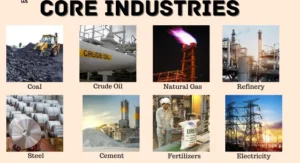
Index of Eight Core Industries

India’s Current Economic Pressures

  • Declining Domestic Energy Production: Crude oil output has contracted in 20 of the last 24 months. Natural gas sector has shrunk for 20 consecutive months, increasing reliance on imports.
  • India imports 85% of its crude oil, making the economy highly vulnerable to global price shocks.
  • Subdued Demand and Weak Growth Drivers: New GDP series shows India’s economy is smaller than earlier estimates.
  • Global Oil Prices and External Shocks: Ongoing West Asian conflict has pushed crude oil prices above $100 per barrel. Forex reserves fell by $19 billion in two weeks, rupee weakened by 2.9% to ₹93.72, and stock markets dropped nearly 9%.

Issues in Core Sector

  • Crude Oil Production: Contracting for six straight months; 20 out of last 24 months in decline. Heavy reliance on imports, especially from West Asia.
  • Natural Gas Sector: Contracted for 20 consecutive months. Imports were cheaper, discouraging domestic production.
  • Policy Gap: Lack of foresight in building reserves despite geopolitical tensions. Ujjwala Yojana (2016) should have triggered stronger LPG supply security.

GDP and Demand Trends

  • New GDP series shows economy smaller than earlier estimates.
  • Between 202223 and 202526, contributions of private consumption, capital formation, exports, imports have all declined.
  • Share of “change in stocks” has doubled → production exists but sales are weak.
  • Subdued demand likely to reduce production further.

India’s current economic implications:

  • Resilience Overstated: Despite claims of “strong fundamentals,” India’s forex reserves fell by $19 billion in two weeks (March 2026), rupee weakened by 2.9% to ₹93.72, and stock markets dropped nearly 9%, showing vulnerability to external shocks.
  • Growth Outlook Downgraded: Rating agencies have cut India’s GDP growth forecast to ~6.5% for FY26, reflecting subdued demand, weak industrial drivers, and heavy reliance on imports.
  • Temporary Energy Push: India imports 85% of crude oil; a shortterm boost in domestic oil and gas production could reduce import bills and cushion external pressures.
  • LongTerm Energy Diversification: Diversification will strengthen energy security and align with climate goals.

Conclusion

A pragmatic reassessment of fundamentals with emphasis on energy security, demand revival, and structural reforms is essential to sustain growth and resilience.

INSURANCE PENETRATION AND DENSITY IN INDIA

TOPIC: (GS3) ECONOMY: THE HINDU

Recent studies show that insurance penetration and density figures do not reflect the real financial protection of households in India.

What is Insurance?

  • Definition: A contract where individuals pay premiums to insurers in exchange for financial protection against specified risks.
  • Types: Life insurance, health insurance, motor insurance, property insurance, crop insurance, etc.
  • Purpose: Provides financial security, income replacement, and risk sharing across society.

Why India Needs Strong Insurance Infrastructure

  • Low Penetration and Density: Insurance penetration in India is 3.7% of GDP (2025), compared to the global average of ~7%.
  • Household Vulnerability: Average life insurance claim payout is only ₹3.3 lakh, insufficient for longterm income replacement.
  • Many households see insurance as a savings product rather than risk protection, leading to inadequate coverage.
  • Economic Stability: Insurance spreads risk across society, reducing the burden on government welfare schemes.

Limitations of Indicators

  • Premiums ≠ Protection: Indicators measure premium collection, not actual household coverage. High premiums may still mean inadequate financial security.
  • Misleading Interpretation: Penetration often mistaken as coverage; it only shows industry revenue relative to GDP. GDP growth fluctuations can distort penetration ratios.
  • Distorting Factors: Rapid GDP growth lowers penetration even if insurance uptake rises. Insurers selling highpremium products inflate figures without improving protection.

Gap Between Premium and Protection

  • Insurance products often marketed as savings tools rather than risk protection.
  • Example: Life insurers settled over 10 lakh death claims worth ₹33,000 crore, with average payout ~₹3.3 lakh.
  • While settlement ratios are high (97%), payouts are too small for longterm income replacement.
  • Indicates coverage inadequacy despite premium growth.

Need for Better Measurement

  • New metrics should assess: How many households have life insurance?
  • Coverage level relative to household income. Data available through regulatory filings, census, and insurance databases.
  • Would give clearer picture of financial security.

Policy Implications

  • Improve Financial Protection: Prioritise adequate life cover over premium growth.
  • Product Reforms: Promote pure riskbased products like term insurance.
  • Better Data Framework: Develop metrics focused on adequacy of coverage.
  • Public Awareness: Shift perception from insurance as savings to insurance as protection.

Concepts

  • Insurance Penetration: Ratio of total insurance premiums to GDP.
  • Insurance Density: Per capita premium paid (usually in US dollars).
  • These are global indicators used for crosscountry comparison and industry growth tracking.

Conclusion

India’s insurance sector focus must be on real household protection, adequacy of coverage, and riskbased products. This will ensure genuine financial security and resilience for families.

FOREX RESERVES IN INDIA AND THEIR ROLE DURING CRISES

TOPIC: (GS3) ECONOMY: THE HINDU

Following the West Asian conflict (2025–26), India’s forex reserves fell by $19 billion in two weeks, the rupee weakened by 2.9% to ₹93.72, and stock markets dropped nearly 9%.

What are Forex Reserves?

  • Funds held by the Reserve Bank of India (RBI) in foreign currencies (mainly US dollars).
  • Act as a financial buffer during global or domestic economic shocks.
  • Key roles:
    • Finance Current Account Deficit (CAD).
    • Stabilize rupee by selling dollars during capital outflows.
    • Strengthen macroeconomic credibility and investor confidence.

Current Status

  • As of March 13, 2026, reserves stood at $709.75 billion.
  • Sufficient to cover 12+ months of imports — considered very comfortable.
  • Despite healthy levels, recent depletion signals vulnerability.

Historical Context

  • 1991 BoP Crisis: Reserves fell to cover only 2–3 weeks of imports.
    • India pledged gold (67 tonnes) to raise ~$600 million.
    • Rupee devalued ~18.7% against the dollar.
    • Triggered landmark reforms: trade liberalisation, FDI opening, rupee convertibility.
  • Other stress episodes: Asian Financial Crisis (1997). Global Financial Crisis (2008). COVID19 Pandemic (2020). RussiaUkraine War (2022). Current West Asian conflict (2025–26).

Current Concerns

  • FPI Outflows: Large withdrawals from equity and debt markets increase dollar demand.
  • Crude Oil Prices: India imports 85% of oil; prolonged conflict raises import bills.
  • Supply Chain Disruptions: Conflict affects trade flows, straining BoP.
  • Widening CAD: Higher oil costs + capital outflows → more pressure on reserves.

Way forward

  • Maintain adequate reserves as first line of defence. Enhance investor confidence through stable macroeconomic policies.
  • Diversify energy sources to reduce oil import dependence. Strengthen domestic production and export competitiveness.
  • Use reserves judiciously for rupee stabilization without exhausting buffers.

Components of India’s Forex Reserves

  • Foreign Currency Assets (FCA)
    • Largest share of reserves, currently around $555 billion.
    • Includes cash, deposits, and bonds denominated in foreign currencies.
    • Managed by the RBI in highly liquid and safe instruments.
    • Held across multiple currencies: US dollar (dominant), euro, pound sterling, Japanese yen.
    • Value fluctuates with exchange rate movements.
  • Gold Reserves
    • India holds physical gold as part of reserves, stored both domestically and abroad.
    • Provides diversification and acts as a hedge against currency volatility.
    • As of 2024, gold reserves were valued at ~$65.7 billion.
  • Special Drawing Rights (SDRs)
    • Allocated by the International Monetary Fund (IMF).
    • SDRs are an international reserve asset based on a basket of currencies (USD, EUR, GBP, JPY, CNY).
    • Can be exchanged for freely usable currencies during crises.
  • Reserve Position in IMF
    • India’s contribution to the IMF that can be drawn upon if needed.
    • Acts as a liquidity buffer and strengthens India’s global financial credibility.

Conclusion

Building and safeguarding reserves is vital for currency stability, crisis management, and longterm economic resilience.

INVESTMENT FACILITATION FOR DEVELOPMENT (IFD) AGREEMENT AT WTO

TOPIC: (GS3) ECONOMY: THE HINDU

The upcoming 14th WTO Ministerial Conference (MC14) in Cameroon will discuss incorporating the IFD Agreement into the Marrakesh Agreement (1995).

What is the IFD Agreement?

  • Focus: Facilitating Foreign Direct Investment (FDI), not liberalising it.
  • Objectives: Improve transparency, reduce red tape, streamline approvals, and promote sustainable development.
  • With 128 of 166 WTO members supporting IFD, India and South Africa risk political isolation if they continue opposing it.
  • Features:
    • Special and Differential Treatment (SDT) for developing countries.
    • Excludes market access, investment protection, ISDS, subsidies, and procurement.
  • Nature: Plurilateral agreement — binding only on signatories, open for others later.

Global Support and WTO Context

  • Support grew from 70 countries (2017) to 128 members now.
  • Backed by WTO leadership as a way to revive rulemaking amid institutional crisis (dispute settlement paralysis, unilateral tariffs).
  • Seen as a step towards modernising WTO.

India’s Opposition

  • Threat to Multilateralism: WTO works on consensus; plurilateral deals risk fragmentation.
  • TwoTier System: Fear of elite club marginalising developing nations.
  • Negotiation Imbalance: Diverts attention from unresolved issues like agriculture subsidies and food security.
  • China Angle: 98 of 128 IFD members are part of BRI. Standardised rules may strengthen China’s geoeconomic influence in India’s neighbourhood.

India’s Tactical Position

  • Food Security Priority: Seeks permanent solution on public stockholding (subsidies capped at 10% of production value).
  • Relies on Bali Peace Clause (2013) to avoid disputes.
  • May use opposition to IFD as leverage for concessions on agriculture.

Challenges

  • External: Growing global consensus, African bloc shifting stance.
  • Internal: Balancing FDI inflows with strategic autonomy; risk of isolation in WTO.

Way Forward

  • Calibrated Engagement: Avoid outright rejection, shape IFD provisions.
  • Safeguard Multilateralism: Push for consensusbased safeguards.
  • Strategic Bargaining: Use IFD talks to secure food security concessions.
  • Coalition Building: Strengthen alliances with Global South and South Africa.
  • Domestic Reforms: Improve ease of doing business to attract FDI independently.

Conclusion

A balanced, pragmatic approach — defending food security while engaging constructively — will help India remain an influential voice in shaping WTO’s future.

SAHIWAL CATTLE

TOPIC: (GS3) SCIENCE AND TECHNOLOGY: THE HINDU

The Indian Council of Agricultural Research – Indian Veterinary Research Institute (IVRI), Bareilly has successfully produced indigenous Sahiwal cattle calves using advanced reproductive biotechnology.

Sahiwal Cattle

  • Origin: Named after the Sahiwal area in Montgomery district (now in Pakistan).
  • Other Names: Lambi Bar, Lola, Montgomery, Multani, Teli.
  • Appearance: Brownishred coat (from mahogany red to greyish red); bulls darker; occasional white patches.
  • Milk Yield: Average lactation ~2,325 kg (range: 1,600–2,750 kg).
  • Unique Traits:
    • High milk productivity.
    • Heat tolerance and tick resistance.
    • Strong resistance to internal and external parasites.
  • Global Demand: Exported to Asia, Africa, and the Caribbean due to adaptability in hot climates.
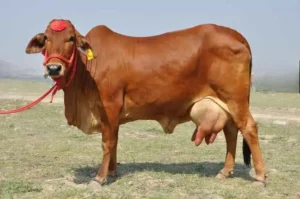
Sahiwal cattle calves

OPU–IVF–ET Technology

  • Ovum PickUp (OPU): Collects oocytes from live animals using ultrasound and vacuum needle.
  • In Vitro Fertilization (IVF): Fertilization of oocytes outside the body.
  • Embryo Transfer (ET): Cultured embryos implanted into synchronized recipient cows.
  • Advantages:
    • Produces offspring of known pedigree.
    • Reduces generation interval.
    • Can be performed even on pregnant animals (<100 days gestation).
    • Boosts genetic improvement in indigenous breeds.

Significance

  • Enhances conservation and productivity of indigenous breeds like Sahiwal.
  • Supports India’s dairy sector by improving milk yield and resilience.
  • Reduces dependence on exotic breeds, ensuring sustainable livestock development.
  • Strengthens rural economy and food security through better cattle genetics.

Conclusion

It combines conservation of native breeds with modern science, ensuring higher productivity, resilience, and longterm sustainability of India’s dairy sector.

CABINET COMMITTEE ON SECURITY (CCS)

TOPIC: (GS2) POLITY: THE HINDU

The Prime Minister recently chaired a CCS meeting to review global developments and India’s preparedness amid the ongoing conflict in West Asia.

Cabinet Committee on Security

  • Headed by: Prime Minister of India.
  • Role: Apex body for decisions on defence policy, national security, foreign affairs, intelligence, nuclear issues, and major security appointments.
  • Composition: PM (Chair), Home Minister, Defence Minister, Finance Minister, External Affairs Minister.
  • Support: National Security Advisor (NSA) acts as coordinator; Cabinet Secretariat maintains records.
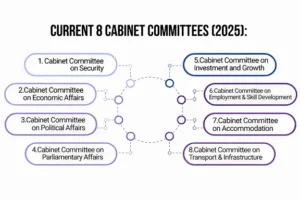
Cabinet Committee on Security

Historical Background

  • 1947: First security committee formed by PM Jawaharlal Nehru with Sardar Patel (Home) and Baldev Singh (Defence).
  • Post1999 Kargil War: CCS evolved into its present formal structure as a highpowered committee.
  • Today: Functions as the top decisionmaking body for internal and external security matters.

Functions

  • Reviews defence expenditure and policy. Oversees foreign affairs and intelligence coordination.
  • Decides on nuclear and space policy. Approves major appointments in national security institutions.
  • Provides strategic direction during crises (wars, conflicts, or global emergencies).

Conclusion

The Cabinet Committee on Security is India’s highest authority for national security and defence decisions. Its recent meeting underscores the importance of coordinated policy responses to global conflicts and their impact on India’s security and economy.


SMOGEATING PHOTOCATALYTIC COATING

TOPIC: (GS3) ENVIRONMENT: THE HINDU

The Delhi government in collaboration with IIT Madras has begun studying the use of “smogeating” photocatalytic coatings on roads to tackle urban air pollution.

SmogEating Photocatalytic Coating

  • Purpose: Neutralizes harmful gases like nitrogen dioxide and volatile hydrocarbons.
  • Compound Used: Titanium dioxide (TiO₂) — lowcost, stable, and compatible with construction materials.
  • Working Principle:
    • Uses light energy to trigger photocatalytic reactions.
    • Breaks down toxic gases and organic pollutants into less harmful substances.
    • Helps clean both air and water environments.
  • Applications: Can be applied on roads, buildings, and construction surfaces to reduce pollution levels.

What is Smog?

  • Definition: A mix of smoke, pollutants, and fog forming toxic air.
  • Types:
    • Sulfurous Smog – caused by burning coal and sulfurrich fuels.
    • Photochemical Smog – common in cities with heavy automobile use; formed by sunlight reacting with pollutants.

Significance

  • Helps reduce urban air pollution and improve public health.
  • Provides a costeffective, sustainable solution for cities struggling with smog.
  • Supports India’s broader environmental goals and clean air initiatives.

Conclusion

The smogeating photocatalytic coating represents an innovative approach to pollution control. By combining science with infrastructure, India can move towards cleaner cities and healthier living environments.

Write a Review

Your email address will not be published. Required fields are marked *