
Daily Current Affairs 27-December-2025

Share this Post

HEALTH CARE DOES NOT NEED THE PPP ROUTE

TOPIC: (GS3) ECONOMY: THE HINDU

The Andhra Pradesh government has proposed setting up new medical colleges under the PublicPrivate Partnership (PPP) model, sparking protests and concerns about privatisation of public health assets.

What is PPP Model?

  • A PPP is an arrangement between a government entity and a private sector company to provide public assets or services.
  • Key Features:
    • Risk sharing between public and private partners.
    • Longterm contracts with performancelinked payments.
    • Private investment in public infrastructure with government oversight.
  • Common Models: BuildOperateTransfer (BOT), BuildOwnOperate (BOO), and Hybrid Annuity Model (HAM).
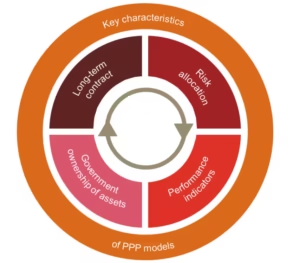
Health Care Does Not Need The PPP Route

Expansion of Medical Colleges

  • Andhra Pradesh already has 17 government medical colleges and 19 private colleges.
  • The state plans to add 10 more colleges under PPP, with over 6,500 seats expected.

PPP Model Design

  • Land leased for 33 years, extendable to 66 years, at nominal rates.
  • Government provides 25% viability funding and ensures 70% bed occupancy.
  • Hospitals empanelled under state insurance schemes, with 70% beds reserved for free or subsidised patients.
  • Investors allowed to charge commercial rates for the remaining 30% beds.

Concerns and Risks

  • Privatisation fears: Public hospitals may lose their character as assets serving the poor.
  • Equity issues: Middleclass and poor students may lose affordable education opportunities.
  • Quality risks: Investors may cut corners in faculty recruitment and patient care.
  • Contract imbalance: Government bears higher risks if investors fail, with disputes likely to drag in courts.
  • Fragmentation: PPP at district level disrupts integration of primary, secondary, and tertiary care.

System Inefficiencies

  • Andhra Pradesh’s health system already suffers from underfunding and staff shortages, especially in rural areas.
  • Commercialisation of medical education may worsen shortages, as students paying high fees prefer private practice or jobs abroad.
  • Evidence shows that effective primary care can reduce hospitalisation by 30%, making uniform expansion of 650bed hospitals questionable.

Way Forward

  • Government should invest directly in subsidised medical education to build a pool of doctors for rural and public hospitals.
  • Strengthen primary health care and referral systems instead of fragmenting services through PPP.
  • Ensure quality and equitable access in medical education rather than focusing only on numbers.
  • Explore alternative financing options instead of relying on PPP, given weak state capacity to enforce contracts.

Conclusion

While PPP may appear attractive for resource mobilisation, in health care it risks undermining equity, quality, and public accountability. For a state like Andhra Pradesh, where institutional enforcement is weak, direct public investment in medical education and health infrastructure remains the safer and more sustainable path.

CHILD MARRIAGE IN INDIA

TOPIC: (GS2) INDIAN POLITY: THE HINDU

India recently marked the first anniversary of the Bal Vivah Mukt Bharat Abhiyan with a 100day awareness campaign against child marriage.

Current Status

  • NFHS data shows child marriage among women aged 20–24 years declined from 47.4% (2005–06) to 23.3% (2019–21).
  • Highest prevalence is reported in West Bengal, Bihar, and Tripura, followed by Jharkhand, Andhra Pradesh, Assam, Telangana, Madhya Pradesh, and Rajasthan.
  • Strong correlation exists between poverty, lack of education, and child marriage.
    • 40% of girls from the poorest households marry before 18, compared to only 8% from the richest.
    • 48% of girls with no education marry early, compared to 4% among those with higher education.

Legal Framework

  • Prevention of Child Marriage Act, 2006 is the main law, but enforcement remains weak with low conviction rates.
  • Use of POCSO Act has created complications, as it criminalises adolescent consensual relationships, pushing girls towards unsafe alternatives.

Social and Health Impacts

  • Leads to poor maternal and child health outcomes.
  • Reduces opportunities for education and formal employment.
  • Perpetuates cycles of poverty and gender inequality.

Challenges

  • Weak enforcement of laws – low conviction rates and poor monitoring reduce deterrence.
  • Socioeconomic drivers – poverty, lack of education, and gender inequality continue to push families towards child marriage.
  • Cultural acceptance – deeprooted traditions and social norms make eradication difficult despite legal bans.

Government Initiatives to Discourage Child Marriage

  • Bal Vivah Mukt Bharat Abhiyan – awareness campaigns to end child marriage.
  • Beti Bachao Beti Padhao – promoting girls’ education and empowerment.
  • Conditional cash transfer schemes in states like West Bengal to incentivise girls to stay in school.
  • Infrastructure support – focus on safe transport, clean toilets, and better schooling facilities to retain girls in education.

Conclusion

India has made progress in reducing child marriage, but uneven outcomes across states highlight persistent challenges. To meet the 2030 SDG target, stronger enforcement of laws, targeted support for vulnerable communities, and investment in girls’ education and empowerment are essential.

DECODING AIR POLLUTION CONCERNS IN DELHINCR

TOPIC: (GS3) ENVIRONMENT: THE HINDU

DelhiNCR continues to face severe air pollution, with vehicular emissions identified as the primary source of PM2.5 and toxic gases.

Major Sources of Pollution

  • Vehicular emissions are the largest contributor to PM2.5, carbon monoxide, benzene, and nitrogen oxides.
  • Stubble burning adds seasonal spikes but is not the dominant source.
  • Industrial activities and construction dust further worsen air quality.

Polluter Pays Principle (PPP)

  • PPP states that those who pollute must bear the cost of environmental damage.
  • Recognised by the Supreme Court in Vellore Citizens Welfare Forum vs Union of India (1996) and later in the National Green Tribunal Act, 2010.
  • Application is complex when multiple sources contribute to pollution.
  • The Standley case (1999, European Court of Justice) highlighted proportionality, meaning farmers cannot be solely blamed when other sources are significant.

Transboundary Nature of Air Pollution

  • Air pollution is not just local; it travels across regions and borders.
  • The Trail Smelter case (1941) established liability for crossborder pollution.
  • International agreements like the Convention on LongRange Transboundary Air Pollution (1979) and ASEAN’s Haze Pollution Agreement (2002) show global recognition of this issue.
  • PM2.5 is now classified as a longdistance pollutant under the Gothenburg Protocol (2012 amendment).

GovernmentPays Principle in India

  • Indian courts often shift responsibility to the government for compensation and restoration.
  • Cases like Indian Council for EnviroLegal Action (1996) leaned towards corrective justice rather than strict PPP.
  • Laws such as the Water Act (1974), Air Act (1981), and Environment Protection Act (1986) empower authorities but enforcement remains weak.

Role of Judiciary

  • The judiciary has taken an activist role, obligating governments to monitor and control pollution.
  • This welfareoriented approach protects vulnerable citizens but does not fully internalise pollution costs.
  • Duties of individuals towards the environment are rarely emphasised compared to rights.

Conclusion

DelhiNCR’s air pollution crisis reflects the limits of blaming single sources like stubble burning. Vehicular emissions, industrial activity, and weak enforcement are major contributors. A balanced approach combining polluter accountability, strong governance, and citizen responsibility is essential for sustainable air quality management.

INVASIVE MOSQUITO SPECIES THREATENS MALARIA ELIMINATION

TOPIC: (GS2) HEALTH: THE HINDU

The Health Ministry’s Malaria Elimination Technical Report (2025) has highlighted that the spread of the invasive mosquito species Anopheles stephensi in Indian cities is posing a serious threat to the country’s target of eliminating malaria by 2030.

About Malaria

  • Malaria is caused by Plasmodium parasites, mainly Plasmodium falciparum and Plasmodium vivax.
  • The disease spreads through the bite of infected female Anopheles mosquitoes, which act as vectors.
  • Common symptoms include fever, chills, headache, and fatigue, while severe cases can lead to organ failure and death.
  • Malaria is both preventable and treatable through vector control measures, effective medicines, and strong surveillance systems.
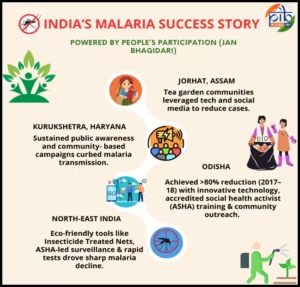
India's Malaria Success Story                        

Present Burden of Malaria in India

  • Malaria cases have reduced from 11.7 lakh in 2015 to 2.27 lakh in 2024, showing a major decline in overall burden.
  • Deaths due to malaria have fallen by 78% during the same period, reflecting improved treatment and prevention measures.
  • Transmission is no longer widespread but is concentrated in specific pockets such as Odisha, Tripura, and Mizoram, and in border districts of the northeast.
  • Asymptomatic infections and frequent population movement continue to sustain transmission in vulnerable areas.

India’s Goals

  • India has set an intermediate target of achieving zero indigenous malaria cases by 2027, which would mark a major milestone in its elimination journey.
  • The country aims for complete elimination of malaria by 2030, in line with the World Health Organization’s global malaria strategy.

Anopheles Stephensi – The Invasive Threat

  • Anopheles stephensi, originally found in West Asia and Africa, has now spread widely across Indian cities.
  • This species breeds in artificial containers such as water tanks, tyres, and construction sites, making it difficult to control in urban settings.
  • It thrives in highdensity urban environments, where population exposure is greater.
  • The mosquito efficiently transmits both Plasmodium falciparum and Plasmodium vivax, increasing the risk of urban malaria outbreaks.

Key Challenges

  • Urban transmission remains difficult to control, as container breeding and fragmented healthcare delivery systems complicate vector management.
  • Operational gaps persist in tribal, forest, and border areas, where surveillance and healthcare access are weak.
  • Drug and insecticide resistance is growing, reducing the effectiveness of existing treatment and prevention tools.

Way Forward

  • India must strengthen surveillance and vector monitoring systems in both urban and rural regions to detect and respond quickly to outbreaks.
  • The government should improve supply chain reliability for medicines, diagnostics, and insecticides to ensure uninterrupted availability.
  • Cityspecific strategies are needed to tackle container breeding, especially in construction sites and informal settlements.
  • Greater crossborder cooperation with neighbouring countries is essential to address transmission risks in border districts.

Conclusion

India has entered the preelimination phase of malaria control, but the spread of Anopheles stephensi and the persistence of highrisk pockets demand urgent and coordinated action. Achieving the 2027 and 2030 targets will require robust surveillance, stronger health systems, and tailored urban strategies to prevent malaria from reemerging as a major public health threat.

WILL INDIANS STILL RIDE THE GOLD WAVE IN 2026?

TOPIC: (GS3) ECONOMY: THE HINDU

Gold Exchange Traded Funds (ETFs) witnessed record inflows in 2025 as Indian investors turned to gold amid weak equity market performance.

What is ExchangeTraded Fund

  • ETF stands for ExchangeTraded Fund. It is a fund made up of many investments (like stocks, bonds, or gold).
  • You can buy and sell ETFs on the stock exchange just like you buy shares of a company.
  • One ETF gives exposure to multiple assets at once, reducing risk compared to buying a single stock.
  • ETFs can track stock market indices (like Nifty or S&P 500), commodities (like gold), or bonds.
  • ETFs usually have lower fees than mutual funds because they are passively managed (they just follow an index).

Gold ETFs – Performance in 2025

  • Net inflows into gold ETFs touched ₹25,566 crore between January–November 2025, nearly three times higher than the same period in 2024.
  • In 2025, gold prices surged by over 60%, making it one of the best performing assets. Gold has traditionally been a preferred investment for Indian households.
  • The share of gold ETFs in all openended schemes rose to 3.2%, compared to less than 1% in earlier years.
  • Overall mutual fund inflows fell by 4.8% to ₹7.9 lakh crore, showing that gold ETFs gained popularity while general fund interest slowed.

Reasons for the Gold Rush

  • Price surge: Gold prices jumped from ₹2.4 lakh/kg in November 2024 to ₹3.8 lakh/kg in November 2025, a 61% increase.
  • Weak equity returns: Benchmark Nifty delivered negative returns, and many new stocks underperformed.
  • Global uncertainties: The tariff war initiated by U.S. President Donald Trump created volatility in global markets.
  • Central bank demand: Global central banks increased gold reserves to reduce dependence on the dollar, boosting investor confidence.
  • Accessibility: Gold ETFs offered a cheaper and safer way to invest, with units priced around ₹140–₹150.

Conclusion

The surge in gold ETFs in 2025 reflects investor preference for safety during uncertain times. While returns may moderate in 2026, gold will continue to play a crucial role in Indian portfolios as a hedge against volatility. For policymakers and investors, the trend highlights the importance of balancing traditional safehaven assets with broader market investments.

FOUR NEW REGIONAL AIRLINES IN INDIA

TOPIC: (GS2) INDIAN POLITY: THE HINDU

The Ministry of Civil Aviation has recently issued NoObjection Certificates (NOCs) to two new regional airlines—Al Hind Air and FlyExpress—taking the total number of proposed carriers to four.

What an NOC Means

  • An NOC allows an airline to set up offices, hire staff, and pursue further approvals.
  • It is granted after assessing financial health, operational plans, and security clearances.
  • Valid typically for three years, but airlines must secure an Air Operator Certificate (AOC) to begin flights.

New Regional Players

  • Al Hind Air: Backed by Kerala’s Al Hind Group; plans commuter services using ATR72 aircraft.
  • FlyExpress: Details of operations yet to be announced.
  • Air Kerala: Proposed ultralowcost carrier connecting smaller towns to hubs; has struggled to induct aircraft despite NOC.
  • Shankh Air: Promoted by a UP entrepreneur; aims to operate from Noida International Airport on regional routes.

Why Regional Airlines Struggle in India

  • Past failures: Airlines like Paramount Airways, TruJet, Zoom Air, Air Pegasus, and Fly Big collapsed due to financial stress.
  • High costs: Fuel, leasing, and maintenance are dollardenominated, making operations expensive.
  • Thin margins: India’s aviation market is highly pricesensitive, favouring large carriers with scale.
  • Demand issues: Smaller airports often have limited and seasonal demand, leading to volatile load factors.

Structural Challenges

  • Duopoly concerns: IndiGo and Air India together control over 90% of the domestic market.
  • Regional carriers lack resilience to withstand shocks compared to larger airlines.
  • Ancillary revenue opportunities (cargo, premium services) are limited for small carriers.

What Could Improve Viability

  • Growth of India’s middle class could expand demand for regional air travel.
  • Lean operations and focus on underserved regions may help carriers build niche markets.
  • Strong financial backing and partnerships are essential to survive downturns.
  • Government support through infrastructure development and subsidies could improve sustainability.

Conclusion

The entry of four new regional airlines signals optimism in India’s aviation sector. Yet, given the history of failures and structural challenges, success will depend on financial strength, efficient operations, and targeted regional strategies. Without these, the risk of repeating past collapses remains high.

KIMBERLEY PROCESS (KP)

TOPIC: (GS2) INTERNATIONAL RELATIONS: THE HINDU

India has been selected to assume the Chairmanship of the Kimberley Process from 1 January 2026.
This marks India’s third time as Chair, underlining its importance in the global diamond sector.

Kimberley Process                                            

What is the Kimberley Process?

  • The Kimberley Process is an international certification system for diamonds.
  • It aims to stop the trade of conflict diamonds.
  • Conflict diamonds are rough diamonds used by rebel groups to finance armed conflicts, as recognised by the UN.
  • The process is a tripartite arrangement involving governments, the diamond industry, and civil society.

Objectives

  • Prevent diamond trade from funding violence and insurgency.
  • Ensure ethical sourcing and transparency in the diamond supply chain.
  • Promote peace in diamond-producing regions.

Governance Structure

  • The Plenary is the highest decision-making body.
  • The Chair and Vice-Chair are chosen by consensus.
  • The Vice-Chair automatically becomes Chair the following year.

Members

  • The Kimberley Process has 60 participants, representing 86 countries.
  • The European Union is counted as one participant, not separately by country.

India and Kimberley Process

  • India joined the Kimberley Process Certification Scheme in 2003.
  • India is a global hub for diamond cutting and polishing.
  • Its chairmanship reflects commitment to responsible diamond trade.

VITAMIN C

TOPIC: (GS3) SCIENCE AND TECHNOLOGY: THE HINDU

Recent studies indicate that high doses of Vitamin C may help protect lungs against damage caused by fine particulate matter in polluted air. This finding is significant for countries like India where air pollution is a major public health concern.
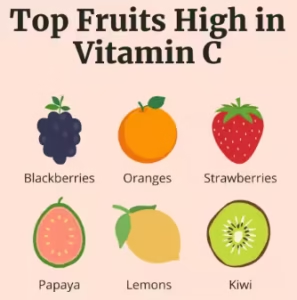
Top Fruits High in Vitamnic C                                                

Functions of Vitamin C

  • Helps in the formation of collagen, a protein important for skin, tendons, ligaments, and blood vessels.
  • Aids in healing wounds and forming scar tissue.
  • Supports the repair and maintenance of cartilage, bones, and teeth.
  • Improves iron absorption from plantbased foods.
  • Acts as a powerful antioxidant, neutralizing harmful free radicals.
  • Assists in the production of hormones and neurotransmitters in the brain and nerves.

Sources of Vitamin C

  • Found mainly in fruits and vegetables such as citrus fruits, tomatoes, peppers, broccoli, and leafy greens.
  • Some packaged juices and cereals are fortified with Vitamin C.
  • Heat reduces Vitamin C content, so raw foods are more beneficial.

Deficiency and Health Concerns

  • Since Vitamin C is not stored in the body, deficiency can occur quickly.
  • Severe deficiency leads to scurvy, marked by anemia, fatigue, bleeding gums, limb pain, and tooth loss.


Write a Review

Your email address will not be published. Required fields are marked *