

Table of Contents
ToggleSUPREME COURT’S BAN ON THE CLASS 8 NCERT TEXTBOOK
TOPIC: (GS2) POLITY: THE HINDU
The Supreme Court banned a Class 8 NCERT social science textbook and ordered seizure of all copies (digital and print).
Background
- The textbook was published by NCERT in February under the Ministry of Education.
- A three-judge Bench led by CJI Surya Kant took suo motu action, calling the content “reckless, motivated, and contemptuous.”
- The Court initiated contempt proceedings against NCERT officials and the Education Ministry.
Court’s Observations
- The content was seen as a deliberate move to instil bias against the judiciary in young minds.
- The book ignored the judiciary’s role in upholding constitutional morality, basic structure, and access to justice.
- The Court said the publication “washed away the illustrious history of the Supreme Court and High Courts.”
- Solicitor-General offered an unconditional apology, but the Court insisted on deeper accountability.
Impact on Children’s Perspective
- Trust Deficit – Such content can create negative perceptions about the judiciary among impressionable students.
- Bias Formation – Early exposure to one-sided narratives may lead to long-term mistrust of institutions.
- Loss of Respect – Undermines the judiciary’s image as a guardian of rights and democracy.
Way Forward
- Balanced Curriculum: Textbooks must present objective and holistic views of institutions.
- Accountability: Stronger review mechanisms before publishing educational material.
- Awareness: Promote civic education highlighting the role of judiciary in democracy.
Citizens’ Right to Criticise Organs of Government
- Freedom of Speech (Article 19) – Citizens can criticise government institutions within reasonable limits.
- Constructive Criticism – Criticism should aim at reform and accountability, not defamation.
- Judicial Protection – Courts protect free speech but balance it against contempt jurisdiction to safeguard institutional dignity.
Conclusion
The SC’s intervention underscores the sensitivity of shaping young minds through textbooks. While citizens have the right to critique institutions, educational content must remain balanced, factual, and respectful of constitutional values to preserve trust in democracy.
SHIFT IN GLOBAL TRADE ARCHITECTURE
TOPIC: (GS2) INTERNATIONAL RELATIONS: THE HINDU
Why in News?
Recent trade engagements by the United States under its “reciprocal trade” approach have sparked debate over their legality and impact on the global trading system.
Foundation: Multilateral Trading System
- Evolution
- Originated with the General Agreement on Tariffs and Trade (GATT), 1947.
- Institutionalised under the WTO in 1995.
- Expanded coverage from goods to services (GATS) and intellectual property (TRIPS).
- Core Principles
- Most-Favoured-Nation (MFN): Equal trade treatment to all members.
- National Treatment: No discrimination between domestic and imported goods.
- Dispute Settlement Mechanism (DSM): Legal platform for resolving trade disputes.
- Role of the U.S.
- Historically central in designing the multilateral trade order.
- Promoted open markets post–Great Depression protectionism.
Preferential Trade Agreements (PTAs)
A Preferential Trade Agreement (PTA) is a trade arrangement between two or more countries in which they reduce or eliminate tariffs and other trade barriers on selected goods and services among themselves, while maintaining separate trade policies toward non-member countries.
Conditions
- Must cover “substantially all trade”.
- Customs unions require a common external tariff.
Recent Trends
- Rapid growth since the 1990s.
- Large regional agreements like Regional Comprehensive Economic Partnership (RCEP) have emerged.
- Modern FTAs include labour, environment, digital trade, and investment rules.
Criticism
- Compliance burdens on developing countries.
- TRIPS-plus intellectual property norms.
Agreements on Reciprocal Trade (ARTs)
Key Features
- Introduced during the Trump administration under the “America First” doctrine.
- Not notified under Article XXIV of GATT, unlike FTAs.
- Allow the U.S. to impose tariffs inconsistent with WTO commitments.
- Require partner nations to reduce tariffs or adopt U.S.-aligned regulatory standards.
Concerns
- Bypassing WTO transparency mechanisms.
- Undermining MFN principle.
- Imposing data and digital trade constraints on partner nations.
- Perceived as tools of economic coercion.
Legal and Geopolitical Implications
Legal Issues
- Lack of WTO scrutiny raises questions of compatibility with global trade law.
- Weakens the authority of the WTO dispute system.
Geopolitical Impact
- Signals rise of economic nationalism and protectionism.
- May encourage other major powers to adopt unilateral trade practices.
- Risks fragmentation of global trade into competing blocs.
India–U.S. Trade Dynamics
- India and the U.S. are negotiating a comprehensive trade agreement (as of 2026 discussions).
- Key areas: market access, digital trade, supply chains, intellectual property.
- India must guard against provisions affecting data sovereignty and tariff autonomy.
- In contrast, India’s negotiations with the EU and UK largely follow conventional FTA frameworks aligned with WTO norms.
Way Forward
- Reinforce multilateral cooperation through WTO reform.
- Ensure transparency and compatibility of bilateral agreements with global rules.
- Protect interests of developing countries in asymmetric negotiations.
- Promote balanced trade frameworks based on reciprocity and fairness.
Conclusion
The emergence of ARTs reflects a shift from rule-based multilateralism to power-driven bilateralism.
Sustaining a fair global trade order requires renewed commitment to WTO principles and cooperative engagement.
I&B MINISTER CALLS FOR GREATER ACCOUNTABILITY OF ONLINE PLATFORMS
TOPIC: (GS2) GOVERNANCE: THE HINDU
Union Minister for Information & Broadcasting, Ashwini Vaishnaw, urged digital platforms to take responsibility for harmful and synthetic content.
Background of the Issue
- Rapid growth of social media and digital news platforms has changed information flow.
- Artificial Intelligence tools can now create deepfakes (fake videos, voices, and images).
- False information spreads quickly due to high virality of online platforms.
- Traditional media houses argue that platforms earn revenue using their content without fair sharing.
Concerns Highlighted by the Minister
- Threat of Deepfakes and Synthetic Content: AI-generated fake videos and voice clones can damage reputations. Such content can mislead voters and weaken democratic institutions.
- Spread of Misinformation: Fake news spreads rapidly to millions within minutes. It can incite violence, hatred, or panic. It reduces public trust in media and governance.
- Online Safety and Cybercrime: Rise in online fraud, financial scams, and betting apps. Children are exposed to obscene and harmful content.
- Revenue Sharing Concerns: Digital platforms earn advertisement revenue through news and original content. Minister warned that if voluntary action is not taken, legal measures may follow (as seen in some other countries).
Challenges with Unregulated Content
- Jurisdiction Issues: Many platforms operate globally, complicating regulation.
- Technology Speed vs Law: AI evolves faster than regulatory frameworks.
- Free Speech Concerns: Balancing regulation without suppressing freedom of expression.
- Algorithm Bias: Platforms promote sensational content for engagement.
- Lack of Transparency: Limited clarity on how content moderation decisions are made.
Measures Taken by the Indian Government
- Information Technology (IT) Rules, 2021: Mandate grievance redressal officers. Require removal of unlawful content within fixed timelines.
- Amendments on Online Gaming: Rules to curb illegal online betting and financial fraud. Protect users from monetary exploitation.
- Digital Personal Data Protection Act, 2023: Focus on user consent and protection of personal data. Limits misuse of personal information.
- Advisory on Deepfakes (2023–24): Platforms directed to act quickly against AI-generated fake content. Emphasis on labeling AI-generated material.
Way Forward
- Stronger AI Regulation Framework: Clear rules on synthetic media and consent.
- Transparent Algorithms: Platforms should disclose content moderation policies.
- Fair Revenue-Sharing Models: Structured agreements between platforms and publishers.
- Digital Literacy Campaigns: Educate citizens to identify fake content.
- International Cooperation: Global coordination to regulate cross-border digital platforms.
Conclusion
Ensuring accountability, protecting citizens from cyber threats, and maintaining fairness in revenue sharing are essential to safeguard democracy and public trust in the digital age.
INDIA’S CYCLE OF DEPRIVATION AND AFFLUENCE
TOPIC: (GS3) ECONOMY: THE HINDU
Recent analysis of income mobility trends (2014–2025) shows rising downward mobility among households, especially in rural areas and disadvantaged social groups.
About Income Mobility
- Income mobility refers to households moving upward, downward, or remaining stable in income groups over time.
- The findings highlight entrenched inequality and uneven economic gains despite claims of falling poverty and inequality.
- Based on 2014 per capita income ranks: Top 10%, Next 40%, Bottom 50%
Overall Trends
- Downward mobility rose from 14% (2015) to 26.8% (2025).
- Upward mobility increased from 14.1% to 23.5%, but lagged behind downward shifts.
- By 2025, 1 in 4 households were worse-off compared to 2014.
Rural vs Urban
- Rural households: 29% worse-off by 2025, with vulnerability persisting after 2019.
- Urban households: Fared better, with gradual upward mobility, but still faced rising downward shifts.
- Gains concentrated in urban centres, rural areas bore the brunt of volatility.
Caste Patterns
- OBCs and SCs: Sharp rise in downward mobility; SCs faced limited upward pathways.
- STs: Lower downward mobility, some upward gains due to targeted interventions.
- Upper castes: More resilience and upward movement.
Religious Groups
- Hindus & Muslims: Higher downward mobility, modest upward gains.
- Sikhs & Christians: Stronger upward mobility in early years, though momentum slowed later.
- Discrimination restricted Muslim upward mobility more than downward shifts.
Structural Insights
- Districts with higher inequality showed greater downward mobility.
- Education, urban location, and larger household size improved prospects.
- COVID-19 pandemic worsened vulnerabilities, especially in informal and rural sectors.
Implications
- Rising downward mobility signals economic insecurity and social instability.
- Inequality is not just about income gaps but about restricted mobility opportunities.
- Frustration may replace aspiration if households continue slipping down the ladder.
Way Forward
- Strengthen Public Services – Invest in health, education, and social protection.
- Employment-Intensive Growth – Focus on agriculture, manufacturing, and informal sector revival.
- Address Discrimination – Ensure equal access to assets, opportunities, and reduce caste/religion-based barriers.
Conclusion
India’s economy shows uneven progress where more households are sliding into deprivation than rising into affluence. Tackling entrenched inequality and ensuring inclusive mobility is essential to sustain social stability and restore faith in economic progress.
AI/LLMS DISRUPTING INDIA’S SOFTWARE SERVICES INDUSTRY
TOPIC: (GS3) SCIENCE AND TECHNOLOGY: THE HINDU
Rapid adoption of Artificial Intelligence (AI) and Large Language Models (LLMs) is reshaping India’s IT and BPO sectors coinciding with layoffs and restructuring in tech firms.
Transformation vs Disruption
- AI Washing: Some layoffs are labelled as “AI-driven” but are largely cost-cutting measures.
- Positive Transformation: Developers, testers, and product managers are using AI tools to improve productivity.
- Shift in Model: From labour arbitrage (adding manpower) to intelligence arbitrage (leveraging AI for efficiency).
Impact on Roles
- Software Development: AI assists coding, testing, DevOps, and product management, reducing time but requiring new skills (context engineering, refactoring).
- Team Size: Squads of 8–10 may shrink to 3–5, but new roles in AI fine-tuning and monitoring are emerging.
- Revenue per Engineer: Increasing due to efficiency gains.
Vulnerability of Entry-Level Jobs
- BPO/KPO Roles: Repetitive tasks in call centres and documentation are highly vulnerable to automation.
- Agentic AI: Can automate end-to-end processes, reducing large teams to small monitoring groups.
- IT Services: Less vulnerable, as human coordination across geographies and teams remains essential.
Global Partnerships
- Indian IT firms embed AI into the Software Development Life Cycle for regulated industries like banking.
- Partnerships with global AI leaders are growth strategies, not defensive moves.
- India consumes AI built abroad but adds value through systems engineering, integration, and execution.
Shifts in Business Models
- Moving from time-and-material billing to outcome-based pricing.
- Customers demand predictable delivery, quality, and cost clarity.
Challenges & Concerns
- Job Security: Entry-level layoffs without social safety nets.
- Skill Gaps: Reskilling limited to prompt engineering; lack of foundational AI research in India.
- Regulation: Need for transparency in algorithmic decision-making.
- Environmental Impact: AI-driven data centres consume high electricity and water.
Way Forward
- Just Transition – Introduce unemployment benefits and stronger worker protections.
- Reskilling & Certification – Formal skill accreditation under Skill India for AI-related roles.
- Balanced Strategy – Build sovereign LLMs while strengthening India’s dominance in AI services.
Conclusion
India must balance growth with social protections, reskilling, and strategic investments to ensure a fair and sustainable transition.
INDIA’S CRITICAL MINERALS STRATEGY
TOPIC: (GS3) ECONOMY: THE HINDU
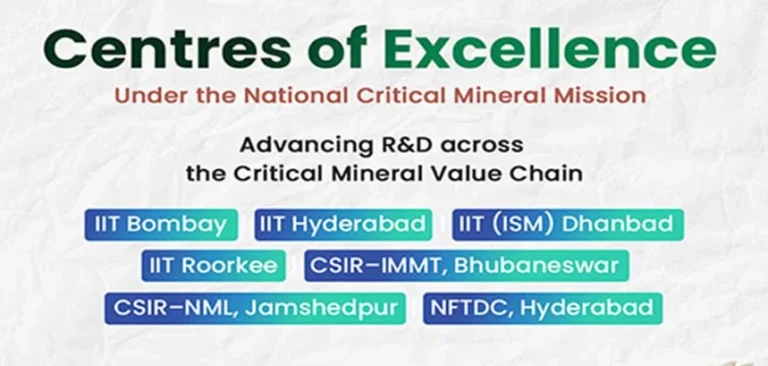
The Union Budget 2026 highlighted critical minerals as a strategic priority for India’s industrial, energy, and geopolitical future.
Background
- The launch of the National Critical Mineral Mission (NCMM) with ₹16,300 crore outlay marks a major policy shift.
- Earlier, minerals like lithium were classified as atomic minerals, restricting private exploration.
- India now has a list of 30 critical minerals and has eased exploration norms, rationalised royalty rates, and opened opportunities for private players.
- Critical minerals are essential for clean energy technologies, defence, and advanced manufacturing.
Current Capabilities
- India already produces high-purity copper, graphite, rare earth oxides, tin, and titanium (99.9% purity).
- Production is limited and geared towards conventional uses.
- Scaling up requires technological upgrades, refining capacity, and leveraging skills from sectors like chemicals and pharmaceuticals.
Priority Areas for Implementation
- Demand Creation: Boost domestic manufacturing of EVs, batteries, solar modules, and wind turbines to create assured demand.
- AI-Driven Exploration: Use AI tools for prospectivity analysis, integrating with IndiaAI Mission, National Geospatial Policy, and Mission Anveshan.
- Geopolitical Leverage: Weaponisation of rare earths and battery supply chains shows global fragility. India announced rare earth corridors and reduced import duties on monazite sands.
International Partnerships
- Collaborations with Australia, EU, Japan, UK, and U.S. for advanced processing and technology transfer.
- Encourage foreign firms to set up facilities in India.
- Strengthen research links (e.g., UK-India Critical Minerals Supply Chain Observatory).
- India-EU FTA includes cooperation on critical minerals.
Challenges in Scaling Critical Minerals
- Lengthy Exploration and Mining Timelines: Discovering, assessing, and developing mineral deposits often takes years or even decades, delaying supply security.
- China’s Global Dominance in Processing: China controls nearly 90% of global mineral refining capacity, creating dependency risks and limiting India’s strategic autonomy.
- Regulatory and Market Uncertainty: Lack of clear legal frameworks, stable policies, and assured domestic demand discourages private investment and slows industrial growth.
Conclusion
India’s shift towards critical minerals marks a strategic transformation in industrial and energy policy. Success will depend on execution, AI-driven exploration, demand creation, and global partnerships
EPSTEIN–BARR VIRUS (EBV)
TOPIC: (GS3) SCIENCE AND TECHNOLOGY: THE HINDU
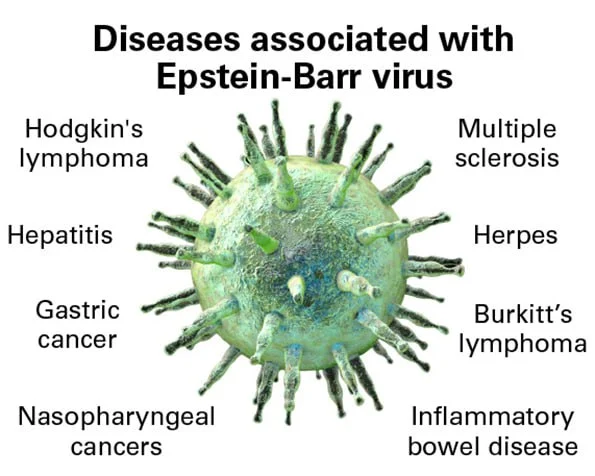
Scientists are making progress in developing a vaccine against the Epstein–Barr Virus (EBV). Since EBV infects about 95% of the world’s population and is linked to serious diseases, vaccine development has gained global attention.
About Epstein–Barr Virus
- EBV is a very common and highly contagious virus.
- It belongs to the herpesvirus family and is also known as Human Herpesvirus-4 (HHV-4).
- A large majority of people across the world get infected at some point in their lives.
- The infection is usually mild or unnoticed in many individuals.
Mode of Transmission
- The virus mainly spreads through saliva.
- It can spread through close personal contact such as kissing or sharing utensils.
- In rare cases, it may also spread through blood or organ transplantation.
Who is Affected?
- Most infections occur during childhood or adolescence.
- Teenagers and young adults are more likely to show symptoms.
- Nearly 95% of adults globally carry the virus in a dormant form.
Reactivation and Health Risks
- After initial infection, EBV remains inactive inside the body.
- It can reactivate during periods of weak immunity or severe stress.
- Reactivation has been linked to serious illnesses such as: Certain stomach cancers, Multiple sclerosis (autoimmune disorder)
Common Symptoms
- Sore throat and throat inflammation
- Fever
- Severe tiredness (fatigue)
- Swollen lymph nodes
- Skin rashes
- Enlarged spleen or liver
Treatment and Prevention
- There is no specific antiviral treatment for EBV.
- Care mainly focuses on relieving symptoms.
- Rest, hydration and supportive care help recovery.
- Vaccine research is underway to prevent infection and long-term complications.
Conclusion
Although EBV infection is widespread and often harmless, its link to cancer and autoimmune diseases makes vaccine development an important global health priority.
VITAMIN B3 (NIACIN)
TOPIC: (GS3) SCIENCE AND TECHNOLOGY: INDIAN EXPRESS
Researchers have found that Vitamin B3 supplementation helped treat NAXD deficiency in experimental mice studies. This rare genetic disorder affects energy production in cells, raising hope for new treatment options.
About Vitamin B3
- Vitamin B3, also called Niacin, is a water-soluble vitamin.
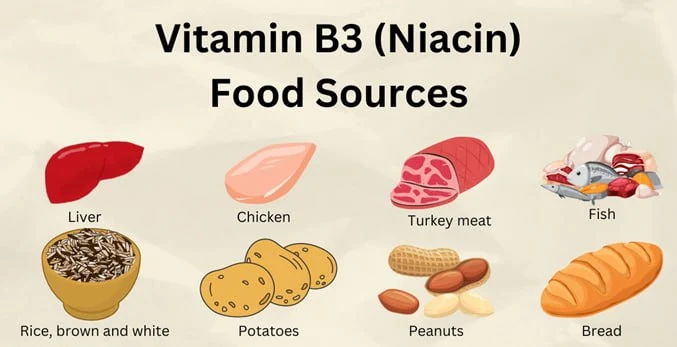
- It is obtained from food and also produced in small amounts in the body from the amino acid tryptophan.
- It exists in two main forms: Nicotinic acid, Niacinamide (nicotinamide)
Functions in the Body
- Acts as a coenzyme in more than 400 enzymatic reactions.
- Helps convert carbohydrates, fats and proteins into energy.
- Supports the formation of cholesterol and fatty acids.
- Plays a role in DNA repair and cell health.
- Has antioxidant properties that protect cells from damage.
Deficiency and Health Effects
- Severe deficiency leads to Pellagra, characterised by: Dark, scaly rash on sun-exposed skin, Red and swollen tongue, Diarrhoea or constipation
- Other symptoms include: Depression, Headache, Fatigue, Memory problems
NAXD Deficiency
- NAXD is an enzyme that repairs damaged metabolic molecules inside cells.
- It ensures proper energy production and cell survival.
- Deficiency is a rare inherited neurological disorder.
- Symptoms often appear in infancy and worsen after fever.
- Clinical features include:
- Muscle weakness and irritability
- Loss of speech and movement control
- Seizures and hearing problems
Conclusion
Vitamin B3 is essential for energy metabolism and cellular health. Recent findings suggest its potential role in managing rare genetic metabolic disorders, highlighting its growing medical importance.