

Daily Current affairs 30 March 2026

Daily Current Affairs 30-March-2026

Share this Post

WAGE RIGHTS AND THE VBGRAMG

TOPIC: (GS2) POLITY: THE HINDU

Recently The Viksit Bharat – Guarantee for Rozgar and Ajeevika Mission (VBGRAMG) Act replaces the earlier MGNREGA framework and retains central powers to set wages.

Why wage rates matter

  • Wage is a core parameter: Higher wages raise worker interest and programme uptake; low wages can suppress demand and allow gradual programme erosion.
  • Cost and coverage link: Wage levels directly affect programme costs and the political will to fund it.
  • Economists opined that this is a missed chance to guarantee minimum wages and that a longrunning realwage freeze has already reduced the scheme’s effectiveness.

What VBGRAMG does

  • Retains central power to set wages (Section 10) rather than restoring the earlier rule that linked payments to State minimum wages; cost sharing is now 60:40 Centre:State.
  • Legal ambiguity: The removal of the earlier “nonobstante” clause raises questions about whether paying below State minimums is lawful.

How wages were set under MGNREGA

  • Initial rule (2006–2009): Until 2009, State minimum wages for agricultural labourers applied to MGNREGA work, which helped make the scheme popular in many States.
  • Central notification (2009): The Centre then began notifying a uniform MGNREGA wage (about ₹100/day at the time), which later froze in real terms.

Consequences

  • MGNREGA wages fell behind State minimums and market wages, reducing the scheme’s role in sustaining rural pay levels.
  • Payment delays and technical failures (Aadhaar/payment systems) discouraged workers and lowered participation.
  • Corruption and leakages rose as worker vigilance fell, further reducing real employment outcomes.

way forward

  • Centre should notify wages at or above State minimums across all States to remove legal doubt and raise real pay.
  • Ensure timely payments: Fix technical bottlenecks and strengthen payment guarantees to prevent delays.
  • Restore demanddriven design: Link wages to local labour markets so the scheme sustains rural wage floors rather than undermining them.

Conclusion:

The VBGRAMG Act misses a chance to secure minimum rural wages retaining central control and a realwage freeze risks weakening income protection unless the Centre commits to paying at least state minimums and ensuring timely, corruptionfree payments.

CENTRE CUTS EXCISE DUTY ON PETROL AND DIESEL

TOPIC: (GS3) ECONOMY: THE HINDU

The Union government cut the special additional excise duty on petrol and diesel to ease the financial burden oil marketing companies (OMCs)  from high global crude prices.

Key Measures

  • Excise duty cut: ₹10 per litre reduction on petrol and diesel. : After the cut, diesel duty effectively becomes zero and petrol duty falls to ₹3 per litre.
  • Export duty hikes: Export duty on diesel raised to ₹21.5 per litre; on ATF (aviation turbine fuel) raised to ₹29.5 per litre.
  • Short-term fiscal estimate: The duty reduction is expected to cost the exchequer about ₹7,000 crore over the next 15 days.
  • Offset revenue: Higher export duties are projected to add roughly ₹1,500 crore, partially offsetting the excise loss.
  • Official stance: The government clarified that this change will not be passed on to consumers as lower pump prices.

Government Rationale

  • Protect OMC balance sheets: The cut aims to reduce the fiscal strain that oil marketing companies have been absorbing because international oil prices remain high.
  • Stabilise domestic supply economics: By adjusting duties and export levies, the government seeks to manage margins and discourage excessive exports that could tighten domestic availability.

Market and Consumer Impact

  • No immediate price relief: Retail fuel prices at pumps are expected to remain unchanged despite the duty cut.
  • Short-term fiscal pressure: The exchequer will bear a near-term revenue hit, partly mitigated by higher export levies.
  • Export behaviour: Increased export duties make exporting diesel and ATF less attractive, which could help maintain domestic supplies.

Policy Implications and Considerations

  • Temporary measure: The announcement appears aimed at short-term relief for OMCs rather than long-term consumer subsidy.
  • Fiscal trade-offs: Policymakers must balance supporting OMCs, protecting consumers, and maintaining revenue targets.
  • Monitoring required: Watch for changes in pump pricing, OMC margins, and international crude trends to assess whether further interventions are needed.

Fuel taxes

Fuel taxes are a major revenue source for Centre and states and explain large price differences across states.

Central levies (what the Union government charges)

  • Central Excise Duty / Basic Excise: A fixed rupee amount per litre set by the Centre; it is a direct component of the retail price.
  • Special Additional Excise Duty / Road Cess (if applicable): Additional perlitre levies the Centre can vary for fiscal or policy reasons (recently adjusted to ease OMC margins).
  • Export Duties (when applied): Centre can levy export duties on diesel/ATF to discourage exports and protect domestic supply; revenue from these duties goes to the Centre.

State levies (what state governments charge)

  • Value Added Tax (VAT) / Sales Tax: The main state component; charged as a percentage of the retail price and varies by state, causing price differences across India.
  • State Cesses and Surcharges: Some states add small cesses or surcharges for road funds or special purposes; these are layered on top of VAT.

Other price components (not taxes but affect final pump price)

  • Dealer commission and dealer margin: Fixed or percentage margins paid to fuel retailers.
  • Oil Marketing Company (OMC) margins and freight: Distribution, storage and marketing costs included in retail price.

Conclusion:

The ₹10-per-litre excise cut eases the fiscal burden on oil marketing companies but does not lower pump prices, making it a short-term fiscal tradeoff.

SECURING INDIA’S SUPPLY CHAINS

TOPIC: (GS3) ECONOMY: THE HINDU

Recent geopolitical tensions in West Asia and ongoing global disruptions are now emphasising diversification, domestic capacity building and integrated planning to reduce vulnerability.

Import Dependence and Supply Vulnerability

  • Crude oil: India imported 88.2% of its crude oil needs in FY 2024–25; natural gas imports stood at 50.8%.
  • Edible oils: India imports about 57% of its cooking oil requirement, amounting to 26–27 million tonnes annually
  • Fertilizers: Imports account for 67% of DAP and 27% of urea availability in 2025.
  • APIs (pharmaceuticals): India imported APIs worth USD 4.35 billion in 2024–25, with China supplying nearly 74% of the total.
  • Electronics: India imported $36.8 billion worth of electronic components in 2024–25, mainly from China

Energy security

  • Diversify supply sources: Broaden crude and gas import partners to reduce geopolitical risk.
  • Expand domestic capacity: Increase exploration and production of oil and gas to lower import share.
  • Accelerate renewables: Scale up nonfossil capacity and invest in storage to manage intermittency.
  • Strategic buffers: Build larger strategic petroleum and critical fuel reserves to ride out short shocks.
  • Green transition: Promote green hydrogen and electrification to cut longterm oil and gas dependence.

Food and fertilizer resilience

  • Reduce import gaps: Boost domestic production of oilseeds and pulses through targeted missions and procurement support.
  • Strategic reserves: Create buffer stocks for edible oils and pulses to manage supply shocks.
  • Fertilizer reforms: Diversify suppliers, expand domestic phosphatic/potassic production and promote biofertilisers.

Manufacturing inputs

  • Localise intermediates: Incentivise domestic production of APIs, semiconductors components and industrial intermediates.
  • Move beyond assembly: Shift policy focus from final assembly to building upstream and midstream capabilities.
  • Process reengineering: Encourage firms to adopt inputefficient technologies and alternative materials to lower import intensity.
  • Strategic sourcing: Secure longterm contracts and partnerships across multiple regions, including Africa and Latin America.

Systemic measures

  • Integrated policy approach: Coordinate industry, trade, energy and agriculture policies for crosssector resilience.
  • Publicprivate partnerships: Use incentives, finance and technology transfer to scale domestic capacity quickly.
  • Risk mapping and monitoring: Identify critical inputs, map supply risks and maintain contingency plans.
  • Skill and infrastructure push: Invest in specialised manufacturing clusters, testing facilities and skilled labour for complex inputs.

Conclusion

Building resilient supply chains requires a mix of diversification, domestic capacity expansion and strategic buffers, supported by coordinated policy action to reduce India’s exposure to external shocks.

MAHARASHTRA FREEDOM OF RELIGION BILL, 2026

TOPIC: (GS2) POLITY: THE HINDU

The Maharashtra Legislature recently passed the Maharashtra Freedom of Religion Bill, 2026, to curb unlawful religious conversions.

Maharashtra Freedom of Religion Bill, 2026

  • Objective: To prohibit conversions obtained by force, fraud, allurement, undue influence or other illegal means and to protect the right to freedom of religion.
  • Core procedure: Requires a 60day prior notice before conversion and a postconversion declaration after the change of faith.
  • Who can complain: The converted person, their parents, siblings or any blood/ marriage/ adoption relative may file a complaint; police must register such complaints.
  • Penalties: Violations attract cognisable, nonbailable offences with imprisonment up to 10 years and fines up to ₹7 lakh for repeat or mass offences; specific unlawful conversion offences carry up to 7 years and fines (higher if victim is minor, woman, person of unsound mind, SC/ST).
  • Marriage and children: Marriages solemnised solely for conversion can be declared null and void; children from such unions are deemed to follow the mother’s premarriage religion and retain succession and maintenance rights.

How the 60day notice works

  • Declaration of intent: A person intending to convert must submit a written notice 60 days before the conversion.
  • Waiting period purpose: Allows authorities to verify voluntariness and investigate allegations of coercion or allurement.
  • Postconversion step: After conversion, the person must file a declaration confirming the change.

Major concerns raised

  • Personal liberty: Critics say the law interferes with the constitutional right to freely choose religion and may deter voluntary conversions.
  • Family and vigilante pressure: Allowing relatives to file complaints could enable family or community coercion and encourage vigilante interventions.
  • Impact on interfaith marriages: Nonbailable offences and annulment provisions may intimidate consenting adult couples in interfaith relationships.
  • Administrative burden: Implementing the law requires new certification and verification systems; bureaucrats warn of legal and procedural complications.
  • Lack of evidence: Civil society questions the empirical basis for such sweeping legislation.

State’s justification

  • Law and order rationale: The government argues forcible and fraudulent conversions have risen and existing laws are inadequate to prevent communal tensions.
  • Public order and protection: The Bill is presented as a tool to protect vulnerable groups and maintain social harmony.

Conclusion:

The Bill longterm impact will depend on how safeguards for individual rights, administrative processes and judicial review are balanced in practice.

CAPF (GENERAL ADMINISTRATION) BILL, 2026

TOPIC: (GS2) POLITY: THE HINDU

The CAPF (General Administration) Bill, 2026 was introduced in the Rajya Sabha, reserving top leadership posts in CAPFs for IPS officers on deputation.

Background

  • Supreme Court ruling (May 2025): Directed gradual reduction of IPS deputation in CAPFs within two years; recognised CAPF Group A officers as Organised Group A Services (OGAS).
  • Government response: Filed a review petition (dismissed in Oct 2025), but continued IPS appointments. Retired CAPF officers filed contempt petitions.
  • Legislative move: The government introduced the CAPF Bill, 2026, to legally reserve senior posts for IPS officers.

Key Provisions of the Bill

  • Leadership reservation:
    • 50% of Inspector General (IG) posts.
    • At least 67% of Additional DG posts.
    • 100% of Special DG and DG posts.
  • Rationale given: To ensure coordination with states and strengthen Centre–State relations in national security.

Concerns Raised

  • Career stagnation: CAPF cadre officers face slow promotions; reserving top posts for IPS blocks their progression.
  • Judicial overreach: Critics say the Bill undermines the Supreme Court’s ruling and sets a precedent of bypassing judicial authority.
  • Domain expertise gap: IPS officers often lack ground-level CAPF experience, affecting operational effectiveness.
  • Institutional autonomy: Seen as reinforcing bureaucratic control rather than professional independence of CAPFs.
  • Equality issues: Permanent exclusion of CAPF officers from top posts raises concerns under Articles 14 and 16 (equality and equal opportunity).
  • Morale impact: Low promotions and lack of leadership opportunities may reduce motivation among CAPF personnel.

Government’s Justification

  • National security needs: CAPFs handle sensitive roles like border security, counter-insurgency, and internal law and order.
  • Coordination argument: IPS officers are considered essential for linking CAPFs with state police and ensuring unified command.

Conclusion

The CAPF Bill, 2026, seeks to institutionalise IPS dominance in CAPF leadership despite Supreme Court directions to reduce deputation.

ADVANCED SHORT RANGE AIR-TO-AIR MISSILE (ASRAAM)

TOPIC: (GS3) SEQURITY: THE HINDU

The Indian Air Force will soon equip its MiG29 fighter jets with the Europeandesigned ASRAAM missile.

About ASRAAM

  • Origin: Developed by MBDA, a European multinational defence company.
  • Type: Shortrange, heatseeking, airtoair missile designed for close combat.
  • Dimensions: 2.9 metres long, weighs 88 kg, carries a highexplosive warhead.
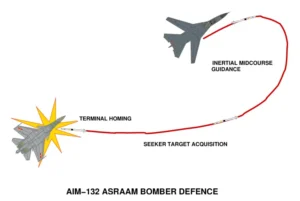
MiG29 fighter jets

Key Features

  • Fireandforget system: Once launched, it guides itself to the target without pilot input.
  • Speed and range: Flies at speeds above Mach 3 and engages targets beyond 25 km.
  • LockOn After Launch (LOAL): Can be fired before the seeker locks onto the target.
  • High manoeuvrability: Capable of extreme Gforces to track agile fighter jets.
  • Accuracy: Aerodynamic design and powerful rocket motor ensure sustained energy and precision.

Operational Significance

  • Dogfight advantage: Optimised for closerange aerial battles.
  • Integration: Already deployed on LCA Tejas and Jaguar aircraft; now expanding to MiG29 fleet.
  • Capability boost: Strengthens India’s air defence by providing faster response and reliable shortrange strike power.

Conclusion

Equipping MiG29s with ASRAAM enhances India’s aerial combat readiness, giving pilots a modern, agile, and precise missile system for shortrange engagements. This step strengthens indigenous and imported platforms alike, ensuring greater resilience in future air battles.

EARTH HOUR

TOPIC: (GS3) ENVIRONMENT: THE HINDU

WWF India, along with the Ministry of Environment, Forest and Climate Change, organised outreach activities in Gwalior to mark 20 years of Earth Hour.

About Earth Hour

  • Global movement: A grassroots initiative by World Wildlife Fund (WWF) to unite people for environmental protection.
  • Origin: Began in Sydney, Australia, in 2007 as a symbolic lightsout campaign.
  • Scale: Now observed in 190+ countries and territories, making it one of the largest environmental movements.
  • Timing: Held annually towards the end of March, from 8:30 p.m. to 9:30 p.m. local time.

Participation

  • Individuals: Switch off nonessential lights for one hour to show commitment to climate action.
  • Governments & companies: Turn off lights in offices, monuments, and landmarks to raise awareness.
  • Symbolic act: The “lightsoff” moment serves as a reminder of the urgent need to reduce energy consumption and tackle climate change.

Significance

  • Promotes awareness of climate change and energy conservation.
  • Encourages collective responsibility by involving citizens, institutions, and governments.
  • Acts as a symbolic gesture that sparks conversations and actions on sustainability.

Conclusion

Earth Hour is more than a symbolic lightsout event; it is a global call to action, reminding people that small collective steps can drive big changes in addressing climate change and protecting the planet.

RASHTRIYA VIGYAN PURASKAR (RVP)

TOPIC: (GS2) POLITY: THE HINDU

The central government has opened nominations for the Rashtriya Vigyan Puraskar (RVP) 2026, India’s premier science awards.

About the Award

  • Prestigious recognition: National award for excellence in science, technology, and innovation.
  • Administered by: RVP Secretariat under CSIR, Ministry of Science & Technology, guided by the Principal Scientific Advisor.
  • Objective: To celebrate individuals and teams whose work advances India’s scientific progress and benefits society.
Eligibility

  • Open to scientists, technologists, innovators from government, private sector, or independent work.
  • Indian diaspora (NRIs/PIOs): Eligible if their contributions benefit Indian society or communities.
  • Recognises pathbreaking research, innovation, or discovery in any field of science and technology.

Categories of Awards

  • Vigyan Ratna (VR): Lifetime achievement in science and technology.
  • Vigyan Shri (VS): Distinguished contributions in specific fields.
  • Vigyan Yuva – Shanti Swarup Bhatnagar (VYSSB): For young scientists under 45 years showing exceptional promise.
  • Vigyan Team (VT): For collaborative excellence by research groups of three or more members.

Significance

  • Encourages scientific excellence and innovation across disciplines.
  • Promotes youth participation in research through dedicated awards.
  • Strengthens India’s global standing by recognising contributions from both domestic and diaspora scientists.

Conclusion

The Rashtriya Vigyan Puraskar is a landmark initiative to honour India’s scientific talent, fostering innovation, collaboration, and national development while motivating future generations of researchers.


Write a Review

Your email address will not be published. Required fields are marked *