
Table of Contents
ToggleGLOBAL RISKS REPORT 2026
This topic is part of Daily Current Affairs – 20 January 2026
The World Economic Forum (WEF) has released the Global Risks Report 2026, identifying geoeconomic confrontation as the most severe near-term global risk. The report is based on inputs from over 1,300 global experts and was published ahead of the Davos meeting.
About the Report
- 21st edition of the Global Risks Report.
- Examines risks across three horizons:
- Immediate (2026)
- Short to medium term (up to 2028)
- Long term (up to 2036)
- Respondents include experts from academia, business, government, civil society, and international organisations.
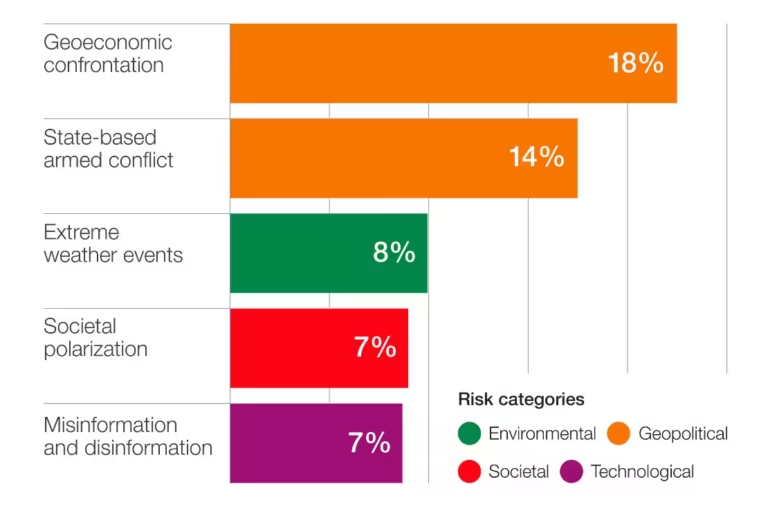
Top Risks in 2026
The World Economic Forum (WEF) has released the Global Risks Report 2026, identifying geoeconomic confrontation as the most severe near-term global risk. The report is based on inputs from over 1,300 global experts and was published ahead of the Davos meeting.
- Geoeconomic confrontation ranked first – use of tariffs, sanctions, restrictions, and control of critical minerals.
- Economic Risks: Economic downturn moved to rank 11. Inflation rose to rank 21. Driven by debt stress, fragile financial systems, and geopolitical rivalry.
- Technological Risks: Misinformation/disinformation ranked 2nd in short term. Cyber insecurity at rank 6. AI risks job loss, social harm, military misuse.
- Societal Risks: Rising political and social polarisation. Weak trust in institutions.
- Environmental Risks: Short term: extreme weather (rank 4), pollution (rank 9). Long term: environmental risks dominate half of top 10. Extreme weather is top long-term risk.
- Global Order Transition: Shift toward multipolar and fragmented world. 68% respondents expect contested multipolarity in next decade. Bretton Woods institutions under strain.
Conclusion:
The report warns of rising economic weaponisation, technological disruptions, and environmental crises, alongside a fragmented global order. For India, understanding these risks is crucial for shaping foreign policy and economic resilience.
GLOBAL RISKS REPORT 2026 - FAQs
What is the Global Risks Report 2026?
The Global Risks Report 2026, published by the World Economic Forum (WEF), analyses major global threats across economic, geopolitical, technological, societal, and environmental domains.
Why is geoeconomic confrontation the top global risk in 2026?
Geoeconomic confrontation tops the list due to rising use of tariffs, sanctions, supply-chain controls, and critical mineral restrictions amid intensifying geopolitical rivalry.
What technological risks are highlighted in the Global Risks Report 2026?
The report flags misinformation and disinformation, cyber insecurity, and AI-driven job losses and military misuse as major short-term technological risks.
How do environmental risks feature in the Global Risks Report 2026?
Extreme weather events dominate both short-term and long-term risks, with climate change and pollution forming half of the top long-term global threats.
What does the Global Risks Report 2026 mean for India?
For India, the report underscores the need to strengthen foreign policy resilience, economic security, and climate preparedness in a fragmented multipolar world.