Table of Contents
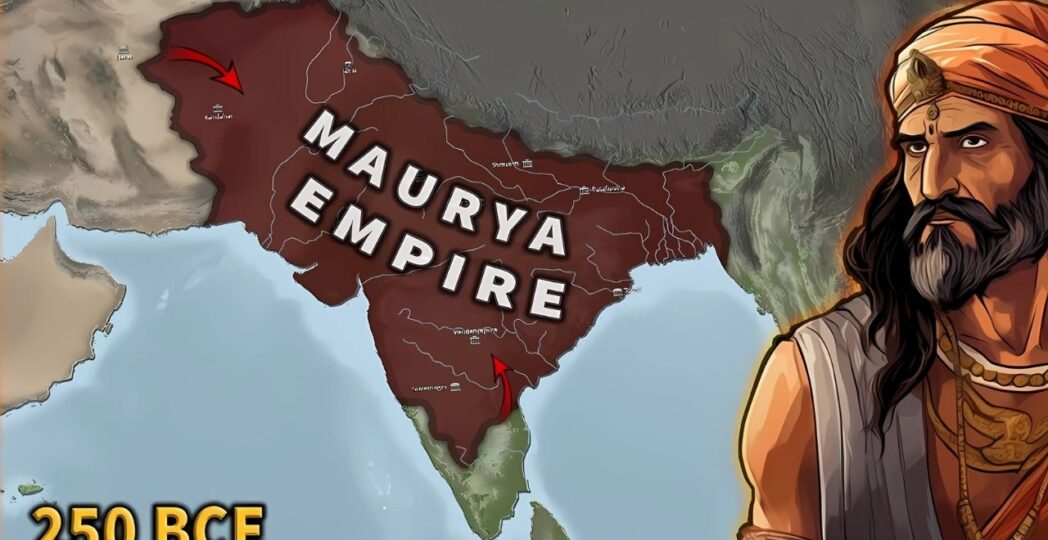
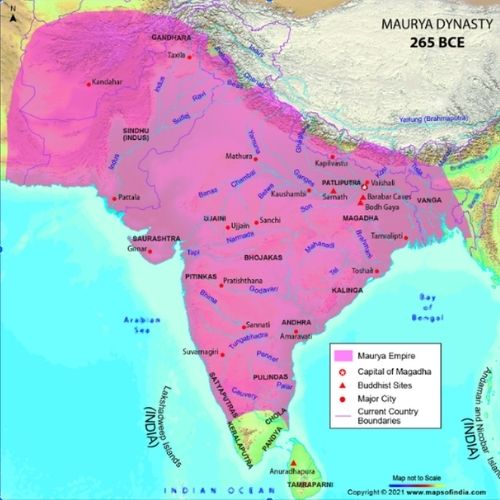
ToggleThe Mauryan Empire (321 BCE – 185 BCE) was the first great empire of ancient India, unifying most of the subcontinent under a centralised authority with its capital at Pataliputra. Founded by Chandragupta Maurya with the guidance of his mentor Kautilya (Chanakya), the empire became a watershed in Indian history, marking the transition from regional kingdoms to a vast pan-Indian polity. Stretching from Afghanistan in the northwest to Bengal in the east, and from the Himalayas to the Deccan plateau, the Mauryan state was known for its efficient administration, flourishing agrarian economy, thriving trade networks, and monumental cultural achievements. The empire reached its zenith under Ashoka the Great, who after the Kalinga War embraced Buddhism and spread the message of Dhamma both within and beyond India. Though it declined after Ashoka due to weak successors and economic strains, the Mauryan legacy of political unity, administrative machinery, and cultural exchange left an indelible imprint on Indian history.
- Origin & Sources
- Rulers & Contributions (Chronological Timeline)
- Society & Religion
- Economy (Agriculture, Revenue, Trade, Currency)
- Administration & Officers
- Decline of Mauryan Empire
Origin & Sources
- Origin & Sources
- Rulers & Contributions (Chronological Timeline)
- Society & Religion
- Economy (Agriculture, Revenue, Trade, Currency)
- Administration & Officers
- Decline of Mauryan Empire
Founder:
Chandragupta Maurya (321 BCE–297 BCE)
- Overthrew Nanda dynasty in Magadha
- Inspired by Alexander, built large army
- Guided by minister Kautilya (Chanakya)
Significance:
- First pan-Indian empire, uniting vast territory under one power
- Capital: Pataliputra
Sources of Mauryan History:
- Kautilya’s Arthashastra
- Ashokan inscriptions (edicts)
- Megasthenes’ Indica
- Buddhist texts: Divyavadana, Ashokavadana
- Sri Lankan chronicles: Dipavamsa, Mahavamsa
- Archaeology: Bulandi Bagh & Kumrahar (Pataliputra remains)
Rulers & Contributions
1.Chandragupta Maurya (321–297 BCE)
- Dynasty founder, empire: Bihar, Nepal, western/north-western India, Deccan
- Treaty with Seleucus Nicator (303 BCE): gained Arachosia, Gedrosia, Paropomisadai
- Hosted Greek envoys: Megasthenes, Dionysius
- Later embraced Jainism, disciple of Bhadrabahu
2. Bindusara (297–273 BCE)
- Nickname: Amitraghata (Slayer of Enemies)
- Expanded empire to almost entire peninsula → “land between the two seas”
- Greek envoy: Deimachus at his court
- Follower of Ajivika sect
3. Ashoka (272–232 BCE)
- Viceroy of Taxila & Ujjain before becoming king
- Names: Devanampiya, Piyadassi, Dharmasoka
- Kalinga War (261 BCE): Huge loss of life → embraced non-violence
- Religion: Buddhism; organised 3rd Buddhist Council (Pataliputra)
- Dhamma: Moral code for all subjects, inscribed on edicts
4. Dasharatha (232–224 BCE)
- Last ruler to issue imperial inscriptions
- Territories broke away under his rule
5. Samprati (224–215 BCE)
- Ruled from Pataliputra & Ujjain
- Reconquered Saurashtra, Maharashtra, Andhra, Mysore
- Major patron of Jainism → allowed monks to travel abroad
6. Shalishuka (215–202 BCE)
- Described as quarrelsome, unrighteous (Yuga Purana)
7. Devavarman (202–195 BCE)
- Ruled 7 years (per Puranas)
8. Shatadhanvan (195–187 BCE)
- Lost territories due to invasions
9. Brihadratha (187–185 BCE)
- Last Mauryan ruler
- Assassinated by Pushyamitra Shunga → Shunga Empire founded
Society & Religion
Society (per Megasthenes): 7 groups – philosophers, cultivators, herders, artisans/traders, overseers (spies), counsellors, king Occupations hereditary, no intermarriage
Religion:
- Chandragupta → Jainism
- Bindusara → Ajivikas
- Ashoka → Buddhism (personally, but didn’t impose)
Agrarian Society: agriculture = main occupation
Women: High status, freedom, bodyguards, could divorce/remarry
Slavery: No concept (per Megasthenes), but sources mention slaves by birth, war, punishment
Ashoka’s Major Rock Edict V → humane policy: “Every human is my child”
Economy
Agriculture: fertile soil, two crop cycles (grains, sugarcane, cotton)
Janapadanivesa: permanent settlement for agrarian expansion
Crown lands (Sita): state-controlled, supervised by Sitadhyaksa
Currency: Silver coin “Pana”
Revenue System:
- Samaharta → collector-general
- Sannidhata → treasury head
- Bhaga → 1/4th produce tax
- Pindakara → village tax
- Other taxes: Bali, Hiranya
Trade:
- Ganga & Himalayan foothills routes, Taxila → west, routes to Andhra & Karnataka
- Internal trade → river transport developed
- Artisans in guilds (metallurgists, potters, carpenters, weavers)
State-employed artisans exempt from taxes
Officers:
- Panyadhyaksha (commerce), Samsthadhyaksha (markets), Pautavadbyaksha (weights), Navadhyaksha (boats), Sulkadhyaksha (tolls), Akaradhyaksha (mines)
Administration & Governance
- Highly centralised administration
- Kautilya’s Arthashastra → detailed bureaucracy
- Key officers:
- Samaharta (revenue)
- Sannidhata (treasury)
- Espionage system (later collapsed)
- Military strength: army = backbone of empire
- Dhamma Mahamattas (Ashoka) → officials for moral governance
Decline of Mauryan Empire
- Political Factors:
- Weak successors after Ashoka
- Short reigns, lack of strong policies
- Dhamma Mahamattas → too powerful & oppressive
- Loyalty to kings not state → instability
- Economic Factors:
- Metal scarcity, esp. iron
- Over-expansion, deforestation → floods & famines (evidence in Bengal)
- Revenue shortages in centralised system
- Extra taxation (even actors, prostitutes – per Arthashastra)
- End: Brihadratha assassinated by Pushyamitra Shunga (185 BCE) → Shunga Empire
MCQs on Mauryan Empire
Q1. Who is considered the founder of the Mauryan Empire?
- Bindusara
- Chandragupta Maurya
- Ashoka
- Pushyamitra Shunga
Q2. Which ancient text is the most important literary source about the Mauryan Empire written by a Greek ambassador?
- Arthashastra
- Indica
- Dipavamsa
- Puranas
Q3. Which Mauryan ruler fought the Seleucid ruler Seleucus Nicator and later signed a treaty with him?
- Ashoka
- Bindusara
- Chandragupta Maurya
- Brihadratha
Q4. Who among the following was the Seleucid ambassador in Bindusara’s court?
- Megasthenes
- Deimachus
- Dionysius
- Pliny
Q5. Ashoka’s Dhamma was primarily:
- A new sect of Buddhism
- A personal religious cult
- A code of ethical conduct and moral values
- A policy of conquests
Q6. The term “Amitraghata” (Slayer of enemies) refers to which Mauryan ruler?
- Chandragupta Maurya
- Bindusara
- Ashoka
- Dasharatha
Q7. The Kalinga War was fought during the reign of:
- Chandragupta Maurya
- Bindusara
- Ashoka
- Brihadratha
Q8. Which Mauryan emperor is known for spreading Jainism to southern regions like Andhra, Dravida, and Maharashtra?
- Dasharatha
- Samprati
- Shatadhanvan
- Devavarman
Q9. Which was the main currency in circulation during the Mauryan Empire?
- Dinar
- Pana
- Karshapana
- Tanka
Q10. Who was the last Mauryan ruler, assassinated by his commander-in-chief Pushyamitra Shunga?
- Shalishuka
- Brihadratha
- Devavarman
- Shatadhanvan
Frequently Asked Questions (FAQs)
Who founded the Mauryan Empire and when?
The Mauryan Empire was founded by Chandragupta Maurya in 321 BCE, with guidance from his mentor Kautilya (Chanakya), after overthrowing the Nanda dynasty in Magadha.
What was the significance of the Mauryan Empire in Indian history?
It was the first pan-Indian empire, unifying most of the subcontinent under one authority, with its capital at Pataliputra. It marked the shift from regional kingdoms to a centralized polity.
What are the main sources of Mauryan history?
- Literary: Kautilya’s Arthashastra, Megasthenes’ Indica, Buddhist texts (Divyavadana, Ashokavadana), Sri Lankan chronicles (Dipavamsa, Mahavamsa).
- Epigraphic: Ashokan edicts.
- Archaeological: Remains at Pataliputra (Bulandi Bagh, Kumrahar).
What was the extent of the Mauryan Empire?
It stretched from Afghanistan in the northwest to Bengal in the east, and from the Himalayas in the north to the Deccan Plateau in the south.
What were the major contributions of Chandragupta Maurya?
- Defeated the Nandas and founded the empire.
- Established centralised administration.
- Signed treaty with Seleucus Nicator (303 BCE) and gained territories.
- Hosted Greek envoy Megasthenes at his court.
- Later embraced Jainism and migrated south with Bhadrabahu.