Table of Contents
ToggleInternational Relations: A Crucial Topic for UPSC GS Paper 2
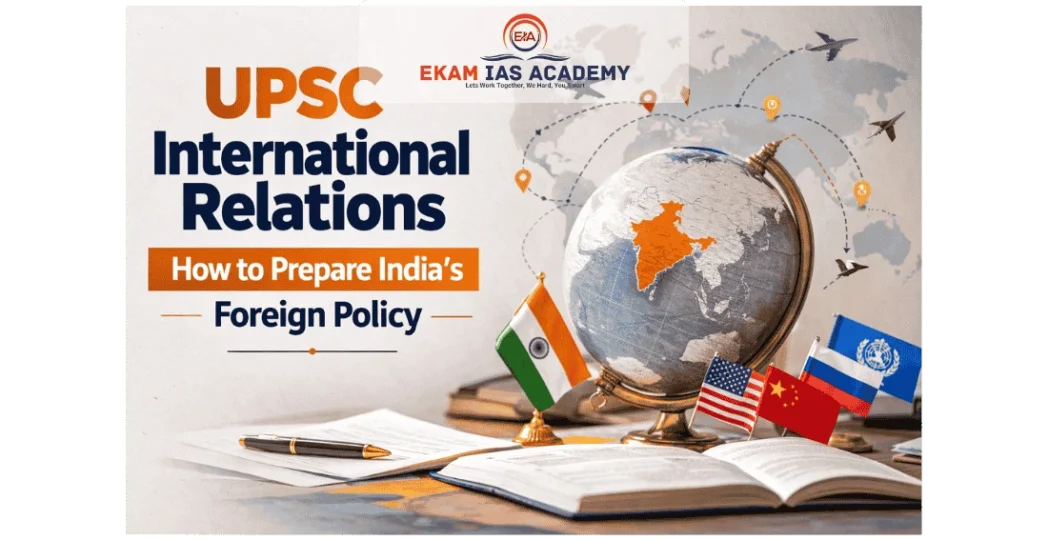
International Relations is a major component of the UPSC Civil Services Examination. It forms an important part of General Studies Paper 2 in the UPSC Mains syllabus. Therefore, aspirants must understand the key concepts and current developments in International Relations.
In addition, questions from International Relations frequently appear in both Prelims and Mains examinations. Aspirants must analyze global events and understand India’s diplomatic strategies. Consequently, a strong understanding of foreign policy becomes essential for UPSC preparation.
Importance of International Relations for UPSC
For UPSC aspirants, International Relations helps in understanding India’s position in global politics. It explains how India interacts with other countries and international organizations. Moreover, the topic improves analytical thinking required for writing strong Mains answers.
Another important reason is the increasing role of India in global governance. For example, India actively participates in global forums such as the United Nations, G20, and BRICS. As a result, aspirants must track these developments while preparing International Relations topics.
Core Principles of India’s Foreign Policy
India’s International Relations framework is based on several guiding principles. Historically, the policy of Non-Alignment shaped India’s diplomatic strategy during the Cold War period. However, over time it evolved into the concept of Strategic Autonomy.
Furthermore, principles like Panchsheel and Vasudhaiva Kutumbakam influence India’s global outlook. These ideas promote peaceful coexistence and cooperation among nations. Therefore, India often supports multilateral diplomacy in international conflicts.
Major Global Partnerships
India’s International Relations include both bilateral and multilateral partnerships. Important bilateral relationships include India–USA, India–China, and India–Russia. Each relationship influences India’s economic, strategic, and geopolitical interests.
Similarly, India plays an active role in international groupings such as QUAD, G20, and ASEAN. Through these platforms, India addresses global issues such as climate change, trade, and regional security.
Conclusion
In conclusion, International Relations remains a critical topic for UPSC aspirants. It helps students understand India’s diplomatic strategies and global responsibilities. By studying International Relations regularly, aspirants can develop strong analytical answers for the UPSC examination.



UPSC International Relations-FAQs Answered
Why is International Relations important for UPSC preparation?
International Relations is an important part of UPSC GS Paper 2 in Mains, usually contributing 3–5 questions of 15 marks each. In Prelims, questions related to global events and India’s foreign policy also appear regularly.
What are the core principles of India’s foreign policy?
India’s foreign policy is based on principles such as Strategic Autonomy (earlier Non-Alignment), Panchsheel or the Five Principles of Peaceful Coexistence, Vasudhaiva Kutumbakam, and the Neighbourhood First Policy.
What are the core principles of India’s foreign policy?
India’s foreign policy is based on principles such as Strategic Autonomy (earlier Non-Alignment), Panchsheel or the Five Principles of Peaceful Coexistence, Vasudhaiva Kutumbakam, and the Neighbourhood First Policy.
Which bilateral relationships are most important for UPSC International Relations?
Important bilateral relationships include India-USA, India-China, India-Russia, India-Pakistan, and India’s relations with neighbours such as Bangladesh, Bhutan, Nepal, and Sri Lanka.
Which international organisations should UPSC aspirants focus on for IR?
UPSC frequently asks questions about organisations such as the United Nations (UN), BRICS, SCO, G20, QUAD, ASEAN, and global climate forums like COP.
How should aspirants write high-scoring International Relations answers in UPSC Mains?
A good IR answer should include the historical background of the relationship, current developments, strategic importance for India, key challenges, and a balanced forward-looking conclusion.