
Table of Contents
ToggleWhat Is a Black Box in Aviation?
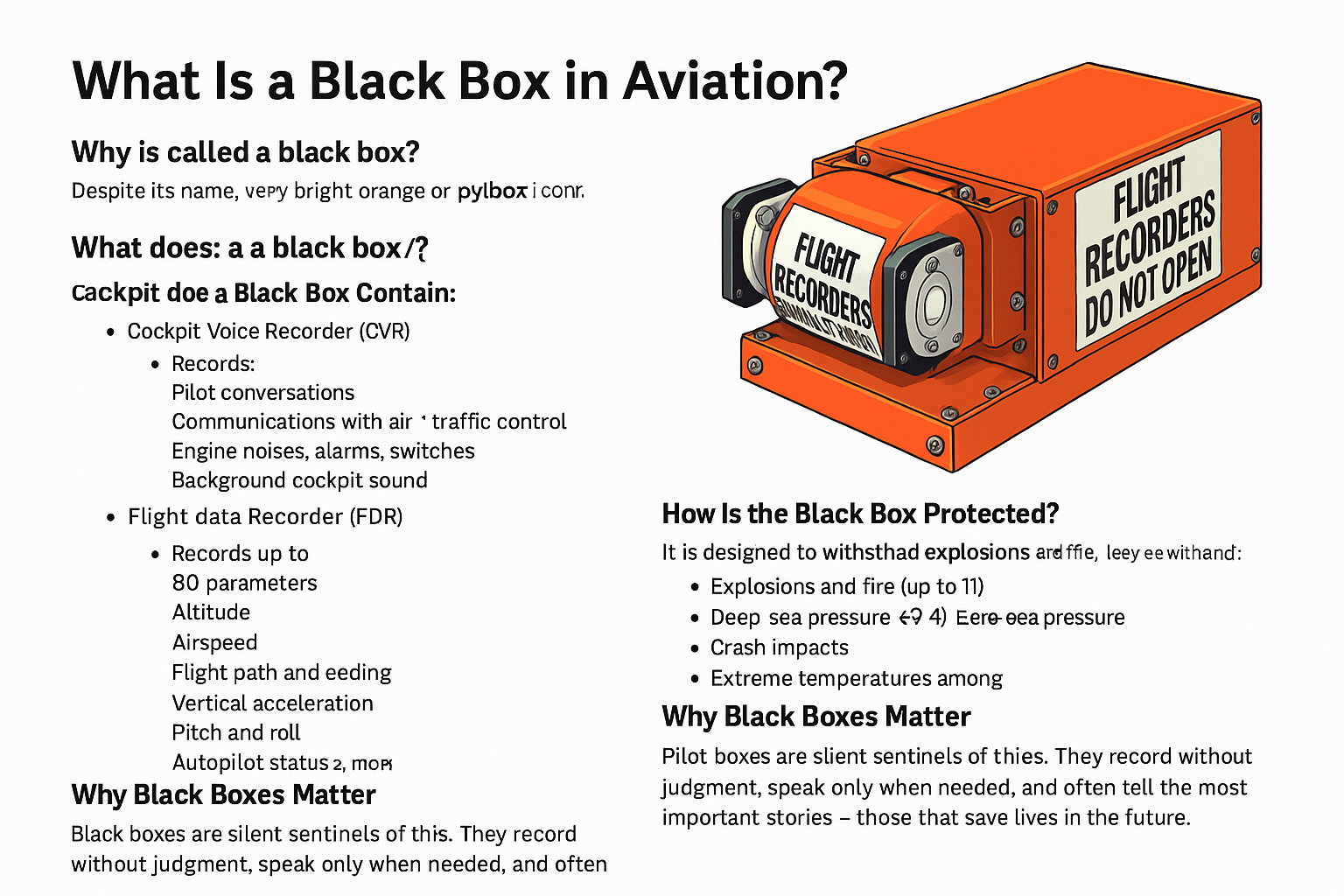
A black box is one of the most critical components in modern aircraft. Despite its name, the black box is neither black nor a conventional “box.” It’s a bright orange or yellow device that plays a key role in investigating aircraft accidents. When a crash occurs, it’s the black box that often holds the final answers capturing the last words, technical data, and flight performance metrics that help investigators piece together what happened.
Why Is It Called a Black Box?
The term “black box” is more of a nickname. In reality, it’s officially known as the Flight Recorder. The color is intentionally bright (usually orange or yellow) to aid in visibility during recovery missions. The term might have originated from early prototypes being encased in black boxes — or simply from the mystery and seriousness surrounding its use.
Who Invented the Black Box?
The black box was invented by Dr. David Warren, an Australian scientist, in the 1950s. Warren lost his father in an air crash and became deeply committed to preventing future aviation tragedies. His invention became a global aviation standard by the 1960s and is now mandatory on most commercial aircraft around the world.
What Does a Black Box Contain?
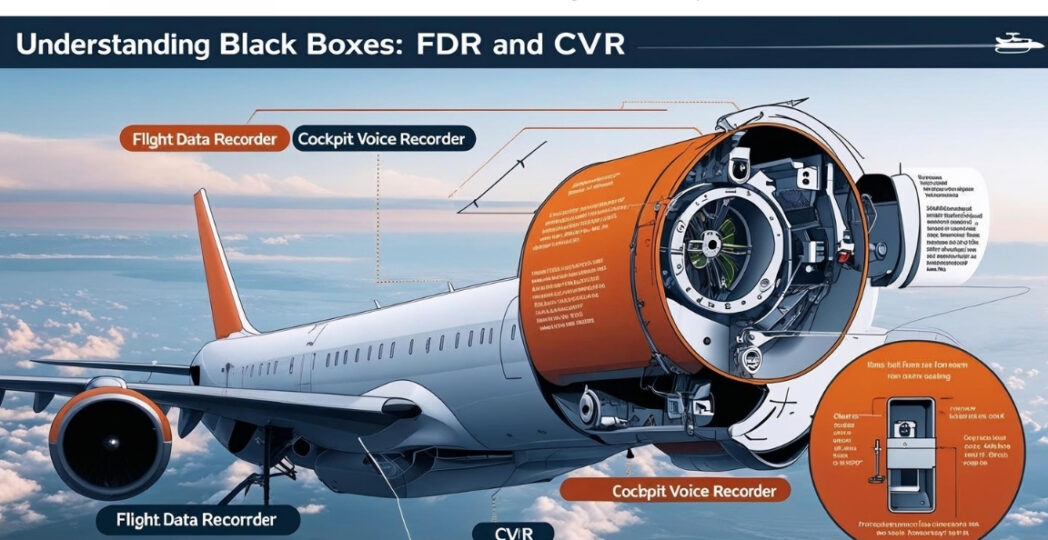
An aircraft typically has two separate recording units, both referred to collectively as the “black box”:
- Cockpit Voice Recorder (CVR)
Records:
- Pilot conversations
- Communication with air traffic control
- Engine noises, alarms, switches
- Background cockpit sound
This helps investigators assess what the crew was experiencing and how they responded in the final moments of the flight.
- Flight Data Recorder (FDR)
Captures more than 80 parameters including:
- Altitude
- Airspeed
- Flight path and heading
- Vertical acceleration
- Pitch and roll
- Autopilot status
- Engine performance and more
This data provides the technical story of the flight, minute-by-minute.
How Is the Black Box Protected?
Black boxes are built to survive the worst. Each unit is housed in a highly durable container, usually made of steel or titanium, and is designed to withstand:
- Explosions and fire (up to 1,100°C for 60 minutes)
- Deep-sea pressure (up to 6,000 meters underwater)
- Crash impacts (up to 3,400 Gs of force)
- Extreme temperatures and prolonged submersion in water
Additionally, the device is equipped with an underwater locator beacon (ULB) that emits signals for 30 days after submersion, making it easier to locate in ocean crashes.
Most aircraft have black boxes installed toward the rear of the plane, as this area tends to sustain the least damage in crashes.
Latest News: Air India Flight AI171 Crash
The tragic crash involving Air India flight AI171, bound for Gatwick, has brought renewed attention to black boxes. Recovery teams are still searching for the CVR and FDR, as these devices are essential to understanding the sequence of events that led to the disaster.
Without them, authorities are left in the dark — but once found, they could provide clarity, closure, and, most importantly, pave the way for better aviation safety standards.
Why Black Boxes Matter
In every aviation accident, the black box becomes the voice of the flight. It offers insight, accountability, and the chance to learn from tragedy. Thanks to black box data:
- Pilots are better trained for emergency scenarios
- Aircraft design has improved
- Air travel has become statistically the safest mode of transport
Final Thought
Black boxes are silent sentinels of the skies. They record without judgment, speak only when needed, and often tell the most important stories those that save lives in the future.