Table of Contents
ToggleWhy Motivation Is Not Enough for UPSC Preparation
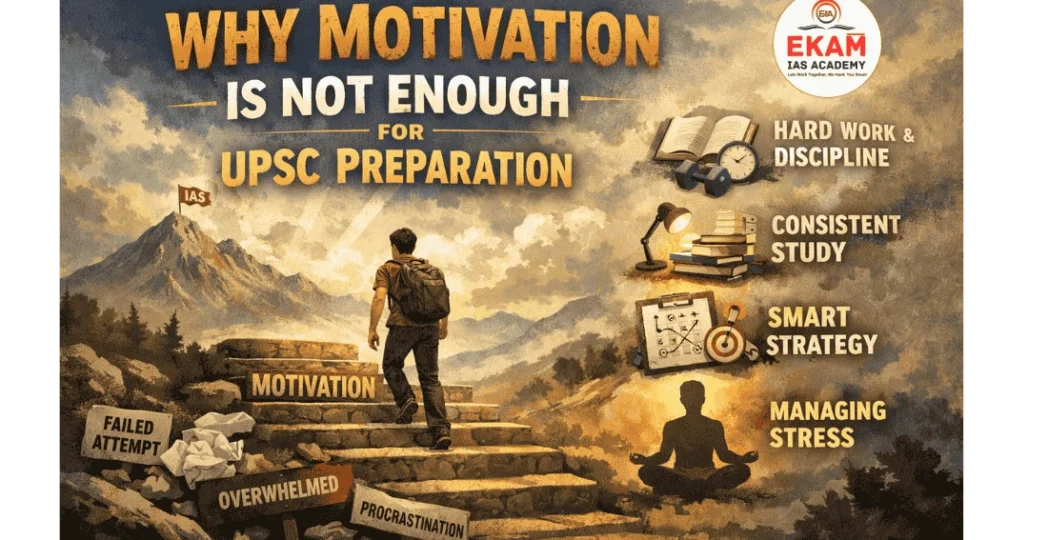
The UPSC journey is long, competitive, and mentally demanding. Many aspirants begin with strong motivation, driven by dreams of becoming civil servants. However, this motivation often fades with time. Therefore, relying only on motivation in UPSC preparation is not enough to achieve success.
Aspirants preparing through UPSC coaching in Hyderabad quickly realize that discipline and consistency matter more than temporary emotional drive. While motivation helps you start, only sustained effort helps you finish.
Understanding the Role of Motivation
What Does Motivation Do?
Motivation acts as the initial push that encourages aspirants to begin preparation. It can come from personal ambition, family expectations, or success stories. However, it is unstable and can decline due to stress or setbacks.
Institutes offering IAS Coaching in Hyderabad often guide students to develop study habits that go beyond motivation.
Why Motivation Alone Cannot Ensure Success
Temporary Nature of Motivation
Firstly, motivation is short-lived. Aspirants may feel highly motivated at the beginning but struggle to maintain the same energy throughout the preparation cycle.
UPSC Requires Long-Term Effort
Preparation for prelims and mains requires months or even years of disciplined effort. On many days, aspirants may not feel motivated, yet they must continue studying.
Students trained at the Best IAS Academy in Hyderabad follow structured schedules instead of depending on mood-based study.
Building Consistency Beyond Motivation
Structured Preparation Strategy
A well-planned study schedule ensures progress even when motivation drops. Enrolling in structured courses provides clarity and direction.
Practice and Revision
Regular answer writing, revision, and mock tests are essential. These habits build discipline, which is far more reliable than motivation.
Institutes known for Top UPSC Coaching in Hyderabad emphasize continuous evaluation and practice.
Maintaining Balance During Preparation
Flexible Learning Options
For working aspirants, maintaining consistency can be difficult. Weekend batches help maintain preparation alongside professional commitments.
Role of Optional Subjects
Choosing suitable optional subjects helps maintain interest and reduces burnout. It also improves conceptual clarity and supports consistent learning.
Ekam IAS Academy Approach
Ekam IAS Academy focuses on building discipline rather than depending only on motivation. The approach includes structured planning, mentorship, and regular assessments.
Aspirants are trained to follow routines, revise consistently, and stay focused throughout their preparation journey.
Conclusion
While motivation is important to begin UPSC preparation, it is not enough to sustain it. Consistency, discipline, and structured effort play a much bigger role in achieving success.
Aspirants who focus on daily progress rather than waiting for motivation are more likely to succeed in the Civil Services Examination.



FAQs Answered
Is motivation enough to clear UPSC exam?
No, motivation alone is not enough to clear UPSC. While it helps you start preparation, long-term success depends on discipline, consistency, and a structured study plan followed daily.
Why does motivation fade during UPSC preparation?
Motivation often declines due to long preparation cycles, stress, failures in mock tests, and mental fatigue. This is why aspirants must build habits that do not depend on emotional highs.
What is more important than motivation in UPSC preparation?
Consistency and discipline are more important than motivation. Following a fixed timetable, regular revision, and mock test practice ensures steady progress even on low-motivation days.
How can I stay consistent in UPSC preparation?
Aspirants can stay consistent by creating a realistic study schedule, setting daily targets, and tracking progress regularly. Structured coaching and mentorship also help maintain accountability.
How do coaching institutes help build discipline for UPSC?
Top coaching institutes provide structured plans, regular tests, answer-writing practice, and mentorship, which help aspirants stay on track and develop disciplined study habits throughout preparation.