

Table of Contents
TogglePETROCHEMICAL DUTY WAIVER AND MSME SUPPORT MEASURES
TOPIC: (GS3) ECONOMY: THE HINDU
The government announced a temporary waiver of basic customs duty on selected petrochemical feedstocks and intermediates amid geopolitical tensions in West Asia.
What was announced
- Scope: Full customs duty exemption on around 40 petrochemical products until 30 June 2026.
- Objective: Ensure availability of critical inputs, reduce input costs for downstream industries and stabilise supply chains.
- Estimated fiscal impact: ~₹1,800 crore revenue loss for the government over the threemonth window.
Why petrochemicals matter
- Definition: Petrochemicals are chemicals derived from crude oil and natural gas used as feedstock for polymers, fibres, solvents and intermediates.
- Key products: Polyethylene, polypropylene, PVC, styrene, methanol, PTA, MEG and other intermediates.
- Economic role: They underpin manufacturing in textiles, packaging, pharmaceuticals, fertilisers, automobiles and consumer goods; disruptions ripple across the economy.
Causes of the current disruption
- Geopolitical shock: Conflict in West Asia has disrupted supplies and raised freight and crude prices.
- Feedstock diversion: Domestic feedstock (propane, butane) has been diverted for LPG production, tightening availability for petrochemical plants.
Immediate impact on industries
- Textiles: Relief in costs for synthetic fibre raw materials (PTA, MEG).
- Plastics & packaging: Lower input prices for polymers like PP, PE, PVC.
- Pharmaceuticals & chemicals: Stabilised supply of chemical intermediates.
Challenges and tradeoffs
- Temporary fix: The exemption is shortterm and does not remove longterm supply vulnerabilities.
- Fiscal cost: Revenue loss may affect shortterm fiscal calculations.
- Dependence risk: Continued import reliance, especially from West Asia, leaves India exposed to future shocks.
Way forward
- Expand domestic capacity: Invest in petrochemical plants and downstream units to reduce import dependence.
- Diversify suppliers: Source feedstock from multiple regions to lower geopolitical risk.
- Strategic reserves: Create buffer stocks for critical intermediates.
- Promote alternatives: Support R&D in biobased and recycled feedstocks to reduce crude linkage.
- Logistics & allocation: Improve allocation of LPG and feedstock between fuel and petrochemical uses to avoid supply squeezes.
Conclusion:
The customs duty waiver is a targeted shortterm relief to protect manufacturing and consumers; longterm resilience will require capacity expansion and strategic policy measures.
RBI’S NDD BAN AND THE RUPEE
TOPIC: (GS3) ECONOMY: THE HINDU
The Reserve Bank of India (RBI) has barred banks from offering nondeliverable derivative (NDD) contracts in the rupee to curb offshore speculation and protect India’s external stability amid global shocks.
Context and Snapshot
- What happened: RBI issued a directive restricting banks from dealing in NDD/NDF contracts in the Indian rupee, closing a channel widely used for offshore rupee bets.
- Immediate market effect: The rupee strengthened immediately eased pressure on the currency, which recovered from near ₹95 to about ₹93.10 per USD.
- Why now: Rising oil prices, capital outflows linked to geopolitical tensions (West Asia) and aggressive offshore positions had amplified rupee volatility, prompting the central bank to act.
What are NonDeliverable Derivatives (NDDs)?
- Basic idea: An NDD is a financial contract that lets two parties bet on or hedge the future value of a currency (here, the rupee) without actually exchanging that currency.
- Cash settlement: At the contract’s end, the winner is paid the difference in a freely convertible currency (usually US dollars) — no Indian rupees change hands.
- Why they exist: Because of capitalcontrols or limited onshore access, foreign players use NDDs offshore to take rupee exposure.
- Where traded: Mostly in global financial centres such as Singapore, London, Hong Kong and Dubai.
- Two uses:
- Hedging: Companies or investors protect themselves against currency moves.
- Speculation: Traders place directional bets to profit from expected rupee moves.
- Price signal role: Offshore NDD prices can influence expectations about the rupee and affect onshore markets when trading opens.
- Risk: Large speculative positions in NDDs can amplify volatility and transmit stress to the domestic currency market.
Positives and Strategic Importance
- Improves onshore price discovery: By limiting offshore shadow markets, the RBI strengthens the role of onshore deliverable markets as the primary reference for the rupee.
- Reduces speculative amplification: Curtails avenues for large, unregulated bets that can destabilise the currency during stress.
- Boosts investor confidence: Clear regulatory action signals commitment to orderly markets, which can attract longterm capital.
Challenges
- Liquidity shift: Offshore liquidity and price signals may weaken, potentially increasing hedging costs for nonresident users.
- Legitimate hedging affected: Corporates and funds that used NDDs for genuine hedging may face higher transaction costs or limited access.
- Regulatory arbitrage risk: Market participants may seek new offshore instruments or routes unless onshore alternatives are deepened.
Way Forward and Policy Measures
- Deepen onshore deliverable markets: Expand access, improve market microstructure and widen participation to absorb hedging demand.
- Enhance transparency: Publish regular data on offshore positions and onshore liquidity to reduce information asymmetry.
- Support legitimate users: Provide clear guidance and transitional arrangements for corporates and nonresident hedgers.
- International coordination: Engage global financial centres to manage spillovers and prevent regulatory arbitrage.
Conclusion
The central bank must now move swiftly to build robust, transparent onshore alternatives so that stability does not come at the cost of market access or competitiveness.
FORM 6 CONTROVERSY IN WEST BENGAL
TOPIC: (GS2) POLITY: THE HINDU
Thousands of Form 6 applications were reportedly submitted in a short period ahead of the April 23 and 29 West Bengal elections, Possible influx of outofstate registrations:
Surge in Form 6 Applications Before West Bengal Polls
- Registrations: many applicants may be from other states (e.g., Bihar, Uttar Pradesh) and not eligible to vote in the state.
- Risk to voter roll integrity: Political parties warn that such a concentrated spike could change local voter composition in key constituencies; election authorities must verify residential eligibility, documentation, and timelines before finalising the rolls.
- Administrative response required: Election officials should apply strict verification procedures (field checks, documentary proof, crosschecks with other databases) and publish provisional lists early to allow objections and prevent wrongful inclusion.
What is Form 6
- Electoral rolls are updated through periodic revisions and continuous updation; Form 6 is the statutory route for adding new electors.
- In election periods, special revision processes and strict timelines apply to prevent lastminute manipulation.
- Form 6: Official application for inclusion of a name in the electoral roll under the Registration of Electors Rules, 1960.
- Modes: Can be filed online (ECI portal) or offline with the local Electoral Registration Officer (ERO).
Role of the Electoral Registration Officer and BLO
- ERO: Maintains rolls, processes Form 6, conducts hearings on objections and decides inclusion.
- BLO: Verifies applicant’s residence and identity at the booth level before ERO action.
- Citizenship and age: Only Indian citizens aged 18+ may be enrolled; Form 6 requires a selfdeclaration of not being registered elsewhere. False claims attract penalties.
- Objection window: Proposed additions must be displayed and open to objections for a minimum period before finalisation.
Allegations in West Bengal and Procedural Issues
- Reports claim ~30,000 forms were submitted within hours at the CEO office, exceeding normal submission patterns and raising questions about Booth Level Agent limits and verification.
- Concerns include duplicate enrolment (applicants already registered elsewhere) and possible breaches of the Representation of the People Act.
Challenges and Risks
- Verification pressure: Rapid bulk filings strain BLOs and EROs, risking cursory checks.
- Political polarisation: Allegations can erode public trust and fuel litigation.
- Timing constraints: Freeze deadlines limit time for thorough probes.
Way Forward and Recommendations
- Immediate audit: EROs should publish a verified list of new entries and reasons for acceptance or rejection.
- Strict verification: Crosscheck with other states’ rolls and use Aadhaarlinked processes where lawful.
- Transparent redress: Fasttrack hearings and publish outcomes to restore confidence.
- EC oversight: The Election Commission must proactively communicate steps taken and timelines.
Conclusion
Any perception of roll manipulation damages democratic legitimacy; the Election Commission must act decisively to ensure that only eligible citizens are enrolled and that electoral integrity is preserved.
KERALA MODEL OF PEOPLECENTRED DEVELOPMENT
TOPIC: (GS1) SOCIAL ISSUES: THE HINDU
Kerala’s State Planning Board and government reports highlight major gains in infrastructure, health, education and social protection over 2016–2026, prompting national attention.
Kerala’s Model of Inclusive Development
- Sustained planning: Kerala continued formal state planning and sharply increased capital expenditure from 2017 onward, bucking a national decline in many states.
- Institutional tools: Kerala Infrastructure Investment Fund Board (KIIFB) financed over a thousand projects; Kerala Bank consolidated cooperative finance; LIFE Mission delivered mass housing for the poor.
- The decade’s flagship programmes (KIIFB projects, LIFE Mission housing, digital education and health reforms) are cited as evidence of a distinct development path.
Social Sectors — Education and Health
- Education: Major investments in school infrastructure, teacher training, curriculum renewal and digital learning; Kerala claims nearuniversal elementary enrolment and low dropout rates.
- Health: Strong public health outcomes, expanded insurance and primary care programmes, and effective epidemic response capacity have been emphasised.
Economic Transformation and Jobs
- MSMEs and industry: Growth in MSMEs, valueaddition in traditional sectors, and improved industrial infrastructure shifted Kerala’s industrial trajectory.
- Digital push: Initiatives like KFON and targeted support for startups boosted the knowledge economy and connectivity.
Social Justice and Inclusion
- Targeted budgets: Allocations for SC/ST and elderly welfare expanded; PDS coverage and pension schemes strengthened social protection.
- Women’s empowerment: Models like Kudumbashree scaled livelihoods and local economic participation.
Infrastructure and Resilience
- Transport & ports: Major corridor projects, metro and watermetro expansion, and the commissioning of Vizhinjam port are cited as connectivity milestones.
- Disaster management: Kerala’s decentralised response and recovery systems are now referenced nationally.
Fiscal Constraints and Risks
- Federal fiscal squeeze: Centralisation of tax revenues (GST design, reduced compensation), borrowing limits and conditional transfers have constrained Kerala’s fiscal space.
- Sustainability challenge: Continued public investment depends on restoring cooperative federal fiscal arrangements and predictable transfers.
Way Forward
- Restore fiscal federalism: Advocate for predictable, untied transfers and fair GST compensation.
- Scale domestic finance: Deepen capital markets and concessional finance for infrastructure.
- Sustain social investments: Protect education, health and social protection budgets while promoting privatepublic partnerships for jobs.
Conclusion
Kerala’s 2016–2026 record proves that inclusive, planned public investment can deliver high growth with social justice. cooperative federalism and predictable finance are nonnegotiable if India is to replicate Kerala’s humane development at scale.
IRAN’S RESILIENCE AND STRATEGIC ENDURANCE
TOPIC: (GS2) INTERNATIONAL RELATIONS: THE HINDU
Despite heavy U.S. and Israeli strikes, Iran has shown resilience and multiple means of retaliation; and Tehran may gain leverage if the conflict drags on.
Recent Policy Move and Immediate Effects
- Policy note: A highlevel US address set out military objectives but did not declare a ground invasion or an end to operations.
- Operational emphasis: The campaign has relied mainly on air strikes and precision attacks to degrade Iran’s military and industrial infrastructure.
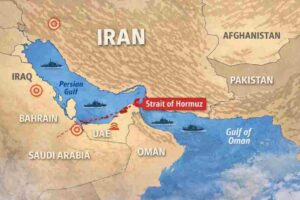
- Market impact: Even limited disruptions have pushed oil and shipping risk premia higher, because the Gulf is a critical energy corridor. About onefifth (≈20%) of global crude oil and LNG trade transits the Strait of Hormuz in peacetime, so any disruption has outsized price effects.
- Security signal: The statement aimed to show resolve while avoiding immediate escalation to a full ground campaign — a calibrated posture to limit coalition strain and domestic political costs.
Why Iran Can Endure
- Regime cohesion and adaptive defence: Iran’s security institutions (notably the IRGC) have dispersed assets and delegated authority, making decapitation strategies less effective.
- Asymmetric and regional leverage: Tehran can regionalise the conflict — using proxies, strikes on allied states, and threats to shipping — raising costs for adversaries and affecting global markets. The Strait’s chokepoint role amplifies this leverage.
- Limits of air power: Historical and contemporary cases show air campaigns can inflict tactical damage but rarely force rapid regime change without sustained ground operations and political strategy.
- Coalition constraints: Hesitation among allies and regional partners reduces the legitimacy and scale of prolonged military action, limiting strategic options.
Why Iran Is Not Collapsing
- Regime resilience and consolidation: The IRGC has tightened control, hidden assets and delegated operations to survive decapitation strategies; hardliners have gained strength.
- Horizontal escalation and economic leverage: Iran can regionalise the conflict (attacks on Gulf states, threats to the Strait of Hormuz), disrupting energy flows and exerting economic pressure.
- Strategic miscalculation in Washington: Overreliance on allied intelligence and air power underestimated Iran’s endurance; internal U.S. debate shows confusion over objectives.
- Allied reluctance and regional blowback: NATO and Gulf partners have been cautious; regional states fear retaliation and are exploring alternative diplomatic groupings.
Implications and Importance
- Global energy markets: Disruption of Gulf oil and gas supplies can raise inflation and hurt energyimporting Asian economies.
- Geopolitical realignment: Prolonged conflict may push parts of the Global South to view Iran more sympathetically and reduce U.S. influence in the region.
- Negotiating leverage: If Iran weathers pressure, it will enter talks from a stronger position, undermining U.S. aims for unconditional surrender.
Challenges and Risks
- Humanitarian cost: Continued strikes inflict civilian casualties and infrastructure damage.
- Escalation spiral: Horizontal attacks risk wider regional war involving multiple states.
- Policy incoherence: Lack of a clear U.S. endgame increases strategic uncertainty and prolongs instability.
Way Forward
- Prioritise diplomacy: Open credible channels for negotiated deescalation with regional stakeholders and neutral mediators.
- Protect global energy routes: Coordinate international efforts to secure shipping lanes and stabilise markets.
- Humanitarian safeguards: Ensure aid corridors and minimise civilian harm to preserve legitimacy.
Conclusion
Tactical victories do not equal strategic success. The U.S without a clear political strategy and multilateral diplomacy, empowering Iran’s regional posture and inflicting longterm global harm.
AMENDMENTS TO THE FOREIGN CONTRIBUTION (REGULATION) ACT (FCRA)
TOPIC: (GS2) POLITY: THE HINDU
The Union government introduced amendments to the Foreign Contribution (Regulation) Act (FCRA) on 25 March 2026, proposing a new authority with powers to take control of assets of organisations that lose FCRA registration.
FCRA
- FCRA origin and purpose: Enacted in 1976, reenacted in 2010 and tightened in 2020, the FCRA regulates how Indian entities receive and use foreign funds to prevent undue external influence while permitting legitimate development work.
- What the Bill proposes: Creation of a statutory “designated authority” empowered to seize, manage and dispose of assets of organisations whose FCRA licence is cancelled.
Key Provisions
- Designated authority: A central body will be authorised to take control of assets of delicensed entities.
- Automatic takeover: Asset control is triggered immediately on cessation of FCRA status, without a separate adjudicatory process.
- Wide scope: Assets covered include schools, hospitals, places of worship and other properties built using foreign contributions.
- Limited safeguards: The draft lacks mandatory prior judicial review or an independent appeals mechanism before seizure.
Major Concerns and Implications
- Violation of natural justice: Automatic confiscation without prior hearing undermines the right to a fair process.
- Selective enforcement risk: Opaque procedures and restricted parliamentary scrutiny raise fears of political or discriminatory targeting of certain groups.
- Service disruption: Seizing assets of NGOs could interrupt essential services in health, education and welfare, harming vulnerable beneficiaries.
- Chilling effect on civil society: Fear of arbitrary action may deter legitimate foreign philanthropy and weaken nonprofit activity.
- Constitutional and property issues: Retroactive or posthoc appropriation of legally acquired assets raises legal and rightsbased challenges.
Governance and Accountability Gaps
- Transparency deficit: Parliamentary questions and data on FCRA cancellations have reportedly been limited, reducing public oversight.
- Federal and international fallout: Heavyhanded rules may strain centrestate relations and affect India’s attractiveness for international philanthropic partnerships.
Way Forward
- Introduce procedural safeguards: Ensure prior judicial review, timebound appeals and independent oversight before any asset takeover.
- Publish data and criteria: Make FCRA cancellations, reasons and related data publicly available to prevent arbitrariness.
- Protect beneficiaries: Ensure continuity of essential services when regulatory action is taken.
- Balance security and rights: Frame rules that protect national interest while upholding rule of law and civil society space.
Conclusion
Any reform must respect due process, transparency and the rule of law; otherwise it will undermine public trust, harm service delivery, and weaken India’s democratic fabric.
EARTHQUAKE LIGHTS (EQL)
TOPIC: (GS1) GEOGRAPHY: THE HINDU
Floating lights were seen after small earthquakes in the Aegean Sea region near Turkey and Greece, attracting viral videos and scientific attention.
What are Earthquake Lights (EQL)?
- Definition: EQL are brief luminous phenomena — flashes, streaks, glowing balls, or vertical pillars — observed just before, during, or after seismic events.
- Appearance: They can be white, blue or orange, may hover or move, and are usually shortlived but highly visible.

How Scientists Explain EQL
- Tectonic stress builds up when large crustal blocks press and slide against each other along faults.
- Certain rocks (e.g., quartzrich) under extreme pressure can generate electric charges (a piezoelectriclike effect). These charges travel along cracks to the surface.
- At the surface the charges ionise air molecules, producing glowing plasma visible as lights; this process does not involve heat or fire.
Where EQL are More Likely
- Rift zones and straight vertical faults provide easier pathways for charges to reach the atmosphere, so EQL reports cluster in such tectonic settings.
Evidence and Recent Examples
- Aegean Sea (April 2026): Small quakes near Turkey produced multiple eyewitness videos of floating beams and flashes; scientists and space agencies are tracking these reports.
- Scientific status: EQL are rare and episodic; while increasingly accepted as real, they are not yet fully predictable or universally observed before every quake.
Limitations and Way Forward
- Unpredictability: EQL are not consistent enough to be a standalone earlywarning tool.
- Research needs: Systematic observation, instrumented field studies near active faults, and satellite monitoring are required to validate mechanisms and assess predictive value.
Conclusion:
Earthquake Lights are a rare but scientifically plausible phenomenon tied to tectonic stress; the recent Aegean events offer fresh data, but more research is needed before EQL can inform policy or earlywarning systems.

SAMPANN
TOPIC: (GS2) GOVERNANCE: THE HINDU
The Government of India signed agreements (3–4 April 2026) to onboard the SAMPANN platform for the State Government of Goa and the Cochin Port Authority.
What is SAMPANN
- Full form: System for Accounting and Management of Pension (SAMPANN) — a cloudbased, endtoend pension management system developed under the Department of Telecommunications (DoT).
- Launch & rollout: Dedicated on 29 December 2018 and rolled out across India in phases, completed by 24 May 2019.
Core Features
- Direct credit to bank accounts: Ensures pensions are paid directly to beneficiaries without intermediaries.
- Singlewindow processing: Integrates sanction, authorisation, accounting and payment on one platform.
- Online grievance redressal: Pensioners can lodge and track complaints digitally, reducing paperwork.
- Tracking & transparency: Pension status and arrears processing can be monitored online.
- DigiLocker integration: Enables paperless access to ePPOs and related documents for telecom pensioners.
Recent Development: PlatformasaService (PaaS)
- Goa & Cochin Port Authority adoption: The Centre will provide SAMPANN as a PaaS to these entities, enabling them to use the central system without building separate infrastructure.
- Benefits: Faster deployment, standardised processes, lower IT costs, and central support for updates and security.
Significance for Governance
- Egovernance case study: SAMPANN exemplifies Digital India objectives — service delivery, transparency and reduced leakages.
- Fiscal management: Streamlined pension accounting improves budgetary control and auditability.
- Policy learning: Shows how central platforms can be offered to states/PSUs as PaaS to scale public services efficiently.
Limitations & Considerations
- Data security & privacy: Centralised pension databases require robust cybersecurity and clear datasharing protocols.
- Digital divide: Pensioners without digital access need assisted channels to avoid exclusion.
Conclusion
SAMPANN’s PaaS adoption by Goa and Cochin Port Authority is a practical step toward standardised, transparent pension delivery; its success will depend on secure implementation and inclusive access.