

...
Daily Current affairs 13 April 2026

Daily Current Affairs 13-April-2026

Share this Post

DELIMITATION VS WOMEN’S RESERVATION

TOPIC: (GS2) POLITY: THE HINDU

The government has convened a special Parliament session in April 2026 to push constitutional changes. The core issue now is delimitation of constituencies linked to the Census, which could significantly reshape political representation across states.

Background

  • Parliament passed Nari Shakti Vandan Adhiniyam, 2023 unanimously in September 2023.
  • It introduced Article 334-A, mandating 33% reservation for women in Lok Sabha and State Assemblies.
  • Implementation was tied to the next Census and delimitation exercise, not immediate elections.
  • Opposition had demanded reservation from 2024 itself, but the government delayed.

Delimitation Concerns

  • Delimitation = redrawing constituencies based on Census data.
  • States with better family planning and smaller populations may lose relative influence if seats are increased proportionately.
  • Political equity, not just arithmetic, must guide delimitation.
  • Without careful planning, larger states could dominate, undermining federal balance.

Lessons from Past

  • The 73rd & 74th Amendments (1993) reserved seats for women in panchayats and municipalities after five years of debate.
  • Today, over 15 lakh women representatives serve in local bodies, proving the success of gradual, consultative reform.
  • In contrast, the current push appears rushed and unilateral.

Census Delays

  • The 2021 Census was postponed repeatedly, depriving over 10 crore people of entitlements under the Food Security Act.
  • Digital Census operations began only in 2026, with data expected by 2027.
  • Government claims of delay due to caste enumeration are misleading; states like Bihar and Telangana completed caste surveys in six months.
  • Critics argue the real intent is to stall caste census while rushing delimitation.

Reservation within Reservation

  • Women’s quota applies within SC/ST reserved seats.
  • Opposition demanded similar inclusion for OBC women, as OBCs already enjoy reservation in education and jobs.
  • This demand remains unaddressed.

Way Forward

  • Hold All-Party Consultations: Convene meetings after ongoing elections to build consensus. Ensure transparency by sharing draft proposals with all stakeholders.
  • Link Delimitation to Census Completion: Conduct delimitation only after the 2027 Census data is fully available. Guarantee that both population size and social justice concerns are reflected.
  • Safeguard Federal Balance: Protect smaller states and those with successful family planning initiatives from losing representation. Consider weighted formulas that balance equity with numbers.
  • Include OBC Women in Reservation: Extend “reservation within reservation” to Other Backward Classes (OBCs). Align political representation with existing educational and employment quotas.
  • Ensure Public Debate: Allow time for civil society, experts, and citizens to discuss implications. Avoid rushed constitutional changes that bypass democratic scrutiny.

Conclusion

A careful, consultative, and transparent approach similar to the passage of the 73rd and 74th Amendments will ensure reforms are both inclusive and sustainable.

TAPPING FISHERIES IN RESERVOIRS

TOPIC: (GS3) ECONOMY: THE HINDU

The Union Budget 2026-27 announced initiatives for integrated fisheries development in 500 reservoirs and Amrit Sarovars, aiming to boost fish farmers’ income and strengthen market access through cooperatives and producer organisations.

Background

  • India is the second-largest fish producer globally and ranks second in aquaculture.
  • National fish production has grown by 106% since 2013-14, reaching 197.75 lakh tonnes in 2024-25.
  • Inland fisheries contribute 75% of total production, with reservoirs covering 31.5 lakh hectares producing about 18 lakh tonnes.

Importance of Reservoirs

  • Reservoirs are concentrated in eastern, central, and peninsular India.
  • Provide livelihood and food security in water-scarce and economically weaker regions.
  • Madhya Pradesh has the largest reservoir area (~6 lakh hectares).
  • Tamil Nadu has the highest number of reservoirs (8,000+).

Rise in Productivity

  • Productivity increased from 50 kg/ha (2006) to 100 kg/ha today.
  • Achieved through cage culture technology and quality seed stocking.
  • Supported by schemes like Blue Revolution and Pradhan Mantri Matsya Sampada Yojana (PMMSY).
  • Core species: Indian major carps (Catla, Rohu, Mrigal).
  • Additional stocking: Tilapia, Pangasius, etc.

Cage Culture Technology

  • Cages made of synthetic mesh allow natural water flow and oxygen exchange.
  • Anchored or buoy-supported for stability.
  • Easier feeding, monitoring, and disease control.
  • Diversification promoted through rectangular and circular cages.
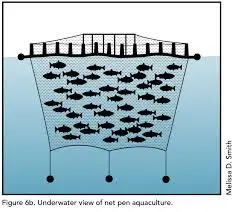
Tapping Fishers in Reservoirs

Success Story

  • Bimal Chandra Oran, Jharkhand, adopted cage culture in Chandil reservoir.
  • Received subsidised seed, feed, and training.
  • Cultured Tilapia and Pangasius, producing 3 tonnes annually.
  • Achieved turnover of ₹3 lakh per year with cooperative marketing support.

Future Potential

  • ICAR-CIFRI study: productivity can rise to 300 kg/ha.
  • Requires value chain approach: hatcheries, feed mills, storage, ice plants, auction centres, boats, refrigerated trucks.
  • NFDB implementing cluster-based strategy for end-to-end solutions.
  • Example: Reservoir cluster announced for Halalai and Indra Sagar dams (Madhya Pradesh).

Amrit Sarovar Initiative

  • Mission Amrit Sarovar focuses on water conservation through ponds.
  • Each pond: minimum 1 acre area, 10,000 cubic metre capacity.
  • Example: Dine Dite Rijo pond (Arunachal Pradesh) successfully used for ornamental fish culture.

Conclusion

With cluster-based strategies, value chain development, and community participation, productivity can triple, ensuring higher incomes, food security, and sustainable aquaculture growth. This aligns with the Viksit Bharat@2047 vision and strengthening India’s Blue Revolution.

BIOMASS COOKSTOVES VS LPG

TOPIC: (GS3) ECONOMY: THE HINDU

Due to the ongoing LPG supply crisis, many rural households are reverting to firewood. The debate is whether modern biomass cookstoves can serve as a cleaner, cheaper, and sustainable alternative.

Background

  • Traditional mud stoves (“chulhas”) are inefficient, with only 10% thermal efficiency.
  • Modern Improved Cookstoves (ICS) achieve 38–45% efficiency, reducing smoke and fuel use.
  • Technologies like secondary aeration help capture soot and harmful gases before they turn into smoke.

Sustainability of Firewood Use

  • Firewood is renewable if harvested responsibly (extraction ≤ regrowth).
  • ICS reduce wood consumption by over 50%, making firewood use more sustainable.
  • Alternative fuels: pellets, briquettes, crop waste, sawdust – widen the fuel base and reduce reliance on raw firewood.

Cost Factor

  • Upfront cost: Household stoves start below ₹2,000; commercial models can exceed ₹20,000.
  • Financing options: microfinance, CSR programs, carbon credits can ease affordability.
  • Fuel cost: Firewood ~₹10/kg (average).
  • 4 kg firewood in ICS ≈ 1 kg LPG energy output.
  • LPG > ₹100/kg in cities; firewood offers 60%+ cost savings.

Supply Chain Needs

  • No massive investment required; fuels like firewood, crop residues, dung cakes are already locally available.
  • Focus should be on:
    • Strengthening distribution networks.
    • Improving last-mile delivery.
    • Building user awareness.
    • Providing after-sales support to ensure long-term adoption.

Benefits of Modern Biomass Stoves

  • Cleaner Indoor Air: Improved cookstoves (ICS) reduce smoke emissions by up to 80%, cutting respiratory illnesses. WHO estimates that traditional chulhas contribute to over 600,000 premature deaths annually in India due to indoor air pollution.
  • Reduced Drudgery for Women: By lowering fuel needs by more than 50%, women spend less time collecting firewood. Example: In Jharkhand, ICS adoption reduced average fuel collection time by 2–3 hours per day.
  • Cost-Effective Cooking: Firewood (~₹10/kg) is far cheaper than LPG (>₹100/kg in cities). With ICS efficiency, 4 kg firewood ≈ 1 kg LPG energy output, saving households 60%+ cooking costs during LPG shortages.
  • Climate Co-Benefits: Lower emissions can be monetised through carbon credits. For instance, ICS projects in Africa and India have generated credits under the Clean Development Mechanism (CDM), linking household energy use to global climate goals.

Way Forward

  • Scale Deployment: Provide subsidies and financing partnerships (microfinance, CSR, carbon finance) to make ICS affordable. Example: The Pradhan Mantri Ujjwala Yojana model of subsidy distribution can be adapted for ICS.
  • Community-Based Fuel Management: Encourage village-level cooperatives to manage sustainable firewood harvesting, ensuring extraction does not exceed regrowth.
  • Diversify Fuels: Promote pellets and briquettes from crop residues and sawdust to reduce forest pressure. In Bihar, biomass briquettes have already replaced firewood in several community kitchens.

Conclusion

With proper financing, awareness, and supply chain support, they can complement LPG, especially in rural areas, while reducing costs and health risks.

BIOMASS COOKSTOVES VS LPG

TOPIC: (GS3) ECONOMY: THE HINDU

Due to the ongoing LPG supply crisis, many rural households are reverting to firewood. The debate is whether modern biomass cookstoves can serve as a cleaner, cheaper, and sustainable alternative.

Background

  • Traditional mud stoves (“chulhas”) are inefficient, with only 10% thermal efficiency.
  • Modern Improved Cookstoves (ICS) achieve 38–45% efficiency, reducing smoke and fuel use.
  • Technologies like secondary aeration help capture soot and harmful gases before they turn into smoke.

Sustainability of Firewood Use

  • Firewood is renewable if harvested responsibly (extraction ≤ regrowth).
  • ICS reduce wood consumption by over 50%, making firewood use more sustainable.
  • Alternative fuels: pellets, briquettes, crop waste, sawdust – widen the fuel base and reduce reliance on raw firewood.

Cost Factor

  • Upfront cost: Household stoves start below ₹2,000; commercial models can exceed ₹20,000.
  • Financing options: microfinance, CSR programs, carbon credits can ease affordability.
  • Fuel cost: Firewood ~₹10/kg (average).
  • 4 kg firewood in ICS ≈ 1 kg LPG energy output.
  • LPG > ₹100/kg in cities; firewood offers 60%+ cost savings.

Supply Chain Needs

  • No massive investment required; fuels like firewood, crop residues, dung cakes are already locally available.
  • Focus should be on:
    • Strengthening distribution networks.
    • Improving last-mile delivery.
    • Building user awareness.
    • Providing after-sales support to ensure long-term adoption.

Benefits of Modern Biomass Stoves

  • Cleaner Indoor Air: Improved cookstoves (ICS) reduce smoke emissions by up to 80%, cutting respiratory illnesses. WHO estimates that traditional chulhas contribute to over 600,000 premature deaths annually in India due to indoor air pollution.
  • Reduced Drudgery for Women: By lowering fuel needs by more than 50%, women spend less time collecting firewood. Example: In Jharkhand, ICS adoption reduced average fuel collection time by 2–3 hours per day.
  • Cost-Effective Cooking: Firewood (~₹10/kg) is far cheaper than LPG (>₹100/kg in cities). With ICS efficiency, 4 kg firewood ≈ 1 kg LPG energy output, saving households 60%+ cooking costs during LPG shortages.
  • Climate Co-Benefits: Lower emissions can be monetised through carbon credits. For instance, ICS projects in Africa and India have generated credits under the Clean Development Mechanism (CDM), linking household energy use to global climate goals.

Way Forward

  • Scale Deployment: Provide subsidies and financing partnerships (microfinance, CSR, carbon finance) to make ICS affordable. Example: The Pradhan Mantri Ujjwala Yojana model of subsidy distribution can be adapted for ICS.
  • Community-Based Fuel Management: Encourage village-level cooperatives to manage sustainable firewood harvesting, ensuring extraction does not exceed regrowth.
  • Diversify Fuels: Promote pellets and briquettes from crop residues and sawdust to reduce forest pressure. In Bihar, biomass briquettes have already replaced firewood in several community kitchens.

Conclusion

With proper financing, awareness, and supply chain support, they can complement LPG, especially in rural areas, while reducing costs and health risks.

SPECIAL INTENSIVE REVISION (SIR) IN WEST BENGAL

TOPIC: (GS2) POLITY: THE HINDU

The Election Commission’s Special Intensive Revision (SIR) of electoral rolls in West Bengal has led to mass voter deletions and disputes, sparking concerns about electoral integrity and democratic inclusion.

Objectives of SIR

  • Purify electoral rolls by removing ASDD voters (Absent, Shifted, Dead, Duplicate).
  • Identify ineligible or illegal voters, including alleged “illegal immigrants.”
  • Use AI-based verification for large-scale scrutiny.
  • Conducted in 13 States/UTs, but most contentious in West Bengal.

Scale and Impact in West Bengal

  • Initial voters (Nov 2025): 7.66 crore.
  • Draft rolls (Dec 2025): reduced to 7 crore.
  • Final deletions: 90.8 lakh, leaving 6.77 crore voters.
  • Categories of concern:
    • 30 lakh “unmapped voters” (no linkage with 2002 rolls).
    • 1.2 crore “logical discrepancy” cases flagged by AI (spelling mismatches, implausible age gaps, gender inconsistencies).
  • 60 lakh voters excluded temporarily under adjudication.
  • Outcome: 1.5 crore cases flagged, 27 lakh names struck off, rest referred to tribunals.

Judicial Intervention

  • Supreme Court termed situation a “trust deficit” between ECI and State.
  • Deployed 700 judicial officers from WB, Odisha, Jharkhand to oversee adjudication.
  • 27 lakh names deleted; remaining cases sent to 19 special tribunals.
  • Many voters risk exclusion due to roll freeze before elections.

Challenges

  • Trust Deficit: Lack of confidence between the Election Commission of India (ECI) and the State government.
  • Opaque Algorithms: No clarity on the criteria used by AI for voter roll scrutiny.
  • Risk of Exclusion: Large-scale deletions threaten the principle of universal adult suffrage.
  • Institutional Overreach: Judiciary stepping into executive roles raises separation of powers concerns.
  • Balancing Act: Difficulty in reconciling electoral integrity with democratic inclusiveness.

Way Forward

  • Transparency in AI Use: Public disclosure of criteria and independent audit mechanisms.
  • Strengthen Due Process: Provide adequate time, documentation support, and grievance redressal for affected voters.
  • Independent Oversight: Ensure third-party or parliamentary scrutiny to maintain neutrality.
  • Bias Safeguards: Conduct periodic social audits to prevent targeted exclusion of communities.
  • Institutional Coordination: Improve cooperation between ECI, State governments, and judiciary for smoother implementation.

Conclusion

Electoral purification is vital for credibility, the scale, timing, and opaque methodology have eroded public trust. Ensuring transparency, fairness, and institutional credibility is as important as the objective of electoral cleansing itself.

SOLARISATION AS FISCAL REFORM

TOPIC: (GS3) ECONOMY: THE HINDU

India’s government is reframing solarisation schemes not just as clean energy initiatives but as fiscal reforms to reduce the ₹2.4 lakh crore annual electricity subsidy burden of States.

Background

  • India’s installed power capacity (March 2026): 535 GW, with 150 GW solar and 54% non-fossil sources.
  • Subsidies mainly benefit agriculture and domestic consumers.
  • Solarisation is being positioned as a tool to cut recurring subsidy liabilities and restructure public finance.

Reframing Solar Policy

  • Shift from climate-centric narrative to fiscal sustainability strategy.
  • Key aims:
    • Replace subsidised grid electricity with low-cost solar power.
    • Reduce States’ subsidy expenditure.
    • Ease cross-subsidy burden on industries and commercial users.

Schemes Driving Transition

PM-KUSUM (Agriculture)

  • Focus: Solarisation of agricultural feeders and standalone solar pumps.
  • Benefits: Cuts dependence on costly grid power and diesel pumps.
  • Maharashtra Model (MSKVY):
    • Decentralised solar plants (2–10 MW) near substations.
    • Reduced cross-subsidy charges, lower tariffs, replacement of diesel pumps.
    • MSKVY 2.0 target: 16 GW, exceeding central support under PM-KUSUM (~4.5 GW).

PM Surya Ghar (Households)

  • Target: 1 crore rooftop solar installations by March 2027.
  • Conventional model: 35 lakh households covered, but poor households lack incentive.
  • Utility-Led Aggregation (ULA) model:
    • Utility installs rooftop solar (own capital or RESCO model).
    • Zero upfront cost for consumers.
    • States save subsidy expenditure.
    • Approved in Assam, Odisha, Bihar, Chhattisgarh, Andhra Pradesh.

Institutional and Policy Challenges

  • Fragmented Governance: The Ministry of New and Renewable Energy (MNRE) lacks full authority under the Electricity Act, 2003, limiting its role in renewable energy regulation.
  • Domestic vs Imports: The Approved List of Models and Manufacturers (ALMM) mandates use of domestic solar equipment, but these are costlier and less available compared to cheaper imports (e.g., Chinese solar cells).
  • Behavioural & Fiscal Barriers: Poor households have little incentive to adopt solar due to subsidised/free electricity; vendors face supply constraints; States differ in fiscal capacity and political willingness.

Way Forward

  • Empower MNRE: Recognise MNRE as the “Central Government” authority for renewables under the Electricity Act to streamline governance.
  • Strengthen Coordination: Improve collaboration between MNRE, Ministry of Power, and State DISCOMs for smoother implementation.
  • Scale Innovative Models: Expand Utility-Led Aggregation (ULA) for household solar adoption and replicate Maharashtra’s decentralised solar feeder model for agriculture.
  • Balance Manufacturing & Affordability: Rationalise ALMM norms, incentivise domestic production, and support technology upgrades to ensure cost-effective solarisation.

Conclusion

By converting recurring subsidy liabilities into capital investments in clean energy, schemes like PM-KUSUM and PM Surya Ghar can reshape both the energy transition and fiscal federalism. If scaled effectively, solarisation could become a cornerstone of India’s energy security and fiscal sustainability

WINDFALL TAX

TOPIC: (GS3) ECONOMY: THE HINDU

The government has recently raised windfall tax on fuel exports — diesel to ₹55.5 per litre and aviation turbine fuel (ATF) to ₹42 per litre — to capture extraordinary profits in the energy sector.

What is Windfall Tax?

  • A special tax imposed on industries earning unexpected, above-normal profits due to external factors.
  • “Windfall” = sudden, unanticipated profit surge.
  • Applied when profits are not from expansion or innovation but from global/geopolitical events.
  • Commonly levied on oil, gas, and mining industries.
  • Can also apply to inheritance, lottery, or game-show winnings.
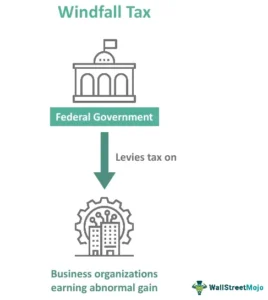
Windfall Tax

Objectives of Windfall Tax

  • Redistribute extraordinary profits for public welfare.
  • Ensure industries benefiting from external factors contribute to society.
  • Provide supplementary revenue for government budgets.
  • Reduce dependence on cross-subsidies and balance fiscal needs.

Key Features

  • Triggered by commodity shortages, wars, pandemics, or policy changes.
  • Targets industries with disproportionate gains.
  • Temporary in nature, linked to market fluctuations.
  • Helps governments manage inflationary pressures and fund welfare schemes.

Current Context in India

  • India imposed windfall tax on fuel exports due to global oil price volatility.
  • Aim: capture excess profits of refiners and exporters benefiting from international demand.
  • Helps government generate additional revenue during subsidy-heavy periods.

Challenges

  • May discourage investment in affected industries.
  • Difficult to define what counts as “extraordinary profit.”
  • Risk of policy uncertainty for businesses.
  • Could lead to disputes between government and industry stakeholders.

Way Forward

  • Ensure transparent criteria for imposing windfall tax.
  • Balance revenue needs with industry stability.
  • Use proceeds for targeted welfare schemes (health, education, energy transition).
  • Periodic review to avoid long-term distortion in investment climate.

Conclusion

Windfall tax is a redistributive fiscal tool designed to capture profits arising from external shocks rather than business innovation. its success depends on clear rules, balanced application, and predictable policy.

INDUS RIVER DOLPHIN

TOPIC: (GS3) ENVIRONMENT: THE HINDU

Recent reports highlight that conservation reserves, citizen science, and habitat protection are giving the endangered Indus River dolphin a chance to survive in India.

Indus River Dolphin

  • Scientific name: Platanista minor.
  • One of the rarest freshwater mammals.
  • Distribution: Found in the Indus River system with a small population in the Beas River.
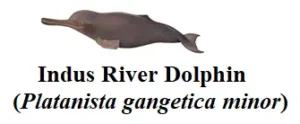
Indus River Dolphin

Physical Features

  • Long, pointed snout typical of river dolphins.
  • Teeth visible even when mouth is closed.
  • Functionally blind – eyes are reduced and lack lenses.
  • Relies on echolocation for navigation and hunting.
  • Unique trait: swims mostly on its side, using its snout to probe riverbeds.

Behaviour and Diet

  • Lives alone or in small groups (mother-calf pairs).
  • Carnivorous (piscivore) – feeds on fish and crustaceans like carp, catfish, prawns, and gobies.

Threats

  • Water pollution from industries and agriculture.
  • Poaching for meat and oil.
  • Habitat fragmentation due to dams and barrages.

Conservation Status

  • IUCN Red List: Endangered.
  • Wildlife Protection Act, 1972: Schedule I (highest protection).

Conclusion

The Indus River dolphin is a rare and endangered species with unique adaptations like side-swimming and echolocation. Its survival depends on habitat protection, pollution control, and community participation.


BSF REPTILE PROPOSAL AND BORDER SECURITY

TOPIC: (GS3) SEQURITY: THE HINDU

The Border Security Force (BSF) has asked field units to study the feasibility of deploying reptiles like snakes and crocodiles in riverine stretches of the India–Bangladesh border to deter infiltration and smuggling.

India–Bangladesh Border Context

  • Total length: 4,096.7 km (India’s longest land border).
  • States covered: West Bengal, Tripura, Meghalaya, Mizoram, Assam.
  • Terrain: Riverine areas, forests, wetlands, and densely populated regions.
  • Challenges: porous boundaries, illegal immigration, smuggling, human trafficking, and insurgency linkages.
  • Institutional framework: BSF as primary guard; Land Boundary Agreement (2015) resolved enclave disputes; CIBMS and smart fencing deployed for surveillance.

BSF’s Reptile Proposal

  • Idea: Release reptiles (snakes, crocodiles) in unfenced riverine stretches.
  • Aim: Natural deterrent against infiltration and criminal activities.
  • Context: About 371 km of border remains unfenced, especially riverine areas where fencing is difficult.

Operational Challenges

  • Procurement, handling, and deployment of reptiles is complex.
  • Reptiles may disperse beyond designated areas, creating human-wildlife conflict with local communities.
  • Ecological imbalance: Sundarbans and other regions already host crocodiles and venomous snakes; adding more could disrupt ecosystems.
  • Effectiveness doubtful: infiltrators are familiar with reptile presence and may adapt; criminals could even exploit animals.
  • Risks to reptiles: translocation reduces survival chances, especially for territorial species like crocodiles.

Existing Technological Interventions

  • CIBMS: integrates sensors, radars, cameras, and communication systems.
  • Smart fencing (BOLD-QIT): laser sensors and infrared cameras for riverine stretches.
  • UAVs/Drones: aerial surveillance of difficult terrain.
  • Floodlights and CCTV networks along vulnerable stretches.

Way Forward

  • Strengthen smart fencing and surveillance technologies rather than ecological experiments.
  • Enhance bilateral cooperation with Bangladesh for joint patrolling and intelligence sharing.
  • Invest in community engagement to reduce local grievances and improve border vigilance.
  • Focus on sustainable deterrents like drones, AI-based monitoring, and integrated command systems.

Conclusion

A more viable path lies in accelerating technological surveillance, smart fencing, and cooperative border management rather than experimenting with ecologically risky measures.

Write a Review

Your email address will not be published. Required fields are marked *

Seraphinite AcceleratorOptimized by Seraphinite Accelerator
Turns on site high speed to be attractive for people and search engines.