

Table of Contents
ToggleINDIA–NEW ZEALAND FREE TRADE AGREEMENT (FTA)
TOPIC: (GS3) ECONOMY: THE HINDU
India and New Zealand signed a “historic” Free Trade Agreement (FTA) in April 2026, hailed as a milestone in deepening trade, investment, and peopletopeople ties. The deal will be implemented after ratification by New Zealand’s Parliament later this year.
What is a Free Trade Agreement?
- An FTA is a bilateral/multilateral pact where countries reduce or eliminate tariffs, quotas, and trade barriers.
- It promotes market access, investment, and mobility of goods and services.
- Examples of India’s FTAs:
- India–UAE CEPA (2022)
- India–Australia ECTA (2022)
- India–Singapore CECA (2005)
- India–Sri Lanka FTA (1998)
Features of the India–NZ Deal
- Tariff Removal: New Zealand to eliminate tariffs on all Indian goods; India to reduce tariffs on 95% of imports from NZ.
- Investment Commitment: NZ pledged $20 billion investment in India over 15 years.
- Trade Growth: India’s exports to NZ grew 32.1% in 2024–25 ($711.1 mn); imports rose 75.2% ($587.1 mn).
- Comprehensive Scope: Covers agriculture, MSMEs, women entrepreneurs, students, skilled professionals, and mobility provisions.
- Speed of Negotiation: Talks began in March 2025, concluded by December 2025—one of India’s fastest FTA negotiations.
Significance of the Deal
- Economic Boost: Expands India’s export opportunities in manufacturing, agriculture, handicrafts, and services.
- Strategic Partnership: Strengthens ties across trade, investment, defence, sport, and innovation.
- Employment Creation: NZ expects thousands of jobs; India gains investment and market access.
- Make in India Synergy: Aligns with India’s flagship initiative, encouraging domestic production with foreign investment.
- Global Positioning: Enhances India’s credibility as a fastmoving trade negotiator amid global uncertainty.
Challenges Ahead
- Ratification Delay: Implementation depends on NZ Parliament approval.
- Agricultural Sensitivity: Indian farmers may face competition from NZ dairy and meat exports.
- Trade Imbalance Risk: Sharp rise in imports could widen deficit if not managed.
- Regulatory Barriers: Nontariff issues like standards, certification, and logistics may persist.
- Domestic Industry Concerns: MSMEs may struggle to compete with NZ’s advanced exporters.
Conclusion
The India New Zealand FTA promises investment, jobs, and stronger ties, India must balance domestic sensitivities, regulatory hurdles, and trade imbalances to fully realize its potential.
ELECTORAL ROLL PURGES AND CONSTITUTIONAL CONCERNS
TOPIC: (GS2) POLITY: THE HINDU
Lakhs of voters were reportedly deleted from electoral rolls in states like West Bengal, Bihar, Kerala, Tamil Nadu, and Assam under the Election Commission’s Special Intensive Revision (SIR), raising questions about legality, citizenship, and constitutional rights.
What is the Issue?
- The Election Commission of India (ECI) introduced the term “logical discrepancy” to justify deletions.
- Many genuine citizens were removed, preventing them from voting.
- Critics argue this is a governance failure and a deviation from electoral law.
Key Data & Trends
- West Bengal: Over 91 lakh voters removed.
- Bihar: Around 64 lakh deletions.
- Problematic Documents: Aadhaar, ration card, and even voter ID were not accepted as proof of citizenship.
- Impact: Many rural and poor citizens lacked the required documents, leading to mass exclusion.
Constitutional & Legal Framework
- Article 326: Grants voting rights to all citizens above 18 years unless disqualified.
- Role of Home Ministry: Responsible for defining documents to prove citizenship.
- Article 324: Empowers ECI to conduct elections but not to decide citizenship proof.
- Representation of the People Act, 1950 (Section 21):
- Summary Revision: Allowed before elections.
- Intensive Revision: Permitted only when elections are not imminent.
- Deviation: SIR was conducted just before elections, violating the law and past practice.
Key Concerns
- Jurisdictional Overreach: ECI acted beyond its powers by prescribing documents.
- Denial of Natural Justice: Many deletions occurred without giving affected voters a hearing.
- Unknown Categories: “Logical discrepancy” is not recognized in electoral law.
- Administrative Chaos: Boothlevel officers failed to follow rules of housetohouse verification.
Way Forward
- Home Ministry Role: Must publish a clear list of acceptable citizenship documents.
- Legal Compliance: ECI should restrict itself to summary revisions before elections.
- Transparency: Ensure deletions are only after due notice and hearing.
- Judicial Oversight: Courts must enforce adherence to constitutional provisions.
- Inclusive Verification: Simplify documentation for rural and marginalized voters.
Conclusion
Electoral roll purges highlight a serious constitutional crisis. By acting beyond its mandate, the ECI risks undermining universal adult franchise. Safeguarding the voter list requires legal clarity, administrative accountability, and judicial intervention to protect citizens’ fundamental democratic rights.
DEFECTIONS AND THE TENTH SCHEDULE
TOPIC: (GS2) POLITY: THE HINDU
On April 24, 2026, seven of AAP’s 10 Rajya Sabha MPs announced their merger with the BJP, raising debate on the antidefection law (Tenth Schedule) and its weakening in practice.
What Happened?
- Seven AAP MPs including Raghav Chadha, Sandeep Pathak, and Swati Maliwal joined BJP.
- The Rajya Sabha Chairman accepted their merger claim, boosting BJP’s tally to 113 seats.
- AAP has challenged the decision in the Supreme Court, arguing misuse of the merger clause.
Constitutional & Legal Framework
- Tenth Schedule (1985): Added by the 52nd Amendment to curb political defections.
- Grounds for Disqualification: Voluntarily giving up party membership or defying party whip.
- Merger Provision: Valid only if twothirds of legislators of a party agree to merge.
- Supreme Court (2023): Clarified that legislature party cannot dictate the course of the political party; merger must be of the original party, not just its legislators.
Key Concerns
- Misinterpretation of Law: Legislators claim merger validity by twothirds strength, but this stretches the intent of the Tenth Schedule.
- Judicial Weakness: Past court rulings failed to deter mass defections, allowing repetition.
- Democratic Erosion: Popular mandates overturned through opportunistic crossovers.
- Institutional Failure: Presiding officers often accept merger claims without rigorous scrutiny.
Defections and Democratic Stability
- Escalating Frequency: Between 2014–2024, over 400 legislators across states switched parties, leading to the fall of governments in Karnataka (2019), Madhya Pradesh (2020), Maharashtra (2022) and others.
- Weak Enforcement: Despite the Tenth Schedule (1985), presiding officers often delay rulings; average time taken for disqualification cases is 6–12 months, allowing defectors to consolidate power.
- Judicial Gaps: Supreme Court interventions have been inconsistent; in several cases, defectors were allowed to contest fresh elections, diluting deterrence.
- Erosion of Mandate: Surveys (CSDSLokniti, 2023) show 62% of voters feel betrayed when elected representatives defect, reflecting declining trust in representative democracy.
- Party System Instability: Regional parties are most vulnerable—data shows 80% of largescale defections occur in states with coalition or fragmented mandates.
Way Forward
- Judicial Clarity: Supreme Court must lay down strict interpretation of merger provisions.
- Strengthening Law: Amend Tenth Schedule to close loopholes and ensure accountability.
- Independent Authority: Consider an independent tribunal for defection cases instead of presiding officers.
- Ethical Politics: Parties must uphold internal democracy and accountability to voters.
Conclusion
The “Gang of Seven” defections have hollowed out the Tenth Schedule, turning it into a weak safeguard. Unless judicial clarity and legislative reforms strengthen the framework, opportunistic politics will continue to undermine India’s democratic institutions.
TIGHTENING OF INDIA’S DIGITAL PUBLIC SQUARE
TOPIC: (GS2) POLITY: THE HINDU
On March 30, 2026, the Ministry of Electronics and IT (MeitY) released draft amendments to the IT Rules, expanding government oversight on online content. Critics argue these changes risk overcensorship, data overreach, and dilution of constitutional safeguards.
What are Heatwave Amendments About?
- Aim to clarify platform obligations under the IT Act.
- Expand executive discretion in regulating online speech.
- Extend oversight to ordinary users posting news/current affairs content.
- Increase data retention duties for platforms.
Provisions & Concerns
- Rule 3(4): Safe Harbour Linked to Compliance
- Platforms must follow government advisories, directions, SOPs to retain immunity under Section 79.
- Risks bypassing Parliament and courts.
- Dilutes Shreya Singhal (2015) ruling, which required court/government orders grounded in law.
- Rule 8: Oversight of Ordinary Users
- Extends monitoring to individuals posting news/current affairs.
- Oversight by InterDepartmental Committee (IDC), earlier stayed by Bombay HC (2021) for violating Article 19(1)(a).
- Rule 14: Undefined IDC Powers
- IDC can examine any “matter” referred by Ministry of I&B.
- No clear threshold or guarantee of hearing for affected users.
- Transforms IDC from grievance redress to preemptive control body.
- Expanded Data Retention
- Platforms must store user data beyond existing laws.
- Risks: data breaches, misuse, surveillance creep.
- Leads to selfcensorship when citizens know interactions are archived.
Challenges
- Risk of OverCensorship: Platforms may remove lawful speech to avoid liability. Studies show that over 70% of flagged posts globally are removed without judicial orders, reflecting a chilling effect on free expression.
- Threat to Media Independence: Oversight of ordinary users posting news/current affairs could undermine press freedom. The Bombay High Court (2021) stayed similar provisions citing violation of Article 19(1)(a).
- Privacy Concerns: Expanded data retention increases vulnerability. India already faced 1.3 million cybersecurity incidents in 2023 (CERTIn data), showing the risks of storing user data for long periods.
- Judicial Conflict: Draft rules clash with pending High Court cases in Bombay and Madras, creating uncertainty. Past rulings like Shreya Singhal (2015) emphasized that only court/government orders grounded in law can mandate takedowns.
Way Forward
- Legislative Scrutiny: Parliament should debate and approve major changes; delegated legislation must stay within parent statute limits (Indian Express case, 1986).
- Judicial Consistency: Align rules with Supreme Court and High Court precedents to avoid contradictory obligations.
- Transparency in Oversight: Clearly define the role of the InterDepartmental Committee (IDC) and publish directives to prevent arbitrary action.
- Balanced Regulation: Adopt a rightsbased approach—curb harmful content while protecting dissent. Global best practices (EU’s Digital Services Act, 2022) show that regulation can coexist with free speech.
Conclusion
While regulation is necessary, bypassing constitutional safeguards and judicial oversight risks shrinking India’s digital public sphere. The challenge lies in balancing content moderation, privacy, and free expression within a democratic framework.
LEAF SPOT DISEASES
TOPIC: (GS3) ENVIRONMENT: THE HINDU
Leaf spot disease continues to affect arecanut plantations in Karnataka, prompting two premier government institutes to launch threeyear field demonstrations. The initiative, now completing its first year, aims to guide farmers with practical diseasemanagement practices.
What are Leaf Spot Diseases?
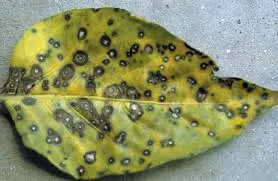
- A group of plant diseases caused by fungi, bacteria, or microorganisms.
- Pathogens attack the leaf surface, producing visible spots or lesions.
- Severe infection interferes with photosynthesis, causing leaves to yellow, shrivel, and drop prematurely.
- Common across the world, especially in humid and wet climates.
- Affect vegetables, fruit trees, ornamentals, and cash crops like arecanut.
Key Data & Trends
- Global Impact: Nearly 85% of plant diseases are fungal, with leaf spot among the most widespread.
- Agricultural Losses: Leaf spot diseases contribute significantly to crop yield reduction, threatening food security.
- Regional Concern: Karnataka’s arecanut plantations face recurring outbreaks, impacting farmer incomes.
- Environmental Factors: High humidity, poor drainage, and nutrient imbalance increase vulnerability.
Causes & Contributing Factors
- Fungal Pathogens: Major cause of leaf spot worldwide.
- Bacterial Infections: Secondary but still significant.
- Environmental Stress: Water shortage, sun scald, pesticide burn, or nutrient imbalance can mimic leaf spot symptoms.
- Climate Conditions: Warm, moist environments accelerate pathogen growth.
Challenges
- Yield Loss: Reduced productivity in cash crops like arecanut and vegetables.
- Economic Burden: Farmers face income instability due to repeated outbreaks.
- Diagnostic Confusion: Environmental stress symptoms often resemble pathogeninduced spots.
- Global Spread: Almost all regions are susceptible, making control difficult.
Control & Management
- Cultural Practices: Crop rotation, proper spacing, and sanitation to reduce pathogen spread.
- Biological Methods: Use of resistant varieties and beneficial microbes.
- Chemical Control: Fungicides and bactericides applied judiciously.
- Integrated Approach: Combining cultural, biological, and chemical methods for sustainable management.
- Farmer Training: Demonstrations and workshops to improve awareness and adoption of best practices.
Conclusion
The Karnataka field demonstrations highlight the importance of scientific guidance, integrated management, and farmer participation. Tackling leaf spot requires a multipronged approach that balances productivity, sustainability, and environmental health.
DOPPLER WEATHER RADAR
TOPIC: (GS3) ENVIRONMENT: THE HINDU
The Indian Institute of Tropical Meteorology (IITM), Pune has recently commissioned a new Xband Doppler Weather Radar at Mahabaleshwar under Mission Mausam, enhancing India’s weather monitoring network.
What is a Doppler Weather Radar?
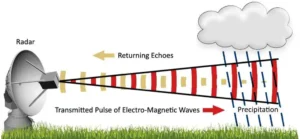
- A specialized radar system that uses the Doppler Effect to measure both the position and velocity of atmospheric objects.
- Provides data on movement of raindrops, cloud bands, and storm systems.
- Helps in realtime weather forecasting and disaster preparedness.
Types of Radar Bands
- SBand: Longrange coverage, useful for heavy rain monitoring.
- CBand: Medium range, widely used for cyclone tracking.
- XBand: Short range, highly sensitive, ideal for detecting thunderstorms and lightning.
Working Principle of Doppler Weather Radar
- Emission of Radio Waves: Radar antenna sends out beams of radio energy into the atmosphere.
- Interaction with Particles: Waves strike raindrops, snowflakes, or dust and scatter in different directions.
- Reflection & Signal Strength: Larger particles reflect stronger signals back to the radar.
- Measurement of Delay & Frequency Shift: By calculating the time taken for waves to return and the Doppler frequency change, forecasters determine distance, intensity, and movement of weather systems.
- Coverage: Modern Doppler radars can monitor weather phenomena within a radius of 250–500 km, depending on the band used.
Applications of Doppler Weather Radar
- Rainfall Estimation: Provides realtime rainfall data across a 500 km coverage area, crucial for flood forecasting.
- Cyclone Tracking: Cband radars are widely used by the India Meteorological Department (IMD) to monitor cyclones in the Bay of Bengal and Arabian Sea.
- Thunderstorm Alerts: Xband radars detect shortrange, highintensity storms and lightning, improving early warning systems.
- Disaster Preparedness: Supports aviation safety, flood management, and evacuation planning.
- National Network: India currently operates over 40 Doppler Weather Radars, with expansion planned under Mission Mausam to cover vulnerable coastal and hilly regions.
Conclusion
By combining advanced radar technology with Mission Mausam, India can better track cyclones, thunderstorms, and rainfall patterns, ensuring timely warnings and safeguarding lives and livelihoods.

OLIVE RIDLEY TURTLE MIGRATION
TOPIC: (GS3) ENVIRONMENT: THE HINDU
Olive Ridley turtles from Tamil Nadu coasts have begun migrating towards the Sri Lanka Dome, a highly productive oceanic region in the Indian Ocean. This highlights the ecological importance of the Dome for marine biodiversity.
Olive Ridley Turtle
- Smallest and most abundant sea turtle species worldwide.
- Named after the olivegreen shell (carapace).
- Famous for Arribada – mass nesting where thousands of females lay eggs together on beaches.
- Distribution: Found in warm waters of the Pacific, Atlantic, and Indian Oceans.
- India’s Rookery: Odisha’s Gahirmatha Marine Sanctuary is the world’s largest nesting site.
Features
- Omnivorous: Feed on plants, crustaceans, and small fish.
- Solitary Lifestyle: Prefer open ocean, migrating thousands of km annually.
- Life Cycle: Spend entire lives in the ocean, moving between feeding and breeding grounds.
Conservation Status
- IUCN Red List: Vulnerable.
- CITES: Appendix I (highest protection).
- Wildlife Protection Act, 1972: Schedule I (strict protection in India).
What is the Sri Lanka Dome?
- A nutrientrich oceanic zone formed by seasonal upwelling.
- Upwelling brings cool, nutrientladen waters to the surface, triggering plankton blooms.
- Supports diverse marine life – turtles, fish, whales, seabirds.
- Seasonality: Begins in May, peaks in July, declines by September.
- Acts as a feeding ground before turtles disperse and return.
Conclusion
Protecting such oceanic hotspots is vital for sustaining biodiversity, fisheries, and climate resilience. Conservation efforts must integrate international cooperation given the migratory nature of these turtles.