Table of Contents
ToggleIntroduction: The Watershed Year of 1707
The death of Aurangzeb in 1707 is often cited as the beginning of the “Modern” period in Indian history. While the Mughal Empire continued to exist for another 150 years, the central authority vanished, replaced by weak rulers, a crumbling economy, and rising regional powers. This blog post explores the “Later Mughals“—the 11 emperors who presided over the disintegration of one of history’s grandest empires.
I. The First Phase: Challenges and Early Decline (1707–1719)
1. Bahadur Shah I (1707–1712) – Shah-i-Bekhabar
The eldest son of Aurangzeb, Prince Muazzam, emerged victorious in the war of succession.
- Pacific Policy: Unlike his father, he adopted a more conciliatory approach toward the Marathas, Rajputs, and Sikhs to stabilize the empire.
- The Maratha Question: He released Shahu (grandson of Shivaji) but did not grant him the Chauth and Sardeshmukhi of the Deccan, leading to continued instability.
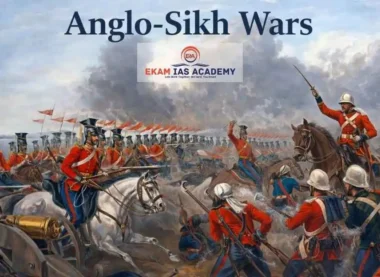
- The Sikh Rebellion: Faced a fierce revolt led by Banda Bahadur.
- Assessment: His reign was too short to reverse the decay. His nickname, Shah-i-Bekhabar (Heedless King), reflected his inability to manage the imperial administration effectively.
2. Jahandar Shah (1712–1713)
His reign marked the beginning of the “Age of the Nobles.”
- The Rise of Zulfiqar Khan: Jahandar Shah was a puppet of his powerful Wazir, Zulfiqar Khan.
Administrative Reforms: Zulfiqar Khan abolished Jizya and attempted to improve ties with the Rajputs. However, he introduced the notorious Ijarah system (revenue farming), which ruined the peasantry.
3. Farrukhsiyar (1713–1719)
He rose to power with the help of the Saiyid Brothers (Abdullah Khan and Hussain Ali), known in history as the “King-makers.”
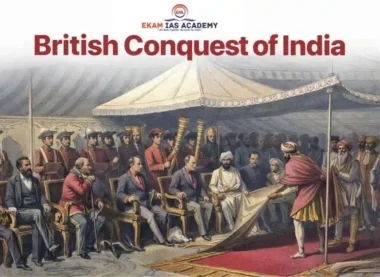
- The Royal Farman (1717): Farrukhsiyar granted the English East India Company the “Magna Carta” of their trade, exempting them from customs duties in Bengal—a move that eventually gave the British an economic foothold.
- Execution of Banda Bahadur: The Sikh leader was captured and executed during this reign.
Death: He became the first Mughal emperor to be assassinated by his own nobles (the Saiyid Brothers).
II. The Factional Era: The Turani vs. Irani Conflict
During the 18th century, the Mughal court was paralyzed by intense rivalry between groups of nobles:
- The Turanis: Nobles from Central Asia (e.g., Nizam-ul-Mulk).
- The Iranis: Nobles from Persia (e.g., Zulfiqar Khan, Saadat Khan).
- The Afghans and Hindustanis: Local Muslim converts and Afghan immigrants.
These factions competed for Jagirs (land grants), leading to the Jagirdari Crisis, where the number of nobles far exceeded the available productive land7.
III. The Long Decline: Muhammad Shah 'Rangeela' (1719–1748)
Muhammad Shah’s long reign saw the final collapse of the Mughal structure.
1. Disintegration of the Empire
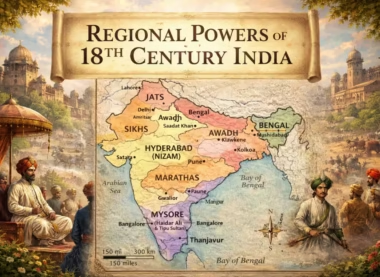
Under his weak leadership, several provinces became de facto independent states:
- Hyderabad (1724): Founded by Nizam-ul-Mulk.
- Bengal: Established by Murshid Quli Khan.
- Awadh: Formed by Saadat Khan.
2. The External Blow: Nadir Shah’s Invasion (1739)
The Persian ruler Nadir Shah invaded India, exposing the military bankruptcy of the Mughals1111.
- Battle of Karnal: The Mughal army was easily defeated.
- Looting of Delhi: Nadir Shah took away the legendary Peacock Throne and the Koh-i-noor diamond.
- Impact: The invasion drained the treasury and invited future Afghan incursions.
IV. The Final Collapse and British Emergence (1748–1857)
1. Ahmad Shah Abdali and the Afghan Invasions
Between 1748 and 1767, Abdali invaded India seven times. The most significant event was the Third Battle of Panipat (1761), where Abdali defeated the Marathas. While it didn’t restore the Mughals, it cleared the path for British expansion
2. Shah Alam II (1759–1806)
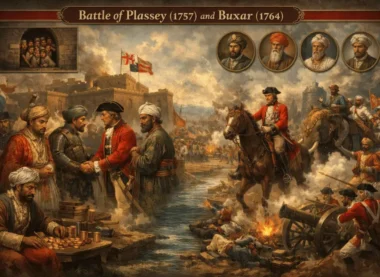
- Battle of Buxar (1764): Shah Alam II joined forces with Mir Kasim and Shuja-ud-Daulah against the British. Their defeat led to the Treaty of Allahabad (1765).
- Pensioner of the British: The Emperor was forced to grant the Diwani rights (revenue collection) of Bengal, Bihar, and Orissa to the East India Company.
- 1803: The British captured Delhi, and the Mughal Emperor became a mere prisoner/pensioner.
3. Bahadur Shah II 'Zafar' (1837–1857)
The last Mughal Emperor was a poet and a reluctant leader.
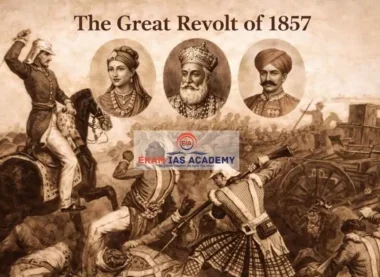
- Revolt of 1857: The sepoys proclaimed him the “Emperor of India”.
- End of the Dynasty: After the revolt was suppressed, he was tried for treason and exiled to Rangoon, where he died in 1862.
V. Why the Mughal Empire Declined: A UPSC Analysis
UPSC aspirants must understand that the decline was not due to a single factor but a combination of systemic failures:
- Weak Successors: After Aurangzeb, no ruler possessed the military or administrative acumen to hold the empire together.
- Jagirdari Crisis: The lack of land to pay nobles led to corruption and internal strife.
- Economic Decay: Over-taxation of the peasantry to fund wars and the luxury of the court led to rural uprisings.
- Military Weakness: The Mughals failed to modernize their weaponry and navy, leaving them vulnerable to both the Marathas and European powers.
- Rise of Regional Powers: The assertion of independence by Marathas, Sikhs, and Jats created a fragmented political landscape.
VI. Summary Table: Later Mughal Emperors
Emperor | Tenure | Key Events |
Bahadur Shah I | 1707–12 | Pacific policy; conflict with Banda Bahadur. |
Jahandar Shah | 1712–13 | Dominance of Zulfiqar Khan; Ijarah system. |
Farrukhsiyar | 1713–19 | 1717 Royal Farman to EIC; killed by Saiyid Brothers. |
Muhammad Shah | 1719–48 | Nadir Shah’s invasion (1739); Rise of independent states. |
Shah Alam II | 1759–1806 | Battle of Buxar; became a British pensioner. |
Bahadur Shah II | 1837–57 | Symbol of the 1857 Revolt; end of the empire. |
UPSC Prelims: PYQs & Practice Questions
Previous Year Questions (PYQs)
Question 1
Q: Which of the following was/were the reasons for the decline of the Mughal Empire? (UPSC Prelims - Multiple Years context)
Options:
(a) Weak successors after Aurangzeb.
(b) The "Jagirdari Crisis."
(c) Foreign invasions by Nadir Shah and Ahmad Shah Abdali.
(d) All of the above.
Answer: (d)
Explanation: The decline was multifaceted. Aurangzeb’s death in 1707 led to a series of weak rulers who could not manage the factions of the nobility. The Jagirdari crisis (lack of productive land for land grants) crippled the economy, while invasions by Nadir Shah (1739) and Abdali drained the treasury and destroyed imperial prestige.
Question 2
Q: The 1717 Royal Farman, often called the "Magna Carta" of the East India Company's trade in India, was granted by which Mughal Emperor?
Options:
(a) Bahadur Shah I
(b) Farrukhsiyar
(c) Muhammad Shah
(d) Shah Alam II
Answer: (b)
Explanation: Farrukhsiyar granted this Farman to the English, exempting them from customs duties in Bengal in exchange for a yearly payment. This gave the British a massive economic advantage over other Europeans and local merchants.
Previous Year Questions (PYQs)
Question 1
Q: Match the following "Later Mughals" with their nicknames/titles:
Pairs:
(1) Bahadur Shah I — (A) Rangeela
(2) Muhammad Shah — (B) Shah-i-Bekhabar
(3) Bahadur Shah II — (C) Zafar
Answer: 1-B, 2-A, 3-C
Question 2
Q: Which battle saw the Mughal Emperor Shah Alam II fighting alongside the Nawab of Awadh and Mir Kasim against the British?
Answer: Battle of Buxar (1764)
UPSC Mains: Previous Year & Practice Questions
Mains Previous Year Questions (Topic-based)
Fragmented Polity
Question: “The middle of the 18th century was a period of a fragmented polity.” Discuss with reference to the decline of the Mughals.
Saiyid Brothers
Question: Analyze the role of the ‘King-makers’ (Saiyid Brothers) in the Mughal court during the early 18th century.
Foreign Invasions
Question: To what extent did the external invasions of the 18th century contribute to the fall of the Mughal Empire?
Jagirdari Crisis
Question: How did the “Jagirdari Crisis” undermine the stability of the Mughal state?
Battle of Buxar
Question: Critically examine the causes of the Battle of Buxar and its significance for the Mughal Emperor.
Mains Practice Questions
Nature of Mughal Decline
Question: “The Mughal Empire did not fall; it simply withered away.” Critically evaluate this statement in the context of the Later Mughals.
Socio-Economic Conditions
Question: Discuss the socio-economic conditions of India on the eve of the British conquest as described in the early 18th century.
Nadir Shah’s Invasion
Question: Evaluate the impact of Nadir Shah’s invasion (1739) on the central authority of Delhi.
The Twilight of the Mughals - FAQs
Who were the "Saiyid Brothers"?
Known as the “King-makers,” Abdullah Khan and Hussain Ali were powerful Irani/Hindustani nobles who controlled the Mughal throne from 1713 to 1720, appointing and deposing emperors like Farrukhsiyar.
What was the "Jagirdari Crisis"?
It was a systemic failure where there was an acute shortage of good jagirs (land grants) to pay the growing number of mansabdars (nobles). This led to corruption, oppression of the peasantry, and factional fighting among the nobility.
Why is 1707 considered a turning point in Indian history?
It marks the death of Aurangzeb, the last of the “Great Mughals.” His death triggered wars of succession and the rise of regional powers (Marathas, Sikhs, Jats) and independent provincial states (Bengal, Awadh, Hyderabad).
What was the result of the Treaty of Allahabad (1765)?
Following the Battle of Buxar, Shah Alam II granted the Diwani (revenue collection) rights of Bengal, Bihar, and Orissa to the British East India Company, effectively making the Mughal Emperor a pensioner of the British.
Who was the last Mughal Emperor?
Bahadur Shah II, also known as “Zafar.” He was the symbolic head of the 18th-century Revolt and was exiled to Rangoon by the British after its failure, marking the formal end of the Mughal dynasty.