Table of Contents
ToggleThe UPSC Civil Services Examination is one of the most competitive exams in India, demanding conceptual clarity, accuracy, and disciplined preparation. Among the countless resources available, NCERT textbooks are often recommended as the foundation for UPSC preparation.
But how important are NCERTs for Prelims and Mains? Do all aspirants need to study them? This article breaks it down in detail.
Why NCERTs Are Important for UPSC Preparation
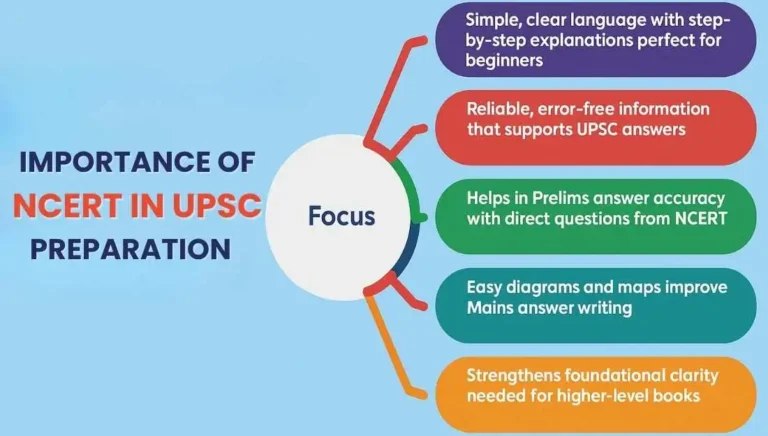
NCERT books are written in simple, clear, and logical language, making them the best starting point for beginners.
Builds Strong Conceptual Foundation
NCERTs help you understand topics from scratch, making them essential for aspirants from non-humanities backgrounds.
How NCERTs Help
- Clear explanation of complex topics
- Chronological flow
- UPSC-friendly approach
- Accurate & authentic information
Provides Reliable and Error-Free Information
NCERTs are published by the Government of India, making them the most trustworthy sources for basic concepts.
Why Reliability Matters for UPSC
- Eliminates confusion from unreliable coaching materials
- Ensures factual accuracy
- Helps avoid contradictory information
Highly Useful for UPSC Prelims
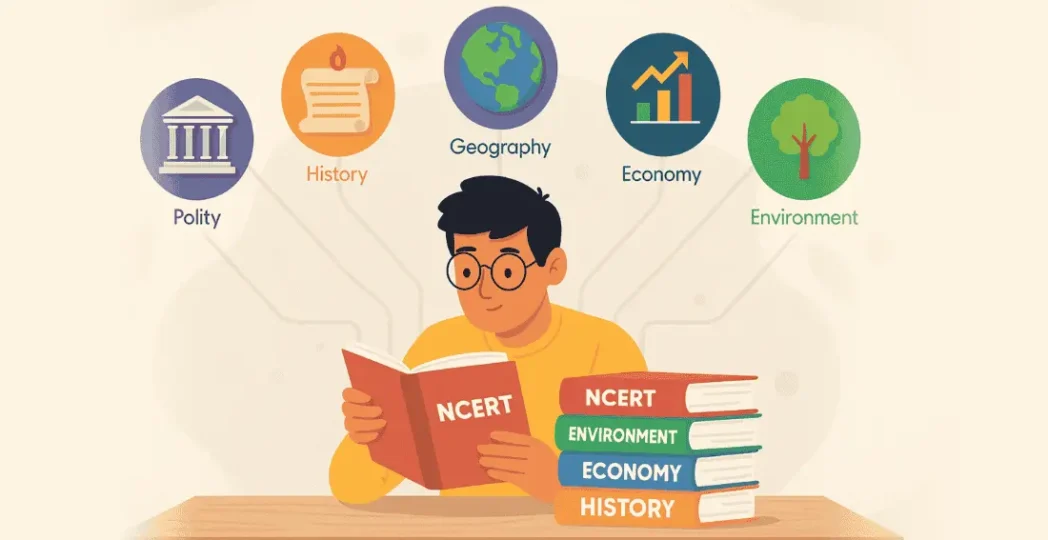
A significant number of UPSC Prelims questions come directly or indirectly from NCERTs, especially in subjects like History, Geography, Polity, Economy, and Science.
Examples of Topics from NCERTs Asked in Prelims
- Fundamental Rights
- Drainage systems of India
- Mughal administration
- Basic economic terminologies
- Environment and biodiversity basics
Helps in Understanding Maps, Diagrams & Illustrations
NCERT Geography, Economics, and Science books include diagrams that make understanding easier and support Mains answer writing.
NCERT Diagrams Useful for UPSC
- Water cycles
- Soil profiles
- Monsoon mechanisms
- Population pyramids
Subject-Wise Importance of NCERT for UPSC
Not all NCERTs hold the same weight. Here is a breakdown:
1. History NCERTs
NCERT History books (Class 6–12) cover:
- Ancient India
- Medieval India
- Modern India
- World History basics
These build the needed foundation for both Prelims and Mains.
2. Geography NCERTs
Class 6–12 Geography NCERTs are essential because they explain:
- Physical geography
- Indian geography
- Human geography
- Climate & vegetation
3. Polity NCERTs
Although Laxmikanth is the main source, NCERTs provide:
- Introduction to Indian Constitution
- Basic political theories
- Democratic framework
4. Economy NCERTs
Class 9–12 Economics NCERTs help to grasp:
- Basic economic concepts
- Indian economy structure
- Developmental indicators
5. Environment & Science NCERTs
NCERT Science books (Class 6–10) and Class 12 Biology chapters are useful for:
- Ecosystems
- Biodiversity
- Food chains
- Conservation
How to Use NCERT Books Effectively for UPSC
Start With Class 6–10 for Basics
These form the foundation for higher-level understanding.
Move to Class 11–12 for Depth
Advanced topics develop analytical and descriptive skills.
Make Notes While Reading
Keep notes short and crisp — useful for Prelims and Mains revision.
Link NCERT Concepts With Current Affairs
For example:
- Geography → Heat waves, monsoon patterns
- Polity → Constitutional debates in news
- Economics → Budget-related topics
Revise Regularly
UPSC preparation requires repeated revision.
Follow the 3R Strategy:
Read → Revise → Repeat
Are NCERTs Alone Enough for UPSC Preparation?
NCERTs build the base but must be complemented with advanced UPSC books and current affairs.
What to Add After NCERTs
- Standard UPSC textbooks
- Government reports
- PIB, Yojana, The Hindu
- Test series
- Optional subject books
At Ekam IAS Academy, we strongly recommend that every UPSC aspirant begins preparation with a solid NCERT foundation. NCERTs help build clarity, simplify complex topics, and make advanced UPSC books easier to understand.
To support this, our programs are designed to help aspirants master NCERTs in a structured and exam-focused way:
Start With NCERT-Based Foundation Learning
Begin with Class 6–12 NCERTs to build your basics before moving to standard books.
👉 Explore Foundation Course
Strengthen Concepts With Optional Courses
NCERT knowledge is crucial for Optional subjects like Anthropology, Geography, and Sociology.
👉 Anthropology Optional
👉 Geography Optional
👉 Sociology Optional
Use Mentorship to Build NCERT-Based Strategy
Our mentors help you plan NCERT reading, make effective notes, and connect basics with current affairs.
👉 One-to-One Mentorship
Test Your NCERT Understanding
Start with NCERT-based tests before attempting full-length UPSC-level papers.
👉 UPSC Test Series
Conclusion
So, why are NCERTs essential for UPSC preparation?
Because they provide:
✅ Clear fundamentals
✅ Reliable information
✅ Exam-oriented content
✅ Strong base for advanced learning
Every successful UPSC aspirant — beginner or advanced — benefits from reading NCERTs. They are not just recommended; they are necessary for cracking the Civil Services Examination.
NCERT Are Essential for UPSC Preparation - FAQs Answered
Are NCERT books enough for UPSC preparation?
No. NCERT books form the foundation for UPSC, but you must supplement them with standard UPSC books, current affairs, government reports, and a UPSC test series.
Which NCERT books are most important for UPSC?
The most important NCERT books for UPSC include:
- History NCERTs (Class 6–12)
- Geography NCERTs (Class 6–12)
- Economics NCERTs (Class 9–12)
- Polity basics NCERT
- Biology NCERT (Class 12 – Ecology chapters)
- Science NCERTs (Class 6–10)
Should beginners start UPSC preparation with NCERTs?
Yes. Beginners should start with NCERTs for UPSC because they offer concept clarity, simple explanations, and authentic information, making advanced UPSC books easier to understand.
How many times should NCERT books be revised for UPSC?
A minimum of 2–3 revisions of NCERTs is recommended. Regular revision ensures better retention, Prelims accuracy, and Mains-level understanding.
Does UPSC ask direct questions from NCERTs?
Yes. UPSC Prelims frequently includes direct questions from NCERTs, especially in History, Geography, Economy, Environment, and Science.