
Daily Current Affairs 06-November-2025

Share this Post

CITES REPORT ON INDIA’S WILDLIFE IMPORTS

TOPIC: (GS3) ENVIRONMENT: THE HINDU

A recent CITES verification mission advised India to halt imports of critically endangered species like gorillas and orangutans due to risks of wild-caught animals being falsely labeled as captive-bred. The move aims to strengthen oversight and prevent illegal wildlife trafficking.

About CITES

  • It is a legally binding international treaty with 185 member nations.
  • Species are categorized into three Appendices:
    • Appendix I – Species facing high extinction risk; trade allowed only in exceptional cases.
    • Appendix II – Species requiring controlled trade to prevent overexploitation.
    • Appendix III – Species protected in a particular country seeking international cooperation.
  • Trade requires CITES-approved export and import permits.

India’s Framework under CITES

  • India became a party in 1976.
  • The Directorate of Wildlife Preservation under MoEFCC functions as India’s CITES Management Authority.
  • Domestic implementation aligns with the Wildlife (Protection) Act, 1972, which regulates trade and possession of wildlife.

Issues Highlighted by the CITES Mission

  • Imports to facilities in Gujarat (GZRRC and RKTEWT) triggered scrutiny.
  • Permits were present, but concerns persisted regarding:
    • True origin of animals.
    • Misuse of captive-bred (C) and zoo (Z) source codes.
    • Insufficient verification of exporting facilities.
  • Imports included species from countries with no credible breeding programs, e.g. gorillas from Haiti, chimpanzees from Egypt and Iraq.
  • Some elephants and primates were found to be wild-captured, contradicting captive-bred claims.
  • The report noted excellent welfare infrastructure at Indian facilities, but flagged procedural and regulatory gaps.

Recommendations for India

  • Strengthen due diligence in verifying captive-bred claims.
  • Seek confirmation from source countries regarding animal origins.
  • Take corrective actions if illegal sourcing is proven.
  • Submit a compliance report within 90 days to the CITES Secretariat.

Conclusion

Strengthening import verification processes will help India maintain its global conservation credibility, uphold wildlife protection commitments, and prevent illegal exploitation of endangered species.

This article has been updated and published in detail on our new platform. Please visit the link below for the latest version:

👉 Read the full article on ekamiasacademy.in

SUPREME COURT RELIEF ON AGR DUES

TOPIC: (GS2) POLITY: THE HINDU

The Supreme Court has recently allowed the reassessment of Adjusted Gross Revenue (AGR) dues of Vodafone Idea (Vi) up to FY 2016–17, including interest is seen as a crucial relief for the financially distressed telecom operator.

What is AGR?

  • Adjusted Gross Revenue (AGR) is the basis for calculating licence fees and spectrum usage charges payable by telecom companies to the government.
  • It includes revenue from telecom services and certain non-core income.

Background to the Case

  • Vi’s total AGR dues were around ₹83,400 crore, with an additional demand of ₹5,600 crore raised later by the Department of Telecommunications (DoT).
  • Vi approached the Supreme Court seeking a complete reconciliation of dues, arguing discrepancies in calculations.

Supreme Court’s Clarification

  • The Court clarified that Vi is entitled to full reassessment of dues up to FY17, not merely the extra ₹5,600 crore.
  • This opens scope for a substantial reduction in payable liabilities.
  • Following the ruling, Vodafone Idea’s share price surged, reflecting renewed market confidence.

Government’s Role and Stake

  • The Government now holds nearly 49% equity in Vodafone Idea after converting ₹36,950 crore dues into shares (March 2025).
  • Earlier, in 2023, the Government converted ₹6,133 crore of interest dues into equity.
  • This makes the Government the single largest shareholder, signaling strong interest in preventing Vi’s collapse.

Financial Challenges

  • Vi’s total debt is around ₹2.3 lakh crore, including:
    • ₹77,000 crore AGR dues
    • ₹1.4 lakh crore spectrum liabilities
  • The company has weak cash flow, declining subscriber base, and limited investor interest.
  • It warned that without bank funding and new capital, it may not sustain beyond FY 2025–26.

Significance for Telecom Sector

  • Vi is one of India’s three major private telecom players (along with Airtel and Jio).
  • A collapse could lead to reduced competition, market dominance, and consumer disadvantage.
  • The relief supports the government’s objective of maintaining a three-player telecom market.

Conclusion

While the Supreme Court’s relief provides short-term breathing space, Vodafone Idea’s survival depends on fresh investment, operational restructuring, and regaining user trust. The government also remains invested in maintaining market balance and telecom sector health.

This article has been updated and published in detail on our new platform. Please visit the link below for the latest version:

👉 Read the full article on ekamiasacademy.in

NUCLEAR POWER SECTOR LIKELY AMENDMENTS

TOPIC: (GS2) POLITY: THE HINDU

Government is now considering two key legislative amendments to the Civil Liability for Nuclear Damage Act (CLNDA), 2010, and the Atomic Energy Act, 1962 to attract private investment, foreign technology, and expand nuclear power capacity.

Why in the News

  • The government is preparing to Modify CLNDA, 2010 to ease strict supplier liability norms.
  • Amend the Atomic Energy Act, 1962 to allow private sector participation, particularly in Small Modular Reactors (SMRs).
  • This would mark the first-ever structured private entry into India’s nuclear power generation sector.

Proposed Amendments

Civil Liability for Nuclear Damage Act, 2010 (CLNDA)

  • Issue: Supplier liability under Section 17(b) has deterred global nuclear firms.
  • Likely Change: Redefining or limiting supplier liability to encourage foreign and private investments.
  • Expected Outcome: Partnerships with companies like Westinghouse (US), GE-Hitachi, and Framatome (France), enabling faster and cost-effective nuclear expansion.

Atomic Energy Act, 1962

  • Current Provision: Only the government can build and run nuclear plants.
  • Likely Amendment: Allowing private firms to co-invest and develop SMRs.
  • Impact: Creates a hybrid public-private nuclear ecosystem to accelerate capacity addition.

Small Modular Reactors (SMRs)

  • Compact, factory-built reactors that are transportable and quicker to deploy.
  • Advantages:
    • Scalable and suitable for decentralized grids
    • Safer, smaller footprint, faster installation
    • Compatible with renewable energy systems
  • Current Interest: NPCIL developing an indigenous SMR design, with private interest from Reliance, Adani, and Tata Power.

Challenges in India’s Nuclear Sector

  • State Monopoly: NPCIL is currently the sole operator.
  • Liability Concerns: Section 17(b) of CLNDA discourages foreign suppliers.
  • Base-load Requirement: Renewable energy intermittency requires reliable nuclear backup.
  • Need for New Technology: Modern reactors and SMRs offer scalability and lower environmental impact.

Why Private and Foreign Entry Matters

  • Capital infusion reduces financial burden on the government.
  • Access to advanced reactor designs and global expertise.
  • Supports India’s Net Zero 2070 targets through low-carbon power.
  • Enhances energy security and grid reliability.
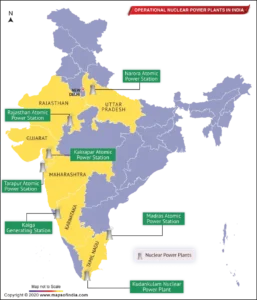
NUCLEAR POWER SECTOR LIKELY AMENDMENTS

Conclusion

These proposed reforms represent a historic shift in India’s nuclear policy. By combining public oversight with private innovation and global partnerships, India can expand nuclear power capacity, reduce carbon emissions, and strengthen its long-term energy security while supporting the transition to a sustainable and reliable power system.

This article has been updated and published in detail on our new platform. Please visit the link below for the latest version:

👉 Read the full article on ekamiasacademy.in

QS ASIA UNIVERSITY RANKINGS 2026

TOPIC: (GS2) POLITY: THE HINDU

The QS World University Rankings: Asia 2026 report shows that while Indian institutions have improved in their absolute scores, many of them slipped in ranking positions.

2026 Rankings

  • University of Hong Kong secured the top position, surpassing Peking University (China), now ranked second.
  • National University of Singapore (NUS) and Nanyang Technological University (NTU) shared the third spot.
  • India’s best performer, IIT Delhi, slipped from 44th to 59th.
  • IIT Bombay dropped 23 ranks to 71st, its biggest fall in recent years.
  • The only notable Indian institution to improve was Chandigarh University, moving from 120th to 109th.

Reasons for India’s Relative Decline

  • Stronger competition: Asian institutions, especially in China and Singapore, have increased investment in research, international partnerships, and faculty recruitment.
  • Ranking expansion: The 2026 list included 1,529 universities, creating more competition.
  • China added 261 new institutions, while India added 137, pushing rankings downward due to higher comparative benchmarks.

Key Weaknesses of Indian Institutions

  • Low Research Impact: Citations per paper remain low compared to leading Asian universities. Indicates limited global research visibility.
  • Poor Faculty-Student Ratio: IITs have large student loads and limited faculty strength. Scores remain far below leading East Asian institutions.
  • Low Internationalisation: Very low foreign student and faculty numbers. Limits global exposure and collaborative research networks.

Strengths Noted

  • Indian institutions scored strongly in:
    • Academic reputation
    • Employer reputation
    • Staff qualification levels
    • Research productivity (papers per faculty)

Way Forward

  • Improve research quality and global collaboration for higher citation impact.
  • Recruit more faculty and upgrade infrastructure to improve teaching capacity.
  • Promote international exchanges, visiting faculty, and global academic partnerships.
  • Align institutional reforms with the National Education Policy (NEP) 2020, which emphasizes global competitiveness and research-driven learning.

Conclusion
The rankings indicate that while Indian universities are progressing, regional competitors are improving faster. Strengthening research ecosystems, internationalisation, and faculty capacity will be crucial to enhance India’s global academic standing.

This article has been updated and published in detail on our new platform. Please visit the link below for the latest version:

👉 Read the full article on ekamiasacademy.in

SHAH BANO CASE

TOPIC: (GS2) POLITY: THE HINDU

The Shah Bano Case (1985) questioned whether secular criminal laws ensuring maintenance could override religious personal laws. The case continues to influence debates on women’s rights, minority identity, and the Uniform Civil Code (UCC).

Background of the Case

  • Shah Bano Begum, a 62-year-old Muslim woman from Indore, was divorced by her husband in 1978 through triple talaq after 43 years of marriage.
  • She sought maintenance under Section 125 of the CrPC, a secular law guaranteeing support for those unable to maintain themselves.
  • Her husband argued that under Muslim personal law, his responsibility was only during the iddat period, and payment of mahr fulfilled his duty.
  • The local court granted ₹25 monthly maintenance; the MP High Court later increased it to ₹179.20. The husband appealed to the Supreme Court.

Supreme Court Judgment (1985)

  • A five-judge Constitution Bench led by CJI Y.V. Chandrachud upheld the High Court ruling.
  • Key Observations:
    • Section 125 CrPC applies to all citizens, irrespective of religion.
    • A divorced Muslim woman is entitled to maintenance beyond iddat if she lacks means of survival.
    • The Court cited Quranic verses, showing that Islamic teachings support caring for divorced women.
    • The Court noted that Article 44 (UCC) had remained ineffective and urged movement towards a common civil code to ensure equality.

Political and Legal Aftermath

  • To calm protests by some Muslim bodies, the government passed the Muslim Women (Protection of Rights on Divorce) Act, 1986.
  • It restricted the husband’s liability to maintenance only during iddat, and placed later support responsibility on relatives or Waqf Boards.

Judicial Re-interpretations

  • Danial Latifi v. Union of India (2001): The Supreme Court upheld the 1986 Act but stated the husband must provide a lump-sum, reasonable settlement during iddat to support the woman for life.
  • Mohd. Abdul Samad v. State of Telangana (2024): The Court reaffirmed that Muslim women may still seek maintenance under Section 125 CrPC, preserving legal choice.

Significance

  • Symbol of women’s rights vs religious authority.
  • Influenced debates on secularism, minority rights, judicial activism.
  • Triggered discussions on the Uniform Civil Code and constitutional morality.

Relevant Current Affairs

  • The Muslim Women (Protection of Rights on Marriage) Act, 2019 banned instant triple talaq, reinforcing gender justice.
  • Uttarakhand (2024) is preparing to implement a Uniform Civil Code, renewing national debate.

Conclusion
The Shah Bano case continues to stand as a milestone in the fight for gender justice, illustrating how constitutional values must guide personal laws in a diverse and democratic society.

This article has been updated and published in detail on our new platform. Please visit the link below for the latest version:

👉 Read the full article on ekamiasacademy.in

HIGH SEAS TREATY

TOPIC: (GS2) INTERNATIONAL RELATIONS: THE HINDU

The High Seas Treaty has now been ratified by over 60 countries, meeting the requirement for it to take effect. It will officially come into force in January 2026, marking a major milestone in global ocean conservation.

About the High Seas Treaty

  • It is a legally binding agreement under UNCLOS (1982) to protect marine biodiversity beyond national jurisdictions.
  • Covers nearly two-thirds of the world’s oceans, which previously lacked strong conservation rules.
  • Introduces Marine Protected Areas (MPAs), Environmental Impact Assessments (EIAs), and fair benefit-sharing of Marine Genetic Resources (MGRs).
  • Aims to support sustainable use, climate resilience, and international cooperation, especially benefiting developing countries.

Key Features of the Treaty

  • Biodiversity Conservation: Establishes rules for protecting ecosystems beyond national boundaries.
  • Marine Genetic Resources (MGRs): Treats these as shared resources, ensuring fair benefit-sharing among nations.
  • Area-Based Management: Allows creation of MPAs to safeguard fragile marine habitats.
  • Environmental Impact Assessments: Requires assessment of activities with potential ecological harm.
  • Support for Developing Nations: Provides for capacity-building and technology sharing to bridge scientific gaps.

Major Challenges

Conceptual and Legal Tensions

  • Conflict between “Common Heritage of Mankind” (equitable sharing) and “Freedom of the High Seas” (open access).
  • Only partial application of common heritage principles, especially for MGRs.
  • Leads to ambiguity in rights and responsibilities of different states.

Issues with Marine Genetic Resource Governance

  • No clear enforcement structure to regulate extraction and usage.
  • Developing countries fear biopiracy and control of genetic patents by richer nations.
  • Risk of unequal profit distribution, worsening North–South inequity.

Implementation and Monitoring Barriers

  • High seas are hard to patrol and monitor due to vastness.
  • Absence of a dedicated global enforcement authority weakens compliance.
  • Heavy reliance on voluntary reporting reduces accountability.

Financial and Technological Divide

  • Developing nations lack deep-sea research capacity, vessels, and data infrastructure.
  • Technology transfer commitments are undefined and funding mechanisms unclear.
  • May widen the global scientific and economic gap.

Balancing Ecology and Development

  • Economic interests in deep-sea mining, fisheries, and biotechnological research may clash with conservation.
  • No clear framework for prioritizing environmental protection over exploitation.

Conclusion

The High Seas Treaty is a landmark in safeguarding global ocean commons. However, its success depends on clearer governance rules, stronger enforcement, and fair technology and profit-sharing mechanisms. For India, integrating the treaty with its Blue Economy policy will help balance marine conservation and economic opportunities.

This article has been updated and published in detail on our new platform. Please visit the link below for the latest version:

👉 Read the full article on ekamiasacademy.in

MADRAS HIGH COURT RECOGNIZES CRYPTOCURRENCY AS PROPERTY

TOPIC: (GS2) POLITY: THE HINDU

In a significant legal development, the Madras High Court has held that cryptocurrency qualifies as “property” under Indian law.

What is Cryptocurrency?

  • Cryptocurrency is a digital asset secured by cryptography and built on blockchain technology.
  • It is decentralized, meaning it is not controlled by any government or central authority.
  • Can function as a medium of exchange, store of value, or speculative investment.
  • Examples include Bitcoin, Ethereum, and Ripple (XRP).

Case Summary

  • Case: Rhutikumari vs. Zanmai Labs Pvt. Ltd. (WazirX) – Madras High Court, October 2025.
  • After a crypto exchange hack, WazirX froze the petitioner’s account even though her assets were unrelated to the theft.
  • The petitioner argued that her crypto holdings were her private property, unlawfully restricted.
  • The Court ruled that cryptocurrency has ownership attributes—it can be held, transferred, possessed, and monetized—therefore it constitutes property.
  • The court ordered the disputed crypto value to be placed in escrow pending arbitration.

Legal Implications

  • Recognition of Ownership Rights: Crypto holders now have clear property rights, enforceable in civil disputes.
  • Investor Protection: Users can seek legal remedies if exchanges freeze or mishandle assets.
  • Accountability of Exchanges: Platforms cannot deny access without lawful basis and due process.
  • Insolvency and Bankruptcy: Crypto can now be treated as recoverable assets in liquidation cases.
  • Judicial Precedent: Likely to influence future policies on regulation and taxation.

Current Legal Status in India

  • Crypto is legal to own and trade, but not legal tender.
  • Taxation: Treated as Virtual Digital Asset (VDA) under Finance Act, 2022. 30% tax on gains + 1% TDS on transactions.
  • Regulatory Supervision: SEBI oversees investment aspects. FIU-IND ensures compliance under PMLA (2023 extension).
  • RBI continues to promote the Digital Rupee (CBDC) as a regulated alternative.

Conclusion
The ruling strengthens legal protection and clarity for cryptocurrency users in India. While crypto remains non-tender, it is now judicially recognized as property, marking an important step in shaping a balanced regulatory framework.

This article has been updated and published in detail on our new platform. Please visit the link below for the latest version:

👉 Read the full article on ekamiasacademy.in

RAMMAN FESTIVAL

TOPIC: (GS1) ART AND CULTURE: THE HINDU

The Ramman Festival is a traditional religious and cultural celebration held in the Saloor-Dungra villages of Uttarakhand. It represents a unique blend of ritual worship, oral storytelling, dance, theatre, and community participation.

RAMMAN FESTIVAL

Key Features

  • Celebrated annually in April in honour of the local deity Bhumiyal Devta.
  • Recognized by UNESCO in 2009 as part of the Intangible Cultural Heritage of Humanity.
  • The festival takes place in the courtyard of the Bhumiyal Devta temple, making the ritual space central to the celebration.

Cultural Practices

  • The performances include recitations from the Ramayana and local legends, combining mythological and regional narratives.
  • The festival is famous for masked dances, where performers wear 18 types of masks made from Bhojpatra (Himalayan birch).
  • Music is provided by traditional instruments like Dhol, Damau, Manjira, Jhanjhar, and Bhankora.

Community Participation

  • Every household contributes, and roles are traditionally caste-based, such as: Priests conducting rituals, Artisans making masks, Musicians and performers carrying out songs and dances.
  • The festival relies on oral transmission, passing songs, techniques, and rituals from one generation to the next.

Significance

  • Preserves indigenous cultural identity and local religious belief systems.
  • Demonstrates community-led heritage conservation without external institutional control.

Conclusion
The Ramman Festival is a living cultural tradition that showcases the harmony of faith, performance art, and community cooperation, contributing richly to India’s cultural diversity.


This article has been updated and published in detail on our new platform. Please visit the link below for the latest version:

👉 Read the full article on ekamiasacademy.in

Write a Review

Your email address will not be published. Required fields are marked *