NUDGES FROM THE COURT, SILENCE FROM THE COMMISSION
TOPIC: (GS2) INDIAN POLITY: THE HINDU
The Supreme Court questioned the Election Commission of India (ECI) over its Special Intensive Revision (SIR) in Bihar, which requires fresh proof of citizenship from voters, raising concerns of mass disenfranchisement of the poor and marginalised.
Background of the Issue
- The ECI launched a Special Intensive Revision in Bihar demanding new citizenship documents from all voters within one month.
- Commonly held IDs like Aadhaar or ration cards are not accepted; only documents like birth certificates or passports are valid.
- Around 65 lakh people in Bihar may risk losing their voting rights due to strict documentation requirements.
Concerns Raised by the Supreme Court
- The Court asked why a sudden fresh documentation exercise was needed and its impact on millions unable to comply.
- It highlighted the humanitarian consequences of excluding poor, displaced, or flood-affected populations.
- The ECI’s response remained technical, without addressing the social realities of disenfranchisement.
Impact on Democracy and Citizens
- Shifts from “presumed inclusion” to “presumptive exclusion”, undermining universal adult franchise.
- Poor, rural, and marginalised voters face barriers in accessing the ballot box.
- Risk of creating two Indias:
- Documented middle class with voting power.
- Undocumented poor excluded from policy influence and welfare benefits.
- Voting could turn into a privilege rather than a constitutional right.
Historical and Legal Perspective
- India’s first CEC, Sukumar Sen, promoted inclusive elections by simplifying participation for illiterate masses.
- Present move resembles discriminatory practices like Jim Crow laws in the U.S. that blocked African-American voters.
- Supreme Court judgments (e.g., Lal Babu Hussein vs ERO, 1995; Md. Rahim Ali vs State of Assam, 2024) hold that disenfranchisement without due process is unconstitutional.
Concerns for Governance and Society
- Bureaucratic rigidity during monsoon season in a flood-prone, poor state worsens exclusion.
- Political focus will shift towards documented urban voters, leaving the marginalised unheard.
- A “silent emergency” emerges where rights are denied without formal declaration.
Way Forward
- ECI must prioritise enabling participation over mere technical accuracy.
- Parliamentary and civil society oversight is needed to prevent exclusion.
- Upholding universal franchise is vital; citizenship should be a right guaranteed by the Constitution, not dependent on paperwork.
Conclusion:
The current SIR risks undermining India’s democratic foundation. Voting is an act of belonging, and the ECI must ensure no citizen is denied this equal share in the republic.
SINGLE-WINDOW SYSTEM FOR APPOINTING STATE DGPS
TOPIC: (GS2) GOVERNANCE: THE HINDU
The Union Government has launched a Single-Window System (April 22, 2025) for appointing State Directors General of Police (DGPs) to standardize the selection process and ensure compliance with the Supreme Court’s Prakash Singh (2006) directives on police reforms.
Background and Objective
- Many states failed to follow SC and MHA guidelines for appointing DGPs.
- Objective: Ensure transparent, uniform, and timely empanelment of DGP/HoPF (Head of Police Force) candidates with minimum political interference.
Features of the Single-Window System
- Streamlined Process: A detailed checklist and standard formats for state proposals. Secretary-rank officer to certify eligibility and minimum tenure of officers before submission to UPSC.
- UPSC Empanelment Committee
- Headed by UPSC Chairperson.
- Members: Union Home Secretary, State Chief Secretary, State DGP, and a senior central police officer.
- Eligibility Conditions
- Officer must have at least 6 months of service left from the date of vacancy.
- Proposal to UPSC at least 3 months before vacancy.
Police Administration Context
- State Police is a State Subject (Seventh Schedule).
- Dual Control at District Level: District Magistrate supervises SP; replaced by Commissionerate System in cities for faster decisions.
- Recruitment:
- Constable to DSP: By state government.
- IPS (Assistant SP onwards): By UPSC under All India Services.
Prakash Singh Case (2006) , SC Directives
- State Security Commission to prevent political misuse of police.
- Police Establishment Board for postings and promotions.
- Police Complaints Authority to probe misconduct.
- Minimum 2-year tenure for DGPs and key officers.
- DGP selection from 3 senior-most UPSC-empanelled officers.
- Separation of law & order from investigation for efficiency.
- National Security Commission for central force chiefs.
Need for Reforms
- Colonial legacy of the 1861 Police Act.
- Political interference and frequent transfers reduce accountability.
- Custodial deaths & poor public trust necessitate ethical training.
- Patchy implementation of SC and expert body recommendations.
Conclusion
The Single-Window System is a step toward depoliticising police leadership and ensuring professional, accountable policing, but effective state-level compliance is critical for true police reforms and good governance.
TRANSFORMING EARLY CHILDHOOD CARE AND EDUCATION (ECCE)
TOPIC: (GS2) SOCIAL JUSTICE: THE HINDU
The National Education Policy (NEP) 2020 has initiated a structural transformation in Early Childhood Care and Education (ECCE), with government schools opening preschool classes (Balvatikas) for 3–6-year-olds to ensure equity in early learning opportunities.
Background
- Earlier, government schools admitted children only from Class 1, while private schools offered nursery classes.
- Public ECCE was mainly through Anganwadis under ICDS, leading to early inequity in learning access.
- NEP 2020 mandates universal ECCE by 2030, introducing Balvatika (preschool classes 1,2,3) in government schools.
What are anganwadis?
- Anganwadis are rural child care and development centers in India established under the Integrated Child Development Services (ICDS) scheme (1975).
- The term “Anganwadi” means courtyard shelter, and these centers serve as community hubs for health, nutrition, and early education services for mothers and children.
Services Provided by Anganwadis (Under ICDS)
- Supplementary Nutrition Provides hot cooked meals and take-home rations to children (6 months–6 years), pregnant women, and lactating mothers.
- Health Check-ups and Referrals: Regular growth monitoring and basic health check-ups for children under 6. Referral services to hospitals for those needing medical attention.
- Immunisation Support: Assist in routine vaccination of infants and children. Tetanus and other vaccines for pregnant women in coordination with health departments.
- Health and Nutrition Education: Educate mothers on breastfeeding, complementary feeding, hygiene, and family planning.
- Pre-School Non-Formal Education (ECCE): Conduct Balvatika or early childhood care and education (ECCE) for children aged 3–6 years.
Key Structural Shifts in ECCE
Expansion of ECCE Sector
- ECCE network will grow beyond 14 lakh Anganwadis, as government schools add preschool classes.
- Samagra Shiksha scheme is funding new ECCE classes in government schools.
- Personnel management challenges: recruitment, training, and deployment of preschool educators.
- Progress is uneven: Some states fully utilise provisions, while others under-utilise or delay implementation.
Migration from Anganwadis to Schools
- Parents prefer preschool in schools over Anganwadis due to a perceived better learning environment.
- Anganwadis risk losing 3–6-year-old children, changing their traditional role.
- Government initiated “Poshan bhi Padhai bhi” to integrate education into Anganwadi services.
- Caution: Avoid over-schoolification; preschool should remain play-based, not solely reading and writing.
Focus on 0–3-Year-Olds and Home Visits
- Greatest developmental impact occurs in the first 1,000 days of life.
- Home visits for 0–3-year-olds improve cognitive and emotional growth, as shown in Perry Preschool and Yale-Pratham studies.
- If 3–6-year-olds shift to schools, Anganwadi workers can focus on 0–3-year-olds and maternal care.
- Requires strengthening POSHAN Abhiyan and ICDS with better training and reduced workload.
Significance
- Aligns with universal ECCE by 2030, fulfilling NEP 2020 vision of equity and inclusion.
- Balances nutrition, health, and learning, crucial for human resource development.
- If implemented effectively, it will transform early childhood education and support India’s demographic dividend.
CAN THE ICJ RULING FORCE RICH NATIONS TO PAY FOR HISTORICAL EMISSIONS?
TOPIC: (GS2) INDIAN POLITY: THE HINDU
On July 23, 2024, the International Court of Justice (ICJ) gave an advisory opinion reaffirming that all nations are legally obliged to reduce greenhouse gas (GHG) emissions and support vulnerable countries, sparking debates on whether rich nations can be made to pay for historical emissions.
Background of the ICJ Ruling
- ICJ’s advisory opinion highlighted legal obligations to mitigate climate change and protect vulnerable nations.
- It reaffirmed the 1.5°C Paris Agreement target and linked state duties to reducing emissions and supporting adaptation.
- The opinion is non-binding but offers legal support for domestic litigation in climate-related cases.
Key Concerns and Limitations
Enforcement Challenges
- Advisory nature: ICJ cannot enforce payments or emission cuts; it only gives legal opinions.
- Political barriers: Even if enforceable, UN Security Council politics could block action.
- Historical precedent: Major emitters like the U.S. have ignored global agreements (e.g., withdrawal from the Paris Agreement).
Difficulty in Proving Liability
- Causation problem: Linking specific disasters to a country’s inaction is scientifically and legally complex.
- Climate impacts are amplifiers, not always direct causes of natural events.
- Populations often choose high-risk areas like coasts for economic reasons, complicating claims.
Sovereignty and Political Realities
- No country will dismantle its energy system because of a court ruling.
- Rich nations focus on domestic interests and corporate pressures over global obligations.
- Loss and Damage Fund and climate reparations remain symbolic with minimal actual compensation.
Opportunities and Domestic Implications
- Domestic courts can use the ICJ opinion to hold governments accountable for emission reduction and policy failures.
- Vulnerable nations may leverage the ruling for legal advocacy and climate diplomacy.
- Pushes developing nations to act independently on emission reductions, benefiting their own citizens (e.g., improving air quality in Indian cities).
Way Forward
- Focus on self-reliant climate action and domestic emission reduction rather than waiting for reparations.
- Invest in clean technology, adaptation, and resilience-building.
- Use ICJ advisory opinions as moral pressure and legal tools in domestic contexts.
Conclusion:
The ICJ ruling strengthens moral and legal arguments for climate action but cannot force rich nations to pay for past emissions. Its real impact lies in domestic litigation, activism, and policy advocacy, rather than in compelling global reparations.
WHY THE WORLD NEEDS BETTER GREEN TECHNOLOGIES
TOPIC: (GS3) ENVIRONMENT: THE HINDU
The rising demand for clean energy and global climate commitments have highlighted the limitations of current silicon solar technology and green hydrogen production, prompting calls for more efficient, cost-effective, and diverse green technologies.
Background
- Countries face land constraints, rising CO2 emissions (425 ppm in 2025 vs 350 ppm in 1990), and geopolitical energy risks.
- Silicon photovoltaic panels (18-21% lab efficiency, 15-18% field efficiency) dominate the solar market but are land- and energy-intensive.
- Achieving net-zero targets and energy self-sufficiency requires next-generation green technologies beyond traditional renewables.
Limitations of Current Technologies
Silicon Photovoltaics (PV)
- Invented in 1954, mass adoption began in recent decades.
- Efficiency remains below 18% in the field, requiring larger land areas for solar farms.
- 80% of panels are supplied by China, creating strategic dependence.
- Land scarcity and environmental conservation limit large-scale solar expansion.
Challenges of Green Hydrogen
- Produced via electrolysis using renewable energy, but energy-intensive.
- Storage and transport are difficult due to hydrogen’s low density and leakage risks.
- Conversion to green ammonia or methanol for transport adds extra energy costs, reducing overall efficiency.
- “Greenness” is compromised if the renewable energy source itself is inefficient.
Need for Advanced Solutions
- Higher-efficiency solar technologies (e.g., gallium arsenide thin films, 47% efficiency) can halve land requirements.
- Artificial Photosynthesis (APS) could directly convert sunlight, water, and CO2 into fuels like green methanol, mimicking plant photosynthesis.
- CO2 recycling technologies and Renewable Fuels of Non-Biological Origin (RFNBO) are emerging areas for deep decarbonisation.
India’s Path Forward
- Reduce 85% energy import dependence by investing in domestic R&D for solar, hydrogen, and APS technologies.
- Encourage public-private partnerships to commercialise next-gen renewable technologies.
- Preventive investment in clean technology will reduce future climate damage costs.
Conclusion:
While silicon PV and green hydrogen are vital for the energy transition, they cannot alone achieve net-zero targets efficiently. Diverse, high-efficiency, and locally developed green technologies are essential for energy security, climate resilience, and economic sustainability.
MYANMAR ENDS STATE OF EMERGENCY, PLANS ELECTIONS
TOPIC: (GS2) INTERNATIONAL RELATIONS: THE HINDU
Myanmar’s military government has ended the state of emergency imposed since the 2021 coup and announced plans to hold elections by the end of 2025, despite ongoing civil conflict and opposition from pro-democracy groups.
Background
- Myanmar’s military seized power on February 1, 2021, overthrowing Aung San Suu Kyi’s National League for Democracy (NLD) government.
- The army declared a state of emergency, alleging election fraud in 2020 polls, though independent observers found no irregularities.
- Seven consecutive six-month extensions of emergency rule were declared over the last 4.5 years.
Recent Developments
State of Emergency Lifted:
- Military announced that emergency rule has ended to enable election preparations.
- Elections likely in December 2025, within six months of lifting emergency.
Restructuring of Administration:
- State Administration Council dissolved; governance transferred to National Defence and Security Council.
- Senior General Min Aung Hlaing gave up two posts but retains central influence through other positions.
Civil War Challenge:
- Country faces widespread armed resistance from ethnic militias and pro-democracy forces.
- Opposition groups reject elections, calling them neither free nor fair under military oversight.
Significance
- Marks a formal political transition attempt but democracy remains uncertain amid conflict.
- India and ASEAN closely monitor Myanmar for regional stability and border security.
- Outcome will impact refugee flows, cross-border insurgency, and regional trade corridors like the India-Myanmar-Thailand trilateral highway.
INDIA–MYANMAR BORDER
- Length and States:
- The India–Myanmar border is ~1,643 km long, touching four Indian states: Arunachal Pradesh, Nagaland, Manipur, and Mizoram.
- Special Features:
- Free Movement Regime (FMR) allows border residents to travel up to 16 km across the border without a visa, mainly for trade and cultural ties.
India’s Key Infrastructure Projects in Myanmar
- Kaladan Multi-Modal Transit Transport Project (KMTTP):
- Connects Kolkata port to Sittwe port (Myanmar) via sea, then river and road transport to Mizoram, boosting Northeast connectivity.
- India–Myanmar–Thailand Trilateral Highway:
- Aims to link Moreh (Manipur) to Mae Sot (Thailand) through Myanmar for trade and regional integration.
- Border Haats and Connectivity Projects:
- Development of border trade points, bridges, and road projects to improve cross-border movement and local economy.
Conclusion:
Ending the state of emergency signals Myanmar’s intent to hold elections, but ongoing civil war and lack of credibility raise doubts about the restoration of genuine democracy.
MALARIA AND INDIA’S 2030 ELIMINATION GOAL
TOPIC: (GS3) SCIENCE AND TECHNOLOGY: THE HINDU
India has reduced its malaria cases by over 80% (2015-2023) and is targeting elimination by 2030, with new vaccines like AdFalciVax and global innovations providing hope against persistent transmission in remote tribal and asymptomatic reservoirs.
Background
- Malaria still causes ~294 million cases and 6 lakh deaths globally (2023).
- India achieved >80% decline in malaria cases but tribal regions like Lawngtlai (Mizoram) and Narayanpur (Chhattisgarh) report high incidence (56 & 22/1,000).
- India fights both P. falciparum (severe) and P. vivax (relapsing), making elimination challenging.
INSIGHTS ON MALARIA
Cause of Malaria
- Malaria is caused by parasites of the genus Plasmodium.
- It spreads through bites of infected female Anopheles mosquitoes.
Main Parasite Species in Humans
- Plasmodium falciparum – Most severe, can cause fatal complications.
- Plasmodium vivax – Causes relapses as it can remain dormant in the liver.
- Plasmodium malariae – Less common, can cause chronic infection.
- Plasmodium ovale – Found mainly in Africa, can also relapse.
- Plasmodium knowlesi – Zoonotic malaria (from monkeys, seen in Southeast Asia).
Mode of Transmission
- Mosquito bite from an infected Anopheles mosquito.
- Rarely through blood transfusion, organ transplant, or shared needles.
Symptoms of Malaria
- High fever with chills (often periodic),
- Sweating, headache, muscle pain, and fatigue,
- Severe cases: Anemia, jaundice, organ failure (especially with P. falciparum).
Life Cycle of the Parasite
- Parasite enters the body via mosquito bite,
- Multiplies in the liver, then in red blood cells,
- Causes symptoms when RBCs rupture.
Prevention
- Mosquito control: Nets, repellents, insecticide spraying.
- Antimalarial drugs for prophylaxis in high-risk areas.
- Vaccines like RTS,S and R21/Matrix-M are emerging tools.
Vaccine and Drug Innovations
First-Generation Vaccines
- RTS,S (2021): ~55% initial efficacy, wanes in 18 months; needs 4 doses.
- R21/Matrix-M (2023, Oxford-SII): ~77% efficacy; fewer doses and low cost.
- Limitations: Target only one parasite stage; reinfections remain possible.
Whole-Parasite and Blood-Stage Vaccines
- PfSPZ & PfSPZ-LARC2: Live, weakened parasites; up to 79% protection after 3 doses.
- PfRH5: Blood-stage vaccine providing cross-strain protection.
Advanced Platforms and Antibody Innovations
- mRNA vaccines (Pfs25) show complete mosquito transmission block in mice;
- Engineered antibodies (D1D2.v-IgG) target parasite immune evasion;
- CRISPR gene-drive mosquitoes and genetic edits reduce malaria vector survival or parasite development.
Challenges for India’s 2030 Goal
- Asymptomatic carriers and hidden reservoirs sustain transmission.
- Drug and insecticide resistance threatens progress.
- Logistical gaps: Doctor training, rural health access, and vector control need reinforcement.
- Regulatory hurdles: Translating promising preclinical vaccines like AdFalciVax to human trials requires 7–8 years, industrial partnerships, and biomarker development.
Significance
- India’s malaria fight is at a critical juncture requiring full-spectrum strategy — next-gen vaccines, drugs, vector control, and community health.
- Success by 2030 will reflect synergy of science, policy, and public health, moving toward global malaria elimination goals.
Conclusion:
India’s endgame against malaria will depend on innovative vaccines, rapid translation of lab breakthroughs to field use, and integrated vector and health interventions to eliminate the disease by 2030.
‘STATION’ IN LADAKH BEGINS RESEARCH TO SIMULATE LIFE ON MARS
TOPIC: (GS3) SCIENCE AND TECHNOLOGY: THE HINDU
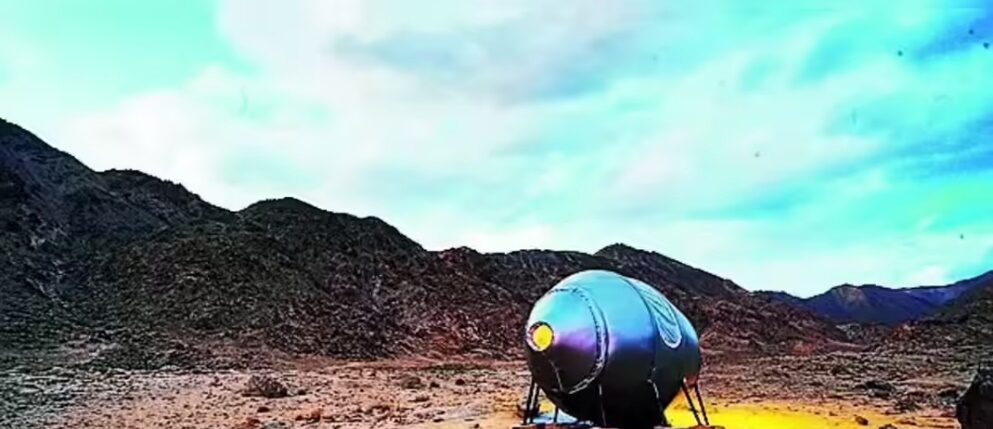
Bengaluru-based Protoplanet has launched the Human Outer Planet Exploration (HOPE) project in Tso Kar, Ladakh, to simulate life on the Moon and Mars, supported in part by ISRO for research on human adaptability in space-like conditions.
Background
- HOPE (Human Outer Planet Exploration) is a space simulation project designed to study human survival and adaptability in extreme conditions similar to the Moon and Mars.
- Conducted in Tso Kar, Ladakh, due to its high altitude, cold desert terrain, and thin atmosphere, which mimic extra-terrestrial environments.
Key Features of the Project
Isolation Mission:
- Selected crew members will inhabit the research station for 10 days in isolation.
- Participants undergo physiological and psychological studies to monitor resilience and adaptability.
Analogue Site Advantages:
- The geology and climate of Ladakh resemble lunar and Martian conditions.
- Provides a safe and controlled environment for testing human endurance before actual space missions.
ISRO’s Role:
- Partially funded the development of the station.
- Provided guidance for selecting suitable participants for the simulation mission.
Significance
- Supports future manned missions to the Moon and Mars by studying human health and behaviour in isolation.
- Strengthens India’s space research capabilities, aligning with ISRO’s long-term exploration plans.
- Encourages private sector participation in space science, boosting innovation and scientific awareness.
BASIC FEATURES OF MARS
- Surface Geography – Mars is a rocky desert planet with red soil (iron oxide), huge volcanoes (Olympus Mons), deep canyons (Valles Marineris), and many impact craters.
- Polar Ice Caps – Both poles have water ice and frozen CO₂ (dry ice) that expand and shrink with seasons.
- Atmosphere – Very thin atmosphere (~1% of Earth), mostly 95% CO₂, with traces of nitrogen, argon, and water vapor.
- Climate – Cold and dry, average temperature ~ -63°C, frequent dust storms can cover the whole planet.
- Other Features – Seasons exist due to a tilted axis (25°), and thin air plus no magnetic field make Mars exposed to solar radiation.
Conclusion:
The HOPE station in Ladakh is a vital step in India’s journey toward human space exploration, providing crucial data on human survival in extraterrestrial conditions and enhancing the country’s role in future lunar and Martian missions.