

Daily Current affairs 10 March 2026

Daily Current Affairs 10-March-2026

Share this Post

PROTOCOL LAPSE DURING PRESIDENT’S VISIT

TOPIC: (GS2) POLITY: THE HINDU

Why in News?

The West Bengal government recently submitted a report to the Union Home Ministry regarding an alleged protocol lapse during President Droupadi Murmu’s visit to North Bengal.

Meaning of Protocol in Government Administration

Protocol refers to the set of formal rules, conventions, and procedures that regulate official interactions involving dignitaries.

Key elements include:

  • Reception and escort arrangements
  • Seating order and ceremonial honours
  • Coordination between central and state authorities
  • Security arrangements
  • Event management and communication

Protocol ensures respect for constitutional hierarchy and smooth functioning of official events.

Protocol for Visits of the President of India

The President of India is the Head of the State under Article 52 of the Constitution. Because of the importance of the office, detailed procedures exist for official visits.

1. Security Arrangements

  • The President receives the highest level of security in India.
  • Security is coordinated by:
    • Special Protection Group (SPG) for the Prime Minister
    • Delhi Police / State Police / Intelligence agencies for the President
    • President’s Secretariat and Union Home Ministry

2. Role of the State Government

When the President visits a state:

  • The State Chief Secretary acts as the chief coordinator.
  • The District Administration and Police manage logistics.
  • Local authorities ensure venue security, transportation, and accommodation.

3. Event Protocol

Important rules include:

  • Pre-approved itinerary prepared in consultation with the President’s Secretariat.
  • Seating arrangements follow the Table of Precedence.
  • Officials must receive the President at the airport or event venue according to protocol.

Table of Precedence in India

The Table of Precedence determines the order of seniority of officials at ceremonial events.

Important positions include:

  1. President of India
  2. Vice-President
  3. Prime Minister
  4. Governors of States
  5. Former Presidents
  6. Chief Justice of India
  7. Speaker of Lok Sabha
  8. Union Cabinet Ministers
  9. Chief Ministers

Importance of Following Protocol

  • Respect for Constitutional Offices: Protocol safeguards the dignity of the highest offices in the country.
  • Security of Dignitaries: Strict procedures help prevent security risks.
  • Coordination between Governments: Events involving the President require cooperation between the Union and State governments.
  • Diplomatic and Public Image: Proper protocol reflects administrative professionalism and institutional respect.

Common Causes of Protocol Issues

  • Last-minute changes in event venues
  • Miscommunication between agencies
  • Political disagreements
  • Administrative coordination failures

Such issues often become politically sensitive because they involve constitutional offices.

Measures to Prevent Protocol Lapses

  • Strengthen coordination between Union and State authorities.
  • Conduct advance security and logistics rehearsals.
  • Ensure clear communication among officials and event organizers.
  • Strict adherence to protocol manuals issued by the Ministry of Home Affairs.

Conclusion:

Strict adherence to official protocol and coordination between Union and State authorities is essential to maintain security, dignity of constitutional offices, and smooth conduct of high-level visits.

WEST ASIA CRISIS AND PARLIAMENTARY DEBATE

TOPIC: (GS2) INTERNATIONAL RELATIONS: THE HINDU

Why in News?

The West Asia crisis became a subject of discussion in the Lok Sabha during the Budget Session, with opposition parties demanding a debate on the issue.

Strategic Importance of West Asia

West Asia occupies a vital location connecting Asia, Europe, and Africa.

Key reasons for its importance:

  1. Energy Resources
    • The region holds nearly half of the world’s proven oil reserves.
    • India imports about 85% of its crude oil, and around 60% of these imports come from West Asian countries such as Iraq, Saudi Arabia, and the UAE.
  1. Important Maritime Routes
    • Critical global trade routes pass through the region:
      • Strait of Hormuz
      • Bab-el-Mandeb Strait
      • Suez Canal
    • These routes are essential for oil transportation and international trade.
  1. Geopolitical Significance
    • The region is a focal point of international politics and security concerns due to ongoing conflicts and rivalries.

Major Issues in the Current West Asia Crisis

Recent tensions in West Asia involve several interconnected conflicts.

1. Israel–Palestine Conflict

  • The long-standing dispute between Israel and Palestine has escalated periodically, causing humanitarian and political concerns.

2. Regional Rivalries

  • Competition between major regional powers such as Iran, Israel, and Saudi Arabia influences security dynamics.

3. Threats to Shipping Routes

  • Attacks on vessels in the Red Sea region have disrupted global shipping and trade routes, raising international concern.

4. Political Instability

  • Countries such as Syria, Yemen, and Iraq continue to face instability due to prolonged conflicts.

Importance of West Asia for India

1. Energy Security

  • West Asia remains India’s primary source of crude oil and natural gas.
  • Any conflict can lead to rising fuel prices and economic pressure.

2. Indian Diaspora

  • Around 9 million Indians live and work in West Asian countries.
  • These workers contribute significantly through remittances, which support India’s economy.

3. Trade and Connectivity

  • India’s trade with Europe and Africa largely passes through West Asian maritime routes.
  • Disruptions may increase transport costs and supply chain delays.

4. Strategic Partnerships

India has developed strong relations with several countries in the region:

  • United Arab Emirates – Comprehensive Economic Partnership Agreement (CEPA) signed in 2022.
  • Israel – cooperation in defence, agriculture, and technology.
  • Saudi Arabia and Qatar – key partners in energy and investment.

India’s Foreign Policy Approach in West Asia

India follows a balanced and pragmatic diplomatic approach in the region.

Key features include:

  1. Strategic Autonomy: India maintains independent relations with all countries in the region.
  2. Balanced Engagement: India maintains ties with both Israel and Arab countries.
  3. Support for Peaceful Solutions: India supports a Two-State Solution to resolve the Israel-Palestine conflict.
  4. Regional Cooperation: India participates in initiatives such as I2U2 (India-Israel-UAE-USA) to promote economic cooperation.

Economic Impact on India

Instability in West Asia can affect India in multiple ways:

  • Higher crude oil prices increasing India’s import bill.
  • Inflation due to rising fuel and transport costs.
  • Disruption in global supply chains.
  • Possible risk to Indian workers abroad.

Way Forward

To manage these challenges, India should:

  • Diversify energy sources including renewable energy.
  • Strengthen diplomatic engagement with all regional partners.
  • Enhance maritime security cooperation in the Indian Ocean region.
  • Prepare contingency plans to protect Indian citizens abroad.

Conclusion

The West Asia crisis has major implications for India’s energy security, trade, and diaspora safety. A balanced diplomatic approach and diversified economic strategy will help India safeguard its national interests while supporting stability in West Asia.

MUSI RIVERFRONT DEVELOPMENT PROJECT

TOPIC: (GS3) ENVIRONMENT: INDIAN EXPRESS

Why in News?

The Telangana government is moving forward with the Musi Riverfront Development Project aimed at rejuvenating the polluted Musi River in Hyderabad.

About the Musi River

  • The Musi River is a tributary of the Krishna River.
  • Origin: Ananthagiri Hills near Vikarabad in Telangana.
  • Length: Approximately 240 km.
  • It flows through Hyderabad city before joining the Krishna River near Wadapally.

Historical Importance

  • The river played an important role in Hyderabad’s development.
  • After the devastating Musi floods of 1908, the Osman Sagar and Himayat Sagar reservoirs were built to control floods and supply drinking water.

Need for the Musi River Rejuvenation

Over time, the Musi River has become heavily polluted and degraded.

Major Issues

  1. Sewage Pollution: Large quantities of untreated sewage from Hyderabad flow into the river.
  2. Encroachments: Settlements and constructions have developed along the riverbanks and floodplains.
  3. Loss of Ecological Health: Decline in aquatic biodiversity and water quality.
  4. Urban Flood Risk: Encroachments and pollution reduce the natural flow capacity of the river.

Key Features of the Musi Riverfront Development Project

1. River Rejuvenation

  • Cleaning and restoring the river ecosystem.
  • Improving water quality and river flow.

2. Sewage Treatment Infrastructure

  • Expansion of Sewage Treatment Plants (STPs).
  • The project proposes additional STPs along the river to treat wastewater before it enters the river.

3. Urban Infrastructure Development

Development of modern public infrastructure along the river:

  • Parks and green spaces
  • Pedestrian pathways and cycling tracks
  • Recreational areas and cultural zones
  • Commercial and tourism facilities

4. Flood Management

  • Riverfront embankments and improved drainage systems to reduce flood risk.

5. Water Flow Regulation

  • Plans to channel water from nearby reservoirs to ensure perennial river flow.

Proposed “Gandhi Sarovar” Cultural Precinct

  • The project includes a proposed cultural and tourism hub called “Gandhi Sarovar.”
  • It is planned near the confluence of the Musi and Esa rivers.
  • The area is expected to become a major urban cultural and tourism destination.

Funding and Implementation

  • The project is expected to receive financial support from international development institutions such as the Asian Development Bank (ADB).
  • The implementation involves multiple government agencies and urban development authorities.

Concerns and Controversies

1. Displacement of Residents

  • Many slum settlements exist along the riverbanks.
  • Residents fear eviction and inadequate rehabilitation.

2. Land Acquisition Issues

  • Property owners near the river have raised objections to acquisition notices.

3. Transparency Concerns

  • Critics argue that the Detailed Project Report (DPR) should be publicly accessible before implementation.

4. Environmental Concerns

  • Some environmental groups warn that excessive commercial development could harm the river ecosystem.

Importance of Urban River Restoration

Urban river rejuvenation has become an important policy focus in India.

Examples

  • Sabarmati Riverfront Development Project (Ahmedabad)
  • Namami Gange Programme for the Ganga River.

Benefits

  • Improved urban ecology
  • Enhanced flood management
  • Increased tourism and economic activity
  • Better quality of life for city residents

Way Forward

To ensure successful implementation, the following measures are necessary:

  • Transparent planning and public consultation.
  • Proper rehabilitation and compensation for displaced residents.
  • Priority to environmental restoration rather than commercial development.
  • Integration with sustainable urban planning and sewage management systems.

Conclusion

The Musi Riverfront Development Project represents an important step toward urban river restoration and sustainable city development in Hyderabad. However, balancing environmental conservation, urban infrastructure, and social justice will be crucial for the long-term success of the project.

SILENT VALLEY NATIONAL PARK – BIRD DIVERSITY SURVEY

TOPIC: (GS3) ENVIRONMENT: THE HINDU

Why in News?

A recent bird survey in Silent Valley National Park (Kerala) recorded 192 bird species, highlighting the rich avian biodiversity of the Western Ghats.

About Silent Valley National Park

  • Location: Situated in Palakkad district of Kerala in the Nilgiri Hills of the Western Ghats.
  • Established: Declared a National Park in 1984.
  • River: The Kunthipuzha River, a tributary of the Bharathapuzha, flows through the park.
  • UNESCO Region: Part of the Nilgiri Biosphere Reserve and Western Ghats World Heritage landscape.
  • Climate & Vegetation:
    • Dense tropical evergreen forests
    • High rainfall and relatively undisturbed ecosystem

Significance

  • One of the last remaining pristine rainforests in India.
  • Known for protecting the Lion-tailed Macaque, an endangered primate species.
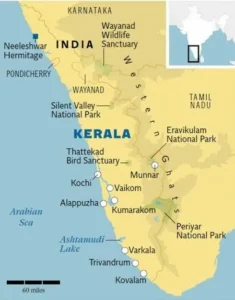
  Silent Valley National Park (Kerala)                                       

Key Findings of the Recent Bird Survey

  • Total Bird Species Recorded: 192 species across different habitats of the park.
  • Survey Period: Conducted over several days covering multiple forest camps and ecological zones.
  • Participation: Included forest officials, scientists, and birdwatchers.

Notable Bird Species Recorded

Important sightings include:

  • Black-and-orange Flycatcher – an endemic bird of the Western Ghats.
  • Nilgiri Blue Robin (Nilgiri Sholakili) – a rare shola forest specialist.
  • White-bellied Treepie – endemic to Western Ghats forests.
  • Malabar Imperial Pigeon – a large arboreal pigeon species.
  • Crimson-backed Sunbird and Purple-rumped Sunbird.

Rare and Nocturnal Birds

Evidence of several night birds was also found:

  • Indian Nightjar
  • Brown Fish Owl
  • Bronzed Drongo
  • Malabar Trogon

High Bird Diversity Zones

  • Some forest camps recorded very high species counts, indicating strong habitat diversity.
  • Evergreen forests and shola–grassland ecosystems supported many insectivorous and forest-dependent birds.

Bird Diversity in the Western Ghats

  • The Western Ghats is one of the world’s eight “hottest hotspots” of biodiversity.
  • It hosts over 500 bird species, including around 35 endemic species.
  • The region supports specialized habitats such as montane shola forests, which are critical for endemic birds.

Examples of Western Ghats Endemic Birds

  • Nilgiri Flycatcher
  • White-bellied Blue Flycatcher
  • Malabar Grey Hornbill
  • Nilgiri Laughingthrush

Importance of Bird Surveys

  • Biodiversity Assessment: Helps track species richness and population trends.
  • Conservation Planning: Identifies rare, endemic, and threatened species needing protection.
  • Ecosystem Health Indicator: Birds act as bio-indicators reflecting the health of forests.
  • Scientific Research: Provides data useful for climate change studies and habitat management.

Threats to Bird Diversity

  • Climate change affecting forest ecosystems.
  • Habitat fragmentation in surrounding landscapes.
  • Invasive plant species altering natural habitats.
  • Human disturbance and tourism pressure.

Conservation Measures

  • Strengthening protected area management in Silent Valley.
  • Long-term bird monitoring programs.
  • Promoting community participation in conservation.
  • Enhancing habitat restoration and invasive species control.

RAISEN FORT

TOPIC: (GS1) HISTORY: THE HINDU

Why in News?

Police in Raisen district of Madhya Pradesh recently arrested four youths after a video showing cannon firing and provocative slogans at Raisen Fort surfaced on social media.
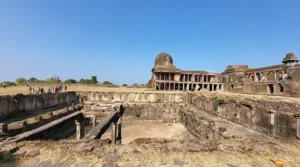
Raisen Fort                              

Location and Historical Background

  • Location: Raisen town, about 40 km from Bhopal in Madhya Pradesh.
  • Built around the 11th century.
  • Positioned on a hilltop, providing strong natural defence.

Architectural Features

1. Massive Hill Fort

  • Spread across nearly 800 acres, making it one of the largest forts in Central India.

2. Defensive Structure

  • Surrounded by massive stone walls.
  • Entry through nine gateways, typical of medieval military fortifications.

3. Palaces Inside the Fort

The fort contains several royal structures:

  • Badal Mahal
  • Rohini Mahal
  • Itradaan Mahal
  • Hawa Mahal

These palaces reflect the architectural blend of Rajput and Indo-Islamic styles.

Religious and Cultural Significance

Raisen Fort demonstrates religious harmony and cultural diversity.

Important sites include:

  • Temple dedicated to Lord Shiva
  • Shrine of Hazrat Peer Fatehullah Shah Baba

This coexistence highlights the shared spiritual traditions of medieval India.

Water Management System

The fort had a highly advanced water conservation system.

Key features:

  • More than 40 wells and water reservoirs.
  • Rainwater harvesting structures to support the fort during sieges and droughts.

This system ensured long-term water availability for residents and soldiers.

Rock Art and Archaeological Importance

The fort region contains ancient rock shelters with prehistoric paintings created by early cave dwellers.

These paintings provide valuable insights into:

  • Prehistoric human life
  • Early art traditions
  • Human settlement patterns

Importance of Protecting Heritage Monuments

Incidents like the recent one highlight the need for stronger protection of historical sites.

Key measures include:

  • Strict enforcement of heritage protection laws.
  • Improved security and surveillance at monuments.
  • Greater public awareness about cultural heritage.

STENOTHOE LOWRYI

TOPIC: (GS3) ENVIRONMENT: THE HINDU

Why in News?

Researchers from Berhampur University recently recorded the rare marine amphipod Stenothoe lowryi for the first time in Indian waters at Aryapalli Beach in Odisha.

Stenothoe lowryi

About Stenothoe lowryi

Stenothoe lowryi is a small marine amphipod crustacean, resembling a tiny shrimp.

Taxonomic Classification

  • Kingdom: Animalia
  • Phylum: Arthropoda
  • Class: Malacostraca
  • Order: Amphipoda
  • Family: Stenothoidae

Amphipods belong to the same broad group as crabs, lobsters, and shrimp.

Key Characteristics of Stenothoe lowryi

  • Small Size: Approximately 5–6 mm in length.
  • Shrimp-like Body: Possesses a laterally compressed elongated body.
  • Large Claws (Gnathopods): Used for gripping rocks and capturing food.
  • Adaptation to Rocky Habitats: Found mainly in rocky intertidal zones.
  • Distinct Morphological Features: Unique antennae and leg structures used for species identification.

What are Amphipods?

Amphipods are small crustaceans found in both marine and freshwater environments.

Habitat

They inhabit diverse environments such as:

  • Oceans and seas
  • Rivers and lakes
  • Sand beaches
  • Caves and moist tropical habitats

Meaning of Amphipoda

The word “amphipoda” means “different-footed”, referring to their varied types of legs used for different functions.

Biological Features

  • Amphipods have a body divided into:
    • Head
    • Thorax (pereon) with 7 segments
    • Abdomen (pleon) with 6 segments
  • Most amphipods are scavengers, feeding on organic debris and dead organisms.

Ecological Importance

    • Nutrient Recycling: They break down dead plant and animal matter, helping recycle nutrients.
    • Food Source: They serve as food for fish, seabirds, and marine mammals.
    • Indicators of Environmental Health: Their presence can indicate healthy coastal ecosystems.

KHEYBAR SHEKAN MISSILE

TOPIC: (GS3) SECURITY: THE HINDU

Why in News?

Iran’s Islamic Revolutionary Guard Corps (IRGC) recently claimed the use of Kheybar Shekan ballistic missiles during rising tensions in the West Asia region.
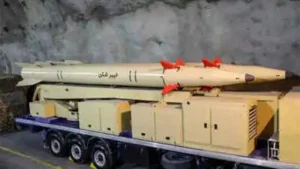
Kheybar Shekan ballistic missiles                                

Key Features of the Missile

    • Range: The missile has a strike range of approximately 1,450 kilometres. This allows it to reach several strategic locations across the West Asian region.
    • Solid Fuel Technology: The missile uses solid propellant, which provides several operational advantages. Solid fuel enables faster launch preparation, easier storage, and lower maintenance compared to liquid-fuel missiles.
    • Size and Weight: The missile is about 4 metres in length and weighs roughly 1,500 kilograms, making it relatively compact compared to some other ballistic missiles.
    • Mobile Launch Capability: The missile can be launched from mobile launch platforms, which improves its survivability by making it harder for adversaries to detect and destroy before launch.

Advanced Technical Characteristics

    • Multi-Stage Flight System: The missile operates through three main phases. These include the launch phase, the mid-course guidance phase, and the terminal phase where the missile precisely strikes the target.
    • Precision Guidance: The missile uses satellite-based navigation systems that enhance targeting accuracy and reduce the chances of missing the intended target.
    • Maneuverable Warhead: It is equipped with a maneuverable warhead, which allows it to adjust its trajectory during the final stage of flight. This feature helps the missile evade interception by missile defence systems.
    • High Speed: Reports suggest that the missile can reach speeds of Mach 10 to Mach 12, which makes interception extremely difficult even for advanced air defence systems.

Strategic Significance

    • Regional Deterrence: The missile strengthens Iran’s deterrence capability by allowing it to strike distant targets if threatened.
    • Indigenous Defence Development: The development of this missile reflects Iran’s progress in domestic missile manufacturing and defence technology.
    • Impact on Regional Security: Such missile advancements influence strategic stability and power balance in West Asia, making them important in geopolitical calculations.

Ballistic Missiles: A Brief Overview

A ballistic missile is a rocket-powered weapon that:

  • Follows a ballistic trajectory after launch.
  • Travels through space before re-entering the atmosphere to strike its target.

Ballistic missiles are classified by range:

  • Short-Range Ballistic Missiles (SRBM) – up to 1,000 km
  • Medium-Range Ballistic Missiles (MRBM) – 1,000–3,000 km
  • Intermediate-Range Ballistic Missiles (IRBM) – 3,000–5,500 km
  • Intercontinental Ballistic Missiles (ICBM) – more than 5,500 km

HUMAN METAPNEUMOVIRUS (HMPV)

TOPIC: (GS2) SCIENCE AND TECHNOLOGY: TIMES OF INDIA

Why in News?

Cases of Human Metapneumovirus (HMPV) have reportedly increased in parts of the United States, raising concern among public health authorities.

About Human Metapneumovirus

Human Metapneumovirus (HMPV) is a respiratory virus that usually produces symptoms similar to the common cold or influenza. The virus was first identified in 2001 by Dutch scientists

Key Characteristics

  • Family: Pneumoviridae
  • Type: RNA virus
  • Target system: Respiratory tract

Scientific studies suggest that approximately 10–12 percent of respiratory illnesses in children may be associated with HMPV infection.

Transmission of HMPV

    • Respiratory Droplets: The virus spreads through droplets released when an infected person coughs or sneezes.
    • Close Physical Contact: Transmission may occur during direct physical contact such as handshakes, hugging, or caring for infected individuals.
    • Contaminated Surfaces: A person may also become infected by touching surfaces contaminated with the virus and then touching the eyes, nose, or mouth.
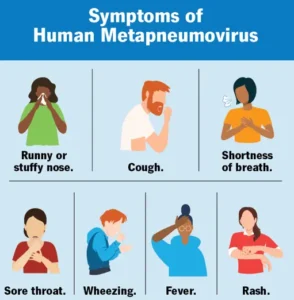
  Human Metapneumovirus (HMPV)                                              

High-Risk Groups

Some individuals are more vulnerable to severe illness caused by the virus.

These groups include:

  • Infants and young children
  • Older adults
  • People with weakened immune systems
  • Patients with chronic respiratory diseases such as asthma or COPD

Diagnosis and Treatment

Diagnosis

Doctors diagnose HMPV infection through laboratory tests such as Polymerase Chain Reaction (PCR) tests or respiratory virus panels.

Treatment

At present, no specific antiviral drug or vaccine is available for HMPV.

Treatment mainly focuses on supportive care, including:

  • Managing fever and cough
  • Ensuring proper hydration and rest
  • Providing medical treatment in severe cases requiring hospitalization

Prevention Measures

  • Regular handwashing with soap
  • Avoiding close contact with infected individuals
  • Maintaining respiratory hygiene
  • Using masks during outbreaks or in crowded places

Write a Review

Your email address will not be published. Required fields are marked *