Daily Current Affairs 04-August-2025

Share this Post

RAILWAY TO SAIRANG – BOOST TO REGIONAL CONNECTIVITY & ACT EAST POLICY

TOPIC: (GS3) ECONOMY: THE HINDU

The Indian Railways has commissioned a new 51.38 km railway line to Sairang in Mizoram, 18 km short of Aizawl, raising hopes for enhancing connectivity under the Act East Policy despite challenges in linking the Northeast to Southeast Asia.
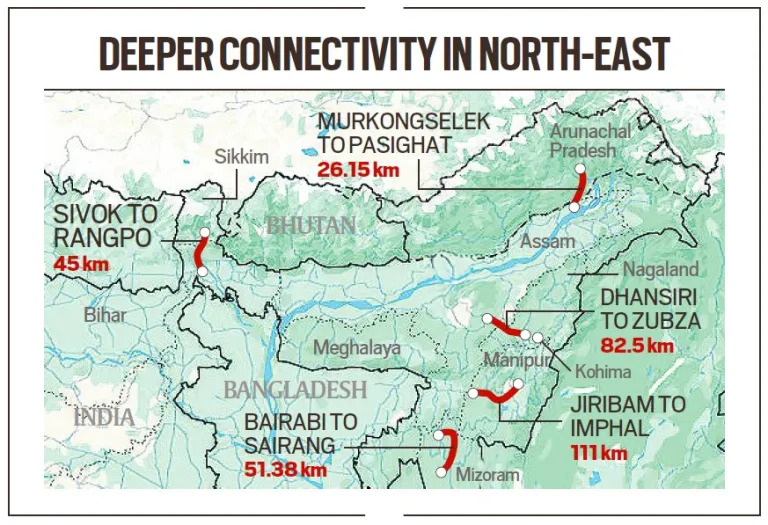
Deeper Convectivity in Nort-East

Background of the Project

  • Earlier Rail Link: Mizoram earlier had only 1.5 km of metre-gauge track from Bairabi to Assam’s Silchar.
  • Gauge Conversion: Sanctioned in 2000, extended to Sairang in 2008–09.
  • Challenges: Harsh weather, landslide-prone terrain, manpower shortage, and transportation issues delayed progress.
  • Infrastructure Details: 48 tunnels (total length: 12.85 km). 142 bridges, including one with India’s tallest pier (collapsed in Aug 2023, killing 18 workers).
  • Cost: Over ₹5,020 crore.
  • Safety Clearance: Granted in June 2025; inauguration awaited.

Significance for Mizoram & the Northeast

  • Faster Connectivity: Reduces travel time to Silchar from 5 hours (road) to 1.5 hours (train).
  • Lower Transport Costs: Cuts dependence on trucks, enabling cheaper movement of goods.
  • Economic Benefits: Boost to tourism and trade. Easier transport for local produce and resources.
  • Strategic Importance: Supports Act East Policy by creating a transit point for goods from the India-funded Sittwe Port in Myanmar. Strengthens India’s outreach to ASEAN countries.

ACT EAST POLICY

  • Launch: Announced in 2014, expanding the 1991 Look East Policy.
  • Objective: Make the Northeast India’s gateway to ASEAN.
  • Government Investments (2014–2025):
    • Budget for Northeast tripled to over ₹1 lakh crore.
    • Built 10,000+ km of highways, 800 km of railway tracks, 8 new airports, and several waterways.

Current Status of Cross-Border Connectivity Projects

  • On Track: Dimapur–Zubza railway project in Nagaland.
  • Stalled / Delayed:
    • Imphal–Moreh rail link affected by Manipur ethnic unrest.
    • Agartala–Akhaura project halted after political changes in Bangladesh (Aug 2024).
    • Kaladan Multi-Modal Project in Myanmar delayed due to civil war post-2021 coup.

Challenges

  • Political Instability in Myanmar and Bangladesh.
  • Security Concerns in border areas like Manipur.
  • Geographical Barriers in hilly, disaster-prone terrain.

WORLD BANK – COUNTRY CLASSIFICATION BY INCOME

TOPIC: (GS2) INDIAN POLITY: THE HINDU

The World Bank has released its latest income classification of countries for 2024–25, updating thresholds for low, lower-middle, upper-middle, and high-income categories based on Gross National Income (GNI) per capita.

About the Classification System

  • Purpose: Provides a standard framework for comparing countries’ income levels.
  • Basis: Uses Gross National Income (GNI) per capita – includes income earned by residents both domestically and abroad.
  • Currency Conversion: National GNI data in local currencies is converted to U.S. dollars using exchange rates.

NATIONAL INCOME

National income is the total money value of all final goods and services produced by the normal residents of a country during a financial year, plus net factor income from abroad.

  • It measures the overall economic performance of a country and reflects the total income earned by its residents.
  • In India, Net National Product at Factor Cost (NNPFC) is considered the national income.

Gross National Income (GNI)

GNI is the total domestic and foreign income earned by a country’s residents in a given year.

  • Formula: GNI= GDP + Net Factor Income from Abroad (NFIA)

Unlike GDP, which counts income produced within the country’s borders, GNI includes income residents earn from abroad and excludes income earned by foreigners domestically.

Income Groups and Current Thresholds (2024–25)

  • Low Income: $1,135 or less.
  • Lower-Middle Income: $1,136 – $4,495.
  • Upper-Middle Income: $4,496 – $13,935.
  • High Income: Above $13,935.

Historical Background

  • Introduced in late 1980s and originally linked to World Bank lending eligibility.
  • Initial low–middle income boundary was tied to concessional loan access.
  • Two more thresholds added for finer distinctions based on global income distribution.
  • Now independent from lending operations, but thresholds are revised annually for global inflation.

Nature of Classification

  • Absolute system – country placement depends only on meeting fixed thresholds, not on relative ranking against others.
  • Annual updates may change a country’s group due to:
    • Economic growth or decline.
    • Exchange rate fluctuations.
    • Population data revisions.

Trends Over Time

  • Upward Movement: Most countries have climbed the income ladder over decades due to growth.
  • Downward Movement: Possible in times of war or economic crisis (e.g., Syria, Yemen dropping from lower-middle to low income in 2017).
  • Population Distribution: 2004 – 37% of the global population lived in low-income countries; now less than 10%. Share of upper-middle income countries rose from <10% to ~35% in the same period.

Significance for Policymaking

  • Helps in targeting development aid and designing trade, investment, and social policies.
  • Used by international agencies, investors, and researchers for comparing economic performance.

INDIA–UK (CETA) CONCERNS OVER INTELLECTUAL PROPERTY COMMITMENTS

TOPIC: (GS2) INTERNATIONAL RELATIONS: THE HINDU

India’s commitments in the Intellectual Property chapter of the India–UK CETA have raised concerns that the agreement may dilute India’s long-standing stance on compulsory licensing of medicines and technology transfer on favourable terms to developing countries.

Background of the Issue

  • CETA’s Article 13.6 promotes voluntary licensing as the “optimal” way to ensure access to medicines.
  • India has historically supported compulsory licensing as a stronger tool to reduce medicine costs.
  • India also pushed for technology transfer on favourable terms in multilateral forums.

Why Compulsory Licensing Matters

  • Allows production of patented medicines without the patent holder’s consent under certain conditions.
  • High Price Problem: Patented medicines often have excessive prices due to monopolistic control.
  • Example: In 2012, Natco Pharma’s compulsory licence for sorafenib tosylate reduced the monthly treatment cost from ₹2,80,428 (Bayer) to under ₹8,800.
  • Legal Basis: India’s Patents Act (TRIPS-compliant) allows compulsory licences if:
    • Public demand is unmet.
    • Price is unaffordable.
    • Patent is not “worked” (commercially used) in India.

Policy Dilutions in Recent FTAs

  • Earlier FTAs (e.g., with EFTA) relaxed the requirement for patentees to report “working” status from annually to once every three years.
  • CETA further reinforces this relaxation, weakening grounds for compulsory licensing.

Voluntary Licensing – Limitations

  • Favours multinational corporations, limiting local producers’ bargaining power.
  • Companies can impose restrictions, such as controlling raw material supply or limiting distribution.
  • Example: Under a voluntary licence for remdesivir, Cipla’s price in India (PPP terms) was higher than Gilead’s U.S. price.

Impact on Technology Transfer Goals

  • Since the 1974 NIEO resolution, India has demanded favourable technology transfer for industrialisation and climate goals.
  • CETA’s stance could weaken India’s case in climate negotiations for affordable access to clean technologies.
  • India’s 2024 UNFCCC report noted barriers like slow tech transfer and restrictive IPR as major challenges.

WHAT IS CETA?

CETA stands for Comprehensive Economic and Trade Agreement. It is a broad trade and economic partnership agreement that goes beyond traditional tariff reduction to cover services, investments, and regulatory cooperation.
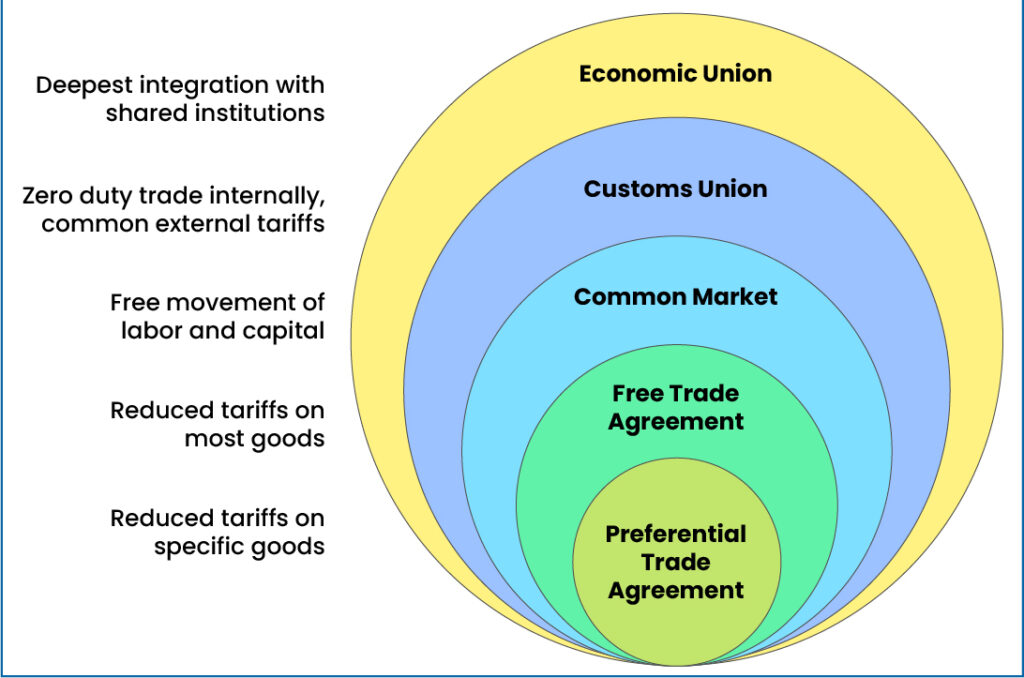
Hierarchy of Trade Agreement

Features of CETA

  • Tariff Elimination – Removes almost all customs duties on traded goods.
  • Services Liberalisation – Expands market access for sectors like finance, telecommunications, transport, and professional services.
  • Investment Protection – Includes strong rules to safeguard investments with a structured dispute resolution system.
  • Public Procurement Access – Allows companies to participate in each other’s government contracts at national and sub-national levels.
  • Intellectual Property Rights (IPR) – Strengthens protections for trademarks, patents, and geographical indications.

Conclusion

By accepting voluntary licensing as the preferred model, India risks weakening both its public health safeguards and its bargaining position in global technology transfer debates. This shift could have long-term consequences for affordable medicine access and climate technology adoption.

RIGHT TO REPAIR AND THE NEED TO PRESERVE TACIT KNOWLEDGE

TOPIC: (GS2) INDIAN POLITY: THE HINDU

In May 2025, the Government of India accepted a proposal to introduce a Repairability Index for mobile phones and appliances and updated e-waste rules to promote formal recycling. Experts stress that alongside the ‘Right to Repair’, India must also protect the ‘Right to Remember’ , the preservation of informal repair knowledge.

Background

  • Right to Repair: Movement to make it easier for consumers to repair devices by ensuring access to spare parts, manuals, and repair information.
  • In India: Department of Consumer Affairs launched a Right to Repair framework in 2022 and a national portal in 2023 covering electronics, automobiles, and farm equipment.

Importance of Tacit Knowledge

  • Definition: Skills and insights gained through practice, observation, and improvisation, which are difficult to document.
  • Transmission: Passed down through mentorship and hands-on learning rather than formal training.
  • Role in Sustainability: Extends product life and delays waste generation. Keeps devices functioning beyond planned obsolescence.
  • Risk of Loss: Modern product design, disposability trends, and lack of policy support threaten this knowledge base.

Policy Gaps

  • Digital Policy Blind Spot: National AI and digital frameworks emphasise innovation but overlook the informal repair sector.
  • E-Waste Management Rules, 2022: Focus on recycling but mention repair only briefly.
  • Skill Development: PMKVY and other schemes focus on formal industrial skills, not improvisational repair work.
  • Education Policy (NEP 2020): Encourages experiential learning but lacks specific measures to preserve repair expertise.

Global Context

  • EU: Mandates manufacturer support for spare parts and repair manuals.
  • UN SDG 12: Promotes repair as part of responsible consumption.
  • South Asia Examples: Informal repair sectors in India, Pakistan, and Bangladesh play a critical sustainability role.

Recommendations

  • Design for Repairability: Integrate disassembly and reuse into product design.
  • Policy Integration: Include repairability in procurement and AI design norms. Expand Right to Repair to cover community participation and classification of products by repair ease.
  • Recognition of Repair Workers: Use e-Shram to formally register informal repairers. Extend social security and training adapted to tacit skillsets.
  • AI-enabled Knowledge Capture: Use digital tools to document repair processes without losing local context.
  • Institutional Collaboration: Coordination between MEITY, Department of Consumer Affairs, Ministry of Skill Development, and Ministry of Labour.

Conclusion

Recognising and preserving informal repair knowledge is essential for a truly sustainable and inclusive Right to Repair. Protecting this tacit expertise will not only strengthen the circular economy but also safeguard livelihoods and cultural know-how that cannot be replaced by manuals or algorithms.

LINGUISTIC REORGANISATION OF STATES IN INDIA

TOPIC: (GS2) INDIAN POLITY: INDIAN EXPRESS

The Governor of Tamil Nadu recently criticised the linguistic division of Indian states, arguing that it contributed to the creation of “second-class citizens” in the country.

Background

At Independence (1947), India inherited a mix of:

    • British provinces under direct rule.
    • 565 princely states under indirect British control.

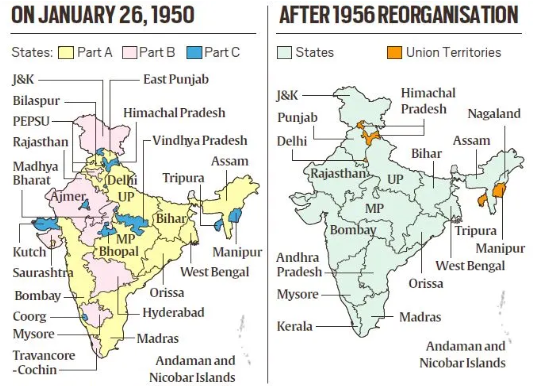
The Constitution of 1950 declared India as a “Union of States” and divided the country into Part A, B, C, and D states:

    • Part A: Former governor’s provinces (e.g., Assam, Bihar, Bombay).
    • Part B: Former princely states or their groups (e.g., Hyderabad, Mysore).
    • Part C: Chief Commissioner’s provinces and small princely states (e.g., Delhi, Manipur).
    • Part D: Andaman & Nicobar Islands.

Demand for Linguistic States

  • People expected governance to reflect linguistic and cultural identity in the new democratic setup.
  • JVP Committee (1948–49):
    • Members: Jawaharlal Nehru, Vallabhbhai Patel, Pattabhi Sitaramayya.
    • Recommended against reorganisation solely on linguistic basis, citing national unity concerns.
  • Andhra State Formation (1953):
    • Triggered by Potti Sriramulu’s 56-day hunger strike for a Telugu-speaking state.
    • Led to separation of Andhra from Madras, becoming the first linguistic state.

States Reorganisation Commission (SRC), 1953

  • Headed by Fazl Ali, with K.M. Panikkar and H.N. Kunzru as members.
  • Accepted language as an important factor but rejected “one language–one state”.
  • Recommended boundary changes to promote administrative efficiency and cultural integration.

States Reorganisation Act, 1956

  • Abolished Part A, B, C, D classification.
  • Created 14 states and 6 Union Territories.
  • New states like Kerala, Karnataka formed, and others expanded on linguistic lines.
  • Later reorganisations:
    • Maharashtra & Gujarat (1960).
    • Punjab & Haryana (1966).
    • North-Eastern states (1963–1987).
    • Chhattisgarh, Jharkhand, Uttarakhand (2000).
    • Telangana (2014).

LINGUISTIC REORGANISATION OF STATES IN INDIA

Impact

  • Unity through diversity: Helped maintain national integration and avoided language-based conflicts seen in Pakistan and Sri Lanka.
  • Better governance: Smaller, linguistically cohesive states improved administration.
  • Cultural pride: Encouraged preservation of linguistic heritage.
  • SRC vision validated: Secessionist movements in India have been based more on ethnicity/religion than language.

Way Forward

  • Strengthen cooperative federalism to balance regional aspirations with national unity.
  • Regular review of state boundaries through institutional mechanisms.
  • Ensure equitable development across states without encouraging divisive politics.

INDIA’S STRATEGIC FOCUS IN THE INDIAN OCEAN REGION (IOR)

TOPIC: (GS2) INTERNATIONAL RELATIONS: PIB

In a written statement to the Lok Sabha, the Minister of State for External Affairs highlighted India’s strong and comprehensive engagement with Indian Ocean Region (IOR) nations, reaffirming the central role of Sri Lanka, Maldives, and Mauritius in maritime diplomacy.

Importance of the Indian Ocean Region

  • Energy Security: Around 80% of India’s crude oil imports and 95% of trade by volume move through the Indian Ocean.
  • Trade and Connectivity: Vital sea lanes like the Strait of Hormuz, Malacca, and Bab el-Mandeb support global and regional trade.
  • Geopolitical Advantage: India’s position offers control over crucial maritime chokepoints, enhancing strategic influence.
  • Climate & Disaster Preparedness: With an 11,000 km coastline, India faces threats from cyclones, rising seas, and climate change—requiring leadership in disaster response and marine research.
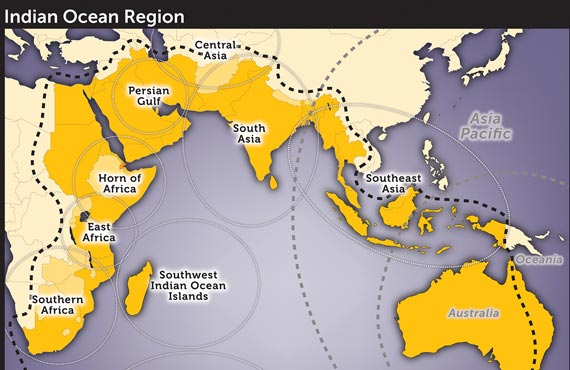
INDIA’S STRATEGIC FOCUS IN THE INDIAN OCEAN REGION (IOR)

Key Challenges

  • Chinese Maritime Expansion: Investments and naval presence in Gwadar, Hambantota, and Djibouti create strategic pressure.
  • Security Threats: Piracy, terrorism, smuggling, and cyber-attacks on ports threaten maritime safety.
  • Environmental Stress: Overfishing, marine pollution, and sea-level rise damage ecosystems and livelihoods.
  • Infrastructure Shortfalls: Limited port capacity, shipbuilding gaps, and inadequate maritime surveillance systems.
  • Regional Political Instability: Volatile situations in some IOR nations and external power rivalries add complexity.

India’s Initiatives in IOR

  • Defence Expansion: Deployment of INS Vikrant, indigenous submarines, and larger naval fleets.
  • Mission-Based Naval Presence: Continuous deployment at strategic chokepoints (Malacca, Bab el-Mandeb, Gulf of Aden).
  • Regional Partnerships: Engagement through IORA, BIMSTEC, QUAD; closer ties with Seychelles, Mauritius, Maldives.
  • Port & Infrastructure Development: Chabahar (Iran), Sittwe (Myanmar), Sabang (Indonesia), and Sagarmala in India.
  • Blue Economy Push: Deep Ocean Mission, sustainable fisheries, marine biotechnology, and ocean-based renewable energy.
  • Maritime Domain Awareness: IFC-IOR for information sharing and coordinated threat response.

Way Forward

  • Enhance naval and surveillance capacity, including cyber-resilient systems.
  • Strengthen diplomatic and defence cooperation through joint exercises like MALABAR and MILAN.
  • Lead in sustainable blue economy and climate-adaptive coastal infrastructure.
  • Upgrade ports, logistics, and technology for competitive advantage.
  • Promote inclusive maritime policies that benefit coastal communities.
  • Balance hard power (military) with soft power (development aid, cultural diplomacy, disaster relief).

Conclusion:

India’s proactive engagement in the Indian Ocean Region strengthens its role as a security provider, trade facilitator, and climate leader.


AI-DESIGNED PROTEINS TO BOOST IMMUNE CELL PRODUCTION

TOPIC: (GS3) SCIENCE AND TECHNOLOGY: INDIAN EXPRESS

A team of Harvard scientists, including Indian researcher Rubul Mout, has used AI-designed proteins to activate the Notch signalling pathway, enabling large-scale production of T cells for improved immunity against cancer and viral infections.

Background

  • Notch Signalling Pathway: Critical for turning immune progenitor cells into T cells. Maintains tissue balance (homeostasis) in the body.

The Research

  • Scientists developed a library of soluble Notch agonists using AI-driven protein design technologies (linked to the 2024 Chemistry Nobel Prize).
  • Tested these agonists for their ability to activate Notch signalling in living organisms.

Key Findings

  • T Cell Generation: Achieved large-scale production in a laboratory bioreactor. Useful for CAR T cell-based cancer treatments.
  • Vaccine Response: Injecting agonists in mice during vaccination enhanced T cell activity. Led to more memory T cells, crucial for long-term immunity.

Significance

  • Potential applications in:
    • Cancer immunotherapy.
    • Vaccine development.
    • Immune cell regeneration for diseases.
  • Addresses global demand for T cells in hospitals.

HONG KONG’S REGULATION AND LICENSING OF STABLECOINS

TOPIC: (GS2) GOVERNANCE: THE HINDU

From August 1, 2025, Hong Kong will implement the Stablecoins Ordinance, requiring licences for issuing fiat-referenced stablecoins (FRS), marking a major step in regulating this fast-growing cryptocurrency segment.

What is the New Stablecoin Licensing System?

  • Regulatory Body: Hong Kong Monetary Authority (HKMA).
  • Main Provision: Illegal to issue or market any unlicensed FRS to retail investors in Hong Kong. Issuers must obtain a licence from HKMA.

Requirements for Licence Holders:

    • Proper management of reserve assets.
    • Clear redemption and stabilisation mechanisms.
    • Compliance with anti-money laundering (AML) and counter-terrorist financing (CTF) laws.
    • Regular audits and disclosure of reserves.
  • Cautious Approach: HKMA plans to approve only a few licences initially.

WHAT ARE STABLECOINS?

  • Definition: Cryptocurrencies pegged to assets (e.g., fiat currencies like USD, commodities like gold, or other cryptocurrencies).
  • Purpose: Maintain stable value, unlike highly volatile coins like Bitcoin or Ether.
  • Methods of Stability:
    • Pegging to fiat or commodities.
    • Algorithmic regulation of supply.
    • Hybrid models.
  • Difference from CBDCs: Stablecoins are privately issued, whereas CBDCs are issued by central banks.

Why is Regulation Needed?

  • Financial Stability: Prevent risks to fiat currencies or backing assets.
  • Investor Protection: Ensure that every issued stablecoin is actually backed by reserves.
  • Prevent Fraud: Reduce risks of false reserve claims or sudden collapses.
  • Use Cases: Trading and settlement in crypto exchanges. Store of value in unstable economies (e.g., Argentina, Turkey, Afghanistan). Lower-cost cross-border transactions.

Risks and Volatility

  • Peg Breaks: Stablecoins can drop below peg value due to market events (e.g., USDT once fell to $0.92).
  • Complete Collapse: Example – Terra UST crash in 2022 wiped billions from the crypto market.

Legal Status & Taxation In India:

  • Cryptocurrency trading and holding is legal and regulated as Virtual Digital Assets (VDAs) under the Income Tax Act, 1961
  • These assets are not recognised as legal tender, so they can’t be used for everyday transactions
  • India imposes a 30% capital gains tax on crypto profits and a 1% TDS on transfers—regulatory measures intended for traceability, though many domestic traders have shifted offshore

Regulatory Landscape in India:

  • After the RBI’s 2018 banking ban was overturned by the Supreme Court in 2020, China’s hostility has softened, enabling exchanges like Coinbase to re-register with India’s Financial Intelligence Unit (FIU)
  • The RBI remains cautious; it continues to warn about potential financial stability risks despite the Supreme Court ruling

Global Regulatory Trends

  • U.S.: GENIUS Act mandates 100% reserve backing and monthly reserve disclosures.
  • Japan & Singapore: Specific stablecoin regulations in place.
  • China: Restricts crypto, but Hong Kong’s rules may open opportunities for mainland tech firms.

Write a Review

Your email address will not be published. Required fields are marked *