
Daily Current Affairs 04-September-2025

Share this Post

SHOULD RESERVATIONS EXCEED THE 50% CAP?

TOPIC: (GS2) INDIAN POLITY: THE HINDU

Bihar opposition leader Tejashwi Yadav promised to raise quota to 85% if voted to power.

Constitutional Basis for Reservations

  • Article 15: Guarantees equality in access to public spaces, education, etc., but allows special provisions for disadvantaged groups.
  • Article 16: Ensures equality in public employment, while permitting reservations for OBCs, SCs, and STs.
  • Current central quota share: OBCs – 27%, SCs – 15%, STs – 7.5%, EWS – 10% → Total: 59.5%.
  • States have different percentages depending on local demographics.

MANDAL COMMISSION (1979):

  • Purpose – Recommended 27% reservation for Other Backward Classes (OBCs) in central government jobs and educational institutions to promote social justice.
  • Criteria – Identified OBCs based on social, educational, and economic backwardness, aiming to uplift underprivileged communities.

Judicial Stand on the 50% Ceiling

  • Balaji vs State of Mysore (1962): Quotas must stay within reasonable limits, ideally under 50%.
  • Indra Sawhney Case (1992): Upheld 27% OBC quota, fixed 50% cap (with rare exceptions), and introduced creamy layer exclusion.
  • N.M. Thomas Case (1975): Stressed substantive equality, viewing reservations as part of equality, not an exception.
  • EWS Verdict (2022): Allowed 10% quota for poorer sections among unreserved groups, treating the 50% cap as applying only to backward class quotas.

Key Issues in the Debate

  • Formal vs Substantive Equality:
    • Formal: Treats all groups equally, limiting reservations.
    • Substantive: Seeks to correct historical disadvantages, supporting expanded quotas.
  • Unequal Distribution of Benefits:
    • Rohini Commission found 25% of OBC castes corner 97% of benefits; nearly 1,000 OBC groups got none.
    • Similar concentration seen in SCs and STs.
    • No creamy layer exclusion exists for SC/STs.
  • Unfilled Vacancies:
    • Around 40-50% of reserved posts remain vacant at the central level.
    • Critics say extending creamy layer to SC/STs may worsen backlog.

Way Forward

  • A caste census (2027) can give accurate data on backward class population for informed policymaking.
  • Implement OBC sub-categorisation as recommended by the Rohini Commission.
  • Explore a two-tier system for SC/ST quotas, giving priority to the most deprived.
  • Balance reservation with skill development, education, and private sector opportunities since public sector jobs alone cannot meet aspirations.

INDIRA SAWHNEY CASE (1992)

  • OBC Reservation Upheld – The Supreme Court allowed 27% reservation for OBCs in central jobs and services.
  • 50% Limit & Creamy Layer – Reservations cannot exceed 50%, and the creamy layer (well-off OBCs) is excluded.
  • No Promotions Reserved – Reservation applies only to initial appointments, not higher posts or promotions.
  • Judicial Review – Courts can review reservation policies to ensure they follow the Constitution and don’t violate equality.

Conclusion:
The 50% cap is under increasing pressure from demands for greater social justice. A balanced approach — data-driven expansion, sub-categorisation, and focus on real empowerment — is crucial to ensure that reservation benefits reach the most disadvantaged without undermining equality of opportunity.

UDID COVERAGE FOR PERSONS WITH DISABILITIES

TOPIC: (GS2) INDIAN POLITY: THE HINDU

Recent data show that less than 40% of India’s estimated disabled population has received a Unique Disability ID (UDID) card, which is crucial for accessing government schemes. Over 11 lakh applications remain pending, many delayed for more than six months.

What is UDID?

  • Launched by the Department of Empowerment of Persons with Disabilities (DEPwD).
  • Aims to create a national database of Persons with Disabilities (PwDs).
  • Replaces earlier State-specific disability certificates issued at district/taluka level.
  • Enables PwDs to access benefits such as:
    • Assistive devices under ADIP scheme (wheelchairs, crutches, hearing aids, Braille kits).
    • Educational scholarships.
    • Reservation in jobs and higher education.

Status of Coverage

  • Less than 40% of PwDs across India have UDID cards.
  • Only 4 States (Tamil Nadu, Karnataka, Odisha, Meghalaya) have crossed 50% coverage.
  • West Bengal shows extremely poor coverage (~6%).
  • Data for Andhra Pradesh and Telangana not separately available.

Challenges in Implementation

  • Delayed Processing: Over 11 lakh applications pending; More than 60% pending for over 6 months; Himachal Pradesh, Ladakh, and Mizoram have the worst delays.
  • Staggered Rollout & Poor Communication: Earlier certificates were issued locally; Transition to UDID not well explained at ground level, creating confusion.
  • Digital Barriers: Application only through online portal, Requires uploading scanned documents — difficult for many PwDs. Limited digital literacy: only 60% of Indians above 15 can perform basic computer tasks (copy-paste); lower among women and PwDs.
  • Funding Issues: Although overall allocation for PwD schemes has risen, funds for UDID sub-scheme have been reduced, slowing its effectiveness.

Broader Concerns

  • PwDs constitute about 2.68 crore people (2011 Census).
  • Despite being a vulnerable group, they lack strong political representation and are often neglected in policy priorities.
  • Without wider UDID coverage, many PwDs remain excluded from welfare schemes and rights they are entitled to.

Challenges:

  • UDID is essential for inclusion, accessibility, and empowerment of PwDs.
  • Current challenges include bureaucratic delays, lack of awareness, digital illiteracy, and funding constraints.

Way forward:

  • Simplify application procedures (offline options, local help centers).
    • Strengthen outreach at the grassroots level.
    • Ensure timely processing of pending applications.
    • Provide adequate budgetary support.

Conclusion:

While UDID is a step towards creating a unified identity system for PwDs, its limited coverage and delays highlight systemic gaps. Addressing these issues is vital to ensure that persons with disabilities can fully access their rights and benefits.

INDIA’S MARITIME REFORMS AND CHALLENGES

TOPIC: (GS2) INDIAN POLITY: THE HINDU

The Indian Ports Bill, 2025 was recently passed in the Rajya Sabha along with three other maritime laws — the Coastal Shipping Act, 2025, the Carriage of Goods by Sea Bill, 2025, and the Merchant Shipping Act, 2025. While these reforms aim to modernise India’s outdated maritime laws, experts caution that the new framework could centralise power, burden smaller operators, and weaken safeguards on ownership.

Need for Maritime Reforms

  • India’s earlier maritime laws, some dating back to 1908, were outdated.
  • Modern shipping practices, offshore operations, and international conventions had outpaced India’s regulatory system.

New laws seek to:

    • Facilitate ease of doing business.
    • Promote sustainable port development.
    • Align India’s maritime governance with global standards.

Concerns with the Indian Ports Bill, 2025

  • Centralisation of power: Establishes a Maritime State Development Council chaired by the Union Minister. States compelled to follow central plans like Sagarmala and PM Gati Shakti, undermining fiscal and policy autonomy.
  • Dispute resolution issue: Civil courts barred from hearing port-related disputes. Conflicts handled by committees formed by the same authorities being challenged, reducing fairness.
  • Impact on smaller operators: Vague compliance rules could increase costs for small businesses.

Issues in the Merchant Shipping Act, 2025

  • Ownership loophole:
    • Earlier law required ships under the Indian flag to be fully Indian-owned.
    • New law permits partial Indian ownership, including by Overseas Citizens of India (OCIs) and foreign entities.
    • Thresholds left to be decided by executive notification, risking dilution of sovereignty.
  • Bareboat Charter-Cum-Demise (BBCD):
    • Allows leasing of foreign vessels with eventual transfer of ownership.
    • Without strong enforcement, foreign entities may retain control indefinitely.
  • Administrative burden:
    • Mandatory registration of all vessels, regardless of size, increases bureaucratic hurdles for small operators.

Concerns with the Coastal Shipping Act, 2025

  • Seeks to strengthen cabotage rules by reserving domestic coastal trade for Indian-flagged vessels.
  • Grants wide discretion to the Director General of Shipping to permit foreign vessels on vague grounds like “strategic plans” or “national security.”
  • Small players, especially in the fishing sector, face compliance burdens such as voyage and cargo reporting without clear guidelines.
  • Centralised strategic planning reduces State-level autonomy.

Challenges:

    • Excessive centralisation over States.
    • Ambiguous provisions leading to arbitrary application.
    • Weakened ownership safeguards, potentially opening doors to foreign dominance.
    • Burdensome regulations on smaller shipping operators.

Conclusion:

India’s new maritime laws are a welcome step towards modernisation, but their centralised approach and vague provisions could harm federal balance, discourage small operators, and risk long-term maritime security. A course correction through clearer safeguards and greater transparency is essential.

CONCEALING A JUDGE’S DISSENT AND JUDICIAL TRANSPARENCY

TOPIC: (GS2) INDIAN POLITY: THE HINDU

A recent controversy has emerged after reports surfaced that Justice B.V. Nagarathna of the Supreme Court dissented against the Collegium’s recommendation to elevate Justice Vipul M. Pancholi. However, this dissent was not recorded in the official resolution, raising concerns over the lack of transparency in the judicial appointments system.

The Principle of Justification

  • Democracies rest not only on laws but also on a “culture of justification” — every use of public power should be explained and defended.
  • Courts in India often demand accountability from the executive and legislature.
  • But when it comes to judicial appointments through the Collegium, the same principle of openness is not followed.

The Problem of Opacity in the Collegium

  • Justice Nagarathna’s dissent note was not disclosed publicly or even clearly shared with the government.
  • The official Collegium resolution suggested “unanimity,” hiding the fact of disagreement.
  • This secrecy weakens trust, as the public is denied reasons behind important judicial selections.

Why Transparency Matters

  • Judges decide on critical issues of civil liberties, federal powers, and checks on the executive.
  • Lack of disclosure erodes institutional legitimacy and public trust.
  • The judiciary cannot demand accountability from others while refusing it for itself.
  • Dissenting views, if shared, would strengthen democratic values rather than weaken the judiciary.

Way Forward:

  • Appointments must meet the highest standards of accountability.
  • Transparency should be balanced with fairness to candidates.
  • A judiciary that is open in its reasoning will not lose autonomy but will instead secure greater trust and confidence of citizens.

COLLEGIUM

The Collegium is a group of senior judges in India that recommends appointments and transfers of judges in the higher judiciary (Supreme Court and High Courts).

  • Formation – It was formed through judicial decisions (not by law):
    • 1993 (Second Judges Case) – Supreme Court ruled that the Chief Justice of India (CJI) and senior judges should recommend appointments.
    • 1998 (Third Judges Case) – Expanded the system to five senior-most Supreme Court judges for recommending appointments.
  • Function – Decides who becomes a judge, where they are posted, and transfers between High Courts.
  • Not by Parliament – It is not created by a law; it is based on judge-made conventions to preserve judicial independence.

Conclusion:

The hidden dissent highlights the urgent need for judicial reforms in appointments. Unless the Collegium system embraces openness, it risks weakening the very legitimacy on which judicial authority depends.

GST COUNCIL APPROVES TWO-RATE TAX SLAB

TOPIC: (GS3) ECONOMY: THE HINDU

The GST Council, chaired by Finance Minister Nirmala Sitharaman, has approved a new two-rate GST slab structure effective September 22, 2025, aimed at reducing the burden on common-use goods and essential services. The move is expected to make household products, medicines, and insurance more affordable while ensuring higher taxes on luxury and tobacco items.

Key Decisions of the Council

  • Two major slabs fixed at 5% and 18%, along with a special 40% rate for tobacco and luxury products.
  • Rate changes will take effect from September 22, except for tobacco-related goods which will shift later to 40%.
  • Estimated fiscal implication: ₹48,000 crore, though actual impact depends on current consumption.

Relief for Common Man and Daily-use Goods

  • Items like hair oil, soap, shampoo, toothbrush, toothpaste, bicycles, kitchenware moved from 12–18% to 5%.
  • Popular food products such as namkeens, sauces, noodles, chocolates, coffee, butter, pasta shifted to 5%.
  • Indian bread (roti, chapati, paratha), paneer, UHT milk brought to 0% tax from earlier 5%.

Support to Farmers and Labour-intensive Sectors

  • Bio-pesticides, bio-menthol, handicrafts, marble, granite blocks, intermediate leather goods reduced to 5%.
  • Fertiliser sector relief: duty on sulphuric acid, nitric acid, ammonia brought down from 18% to 5%.
  • Manmade textile sector: GST on manmade fibre (18% → 5%) and manmade yarn (12% → 5%) to remove inverted duty structure.

Health and Insurance Benefits

  • Individual health insurance and life insurance policies exempted from GST (moved to 0% from 18%).
  • 33 life-saving medicines brought down to 0% from 12%.
  • Reduced cost of healthcare-related products like spectacles (28% → 5%).

Cement, Automobiles, and Appliances

  • Cement shifted from 28% to 18%, reducing construction costs.
  • ACs, TVs, dishwashers, motorcycles (≤350cc), small cars, buses, trucks, ambulances, auto parts cut to 18%.
  • Electric vehicles retain the concessional rate of 5%.

Special 40% Slab

  • Applies only to sin and luxury items such as pan masala, gutka, cigarettes, beedis, caffeinated beverages, aerated water, and premium vehicles.
  • Tobacco products to continue under 28% plus cess until central compensation loans are repaid, after which they will move to 40%.

Significance of the Reform

  • Aimed at easing the burden on common citizens by reducing rates on household goods and essential services.
  • Helps boost compliance and demand by lowering prices of mass-consumption items.
  • Supports farmers, healthcare, and labour-intensive industries.
  • Balances social welfare by keeping high taxes on luxury and harmful goods.

WHY GOLD AND PETROL ARE NOT FULLY UNDER GST:

Gold:

    • Gold is currently taxed under GST at 3% (for jewellery), but certain gold products may have additional duties like import duty.
    • Gold is treated as a financial asset and investment good, not just a consumable product. Including it fully under GST could affect government revenue from customs duties.
    • It’s also politically sensitive because gold is culturally significant in India, and sudden tax changes can impact demand and inflation.

Petrol and Diesel:

    • Petrol and diesel are kept outside GST and taxed via central excise and state VAT.
    • Fuel is a major source of revenue for both the Union and state governments. Bringing it under GST would reduce states’ independent taxation powers.
    • Including fuel in GST could lead to political and economic issues, as fuel prices are linked to inflation and public sentiment.

Conclusion:

The new GST slab structure reflects a people-centric reform, balancing affordability for essential goods with higher taxation on luxury and sin products. It is expected to enhance consumption, reduce inflationary pressures, and support inclusive growth.

MENTAL HEALTH ATLAS 2024

TOPIC: (GS2) INDIAN POLITY: THE HINDU

The World Health Organization (WHO) released two reports – World Mental Health Today and Mental Health Atlas 2024 – highlighting global and national mental health challenges ahead of the 2025 UN High-Level Meeting on noncommunicable diseases and mental well-being.

Global Mental Health Scenario:

  • Prevalence: Over 1 billion people worldwide live with mental health disorders.
  • Suicide: Estimated 727,000 deaths in 2021, with 1 suicide per 20 attempts; accounts for 1% of global deaths.
  • Common Disorders: Anxiety and depression make up two-thirds of mental illnesses.
  • Rising Trend: Mental disorders have increased faster than population growth between 2011 and 2021.
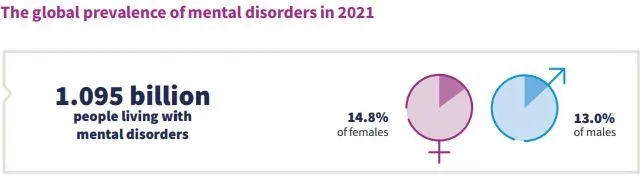
MENTAL HEALTH ATLAS 2024

  • Vulnerable Groups:
    • Ages 20–29 years have the largest rise (1.8%).
    • Males: More prone to ADHD, autism, intellectual developmental disorders.
    • Females: More prone to anxiety, depression, and eating disorders.
  • SDG Progress: Suicide is the leading cause of death among youth; current reduction rate (12%) is far from the 2030 SDG target of 33% reduction.
  • Economic Impact: Depression and anxiety cost the global economy ~US$1 trillion/year, including lost productivity.
  • Treatment Gap: Less than 10% of people with major depression receive adequate care.

Mental Health in India:

  • Prevalence: 10.6% adults suffer from mental disorders (NMHS 2015-16).
  • Urban-Rural Divide: Higher in metros (13.5%) vs rural areas (6.9%).
  • Causes among youth:
    • Excessive social media and internet use → anxiety, sleep disorders.
    • Weak family support → poor emotional well-being.
    • Stressful work environments → burnout and reduced productivity.
    • Unhealthy lifestyle → poor physical and mental health.

Healthcare Challenges:

    • Poor conditions and abuse in psychiatric hospitals.
    • Low funding (~1% of total health budget).
    • Shortage and uneven distribution of psychiatrists and mental health workers.
    • Accessibility issues in rural areas; treatment costs often unaffordable.

Government Initiatives in India:

  • Mental Healthcare Act, 2017: in Decriminalised suicide attempts. Allowed advance directives for treatment decisions.
  • Rights of Persons with Disabilities Act, 2017: Includes mental illness as a disability.
  • KIRAN Helpline: Suicide prevention and crisis support.
  • District Mental Health Programme (DMHP): Covers 767 districts; provides counseling, stress management.
  • National Tele Mental Health Programme (NTMHP): 53 Tele MANAS cells across 36 states/UTs for remote access.

STRENGTHENING INDIA’S AGRI-EXPORT ECOSYSTEM

TOPIC: (GS3) ENVIRONMENT: THE HINDU

The Agricultural and Processed Food Products Export Development Authority (APEDA) has launched the BHARATI initiative to promote agri-food startups and innovation, aiming to boost India’s agri-food exports to $50 billion by 2030.

About BHARATI Initiative:

  • Full Form: Bharat’s Hub for Agritech, Resilience, Advancement and Incubation for Export Enablement.
  • Objective: To make India a global hub for agri-food startups and enhance export competitiveness.
  • Target Cohort: Supports 100 agri-food and agri-tech startups in its first batch.
  • Program Duration: Three-month acceleration program focused on: Product development, Export readiness, Regulatory compliance
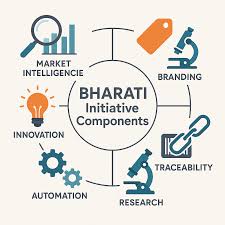
Bharati Innovative Components

Focus Sectors:

  • GI-tagged agricultural products
  • Organic foods
  • Superfoods
  • Processed Indian food products

Significance of the Initiative:

  • Boost Agricultural Exports: Helps diversify India’s agri-export portfolio and enter niche global markets (organic, GI-tagged, AYUSH products).
  • Startup Support: Provides incubation and scale-up support for agri-tech and food processing startups.
  • Innovation Promotion: Encourages R&D in packaging, traceability, and cold-chain logistics, reducing wastage.
  • Alignment with National Goals: Supports Atmanirbhar Bharat, Digital India, Vocal for Local, and Startup India.
  • Global Competitiveness: Helps meet SPS-TBT standards required for international trade.
  • Farmers’ Income & Food Security: Promotes value addition and backward linkages, improving farm-gate prices and rural entrepreneurship.

Challenges to Address:

  • Fragmented supply chains and limited cold storage.
  • Strict global trade barriers and import regulations.
  • Financing and scalability issues for small startups.
  • Inadequate export infrastructure, especially in Tier-II and Tier-III cities.

Way Forward:

  • Strengthen Ecosystem: Expand to a permanent annual incubation program.
  • Policy Synergy: Align with export promotion schemes, FPOs, farm mechanization, and food processing programs.
  • International Partnerships: Enhance technology exchange and market access with importing countries.
  • Sustainability Focus: Promote eco-friendly packaging, climate-resilient logistics, and sustainable practices.

APEDA:

  • Founded: 1986, via Act of Parliament under the Ministry of Commerce & Industry.
  • Objective: Development and promotion of exports for scheduled agricultural and processed products.
  • Scope: Covers 700+ products across 14 categories including fruits, vegetables, cereals, dairy, poultry, meat, and processed foods.

Conclusion:

BHARATI will boost India’s agri-food exports, support startups, and promote innovation, while increasing farmers’ income and rural entrepreneurship. It aligns with national goals for sustainable and competitive growth.

BIODIVERSITY BEYOND NATIONAL JURISDICTION (BBNJ)

TOPIC: (GS3) ENVIRONMENT: THE HINDU

Countries are moving forward to implement the High Seas Treaty, formally called the Agreement on Marine Biodiversity Beyond National Jurisdiction (BBNJ), aimed at conserving biodiversity in international waters and ensuring equitable benefit sharing.

About BBNJ Agreement:

  • Full Form: Agreement on Marine Biodiversity Beyond National Jurisdiction.
  • Purpose: First treaty dedicated to the conservation and sustainable use of biodiversity in the high seas, treating it as the common heritage of humankind.
  • Timeline:
    • Negotiated under UNCLOS for over 10 years.
    • Finalised in 2023, opened for signing in 2024.
    • India signed the agreement in 2024.
    • Treaty becomes legally binding 120 days after the 60th ratification.

Key Components of the Treaty:

  • Marine Genetic Resources (MGRs): Regulation and fair sharing of benefits from high-seas genetic resources.
  • Area-Based Management Tools (ABMTs): Including Marine Protected Areas (MPAs) to conserve biodiversity.
  • Capacity Building & Technology Transfer: Supporting developing countries in research, monitoring, and sustainable use.
  • Environmental Impact Assessments (EIAs): Ensuring activities do not harm marine ecosystems.

Preparatory Steps:

  • PrepCom I (April 2025): Discussed operational rules, governance, and financing arrangements.
  • PrepCom II: Held at the UN with 200+ representatives from governments, civil society, and international organisations.
  • Ratifications: Small island nations Cabo Verde and Saint Kitts & Nevis ratified; only five more ratifications needed for entry into force.
  • COP1: First decision-making meeting expected late 2026.

Significance of the Treaty:

  • No Sovereign Claims: Countries cannot claim or exploit high seas resources exclusively.
  • Ecosystem-Based Approach: Promotes precautionary principle and use of traditional & scientific knowledge.
  • Environmental Protection: Minimises ecological impacts using ABMTs and EIAs.
  • Contribution to SDGs: Supports SDG 14 – Life Below Water by conserving marine biodiversity.

About High Seas:

  • Definition: Ocean areas outside territorial waters, exclusive economic zones, internal waters, and archipelagic waters.
  • Coverage: 95% of Earth’s ocean habitat by volume; largely unprotected.
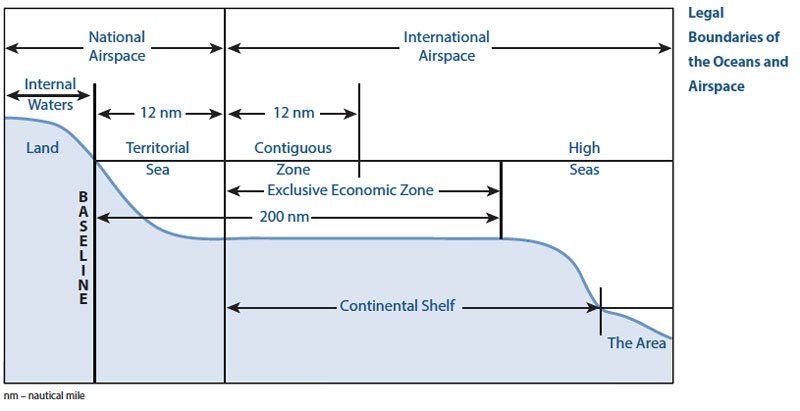
High Seas

Role of UNCLOS & ISA:

  • UNCLOS (1982): Governs the law of the sea, regulating all uses of oceans and resources; came into force in 1994.
  • International Seabed Authority (ISA):
    • Autonomous body established under UNCLOS and 1994 Implementation Agreement.
    • Members: 170 states, including India.
    • Headquarters: Kingston, Jamaica.
    • Regulates mining and related activities on the seabed beyond national jurisdiction.

Way Forward:

  • Encourage rapid ratifications to bring the treaty into force.
  • Support capacity building for developing nations to participate effectively.
  • Ensure equitable benefit sharing and protection of marine biodiversity in global waters.

Conclusion:

The BBNJ Agreement is a landmark treaty to conserve and sustainably use marine biodiversity in international waters, ensuring fair benefit-sharing, protecting ecosystems, and supporting global commitments like SDG14. It strengthens international cooperation for the high seas while safeguarding the interests of developing countries.


Write a Review

Your email address will not be published. Required fields are marked *