Table of Contents
ToggleBRICS INDIA SUMMIT
TOPIC: (GS2) INTERNATIONAL RELATIONS: THE HINDU
India will host the BRICS Summit 2026, and experts suggest that the focus should be on climate resilience and inclusive green growth, issues of critical importance for the Global South.
Background
- India successfully hosted the G-20 Summit (2023), showcasing its diplomatic and organisational capacity.
- BRICS has expanded to include Egypt, Ethiopia, Indonesia, Iran, and UAE, representing nearly half of global population, 40% of GDP, and 26% of trade.
- Climate change impacts are intensifying across BRICS nations, making resilience a shared priority.
Global Context
- Multilateralism under stress: The U.S. has withdrawn from several international organisations and skipped COP30 in Brazil (2025).
- Europe’s climate fatigue: Domestic challenges and security concerns have reduced European leadership on climate issues.
- This creates space for BRICS to act as a stabilising force in sustainability and resilience.
Climate Change – A Common Concern
- BRICS countries face diverse climate risks:
- Amazon deforestation (Brazil).
- Himalayan fragility (India).
- Permafrost thaw (Russia).
- Coastal vulnerabilities (South Africa, Indonesia).
- Shared interest in adaptation, equity, and sustainable development.
- BASIC grouping (Brazil, South Africa, India, China) has been useful, but BRICS offers greater collective strength.
Climate Finance and Global Institutions
- Outcome of BRICS Summit in Rio (2025): Leaders’ Framework Declaration on Climate Finance.
- India has strongly articulated Global South’s demand for finance.
- Need to involve World Bank and IMF chiefs, not just rely on the New Development Bank.
- Finance is the key enabler for climate action; exclusion of global institutions weakens efforts.
India’s Role
- As BRICS chair, India can push for:
- Resilience-focused agenda for Global South.
- Inclusive green growth balancing development and sustainability.
- Climate finance reforms with wider institutional participation.
- Strategically, this helps India:
- Check Chinese leadership ambitions on green agenda.
- Strengthen ties with new BRICS members like Ethiopia, host of COP32 (2027).
BRICS
- Full Form: Brazil, Russia, India, China, South Africa.
- Founded: First summit in 2009 at Yekaterinburg, Russia (initially BRIC, South Africa joined in 2010).
- Nature: Intergovernmental organization for economic, political, and strategic cooperation.
- Purpose:
- Promote economic growth and trade.
- Strengthen South-South cooperation.
- Provide a counterbalance to Western-led institutions like the G7.
- Membership Expansion: Recently expanded to include Egypt, Ethiopia, Indonesia, Iran, and UAE, making BRICS+ a grouping of 10+ nations.
Recent Summits
17th BRICS Summit – 2025 (Brazil)
- Location: Rio de Janeiro, Brazil (July 6–7, 2025).
- Theme: “Strengthening Global South Cooperation for a More Inclusive and Sustainable Governance.”
- Highlights:
- Adoption of the Rio de Janeiro Declaration.
- Welcomed Indonesia and 11 new partners.
Conclusion
The BRICS Summit in India is an opportunity to position the grouping as a global leader in resilience and sustainability. For India, it is both a diplomatic chance and a developmental necessity to champion a green, inclusive, and finance-backed agenda for the Global South.
TRUMP’S GREENLAND PLAN AND NATO’S FUTURE
TOPIC: (GS2) INTERNATIONAL RELATIONS: THE HINDU
U.S. President Donald Trump has renewed his push to acquire Greenland, calling it vital for American security. The move raises questions about NATO’s unity, sovereignty, and the future of transatlantic security commitments.
Background
- Greenland is an autonomous territory of Denmark, a NATO member.
- Trump’s proposal reflects unilateralism and challenges NATO’s Article 5 pledge of collective defence.
- The plan comes amid U.S. military actions abroad and growing tensions with Europe.
Why Greenland Matters
- Strategic location: Key to controlling Arctic shipping routes – Northern Sea Route and Northwest Passage.
- Resources: Rich in minerals and rare earths.
- Security: Seen by Trump as essential for U.S. dominance in the western hemisphere.
NATO Implications
- NATO’s foundation rests on U.S. security guarantees.
- Trump’s stance signals erosion of trust among smaller NATO members worried about Russia.
- His view: alliances are burdensome; U.S. should prioritize its own interests.
- Europe fears that U.S. unilateralism could weaken NATO’s credibility.
Arctic Geopolitics
- Arctic is becoming a new arena of competition for resources and shipping routes.
- Russia has invested heavily in Arctic infrastructure and icebreakers.
- China also expanding its footprint.
- U.S. ambitions in Greenland could trigger long-term rivalry with Russia.
Russia’s Dilemma
- A weaker NATO benefits Moscow, but stronger U.S. presence in the Arctic means strategic competition.
- Possibility of U.S.–Russia cooperation in Arctic tied to Ukraine peace talks.
Resource Politics
- Trump prefers quick deals over long interventions.
- From Venezuela’s oil to Greenland’s minerals, U.S. strategy reflects economic coercion rather than military occupation.
- Sovereign control over Greenland would be difficult due to local resistance and international law.
What is NATO?
- Full Form: North Atlantic Treaty Organization.
- Founded: 1949, after World War II.
- Headquarters: Brussels, Belgium.
- Members: 32 countries (as of 2024), mainly from Europe and North America.
Purpose
- Collective Defence: If one member is attacked, all members defend (Article 5).
- Security Alliance: Protects members against military threats, especially during the Cold War against the Soviet Union.
- Promotes Stability: Works for peace, crisis management, and cooperative security.
Functions
- Conducts joint military exercises and defence planning.
- Coordinates on terrorism, cyber security, and emerging threats.
- Supports humanitarian missions and disaster relief.
- Works with partner countries outside NATO for global security.
Significance
- Largest military alliance in the world.
- Ensures transatlantic security cooperation between Europe and the U.S.
- Plays a major role in global geopolitics, especially in conflicts like Afghanistan, Ukraine, and the Arctic.
Conclusion
Trump’s Greenland plan highlights the fragility of NATO and the rise of unilateral U.S. policies. For Europe, the challenge is balancing dependence on U.S. security with growing uncertainty about American commitment. The Arctic’s strategic importance makes this issue central to future global geopolitics.
THE LIMITS OF HOUSEHOLD STABILITY IN INDIA
TOPIC: (GS3) ECONOMY: THE HINDU
Ahead of the Union Budget 2026, concerns have emerged that India’s growth story, though stable in aggregate, is increasingly being supported by households that are saving less, borrowing more, and absorbing greater risks.
Background
- India’s GDP growth remains strong compared to global peers.
- Household debt-to-GDP ratio is 41.3% (March 2025), lower than many emerging economies.
- Despite this, household finances show hidden fragility beneath stable consumption trends.
Household Debt Trends
- Debt has risen gradually from 36% (2021) to 41% (2025).
- No immediate debt crisis, but borrowing is increasingly used to bridge income gaps rather than create assets.
- Real income growth remains uneven, especially outside formal jobs and high-productivity sectors.
Credit as a Cushion
- Borrowing substitutes for weak income growth and declining savings.
- Net financial savings have become volatile:
- Dropped to 3–4% of GDP in early 2024–25.
- Recovered to 7.6% of GDP later, but instability persists.
- Households remain net holders of financial wealth, but liabilities are rising faster than assets.
Why Households Are Borrowing More
- State finances: Capital expenditure prioritized, revenue spending curtailed.
- Committed expenses (pensions, salaries, interest) consume 30–32% of revenue receipts.
- Less fiscal space for income support.
- Union Budget 2025–26: Focus on infrastructure (₹11.2 lakh crore capital expenditure).
- Growth-enhancing but does little to cushion household income volatility.
- Result: Risk shifted from State to households, forcing families to self-insure.
Macro Risks
- Private consumption forms ~60% of GDP, making household stability crucial.
- Three worrying trends:
- Uneven income growth.
- Rapid rise in unsecured retail credit.
- Volatile net financial savings.
- Any slowdown in income or rise in unemployment could trigger sharp retrenchment in spending.
Way Forward
- Fiscal policy must restore balance in household budgets.
- Focus on labour-intensive employment to raise incomes.
- Enable higher disposable income to reduce reliance on debt.
- Long-term resilience requires stable savings growth alongside consumption.
Conclusion
India’s growth stability is increasingly built on debt-financed household consumption, which is unsustainable. Budget 2026 must address this fragility by boosting incomes, employment, and savings, ensuring households can withstand shocks without excessive borrowing.
ASIA-PACIFIC AND MALARIA ELIMINATION BY 2030
TOPIC: (GS2) SOCIAL JUSTICE AND HEALTH: THE HINDU
The World Malaria Report 2025 highlights mixed progress in the Asia-Pacific region. While malaria cases have declined in several countries, challenges such as drug resistance, uneven progress, and funding shortfalls threaten the 2030 elimination target.
Current Status
- Malaria cases in Asia-Pacific fell from 9.6 million (2023) to 8.9 million (2024).
- Major reductions in Pakistan, Cambodia, Lao PDR, and Vietnam.
- Success in the Greater Mekong Subregion in tackling drug resistance.
- Countries like Sri Lanka, China, and Timor-Leste have achieved malaria-free status.
- Despite progress, overall trajectory is not fully aligned with the 2030 elimination goal.
Key Challenges
- Uneven Progress: Some nations show resurgence while others sustain declines. High-burden countries face persistent transmission.
- Drug Resistance: Rising resistance to artemisinin-based therapies in Southeast Asia. India has not yet reported resistance but remains vigilant.
- Funding Shortfalls: Only 42% of global malaria financing needs met in 2024. Cuts in 2025 widened the gap, forcing countries to scale back interventions.
- Last-Mile Delivery: Difficulties in reaching remote, migrant, and mobile populations. Weak surveillance and uneven programme execution.
India’s Position
- Target: Zero indigenous cases by 2027, ahead of global 2030 deadline.
- Achievements: Steep decline in cases since 2015; many districts report zero transmission.
- Concerns: Progress has plateaued; resurgence in some regions.
- Burden concentrated in five states and the northeast (80% of cases).
- India’s strategy:
- Real-time surveillance across all sectors.
- Focused interventions in hotspots.
- Sustained financing and accountability.
Role of Vaccines
- RTS, S and R21 vaccines are breakthroughs, proven effective in Africa.
- Asia-Pacific nations evaluating their use to complement existing tools.
- Vaccines can reduce severe malaria and child mortality but need targeted rollout.
Way Forward
- Treat malaria elimination as a time-bound national mission.
- Strengthen surveillance, vector control, and case management.
- Ensure regional cooperation to prevent cross-border spread of resistance.
- Mobilize domestic financing alongside global support.
- Recognize elimination as an investment with high economic and social returns.
Conclusion
Asia-Pacific has made remarkable progress, but uneven outcomes, drug resistance, and funding gaps threaten the 2030 target. India’s ambitious 2027 goal is achievable only with focused surveillance, financing discipline, and last-mile delivery.
A DANGEROUS MARCH TOWARDS A HIMALAYAN ECOCIDE
TOPIC: (GS3) ENVIRONMENT: THE HINDU
Recent reports highlight the ecological risks of the Char Dham road-widening project in Uttarakhand, which involves felling thousands of Devdar (Deodar) trees in fragile Himalayan zones already devastated by climate disasters.
Himalayan Vulnerability
- In 2025, India witnessed 331 days of climate impacts, causing over 4,000 deaths.
- Himachal Pradesh and Uttarakhand were worst affected by cloudbursts, landslides, avalanches, and flash floods.
- Areas like Dharali, Harsil, Chamoli, Kullu, Mandi, and Kishtwar faced repeated disasters.
Ecological Importance of Devdar Forests
- Slope stability: Deep roots prevent landslides and act as barriers against avalanches.
- Water quality: Located in the Bhagirathi Eco-Sensitive Zone (4,000 sq. km), they safeguard the Ganga’s pristine stretch.
- Microclimate regulation: Maintain cooler air and water temperatures, sustaining aquatic life.
- Unique properties: Antimicrobial compounds in leaves and bark help regulate river ecology.
- Supreme Court stance: Discouraged felling of deodar trees due to their irreplaceable ecological role.
Char Dham Project Concerns
- Forest clearance: 43 hectares diverted, 7,000 trees approved for felling.
- Faulty standards: DL-PS (double-lane with paved shoulder) road width unsuitable for fragile terrain.
- Consequences: Over 800 landslide zones have emerged along 700 km of widened road.
- Engineering flaws: Vertical hill-cutting violated natural slope stability; retrofitting measures came too late.
- Project fragmentation: Avoided comprehensive Environmental Impact Assessment (EIA).
Climate Change as a Risk Multiplier
- Himalayan regions warming 50% faster than global average since 1950.
- Accelerated glacial melt increases flash floods, later leading to water scarcity.
- Snowless winters and forest fires intensify ecological stress.
Governance Failures
- Ignoring National Mission for Sustaining the Himalayan Ecosystem (NMSHE, 2014), which mandates glacier monitoring and hazard mitigation.
- Short-term development prioritized over long-term resilience.
- Unregulated tourism, traffic, and poor waste management worsen fragility.
Way Forward
- Prioritize disaster-resilient infrastructure over wide highways in unstable zones.
- Strengthen scientific planning and carrying capacity assessments.
- Preserve Devdar forests as ecological anchors.
- Align projects with climate policies and sustainable development goals.
Conclusion
The Himalayas are the foundation of India’s ecology and culture. Projects that destabilize fragile slopes and destroy ancient forests risk turning development into ecocide. Sustainable, science-based policies must replace short-term gains to secure the future of the Himalayan ecosystem.
ICE CLOUD – INTEGRATED CLOUD ENVIRONMENT
TOPIC: (GS3) SCIENCE AND TECHNOLOGY: THE HINDU
The Centre for Development of Advanced Computing (CDAC) has recently expanded the capabilities of the ICE Cloud platform, strengthening India’s indigenous digital infrastructure for advanced scientific research.
About ICE Cloud
- Indigenous platform developed by CDAC.
- Designed for scientific research using Artificial Intelligence (AI) and High-Performance Computing (HPC).
- Provides easy access to computational resources for reproducible research.
- Supported by funding from the Department of Biotechnology (DBT).
Features
- Open-access platform with supercomputers and advanced tools.
- Supports AI, quantum technologies, simulation studies, and software development.
- Offers services such as:
- Data storage.
- Bioinformatics tools.
- Virtual hosting.
- Pipeline execution.
- AI visualisation.
- Cloud-based development environments.
- Seamless collaboration features.
Accessibility
- Available to students, researchers, scientists, start-ups, and industry.
- Promotes collaborative innovation and democratizes access to advanced computing.
Use Cases
- Research Institutes: For large-scale data analysis and simulations.
- Developers & Start-ups: For building AI and software solutions.
- Industry: For innovation in biotechnology, healthcare, and engineering.
- Academia: For training and capacity building in cutting-edge technologies.
Significance
- Strengthens India’s self-reliance in digital research infrastructure.
- Boosts innovation in AI, quantum computing, and biotechnology.
- Helps bridge the gap between scientific research and industry applications.
ATAL PENSION YOJANA (APY)
TOPIC: (GS3) ECONOMY: THE HINDU
The Union Cabinet has approved the continuation of the Atal Pension Yojana (APY) till FY 2030-31, ensuring long-term social security for workers in the unorganised sector.

About the Scheme
- Launched on 9 May 2015 by the Government of India.
- Objective: To promote voluntary savings for retirement and provide defined pension benefits.
- Administered by the Pension Fund Regulatory and Development Authority (PFRDA).
Target Group
- Primarily aimed at unorganised sector workers.
- Eligibility: Citizens aged 18–40 years.
- Since October 2022, income tax payers are excluded from joining.
Key Features
- Guaranteed Pension: Choice of fixed monthly pension between ₹1,000–₹5,000, based on contribution and age of entry.
- Government Co-Contribution: For early enrollees (June 2015–March 2016), the government contributed 50% of subscriber’s amount or ₹1,000 per year for five years.
- Defined Benefit: Pension amount assured regardless of market fluctuations.
Exit & Withdrawal Rules
- Exit at 60 years: Subscriber receives full pension.
- Exit before 60 years: Allowed only in cases of death or terminal illness.
- Voluntary Exit: Permitted, but subscriber gets only own contributions with interest; government share is forfeited.
Significance
- Provides financial security in old age for low-income and informal workers.
- Encourages long-term savings culture.
- Complements other social security schemes to build a comprehensive safety net.
STEEL SLAG
TOPIC: (GS3) ENVIRONMENT: THE HINDU
The Union Minister of State for Science and Technology recently promoted the wider use of steel slag–based road construction technology, especially in Himalayan and hilly regions, to improve durability and sustainability.
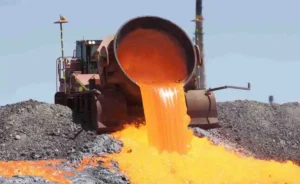
What is Steel Slag?
- Byproduct of steel manufacturing from electric arc furnaces or basic oxygen furnaces.
- Produced in large quantities during steel-making operations.
- Composition: Mainly calcium, magnesium, manganese, and aluminium silicates and oxides.
- Different cooling processes create various types of slag for specific uses.
Applications
- Environmental Use
- Acts as a barrier material at waste sites.
- Prevents heavy metals from leaching into soil and water.
- Successfully used to treat acidic mine water discharges.
- Construction Use
- Can replace coarse aggregates in road building.
- Offers higher impact and crushing strength.
- Provides better anti-skid capacity, making roads safer.
- Suitable for hilly terrains where road stability is critical.
Significance
- Promotes eco-friendly infrastructure by recycling industrial waste.
- Reduces dependence on natural stone aggregates.
- Enhances road safety and longevity in disaster-prone Himalayan regions.
- Supports circular economy and sustainable development goals.
Conclusion
Steel slag is not just an industrial byproduct but a valuable resource for road construction and environmental remediation. Its adoption in infrastructure projects can strengthen India’s push for green technology and resilient roads, particularly in fragile mountain ecosystems.
What is NATO?
- Full Form: North Atlantic Treaty Organization.
- Founded: 1949, after World War II.
- Headquarters: Brussels, Belgium.
- Members: 32 countries (as of 2024), mainly from Europe and North America.
Purpose
- Collective Defence: If one member is attacked, all members defend (Article 5).
- Security Alliance: Protects members against military threats, especially during the Cold War against the Soviet Union.
- Promotes Stability: Works for peace, crisis management, and cooperative security.
Functions
- Conducts joint military exercises and defence planning.
- Coordinates on terrorism, cyber security, and emerging threats.
- Supports humanitarian missions and disaster relief.
- Works with partner countries outside NATO for global security.
Significance
- Largest military alliance in the world.
- Ensures transatlantic security cooperation between Europe and the U.S.
- Plays a major role in global geopolitics, especially in conflicts like Afghanistan, Ukraine, and the Arctic.