
INDIA PUSHES BACK AGAINST U.S. AND EU PRESSURE ON RUSSIAN OIL TRADE
TOPIC: (GS2) INTERNATIONAL RELATIONS: THE HINDU
India’s Ministry of External Affairs (MEA) issued a strong statement criticizing the U.S. and EU for imposing unfair sanctions and penalties over India’s purchase and processing of Russian oil, asserting that India’s trade decisions are based on national interest.
Background of the Issue
- The U.S. recently announced additional tariffs (above the existing 25%) on Indian products linked to Russian oil imports and processing.
- A top U.S. official accused India of indirectly financing Russia’s war in Ukraine.
- The EU also imposed sanctions on India’s Vadinar oil refinery (partially Russian-owned), affecting India’s refining sector.
India’s Response
- The MEA described the actions by the U.S. and EU as “unjustified and unreasonable.”
- India highlighted that western countries themselves continue to import critical resources like LNG, nuclear fuel, and minerals from Russia.
- The Indian government reminded that the U.S. had earlier encouraged India to continue Russian oil purchases to maintain stability in global oil markets.
India’s National Interests
- India explained that its oil imports from Russia are essential due to rising global prices and the ongoing Ukraine crisis.
- The government reaffirmed that protecting economic security and energy needs is a top priority.
- India clarified that its trade choices are guided by national needs, not external pressures.
Growing Frustration with U.S. Approach
- India is increasingly unhappy with the U.S. over:
- Immigration policies
- Trade barriers and stalled trade talks
- Lack of support during Operation Sindoor
- U.S. engagement with Pakistan
- Opposition to India’s growing role in BRICS
Assertion of Strategic Autonomy
- India emphasized that no external power can dictate its foreign policy or trade partnerships.
- Senior Indian officials, including NSA Ajit Doval and EAM S. Jaishankar, have visited Russia, indicating continued engagement.
- Preparations are underway for Russian President Putin’s upcoming visit to India.
Conclusion
India has sent a clear message that its foreign policy is sovereign and will not bend under external pressure. National interests, not global politics, will guide India’s trade and diplomatic choices.
INDIA’S POSITION IN A SHIFTING GEOPOLITICAL ORDER
TOPIC: (GS3) SCIENCE AND TECHNOLOGY: THE HINDU
India is facing growing challenges in global politics due to rising tensions with major powers like the U.S., EU, and China. The recent Operation Sindoor and changing global alignments have highlighted India’s limited global influence and need for stronger geopolitical engagement.
India’s Strategic Setback After Operation Sindoor
- Operation Sindoor exposed the reluctance of India’s allies to criticize Pakistan, despite clear involvement of Pakistani terrorists in the Pahalgam attack.
- India responded strongly to the attack but faced narrative challenges, especially as U.S. President Trump claimed credit for brokering peace.
- Ironically, Pakistan’s military leader was welcomed by the U.S. shortly after, adding to India’s frustration.
- However, there was some recognition — the UN and U.S. officially identified The Resistance Front (TRF) as a terrorist group.
Growing Tensions with the United States
- Despite collaborations like the launch of the India-U.S. NISAR satellite, Trump imposed a 25% tariff on Indian goods.
- The U.S. warned India over its Russian oil imports, linking trade to geopolitical issues.
- Trump urged American firms not to invest in India and to prioritize hiring Americans.
- This shows a shift towards protectionism and unpredictability in U.S. foreign policy.
EU’s Double Standards and Energy Security Issues
- The EU sanctioned India’s Vadinar refinery, targeting India’s import of Russian oil.
- This action contradicts the EU’s own oil imports from Russia, as countries like Spain and Hungary continue such trade.
- India also faces digital and carbon tax barriers from the EU while negotiating a trade pact.
China’s Increased Activity in India’s Neighbourhood
- China is forming new regional groups to exclude India, such as the trilateral plan with Pakistan and Bangladesh.
- It supports Bangladesh in reviving a WWII airbase near India’s Siliguri corridor.
- China’s economic leverage continues as it controls vital supplies like rare earths, APIs, and fertilizers.
- It is building a major dam on the Yarlung Zangbo (Brahmaputra) river near India’s border.
Need for Strategic Recalibration
- India has tried to reset ties with China post-Galwan but progress is limited.
- Its neutral stance on conflicts like Israel-Gaza and Ukraine may reduce its global influence.
- Operation Sindoor taught India that expecting support in its conflicts requires reciprocation.
Way Forward
- India must assert itself in global issues to protect its strategic autonomy.
- Criticizing double standards by the U.S. and EU is a positive shift.
- A quick trade deal with the U.S. and hosting the Quad Summit could restore trust.
- Stronger engagement with BRICS, SCO, and East Asia is essential, especially after missing RCEP.
- Economic growth now depends on smart geopolitical moves, not just trade policies.
Conclusion
India can no longer afford to stay passive in world affairs. To secure its interests, it must actively shape the global order through strategic diplomacy and assertive engagement.
TECHNOCRATIC TRANSFORMATION OF INDIA’S WELFARE STATE
TOPIC: (GS2) INDIAN POLITY: THE HINDU
India’s welfare system is increasingly relying on digital technologies and data-driven methods for delivery, raising concerns over the decline of democratic participation, transparency, and accountability in social welfare programs.
India’s Shift to a Tech-Driven Welfare Model
- Over 1 billion Aadhaar enrollments and 1,200+ welfare schemes now linked to Direct Benefit Transfer (DBT) systems.
- Around 36 public grievance portals are operational across States/UTs.
- The focus has moved from “who needs help and why” to “how to reduce leakages and improve reach.”
Concerns with Technocratic Welfare Delivery
- Welfare is becoming more automated and centralized, losing human judgement and local discretion.
- Citizens are now viewed as data entries or beneficiaries, rather than rights-bearing individuals with political agency.
- Algorithms are making decisions in place of deliberative democratic processes.
Decline in Social Sector Spending
- Social sector funding has dropped to 17% in 2024-25, down from an average of 21% (2014-24).
- Welfare spending in critical areas (minorities, labor, nutrition, etc.) has reduced from 11% pre-COVID to just 3% post-COVID.
Weakening of RTI Mechanism
- India’s Right to Information (RTI) system is under stress:
- Over 4 lakh cases pending as of June 2024.
- 8 posts of Chief Information Commissioners (CICs) are vacant.
- Delays and inaction have weakened transparency.
Lack of Political Accountability
- The Centralised Public Grievance Redress System handles many complaints but often becomes a ticketing system, without solving root issues.
- This creates an illusion of responsiveness, without real political responsibility.
Need for Democratic and Localised Welfare Systems
- Welfare delivery should not be solely tech-based — it must include human judgement and ground-level feedback.
- Empower States and local bodies like gram sabhas for context-specific welfare.
- Use programs like Rashtriya Gram Swaraj Abhiyan and learn from Kerala’s Kudumbashree model.
- Encourage community audits, legal aid, and citizen education to make welfare participatory.
Conclusion
India’s welfare state must balance efficiency with democracy. For an inclusive and resilient future, technology should support—not replace—citizen participation and political accountability.
BIHAR ELECTORAL ROLL REVISIONS: KEY CONCERNS POST-SIR
TOPIC: (GS2) INDIAN POLITY: THE HINDU
The Election Commission of India (ECI) released the draft electoral rolls for Bihar on August 1 after a Special Intensive Revision (SIR), showing a significant drop of 56 lakh voters. This has raised concerns, especially in Muslim-majority and high out-migration districts.
Special Intensive Revision (SIR) in Bihar
- The SIR exercise aimed to clean electoral rolls by removing:
- Deceased individuals.
- Duplicate registrations.
- Voters who migrated out of Bihar.
- Untraceable entries.
- The new draft roll has 7.24 crore voters, down from over 7.8 crore in January 2024 — a net reduction of more than 56 lakh electors.
Key Observations from Data Analysis
Higher Deletions in Muslim-Dominated Districts
- Data shows a moderate positive correlation (r ≈ 0.43) between: Muslim population share (as per 2011 Census), and Voter deletions in August rolls.
- Suggests that districts with more Muslims witnessed more voter removals.
- However, more granular data is needed to confirm if Muslims were disproportionately affected.
Lower Deletions in SC-Dominated Districts
- A negative correlation (r ≈ -0.46) found between: SC population share and Voter deletions.
- Indicates fewer deletions in SC-majority districts, but again, detailed community-wise data is needed.
Out-Migration as a Major Factor
Using Female Voter Turnout as Migration Proxy
- In 2024 Lok Sabha polls, Bihar showed: Higher female voter turnout than male, despite more male registrations.
- This suggests that many men may have migrated, leaving fewer male voters present on polling day.
Out-Migration and Voter Deletions Linked
- A correlation (r ≈ 0.40) was observed between: Districts with higher out-migration, and Higher voter deletions in the SIR.
- Indicates that ECI’s rationale of migration-based deletions is partially supported by data.
Concerns and Implications
- While the voter list clean-up is necessary, patterns hint at potential community-level impacts.
- Risk of unintentional disenfranchisement, especially in minority and migrant-heavy districts.
- Further analysis is required to ensure fairness, accuracy, and inclusivity in the electoral process.
Conclusion:
The SIR process in Bihar has raised red flags over voter deletion patterns. A deeper, community-wise and gender-sensitive examination is essential to uphold the democratic principle of universal suffrage.
SIX YEARS OF ABROGATION OF ARTICLE 370
TOPIC: (GS2) INDIAN POLITY: INDIAN EXPRESS
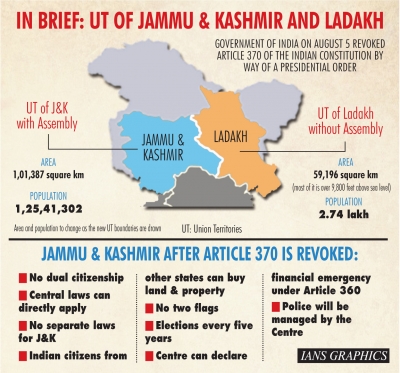
August 5, 2025, marks six years since Article 370 was abrogated by the Government of India. This move ended Jammu & Kashmir’s special status and aimed at bringing uniform governance across the country.
What was Article 370?
- Article 370 was included under Part XXI of the Constitution as a temporary provision.
- It gave special status to Jammu and Kashmir, allowing: A separate constitution and state flag. Power to make laws on all subjects except defence, foreign affairs, finance, and communications.
- Central laws applied to the state only with the approval of its government.
What was Article 35A?
- It was added via a Presidential Order in 1954, based on powers under Article 370.
- Gave the J&K government authority to define permanent residents and give them special rights.
- These included: Access to government jobs, land ownership, and educational scholarships.
- It discriminated against women: If a woman married someone outside the state, she and her children could lose property rights.
Why was Article 370 Removed?
To Ensure National Integration
- The special status created a separate identity for J&K, preventing complete integration.
- Its removal aimed to bring uniformity with other states.
Security and Stability
- The region faced prolonged terrorism and unrest, often supported from across the border.
- Revoking Article 370 was seen as necessary for stronger national security.
Economic Growth and Investment
- Article 35A stopped non-residents from buying land or investing in J&K.
- Removal encourages investment, infrastructure development, and job creation.
Legal Equality
- The provision was temporary and no longer served the interest of the people.
- It also prevented the application of central laws like the 73rd and 74th Constitutional Amendments, which promote local self-governance.
Gender Justice
- The property rights rule was unfair to women, violating the principle of equality.
Way Forward
- The government aims to fully integrate J&K and ensure better governance.
- Restoration of statehood is a key public demand; the government has assured it will happen at the right time.
- Supreme Court petitions demand early restoration of statehood, stressing federal values.
Conclusion
The abrogation of Article 370 is a significant constitutional event aimed at equality and national unity. Its full effects are still evolving, especially in terms of peace, democracy, and development in J&K.
ENVIRONMENTAL, SOCIAL, AND GOVERNANCE (ESG)
TOPIC: (GS3) ENVIRONMENT: THE HINDU
A Parliamentary committee has suggested setting up a separate regulatory body for ESG compliance under the Ministry of Corporate Affairs. The panel stressed the need for better monitoring and prevention of greenwashing by companies.
What is ESG?
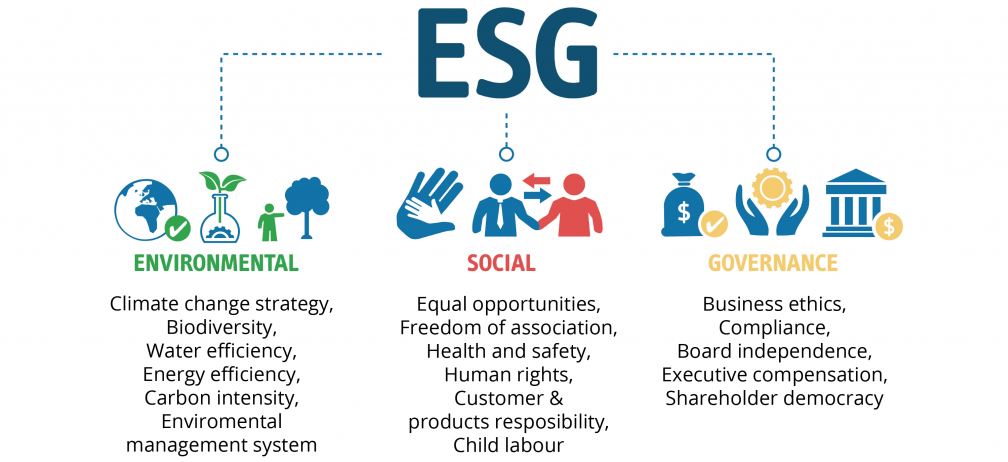
- ESG stands for Environmental, Social, and Governance.
- It is a non-financial framework that helps measure a company’s impact on the planet, people, and ethical business conduct.
- ESG is now a key factor for investors, consumers, and regulators when assessing businesses.
Components of ESG
- Environmental: Examines how a company affects nature. Examples: carbon emissions, water use, pollution control, waste management.
- Social: Focuses on how a company treats people. Includes: employee welfare, human rights, diversity, community relations.
- Governance: Refers to internal rules and company leadership. Covers: transparency, board independence, anti-corruption measures, ethical conduct.
Key Suggestions by the Parliamentary Panel
Creation of a Dedicated ESG Body
- A new regulatory authority should be set up under the Ministry of Corporate Affairs (MCA).
- It should: Have forensic investigation skills to detect greenwashing (false environmental claims). Create sector-wise ESG guidelines for companies to follow.
Stronger Legal Backing
- Existing rules under the Companies Act, 2013 (Section 166(2)) are too general.
- A more detailed legal structure is needed to ensure companies honestly report their ESG efforts.
Support for MSMEs
- The proposed body should offer guidance and support to Micro, Small, and Medium Enterprises (MSMEs).
- MSMEs often lack resources and awareness to meet ESG requirements.
Other ESG-Related Measures in India
- CSR Mandate (Companies Act, 2013): Some companies must spend at least 2% of average profits on Corporate Social Responsibility (CSR) activities.
- BRSR by SEBI: The top 1,000 listed companies must submit a Business Responsibility and Sustainability Report (BRSR) with ESG disclosures.
- Global Alignment: India is working to align its ESG policies with international standards, such as the EU ESG norms and the International Sustainability Standards Board (ISSB) guidelines.
Conclusion
ESG has become essential for sustainable business practices.
India is now focusing on regulation and accountability to ensure companies make a real, not just cosmetic, commitment to ESG values.
TACKLING MONEY LAUNDERING IN INDIA
TOPIC: (GS3) ECONOMY: THE HINDU
The finance minister recently informed the Rajya Sabha that 5,892 cases have been registered under the Prevention of Money Laundering Act (PMLA), 2002, since 2015, but only 15 convictions have been made so far, raising questions on the law’s effectiveness.
What is Money Laundering?
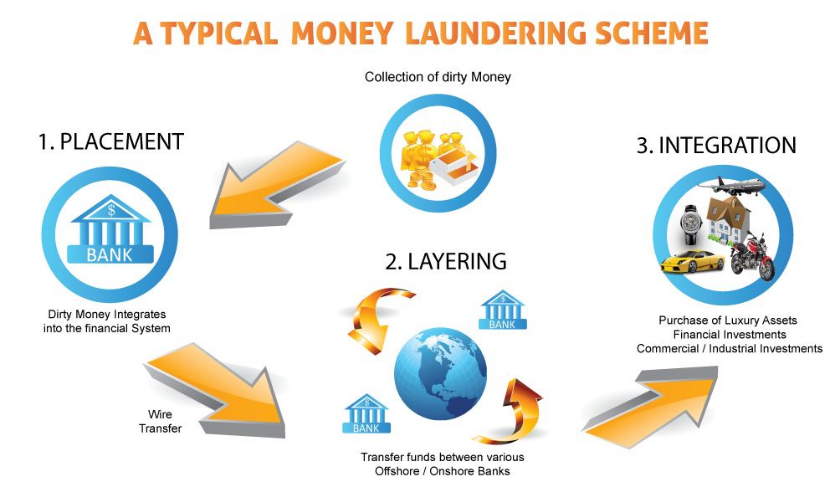
- It is the process of turning illegal money into legal-looking assets.
- Defined under Section 3 of PMLA, it involves possessing, using, or disguising crime-related money as if it were lawfully earned.
Three Stages of Money Laundering:
- Placement: Illegal cash is introduced into the financial system. Example: Breaking large amounts into smaller sums (smurfing).
- Layering: The money is moved through multiple transactions or investments to hide its source.
- Integration: The clean-looking money is reintroduced into the economy via business, real estate, or assets.
Why Is It a Problem?
- Harms the financial system, undermines trust in institutions.
- Leads to monetary instability and inflation.
- Can be linked to terror funding and organized crime.
- Weakens national sovereignty and economic security.
Legal Framework in India:
Prevention of Money Laundering Act (PMLA), 2002
- Enacted to combat money laundering and confiscate crime-linked property.
- Burden of proof lies on the accused.
- No FIR is needed to start proceedings — just an Enforcement Case Information Report (ECIR).
- A “scheduled offence” must exist for criminal prosecution under PMLA.
Supreme Court Rulings:
- Vir Bhadra Singh v. ED (2017): ECIR sufficient to initiate action.
- Vijay Madanlal Choudhary v. UoI (2022): Property can be attached even before a criminal case is filed.
Challenges:
- Low conviction rate: Only 15 convictions out of 5,892 cases.
- Risk of misuse for political purposes, as highlighted by courts.
- Overreach by authorities, lacking adequate safeguards.
Global Cooperation:
Double Taxation Avoidance Agreements (DTAAs)
- India has signed DTAAs with 85+ countries.
- Helps in sharing tax and financial data, preventing illicit fund transfers and tax evasion.
Way Forward:
- Strengthen enforcement with transparency and accountability.
- Implement FATF recommendations to improve global compliance.
- Ensure genuine investigations and prevent misuse of legal provisions.

FATF (FINANCIAL ACTION TASK FORCE)
FATF is an inter-governmental body established in 1989 by the G7 countries. Its main purpose is to combat money laundering, terrorist financing, and other threats to the international financial system.
Headquarters and Membership
- Headquarters: Paris, France (hosted by the OECD).
- Members: 39 members (37 countries + 2 regional organizations – European Commission & Gulf Cooperation Council).
- India became a full member in 2010.
Objectives of FATF
- Set international standards (Recommendations) for combating:
- Money Laundering (ML)
- Terrorist Financing (TF)
- Proliferation Financing (PF)
- Evaluate and monitor country-level implementation.
- Promote effective implementation of legal, regulatory, and operational measures.
FATF Lists
Grey List (Increased Monitoring List):
- Countries that do not fully comply with FATF standards.
- They face increased scrutiny but can work with FATF to improve.
- Example: Pakistan was on the Grey List (2018–2022).
Black List (High-Risk Jurisdictions):
- Countries that refuse to cooperate or have serious strategic deficiencies.
- They face financial sanctions, restrictions from IMF, World Bank, etc.
- Examples: North Korea, Iran.
Conclusion:
Money laundering threatens national integrity and economic health. India needs to balance tough legal action with checks against misuse, ensuring that the law serves its real purpose — fighting financial crime, not political battles.
CHINA’S EXPANDING OVERSEAS POLICING NETWORK
TOPIC: (GS2) INTERNATIONAL RELATIONS: THE HINDU
China has recently sent a police team to Croatia for joint patrols under a 2017 agreement, raising concerns about the country’s growing international policing activities, especially through initiatives like ‘Fox Hunt’ and ‘Sky Net’.
Why is this an issue?
- On July 16, 2024, China’s Ministry of Public Security (MPS) announced an 8-member police team had been sent to Croatia.
- This marks the 6th joint patrol under the 2017 China-Croatia Police Cooperation Agreement.
Purpose of Joint Patrols
- The official reason is to ensure safety of Chinese tourists in Croatia, who numbered 2.5 lakh in 2024, showing a 41% increase from 2023.
- Chinese and Croatian police officers jointly patrol cities like Zagreb, Dubrovnik, and Zadar.
- The aim is also to provide security for overseas Chinese residents in Croatia.
China’s Overseas Police Expansion
- These patrols are part of larger Chinese operations like:
- Operation Fox Hunt (2014)
- Operation Sky Net (2015)
- Similar patrols and initiatives exist in:
- Serbia (joint patrols in 2019, 2023, and 2024)
- Hungary (local “police service centres” set up)
- Italy (later suspended due to security concerns)
Hidden Risks and Global Reactions
- These operations raise fears of:
- Surveillance of Chinese dissidents abroad
- Potential for transnational repression
- Establishment of unauthorised police stations
- Investigations found Chinese “service centres” in:
- Netherlands (Amsterdam, Rotterdam)
- USA (Manhattan’s Chinatown) — where FBI arrested two individuals in 2023.
- These centres claimed to assist with administrative work but allegedly monitored and intimidated critics of the Chinese government.
Global Responses
- USA has acted against such covert networks amid tense ties with China.
- But nations like Croatia, Serbia, and Mongolia, which maintain strong economic relations with China, have not launched public probes.
- In such countries, economic cooperation appears to outweigh national security concerns, unless surveillance crosses critical thresholds.
Conclusion:
China’s overseas policing raises key questions about sovereignty, surveillance, and transnational repression. Nations must weigh the economic benefits of cooperation with China against potential threats to civil liberties and national security.