
POPULATION DECLINE AND THE MISGUIDED PANIC
TOPIC: (GS2) INDIAN POLITY: THE HINDU
The UNFPA’s 2025 report highlights real challenges faced by people wanting children, such as economic and social barriers.
Changing Population Discourse
- Earlier fears were based on rapid population growth stressing resources (Malthusian theory).
- Now, there’s rising concern over low fertility rates leading to ageing populations and a potential economic crisis.
- Influential voices like Elon Musk have warned of civilisational decline due to fewer births, sparking global attention.
Fertility Trends vs Reality
- The UN’s 2024 World Population Prospects (WPP) shows world population will continue to grow until mid-2080s, peaking at 10.3 billion.
- After that, a slow decline is expected by 2100, but the reduction is only around 6% lower than earlier projections — not a crisis.
- Demographic projections depend on assumptions and are not exact forecasts, especially for long-term trends.
- Even with below-replacement fertility (TFR < 2.1), populations can grow for years due to population momentum (young people still in childbearing years).
The Actual Fertility Challenge
- The UNFPA 2025 report highlights reproductive barriers across countries: 1 in 5 surveyed people said they couldn’t have as many children as they wished.
- About 40% of those desiring children had to give up on their plan due to various constraints.
- Barriers in India include: Financial strain (38%), Inadequate housing (22%), Infertility (13%), Childcare issues (18%), Joblessness (21%)
- South Korea, despite spending over $200 billion on pronatal programs, is seeing only a small recovery in birth rates.
Needed Reforms, Not Panic
- The response to declining fertility must focus on removing obstacles for those who want children.
- Blaming women for choosing not to bear children or pushing coercive pronatal policies undermines personal rights.
- Short-term incentives (baby bonuses) often reinforce outdated gender roles and fail to address core problems.
- Governments must shift from ethno-nationalist rhetoric to genuine family-friendly policies like: Better parental leave, Workplace equality, Affordable housing and childcare
Conclusion
Instead of fearing demographic decline, the focus should be on creating a supportive environment for those who want children. Empowering individuals — especially women — through economic and social support is key to addressing fertility challenges in a sustainable and ethical way.
BRIDGE COLLAPSE AND THE URGENT NEED FOR INFRASTRUCTURE AUDITS
TOPIC: (GS3) ECONOMY: THE HINDU
A bridge collapse in Vadodara, Gujarat on July 9, 2025, claimed 18 lives, highlighting the increasing risk of ageing public infrastructure and the urgent need for regular safety audits and maintenance.
Recent Infrastructure Failures
- Vadodara bridge collapse (2025): A 40-year-old bridge span gave way, killing 18.
- Pune (June 2025): A footbridge over Indrayani River collapsed due to overcrowding, leading to 4 deaths.
- Cuttack (May 2025): A concrete slab fell during bridge construction, killing 3 workers.
- Other incidents:
- Ghatkopar hoarding collapse (2024): 17 deaths.
- Railway bridge failure in Mizoram (2023): 26 workers killed.
- Metro site accident in Bengaluru and billboard collapse in Lucknow also caused fatalities.
- Morbi bridge collapse (2022): Over 140 dead.
Root Causes of Failures
- Ageing infrastructure: Most structures were built decades ago and cannot handle growing loads.
- Poor maintenance: Local agencies lack funding, manpower, or urgency.
- Limited audits: Investigations are often narrow and findings are not made public.
- Overcrowding: Urban expansion places more stress on existing assets.
Key Recommendations
- Wider audits: All major public infrastructure should undergo regular inspections, not just after accidents.
- Reform schemes: Modify the Urban Infrastructure Development Fund and AMRUT to prioritize repair and upkeep.
- Transparent reporting: States must publish findings of all infrastructure-related investigations.
- Mandatory probe: Every major accident must trigger a statutory inquiry and system-wide audits.
Conclusion
India must shift from reactive responses to a proactive system of maintenance and safety audits to prevent avoidable tragedies and ensure public infrastructure remains safe and resilient.
EFFECTIVENESS OF MECHANISMS TO PREVENT CUSTODIAL VIOLENCE
TOPIC: (GS2) INDIAN POLITY: THE HINDU
The custodial death of Ajith Kumar in Tamil Nadu’s Sivaganga district has once again highlighted the issue of police brutality and raised concerns about the effectiveness of existing safeguards. The Madras High Court has asked the CBI to complete its investigation by August 20.
Custodial violence
- Custodial violence in India continues despite legal protections and Supreme Court directions.
- Such incidents are not isolated but reflect deeper flaws in policing systems and lack of accountability.
Why Custodial Violence Persists
- India hasn’t passed a law specifically criminalising torture despite signing the UN Convention Against Torture.
- Police brutality is often accepted as a shortcut for justice due to delays in the legal process.
- Lack of reliable data and weak enforcement allow such acts to continue unchecked.
- Public response varies—celebrating extrajudicial action in some cases, while condemning others.
Cultural and Institutional Issues
- Police hierarchy encourages aggression and discourages accountability.
- Popular media glorifies extra-legal action, reinforcing these attitudes.
- Marginalised communities are disproportionately targeted and viewed with suspicion.
- A colonial-era mindset sees citizens as subjects, not stakeholders.
Ineffective Reforms and Loopholes
- CCTV Orders (2020): Cameras are often non-functional or fail to cover locations where torture happens.
- Evidence Law (Section 27): Allows use of information from custodial confessions, enabling torture.
- Judicial Oversight: Magistrates often ignore signs of torture and conduct routine checks without diligence.
- Police Complaints Authorities: Either not set up or include serving police officers, undermining their independence.
Suggested Reforms
- Better Training: Officers need modern tools and bias awareness.
- Use of Science: Shift from physical force to forensic and psychological methods.
- Decriminalise Minor Offences: Reduces scope for unnecessary arrests.
- Reverse Burden of Proof: Makes police accountable in custodial death cases.
- Community Role: Civil society must raise awareness and monitor police actions.
Conclusion
Custodial torture is a systemic issue. Only a combination of legal reform, stronger institutions, public oversight, and political will can ensure real change.
THE NEED TO SAFEGUARD THE RIGHT TO VOTE
TOPIC: (GS2) INDIAN POLITY: THE HINDU
The Supreme Court recently directed the Election Commission to consider Aadhaar, voter ID, and ration cards for revising electoral rolls in Bihar, amid concerns over wrongful voter exclusions during the Special Intensive Revision (SIR) exercise.
Is Voting a Fundamental Right?
- The right to vote is a statutory right, granted under the Representation of the People Act (RPA), 1951.
- The Supreme Court in Kuldip Nayar case (2006) clarified that voting is not a fundamental or constitutional right.
- However, courts have called it a “democratic necessity” for the health of the Republic.
India’s Achievement: Universal Adult Suffrage
- Article 326 guarantees voting rights to all citizens above 18 (lowered from 21 by the 61st Amendment, 1989).
- Unlike Western democracies, India granted universal suffrage from the beginning, regardless of caste, gender, or education.
- This vision was supported by laws like the RPA 1950 (electoral rolls) and RPA 1951 (election procedures).
Issues in Electoral Roll Accuracy
- Mistakes in voter lists, like missing names, ineligible voters, and duplicate entries, affect election fairness.
- Courts have said that only large-scale and outcome-affecting errors can invalidate elections.
- The EC must ensure fairness while maintaining vigilance to remove fake voters and include genuine ones.
Role of ‘Ordinary Residence’
- To vote, a person must be an “ordinarily resident” of a constituency, as per Section 19 of RPA 1950.
- This means having a genuine, continuous presence—not just a temporary stay.
- This prevents fraudulent registrations and keeps voters connected to their local areas.
Judicial Guidelines
- In Lal Babu Hussein (1995), SC said that EROs must follow due process and cannot remove voters arbitrarily.
- Citizenship verification cannot be done casually or based on suspicion without proof.
- Earlier voter records and proper inquiries must be considered before any removal.
Way Forward
- The EC must balance vigilance with inclusion during revision exercises.
- SC’s guidance to accept more documents helps avoid wrongful exclusions.
- Voters must be encouraged to check and update their records.
- Protecting voting rights is a joint responsibility of the state and citizens to strengthen democracy.
Conclusion:
Accurate and inclusive electoral rolls are the foundation of a fair election process. Legal safeguards, public participation, and transparent EC procedures are essential to uphold the democratic right to vote.
SUPREME COURT ON VOTER ID DOCUMENTS AND BIHAR’S ELECTORAL ROLL REVISION
TOPIC: (GS2) INDIAN POLITY: THE HINDU
The Supreme Court has asked the Election Commission (EC) to consider Aadhaar, Voter ID (EPIC), and ration cards as valid identity documents for the Special Intensive Revision (SIR) of electoral rolls in Bihar, amid concerns over potential voter exclusion.
Background of the Issue
- The Election Commission started a Special Intensive Revision (SIR) of Bihar’s electoral rolls — the first such exercise since 2003.
- Several petitions were filed, claiming the revision was being used for citizenship screening, especially targeting vulnerable communities.
Supreme Court’s Observations
- A bench led by Justices Sudhanshu Dhulia and Joymalya Bagchi emphasized that the right to vote is central to democracy.
- The court noted that the EC’s list of 11 documents for identity verification was not exhaustive.
- It directed the EC to also accept Aadhaar, EPIC, and ration cards for the ongoing SIR process.
- The court did not stop the revision process but scheduled the next hearing for July 28, before the release of draft electoral rolls.
Concerns Raised by Petitioners
- Senior lawyers like Kapil Sibal and A.M. Singhvi argued that the EC was overstepping its powers by verifying citizenship, which is under the Home Ministry’s domain.
- They highlighted that Aadhaar is widely held (by 87% of Bihar’s population), while matric certificates (14%) and passports (2%) are rare—putting many at risk of being removed from the voter list.
Arguments by the Election Commission
- The EC claimed Aadhaar is not proof of citizenship, as it can be issued to non-citizens who reside in India.
- It explained that the purpose of SIR is identity verification, not citizenship checks.
- About 5.5 crore entries have already been collected, with many uploaded to the new digital platform ECI Net.
Judicial Criticism
- Justice Dhulia questioned why Aadhaar wasn’t among the 11 accepted documents, especially when it is often used to get other government documents.
- The Court raised concerns about the short timeline for the revision process and its sudden rollout in Bihar before elections.
Conclusion:
The SC’s directive aims to ensure that identity, not citizenship, remains the focus of voter verification and that no eligible voter is excluded due to lack of specific documents.
BRICS CRITICISM OF EU’S CARBON BORDER ADJUSTMENT MECHANISM (CBAM)
TOPIC: (GS2) INTERNATIONAL RELATIONS: THE HINDU
BRICS countries have jointly condemned the European Union’s CBAM policy, saying it unfairly impacts developing countries’ exports and hinders their green transition efforts.
What is CBAM?
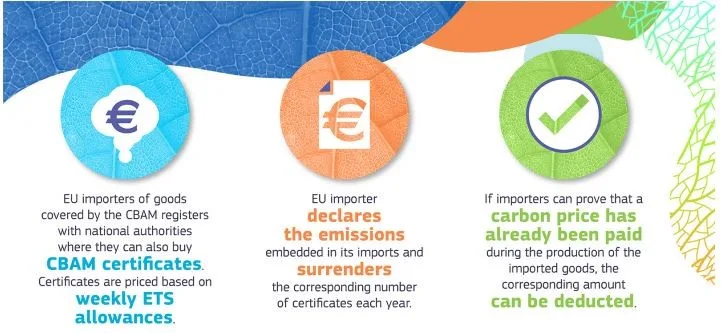
- The Carbon Border Adjustment Mechanism (CBAM) is a proposed carbon tax on imports into the European Union.
- It aims to equalize carbon costs between EU products and imports from countries with looser emission rules.
- CBAM will apply from January 1, 2026 on six sectors: steel, aluminium, cement, fertilizers, hydrogen, and electricity.
- It is linked to the EU’s Emission Trading System (ETS) to avoid “carbon leakage”.
Why BRICS Opposes CBAM
- Unfair Trade Barrier: BRICS nations argue CBAM is a disguised trade restriction and affects their export competitiveness.
- Hurts Developing Nations: India, China, and others see CBAM as harmful to their growth, even though they contribute far less historically to climate change.
- Impacts India’s Trade:
- Could affect 43% of Indian exports to the EU.
- Sectors like metals, chemicals, electronics, and vehicles are at risk.
- Indian metal exports worth over $8 billion could face a 20–35% tax.
Legal and Climate Concerns
- Violates Paris Agreement (2015): The Agreement protects developing countries from unfair burdens under climate measures.
- COP28 Dubai (2023) reaffirmed that climate actions must not be arbitrary or restrictive to global trade.
India’s Way Forward
- Global Collaboration: Align with other developing nations via G77, BASIC, and TTC to oppose unjust measures.
- Green Industry Boost: Invest in clean technology, carbon accounting, and energy-efficient processes.
- Carbon Market in India: Speed up creation of a domestic carbon market to set internal carbon prices.
- Support for Industry: Provide financial and tech support to sectors like steel and aluminium to help them adapt.
- Trade Negotiations: Use India–EU FTA talks to seek exemptions or phased CBAM implementation.
Conclusion:
India must protect its economic interests while working toward sustainable development, ensuring climate action does not become a tool for trade discrimination.
STARLINK GETS FINAL APPROVAL TO LAUNCH SATELLITE INTERNET IN INDIA
TOPIC: (GS3) SCIENCE AND TECHNOLOGY: INDIAN EXPRESS
India’s space regulator IN-SPACe has granted final clearance to Starlink, allowing it to offer satellite-based internet services in India.
This comes after a long wait since 2022 and marks a key move in privatizing India’s space sector.
About Starlink and its Approval
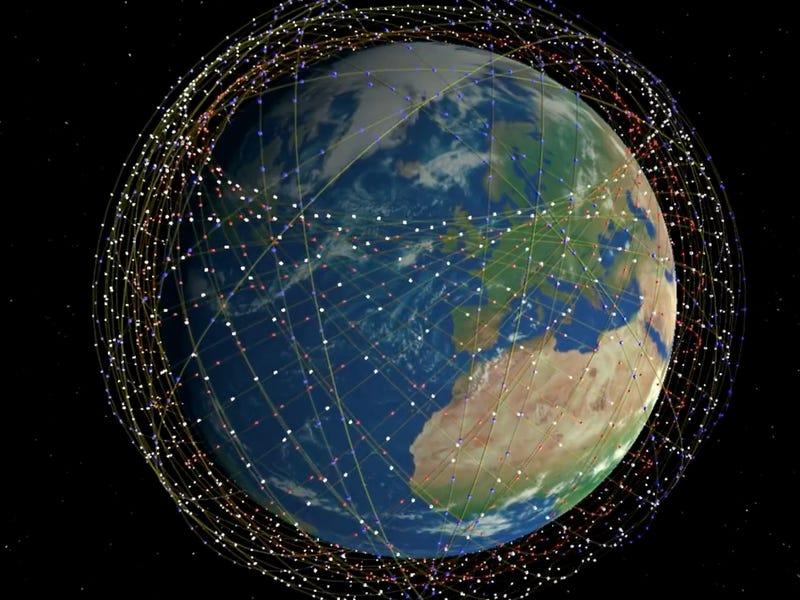
- Starlink, run by Elon Musk’s SpaceX, aims to provide high-speed satellite internet, especially in remote areas.
- It is now the third company after OneWeb and Reliance Jio to get India’s approval for satellite internet.
- The license is for Starlink’s Gen1 satellite network, valid till 2030.
- Next steps for Starlink:
- Get spectrum allocation from the government.
- Set up ground infrastructure.
- Undergo security and technical trials.
Regulatory Framework in India
Telecom and Spectrum Rules
- Governed by the Indian Telegraph Act, 1885 and Telecommunications Act, 2023.
- Starlink needs to follow rules on spectrum use, security, and fair pricing.
- TRAI (Telecom Regulatory Authority of India) gives recommendations on spectrum and license conditions.
Space and Data Regulations
- IN-SPACe ensures private players don’t interfere with ISRO missions and follow national space goals.
- Cybersecurity is managed under the IT Act, 2000.
- Data protection is guided by the Digital Personal Data Protection Act, 2023, including rules on encryption and data storage.
Significance of Privatizing Space Services
- Cost Efficient: Companies like SpaceX use reusable rockets, reducing launch costs.
- Faster and Leaner Operations: Private firms make quick decisions with small, expert teams.
- Jobs and Innovation: Encourages local employment, supports tech start-ups, and builds self-reliant space capabilities.
Government Initiatives to Boost the Sector
- Space Sector Reforms (2020): Opened the door for private participation.
- Indian Space Policy, 2023: Ensures equal opportunities for private firms.
- Vision 2047: Targets Indian space station by 2035, Moon landing by 2040, and missions to Venus and the Moon.
- Rs. 1000 crore VC Fund: For startups via IN-SPACe.
- SpIN Program: Promotes innovation by connecting startups and government.
- 100% FDI now allowed in the space sector.
Way Forward
- Early coordination between companies and regulators is key to success.
- Security compliance like data localisation and encryption is critical.
- Starlink’s entry could help bridge India’s digital divide, especially in rural and remote areas, pushing digital inclusion.
Conclusion:
Starlink’s approval is a major step in opening India’s space and digital sectors, balancing innovation with security and regulation.
DR. SYAMA PRASAD MOOKERJEE
TOPIC: (GS1) HISTORY: PIB
The Ministry of Culture has announced a two-year-long official commemoration to mark the 125th birth anniversary of Dr. Syama Prasad Mookerjee. He is remembered for his contribution to education, politics, and cultural nationalism.
Early Life and Education
- Initially associated with the Indian National Congress, later joined Hindu Mahasabha in the 1930s.
- Became the youngest Vice-Chancellor of Calcutta University in 1934 at the age of 33.
Political Career
- Served as Finance Minister of Bengal (1941–42) in Fazlul Haq’s ministry.
- Started an English daily named ‘Nationalist’ in 1944.
- Presided over the Bilaspur session of the All India Hindu Mahasabha.
- Met M.A. Jinnah to discuss Hindu-Muslim issues before Partition.
- Opposed the Muslim League and strongly rejected the idea of Partition.
Post-Independence Role
- Joined India’s first cabinet as Minister for Industry and Supply (1947–50), but later resigned due to policy disagreements.
- In 1951, founded the Bharatiya Jana Sangh, which later evolved into the Bharatiya Janata Party (BJP).
- Promoted national unity, cultural pride, and economic independence.
Legacy and Recognition
- Remembered as a nationalist leader, visionary educationist, and proponent of Indian unity.
- The Syama Prasad Mookerjee Port in Kolkata and many institutions are named after him to honour his contributions.
Conclusion:
Dr. Mookerjee played a vital role in shaping modern Indian political thought, leaving a legacy rooted in nationalism, education, and unity.
