Daily-Current-affairs-13-March-2026

Daily Current Affairs 13-March-2026

Share this Post

INDIA CO-SPONSORS RESOLUTION AT THE UNITED NATIONS SECURITY COUNCIL (UNSC) AGAINST IRAN

TOPIC: (GS2) INTERNATIONAL RELATIONS: THE HINDU

Why in News?

India recently co-sponsored a resolution at the United Nations Security Council (UNSC) demanding the immediate cessation of attacks by Iran on Gulf Cooperation Council (GCC) countries.

About the UNSC Resolution

  • The resolution called for the immediate halt of attacks allegedly carried out by Iran against GCC nations such as Saudi Arabia, Bahrain, Kuwait, Qatar, Oman and the UAE.
  • It condemned any attempts to obstruct maritime movement through the Strait of Hormuz, a crucial global energy corridor.
  • The proposal was supported by a large majority of UN members, while Russia and China abstained during voting in the Security Council.
  • The resolution emphasised protection of civilians and safeguarding international shipping routes.

India’s Position and Rationale

India clarified that its support reflects several strategic concerns:

1. Safety of Indian Diaspora

  • Around 8–9 million Indians live and work in the Gulf region.
  • Their security and welfare are a key priority in India’s foreign policy.

2. Energy Security

  • India imports a significant share of its crude oil and liquefied petroleum gas (LPG) from West Asian countries.
  • Stability in the Gulf region is essential for India’s energy supply chains and economic stability.

3. Protection of Maritime Trade

  • The Strait of Hormuz carries nearly one-fifth of global oil trade.
  • Any disruption may affect international shipping and global energy prices, impacting India directly.

4. Commitment to Civilian Protection

  • India has repeatedly stressed the need to protect civilians and prevent humanitarian crises during conflicts.

Strategic Concerns for India

1. Balancing Relations in West Asia

  • India maintains friendly relations with Iran, Israel, the Gulf states and the United States simultaneously.
  • Supporting such resolutions may sometimes appear tilted toward one side, creating diplomatic sensitivities.

2. Iran’s Strategic Importance

  • Iran is important for India because of:
    • Connectivity projects such as Chabahar Port.
    • Access to Central Asia and Afghanistan.
    • Historical energy cooperation.

3. Geopolitical Rivalries

  • The West Asia region is marked by rivalry between Iran and several Arab states, along with U.S.–Iran tensions.
  • These dynamics complicate India’s effort to maintain strategic autonomy.

Role of the United Nations Security Council

The UNSC is the principal organ responsible for maintaining international peace and security.

  • It has 15 members:
    • 5 Permanent Members (P5): United States, Russia, China, United Kingdom, France.
    • 10 Non-Permanent Members elected for two-year terms.
  • The Council can pass binding resolutions, impose sanctions, or authorise peacekeeping operations.

Challenges for India

  • Diplomatic balancing between Iran, Israel, and Arab nations.
  • Ensuring energy security while managing geopolitical pressures.
  • Avoiding perception of alignment with any single power bloc.
  • Protecting Indian citizens and trade routes in a conflict-prone region.

Way Forward

  • Continue pursuing balanced and pragmatic diplomacy in West Asia.
  • Strengthen energy diversification and strategic reserves to reduce vulnerability.
  • Promote dialogue, conflict de-escalation and multilateral diplomacy through global institutions.
  • Enhance maritime security cooperation in the Indian Ocean and Gulf region.

Conclusion

India’s support for the UNSC resolution reflects its concern for civilian safety, energy security, and stability in West Asia. Going forward, India must carefully maintain its strategic autonomy while balancing relations with all key regional actors.

U.S. INVESTIGATION INTO ALLEGED DISCRIMINATORY TRADE POLICIES AGAINST INDIA

TOPIC: (GS2) INTERNATIONAL RELATIONS: THE HINDU

Why in News?

The United States has initiated an investigation into India’s trade policies under Section 301 of the U.S. Trade Act of 1974, alleging that certain measures may be discriminatory or restrictive to American businesses.

What is Section 301 Investigation?

  • Section 301 of the U.S. Trade Act, 1974 authorizes the U.S. Trade Representative (USTR) to investigate foreign policies that may unfairly restrict U.S. commerce.
  • If such practices are confirmed, the U.S. government can impose retaliatory measures such as tariffs or trade restrictions.
  • This provision has previously been used in disputes with countries like China and the European Union.
  • The mechanism allows the U.S. to unilaterally respond to trade practices considered unfair.

Reasons Behind the U.S. Investigation

The investigation reportedly focuses on several areas where U.S. authorities believe India’s policies create trade disadvantages.

1. Industrial and Manufacturing Policies

  • The U.S. claims certain Indian policies provide support to domestic industries, potentially creating excess production capacity.
  • Sectors such as steel, petrochemicals, automobiles, and pharmaceuticals are under scrutiny.

2. Tariff and Market Access Issues

  • Concerns exist over high import duties on certain goods, which the U.S. believes restricts American exports.
  • India has traditionally maintained protective tariffs in some sectors to support domestic manufacturing.

3. Regulatory and Subsidy Concerns

  • Allegations include state support to industries and regulatory frameworks that could affect foreign companies’ competitiveness.

4. Trade Imbalance and Policy Differences

  • The U.S. periodically raises issues regarding trade deficits, regulatory barriers, and intellectual property concerns in partner economies.

India–U.S. Trade Relations

  • The United States is one of India’s largest trading partners.
  • Bilateral trade in goods and services crossed approximately $190–200 billion in 2024–25.
  • Key Indian exports to the U.S. include:
    • Pharmaceuticals
    • Engineering goods
    • IT services
    • Textiles and apparel
  • Major imports from the U.S. include:
    • Crude oil and LNG
    • Aircraft and defence equipment
    • Technology products

Implications for India

1. Possible Tariff Actions

  • If the investigation concludes negatively, the U.S. may reimpose tariffs or introduce new trade restrictions.

2. Impact on Indian Exports

  • Sectors such as engineering goods, textiles, chemicals, and auto components could face uncertainty.

3. Effect on Strategic Partnership

  • Trade disputes may create frictions in the broader India–U.S. strategic partnership, although cooperation continues in defence, technology, and Indo-Pacific security.

4. Supply Chain Dynamics

  • Global supply chains are already adjusting due to geopolitical tensions and protectionist policies, which may amplify the impact.

India’s Policy Perspective

India generally defends its policies by highlighting:

  • The need to protect domestic industries and employment.
  • The importance of industrial policy to build manufacturing capacity.
  • Alignment with initiatives such as Make in India and Production Linked Incentive (PLI) schemes aimed at boosting competitiveness.

Way Forward

  • Strengthen trade dialogue mechanisms between India and the United States.
  • Address disputes through World Trade Organization (WTO) frameworks and bilateral negotiations.
  • Promote mutual market access and regulatory transparency.
  • Diversify export markets to reduce dependence on any single trading partner.

Conclusion

The U.S. investigation highlights growing tensions in global trade as countries protect domestic industries. India must balance industrial development goals with open trade commitments while maintaining strong economic relations with the United States.

VIKSHIT BHARAT SHIKSHA ADHISHTHAN (VBSA) BILL AND HIGHER EDUCATION REFORMS

TOPIC: (GS2) GOVERNANCE: THE HINDU

Why in News?

The University Grants Commission (UGC) and All India Council for Technical Education (AICTE) recently supported the Vikshit Bharat Shiksha Adhishthan (VBSA) Bill, 2025 before a Joint Parliamentary Committee.

Key Provisions of the VBSA Bill

The VBSA Bill proposes major structural reforms in higher education governance.

1. Creation of a Single Umbrella Body

  • Establishment of Vikshit Bharat Shiksha Adhishthan (VBSA) as the central regulatory authority.
  • It will replace existing regulators such as UGC, AICTE, and NCTE.

2. Consolidation of Regulatory Functions

  • The new body will oversee:
    • Regulation
    • Accreditation
    • Standard setting
    • Funding and institutional development

3. Unified Regulatory Framework

  • VBSA aims to create a simplified governance structure for universities and colleges.
  • Institutions will deal with one regulator instead of multiple agencies.

4. Alignment with National Education Policy (NEP) 2020

  • The reform aligns with the NEP 2020 vision of reducing regulatory fragmentation.
  • NEP had proposed establishing the Higher Education Commission of India (HECI) with different verticals.

Objectives of the Bill

The legislation intends to achieve several policy goals:

  • Simplification of the higher education regulatory environment.
  • Improving transparency and accountability in institutions.
  • Encouraging academic innovation and interdisciplinary education.
  • Reducing bureaucratic delays and compliance burdens.
  • Strengthening quality assurance and accreditation systems.

Current Higher Education Regulatory Structure

India currently has multiple regulatory bodies responsible for different aspects of higher education:

  • UGC (University Grants Commission) – regulates universities and maintains academic standards.
  • AICTE (All India Council for Technical Education) – supervises technical and professional education institutions.
  • NCTE (National Council for Teacher Education) – regulates teacher training programmes.
  • Other sectoral regulators exist for fields like architecture, medicine, and law.

Concerns and Criticisms

1. Centralization of Power

  • Critics argue that a single authority may lead to excessive concentration of regulatory control.

2. Impact on Institutional Autonomy

  • Universities fear that strong central oversight may limit academic independence.

3. Federalism Issues

  • Education falls under the Concurrent List, meaning both Union and State governments share responsibilities.
  • Some states worry about reduced role in higher education governance.

4. Implementation Challenges

  • Transitioning from multiple bodies to a single regulator may create administrative complexities during the initial phase.

Significance for India’s Education System

If implemented effectively, the reform could:

  • Improve coordination in higher education governance.
  • Promote global competitiveness of Indian universities.
  • Enhance quality assurance and academic standards.
  • Facilitate ease of doing research and innovation in institutions.

India currently has over 1,100 universities and more than 40,000 colleges, making efficient regulation crucial for maintaining quality and accessibility.

Way Forward

  • Ensure balanced regulation that protects academic autonomy.
  • Provide clear institutional roles within the new regulatory framework.
  • Strengthen consultation with states and educational institutions.
  • Implement reforms gradually to ensure smooth transition from existing bodies.

Conclusion

The VBSA Bill represents a major attempt to modernize India’s higher education governance by reducing regulatory fragmentation. Its success will depend on maintaining institutional autonomy while ensuring strong standards and transparent regulation.

STRAIT OF HORMUZ AND SAFETY OF INDIAN SHIPPING IN WEST ASIA

TOPIC: (GS2) INTERNATIONAL RELATIONS: THE HINDU

Why in News?

The Government of India recently stated that reports claiming Iran allowed Indian ships to safely pass through the Strait of Hormuz are premature.

What is the Strait of Hormuz?

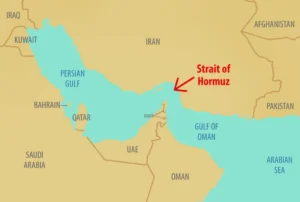
The Strait of Hormuz is a narrow waterway located between Iran in the north and Oman and the United Arab Emirates in the south.

  • It connects the Persian Gulf with the Arabian Sea through the Gulf of Oman.
  • Nearly one-fifth of the world’s petroleum trade passes through this strait, making it a critical global energy route.
  • Major oil-exporting countries that rely on this route include Saudi Arabia, Iraq, Kuwait, Qatar, and the UAE.

Geographical Importance

  • Narrowest width: about 33 km.
  • Shipping lanes in each direction are only around 3 km wide.
  • It acts as a strategic chokepoint for global maritime trade and energy security.
  Strait of Hormuz & Safety of Indian Shipping in West Asia                                 

Recent Developments in the Region

1. Rising Maritime Security Threats

  • Cargo ships and oil tankers in the Persian Gulf and nearby waters have faced missile, drone, and boat attacks.
  • Several incidents have involved commercial vessels linked to multiple countries.

2. Impact on Indian Shipping

  • Indian cargo ships and sailors operate extensively in the Gulf region.
  • Some Indian sailors have been killed or injured in recent attacks on vessels, highlighting the risks faced by seafarers.

3. Diplomatic Engagement

  • India has held discussions with Iranian authorities regarding the safety of Indian ships and crew members.
  • However, the government clarified that claims of special permission or safe passage are not yet confirmed.

Importance of the Strait of Hormuz for India

1. Energy Security

  • India imports more than 80% of its crude oil needs, with a large portion coming from West Asian countries.
  • A significant share of these shipments passes through the Strait of Hormuz.

2. Trade Connectivity

  • The route is crucial for India’s maritime trade with West Asia and Europe.
  • Any disruption could lead to increased shipping costs and supply chain disturbances.

3. Safety of Indian Diaspora

  • Millions of Indians live and work in Gulf countries, making regional stability extremely important for India.

Challenges for India

  • Escalating geopolitical tensions between regional and global powers.
  • Increasing militarization of maritime routes.
  • Threats to commercial shipping and seafarers.
  • Potential rise in global oil prices due to supply disruptions.

India’s Response and Measures

  • Continuous diplomatic engagement with regional countries.
  • Monitoring the security situation through the Ministry of External Affairs and maritime authorities.
  • Strengthening naval presence and maritime surveillance in the Indian Ocean region.
  • Advising Indian shipping companies to exercise caution while operating in conflict-prone waters.

Way Forward

  • Promote dialogue and de-escalation among regional powers in West Asia.
  • Enhance maritime security cooperation and naval coordination in the region.
  • Diversify energy import sources to reduce vulnerability to geopolitical disruptions.
  • Strengthen international maritime safety mechanisms to protect commercial vessels.

Conclusion

The Strait of Hormuz remains a critical artery for global energy trade and India’s economic interests.
Ensuring maritime security, diplomatic engagement, and energy diversification will be essential for safeguarding India’s strategic interests in the region.

HUMAN–ELEPHANT CONFLICT AND COMMUNITY GROUPS IN INDIA

TOPIC: (GS3) ENVIRONMENT: INDIAN EXPRESS

Why in News?

Recent reports suggest that community groups formed to prevent human–elephant conflict may unintentionally be linked with increased elephant deaths in certain regions.

Human–Elephant Conflict (HEC)

Human–elephant conflict occurs when human activities and elephant habitats overlap, leading to encounters that harm people, crops, or animals.

Major Features

  • Elephants frequently enter agricultural lands in search of food, especially crops like rice, maize, and sugarcane.
  • Villagers attempt to drive them away using noise, fire, or barriers, which can escalate confrontation.
  • Both human casualties and elephant deaths result from such interactions.

Scale of the Problem

  • On average, 400–500 people die annually in India due to elephant encounters.
  • In 2023 alone, around 628 human deaths were reported, showing an increasing trend.
  • Over the past five years, more than 2,800 human deaths have occurred due to elephant attacks.
  • Around 100 elephants also die each year due to conflict with humans, including electrocution, poisoning, or accidents.
  Elephant Reserves in India                          

Role of Community-Based Conflict Prevention Groups

To reduce conflicts, forest departments often establish village-level monitoring groups.

Functions

  • Tracking elephant movement near villages.
  • Alerting residents through sirens, mobile messages, or patrol teams.
  • Assisting forest officials in driving elephants back into forests.
  • Protecting crops and minimizing damage.

Expected Benefits

  • Reduced human fatalities and crop losses.
  • Increased community participation in wildlife conservation.
  • Better information sharing between villagers and forest officials.

Concerns Raised by Recent Studies

New research indicates that some conflict-prevention activities may have unintended ecological consequences.

1. Increased Stress on Elephants

  • Frequent chasing or harassment by organized groups may disturb elephant herds.
  • Stress can lead to panic movements, injuries, or separation of calves.

2. Higher Risk of Accidental Deaths

  • Elephants forced into unfamiliar areas may encounter electric fences, railway tracks, or highways, increasing mortality.

3. Escalation of Aggressive Behaviour

  • Repeated disturbance can make elephants more aggressive toward humans, worsening the conflict cycle.

4. Ecological Imbalance

  • Interference with elephant movement may disrupt natural migration routes and corridors.

Major Causes of Human–Elephant Conflict in India

  1. Habitat Loss and Fragmentation: Expansion of agriculture, infrastructure, and mining reduces elephant habitats.
  2. Shrinking Elephant Corridors: Many traditional migration corridors have been blocked by roads, railways, and settlements.
  3. Attractive Crops Near Forest Edges: Crops such as sugarcane and rice provide high energy food, attracting elephants.
  4. Climate and Environmental Changes: Drought and seasonal food shortages force elephants to move into human-dominated landscapes.

Government Initiatives

1. Project Elephant (1992): Launched to protect elephants, conserve habitats, and secure migration corridors.

2. Elephant Corridors: Identification and protection of over 100 elephant corridors across India.
3. Early Warning Systems: Use of SMS alerts, sensors, drones, and tracking technologies to warn communities.

4. Compensation Schemes: Financial assistance for crop loss, property damage, and human casualties.

Way Forward

  • Promote science-based conflict management strategies rather than aggressive driving methods.
  • Restore and protect elephant corridors and forest habitats.
  • Encourage community awareness and coexistence approaches.
  • Use technology such as GPS tracking, AI monitoring, and early warning systems to reduce conflict.
  • Strengthen coordination between forest departments, local communities, and conservation groups.

Conclusion

Human–elephant conflict is a serious conservation and social challenge in India, affecting both people and wildlife. Effective solutions must balance community safety with ecological conservation, ensuring peaceful coexistence between humans and elephants.

DISCOVERY OF NEW LICHEN MOTH SPECIES

TOPIC: (GS3) ENVIRONMENT: TIMES OF INDIA

Why in News?

Scientists from the Zoological Survey of India (ZSI) recently identified two new lichen moth species — Caulocera hollowayi and Asura buxa from the Eastern Himalayan region.
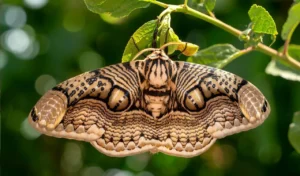
New Lichen Moth Species                                    

About the Newly Discovered Species

1. Caulocera hollowayi

  • Identified from specimens collected near Golitar in Sikkim.
  • Distinguished by unique wing patterns, colour bands, and microscopic morphological features.
  • These features differentiate it from other moths within the genus Caulocera.

2. Asura buxa

  • Discovered from Panijhora region in West Bengal.
  • Recognized by its distinct wing colouration and internal anatomical structures.
  • Taxonomic analysis confirmed it as a previously undocumented species within the genus Asura.

About Lichen Moths

  • Lichen moths belong to the family Erebidae within the order Lepidoptera.
  • Their larvae feed primarily on lichens, which grow on rocks, trees, and soil surfaces.
  • They are typically found in moist forest ecosystems, especially in mountainous regions.

Ecological Role

  • Lichens are highly sensitive to air pollution, making lichen moths important bio-indicators.
  • Their presence indicates healthy ecosystems with clean air.
  • Declining populations may signal environmental degradation or pollution.

KAMAKHYA TEMPLE

TOPIC: (GS1) HISTORY: THE HINDU

Why in News?

The South Central Railway introduced an Amrit Bharat Express connecting Assam with Telugu-speaking states, improving connectivity for pilgrims visiting the Kamakhya Temple.
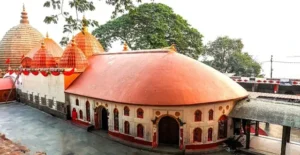
Kamakhya Temple                             

Location and Historical Background

Geographical Location

  • Situated on Nilachal Hill near the Brahmaputra River in Guwahati, Assam.

Historical Evolution

  • The original temple structure was destroyed during medieval invasions by Kala Pahar.
  • It was rebuilt in 1565 by Chilarai of the Koch dynasty.
  • Over time, the temple evolved into an important pilgrimage site in northeastern India.

Religious Significance

1. Shakti Peetha

  • Kamakhya Temple is believed to be the place where the reproductive organ of Goddess Sati fell according to mythology.
  • Hence, it is considered one of the 51 Shakti Peethas.

2. Centre of Tantric Worship

  • The temple is a major hub of Tantric rituals and spiritual practices.
  • It symbolizes the creative power of feminine energy (Shakti).

3. Ambubachi Mela

  • A famous annual festival celebrating the symbolic menstruation of Goddess Kamakhya.
  • The temple remains closed for three days, symbolising the goddess’s menstrual cycle.

Architectural Features

Nilachala Style

  • The temple displays a unique blend of Nagara (North Indian) and Mughal architectural elements.

Structural Characteristics

  • The main dome resembles a beehive-shaped structure.
  • The temple complex consists of five major chambers:
    • Garbhagriha (sanctum)
    • Antarala (vestibule)
    • Jaganmohan (assembly hall)
    • Bhogmandir (ritual chamber)
    • Natmandir (dance and music hall)

Cultural and Tourism Importance

  • The temple is one of the most visited pilgrimage centres in Northeast India.
  • It promotes religious tourism and regional economic development.
  • The site also reflects the syncretic cultural traditions of Assam.

KURUMBA PAINTING

TOPIC: (GS1) ART AND CULTURE: INDIAN EXPRESS

Why in News?

The traditional Kurumba painting art of the Nilgiris is facing the risk of extinction due to a decline in practicing artists.
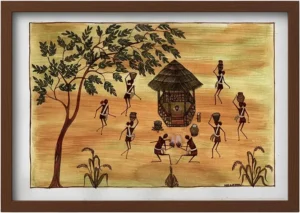
Kurumba Painting Art                            

Origins and Historical Background

  • The art form has roots dating back more than 3,000 years.
  • It is believed to be connected to prehistoric rock art found at sites like Ezhuthupaarai in the Nilgiris.
  • Traditionally, these paintings were created on walls of houses and temples during festivals or ceremonies.

Characteristics of Kurumba Paintings

1. Themes

  • Depict tribal rituals and ceremonies.
  • Illustrate forest life, animals, honey collection, and nature.
  • Represent daily activities of the Kurumba community.

2. Artistic Style

  • Simple linear figures and geometric patterns.
  • Extensive use of dots, lines, and minimalistic motifs.

3. Natural Colours

  • Artists prepare pigments from natural sources such as tree resin, charcoal, and forest minerals.

Cultural Importance

  • Tribal Identity: Kurumba paintings reflect the cultural traditions and spiritual beliefs of the tribe.
  • Indigenous Knowledge: The artwork showcases traditional ecological knowledge and forest-based lifestyle.
  • Heritage Preservation: Such art forms contribute to India’s diverse cultural heritage.

Threats to the Art Form

  • Declining number of practicing artists.
  • Modern lifestyle changes and reduced interest among younger generations.
  • Limited institutional support and market opportunities.

Steps for Preservation

  • Promote documentation and research on tribal art traditions.
  • Provide government support through tribal welfare and handicraft schemes.
  • Encourage cultural tourism and exhibitions.
  • Introduce art education programs for tribal youth.

Write a Review

Your email address will not be published. Required fields are marked *