
DISAPPEARANCE OF FOREST RIGHTS TITLES IN CHHATTISGARH
TOPIC: (GS2) INDIAN POLITY: THE HINDU
Recent RTI findings show that thousands of forest rights titles in multiple districts of Chhattisgarh have gone missing from official records over the past 17 months. This has raised questions as the Forest Rights Act, 2006 does not provide for withdrawal of granted titles.
Forest Rights Act (FRA), 2006
Purpose of the Act
- To recognise and give legal rights to forest-dwelling Scheduled Tribes (STs) and Other Traditional Forest Dwellers (OTFDs) over forest land and resources they have been using for generations.
Why it was made
- Historically, forest communities were treated as encroachers due to colonial forest laws.
- This Act aimed to correct that injustice and secure their livelihood, culture, and habitat.
Who gets benefits
- Scheduled Tribes (STs): Living in forest areas before 13 December 2005.
- Other Traditional Forest Dwellers (OTFDs): Living in forest areas for at least 75 years before the Act.
Main rights given
- Individual Rights: Right to live in and cultivate forest land up to a maximum of 4 hectares.
- Community Rights: Right to use forest products (like firewood, bamboo, fruits, medicinal plants).
- Rights over Community Forest Resources: Right to protect, regenerate, conserve, and manage forest resources.
- Habitat Rights: Especially for Particularly Vulnerable Tribal Groups (PVTGs).
Conditions and limits
- Land cannot be sold or transferred to non-tribals.
- Activities should be eco-friendly and not harm wildlife conservation laws.
Decision-making process
- Gram Sabha (village assembly) decides claims and recommends titles.
- Approved by higher committees at block and district levels.
Importance
- Strengthens tribal livelihood security.
- Promotes community-led forest conservation.
- Reduces conflict between forest authorities and locals.
Findings from RTI Data
- As of May 2025: 4.82 lakh IFR titles and 4,396 CFRR titles distributed across 30 districts.
- Chhattisgarh accounts for over 43% of the forest area under FRA titles in India.
Significant Reductions Noted
- Bastar district: IFR titles fell from 37,958 (Jan 2024) to 35,180 (May 2025).
- Rajnandgaon district: CFRR titles dropped from 40 to 20 in a month last year.
- Bijapur district: CFRR titles decreased from 299 (March 2024) to 297 (April 2024).
- Bastar IFR claims reduced by nearly 3,000 within the same period.
Slow Implementation in Certain Districts
- FRA not implemented in Raipur, Durg, and Bemetara.
- In recently de-notified Naxal-free districts, progress is slow — minimal new titles added in Dantewada and Mohla-Manpur.
Conclusion
The disappearance of forest rights titles in Chhattisgarh raises serious questions about record management and adherence to the FRA, 2006. With large forest-dependent populations relying on these rights, ensuring accuracy and transparency in the process is critical for protecting community livelihoods.
LIMITED GAINS FROM TEMPORARY FALL IN INFLATION
TOPIC: (GS3) ECONOMY: THE HINDU
Retail inflation in July 2025 fell to 1.55%, the lowest since June 2017, mainly due to a drop in food prices. While this offers short-term relief, concerns remain over India’s slowing economic growth.
Current Inflation Scenario
- July 2025 retail inflation: 1.55%, well below RBI’s comfort range of 2%-6%.
- Decline mainly driven by contraction in food prices.
- Low statistical base effect → indicates a genuine price fall, not just a data quirk.
- Core inflation (excluding food and fuel): 4.1%, matching RBI’s target.
Factors Behind the Decline
- Improved Agricultural Output: Better sowing due to favourable monsoon.
- Favourable Base Effect: Prices were already low in July 2024.
- Stable Oil Strategy: Continued purchase of cheaper Russian oil expected.
Outlook on Inflation
- Economists expect low inflation to continue in the short term.
- RBI projects inflation to rise again from January 2026.
- Risk factor: possible shift from Russian to Gulf oil, which is costlier.
Inflation’s effect on the economy:
- Reduces purchasing power – Prices rise, so the same amount of money buys fewer goods and services.
- Increases cost of living – Households spend more on essentials, leaving less for savings or non-essential items.
- Creates economic uncertainty – Businesses and consumers delay investments or spending because they’re unsure of future prices.
why a moderate inflation is needed for an economy:
- Encourages Spending & Investment – Moderate inflation motivates people and businesses to spend or invest money instead of hoarding it, which keeps the economy active.
- Supports Wage & Profit Growth – It allows wages and business profits to gradually rise, improving living standards and encouraging production.
- Prevents Deflation – A little inflation avoids the risk of falling prices, which can slow economic growth and increase unemployment.
Growth Concerns
- Industrial slowdown: IIP growth at 10-month low; weak capital & consumer goods demand.
- Revenue concerns: GST growth slowed to single digits; direct tax collections contracted.
- Consumption indicators: Car sales at 18-month low in June; UPI transactions fell in three months of 2025.
- US tariffs (25%) could reduce growth by 0.2 percentage points even if partially removed.
Conclusion
While the inflation drop offers temporary relief, structural challenges like weak demand, slow industrial activity, and trade risks persist. Without stronger growth momentum, low inflation alone will not secure economic stability.
RISE IN UNDOCUMENTED MIGRANTS LEAVING VIA EASTERN BORDER
TOPIC: (GS2) GOVERNANCE: THE HINDU
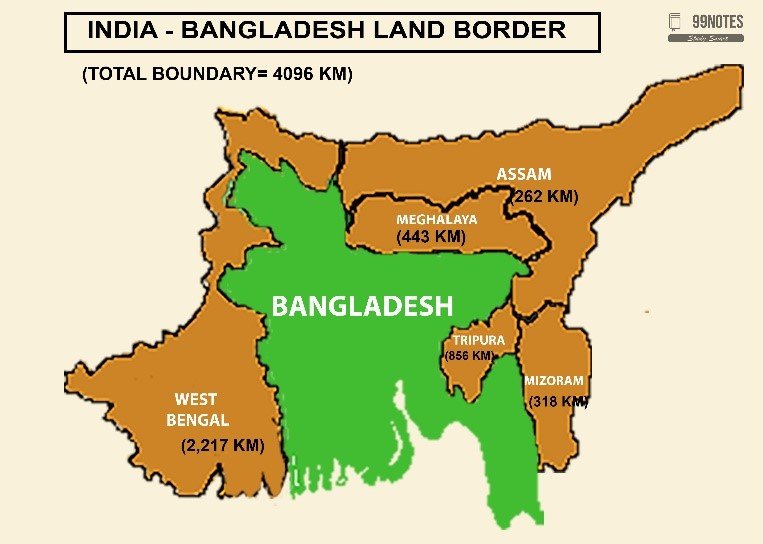
Government data show that the number of undocumented migrants, suspected to be from Bangladesh, voluntarily leaving India through the eastern border in 2025 has more than tripled compared to 2024, following political changes in Bangladesh.
Reasons for Increase
- Political Changes in Bangladesh: Regime change on August 5, 2024, led to more migrants voluntarily returning.
- Government Pushback Measures: MHA directed police to identify and deport illegal Bangladeshi migrants. Pushback intensified after the April 2025 Pahalgam terror attack.
Pushback vs. Deportation
- Pushback: Sending people across the border without legal deportation procedures; not defined in law.
- Estimates suggest around 2,500 people pushed back in recent months.
- Trinamool Congress alleges illegal pushbacks by BSF; BSF denies the claim.
BSF Role and Vigilance
- BSF guards the 4,096 km India-Bangladesh border.
- Post-August 2024: heightened checks; strict orders to allow only those with valid documents.
- Increased outflow mainly voluntary departures.
Reasons for the influx of illegal migrants from Bangladesh:
- Porous Border – The India–Bangladesh border is long (over 4,000 km) and difficult to fully secure, making illegal crossing easier.
- Poverty & Unemployment – Limited work opportunities in rural Bangladesh push people to cross over for survival.
- Overpopulation – Bangladesh is densely populated, leading to land and resource scarcity.
- Ethnic & Cultural Links – Communities living near the border share similar language and culture, making migration socially easier.
- Smuggling Networks – Organised human trafficking and smuggling rackets encourage and facilitate illegal migration.
Measures the Government is taking to remove illegal migrants from India:
- Border Control & Fencing – Strengthening security at borders (especially with Bangladesh and Myanmar) using fencing, floodlights, and patrols to stop illegal entry.
- Identification Drives – Conducting surveys, using the National Register of Citizens (NRC) and Aadhaar verification to identify illegal migrants.
- Deportation & Agreements – Sending identified illegal migrants back to their countries through diplomatic agreements and legal procedures.
NRC (NATIONAL REGISTER OF CITIZENS)
NRC is an official record that contains the names of all legal citizens of India. To identify genuine citizens and detect illegal migrants living in India.
- First Implementation – Prepared only for Assam, as per the Assam Accord of 1985.
- Basis of Inclusion – People had to prove that they or their ancestors were living in Assam before 24 March 1971 (the cut-off date).
- Process – Applicants submitted documents like birth certificates, land records, voter lists, and school certificates to prove citizenship.
- Final NRC in Assam – Published in August 2019, excluding about 19 lakh people who couldn’t prove eligibility.
- Controversy – Criticized for possible errors, exclusion of genuine citizens, and fear among communities.
- National Level Plan – The government has spoken about extending NRC to the entire country, but it has not been implemented nationwide yet.
Conclusion
The sharp rise in voluntary exits highlights how political shifts in neighbouring countries and India’s security measures influence cross-border migration trends. It also raises legal and humanitarian concerns over the use of “pushback” methods.
THE 1950 GREAT ASSAM EARTHQUAKE, LESSONS FOR THE FUTURE
TOPIC: (GS3) DISASTER MANAGEMENT: THE HINDU
The 75th anniversary of the 1950 Great Assam Earthquake (magnitude 8.6) is a reminder of the high seismic risk in Northeast India, one of the most earthquake-prone regions in the world. Scientists warn a similar event is possible in the future.
Background
- On August 15, 1950, a powerful 8.6 magnitude earthquake struck — the strongest ever recorded on land.
- Its epicentre was near Rima (Zayu) in the Mishmi Hills, along the India–Tibet border, about 15 km deep.
- It occurred in the Eastern Himalayan Syntaxis, where the Indian Plate collides with the Eurasian Plate.
What is an earthquake?
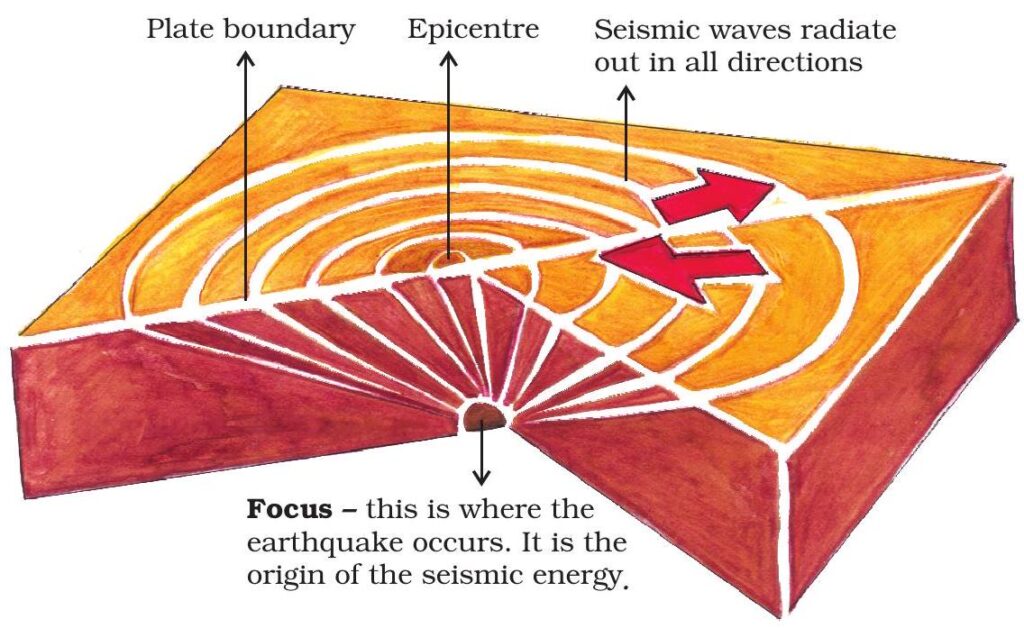
- An earthquake is a sudden shaking or vibration of the Earth’s surface.
- It happens when energy stored inside the Earth is suddenly released.
- This release of energy occurs due to movement of rocks along cracks called faults.
- The point inside the Earth where it starts is called the focus.
- The place directly above it on the surface is called the epicentre.
- The energy travels in the form of seismic waves.
- These waves make the ground shake, sometimes causing damage to buildings, roads, and lives.
Magnitude of an Earthquake
- Measures the energy released at the earthquake’s source.
- Same value no matter where you measure it.
- Calculated using seismographs.
- Common scale: Richter Scale or Moment Magnitude Scale (Mw).
- Example: A magnitude 6.0 earthquake releases far more energy than a 5.0.
Intensity of an Earthquake
- Measures the effects or damage caused at a specific location.
- Varies from place to place (closer areas feel stronger effects).
- Described using the Modified Mercalli Intensity (MMI) scale.
- Based on what people felt and the damage observed.
- Example: The same earthquake may have high intensity near the epicenter and low intensity far away.
Impact of the 1950 Quake
- Felt over 3 million sq. km (India, Myanmar, Bangladesh, Tibet, South China).
- Casualties: India: ~1,500 deaths. Tibet: ~4,000 deaths. Livestock loss: 50,000–1,00,000 cattle.
- Destruction: Rail tracks twisted, bridges collapsed, homes destroyed. Hills sheared; landslides blocked rivers causing flash floods later.
Fault
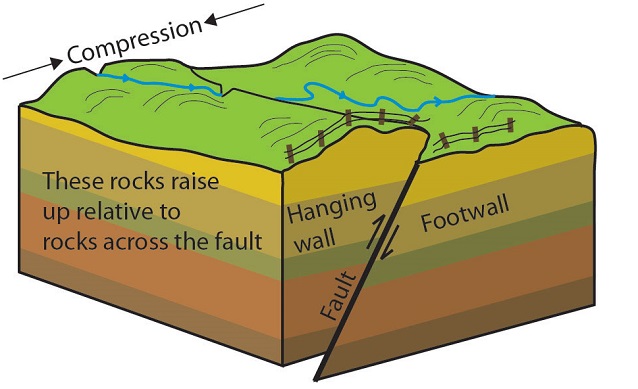
- A fault is a fracture or crack in the Earth’s crust along which movement has taken place.
- It happens due to tensional or compressional forces inside the Earth.
- Rocks on either side of the fault shift their position relative to each other.
- Faults can be vertical, horizontal, or inclined.
- Example: San Andreas Fault in California.
Historical Earthquake Record
- Big earthquakes in the Northeast were recorded in 1548, 1596, and 1697 AD.
- Geological studies show a massive medieval earthquake happened sometime between 1262 and 1635 AD.
Future Earthquake Risks
- High Seismic Potential: Himalayan arc capable of magnitude ≥8.6 events.
- Central Himalayas identified as the most active segment currently.
- Increased Vulnerability: Population growth and urbanisation since 1950. Large infrastructure projects (e.g., dams, hydropower plants) in fragile zones.
Conclusion
The 1950 Great Assam Earthquake reminds us that Northeast India remains highly vulnerable to massive quakes. Strengthening infrastructure safety and disaster preparedness is crucial to reduce future risks.
RBI’S 7 SUTRAS FOR ETHICAL AI ADOPTION IN FINANCIAL SECTOR
TOPIC: (GS3) ECONOMY: THE HINDU
The RBI-appointed committee on the Framework for Responsible and Ethical Enablement of Artificial Intelligence (FREE-AI) has released its report suggesting seven guiding principles (“sutras”) and 26 recommendations for responsible AI adoption in India’s financial sector.
Background
- Committee Purpose: To frame guidelines for safe, fair, and innovation-friendly AI usage in banking, NBFCs, and other regulated entities (REs).
- Objective: Balance innovation with risk management in AI applications in finance.
The Seven Sutras (Core Principles)
- Trust is the Foundation – AI must inspire public confidence.
- People First – Human interest and welfare take priority.
- Innovation over Restraint – Encourage responsible innovation.
- Fairness and Equity – Prevent bias and discrimination.
- Accountability – Clear responsibility for AI-driven decisions.
- Understandable by Design – AI systems should be transparent and explainable.
- Safety, Resilience, Sustainability – Systems must be secure, adaptable, and long-lasting.
Innovation Enablement
- Infrastructure: Shared infrastructure for data and computing resources. AI Innovation Sandbox for experimentation.
- Policy: Clear guidelines on AI usage in finance. Incentives for AI-driven financial inclusion.
- Capacity: Upskilling workforce in AI and data ethics.
Risk Mitigation
- Governance: Board-approved AI policies for all REs. Expanded product approval processes to include AI checks.
- Protection: Consumer protection measures specific to AI usage. Address AI bias, privacy concerns, and misinformation risks.
- Assurance AI audits, stronger cybersecurity practices, and improved incident reporting systems.
Advantages of Integrating AI in the Financial Sector
- Improved Efficiency – Automates routine banking operations, reducing time and costs.
- Better Risk Management – Detects fraud patterns and credit risks faster with advanced analytics.
- Enhanced Customer Service – Offers personalised financial advice and 24/7 chatbot assistance.
- Financial Inclusion – Expands access to banking services for underserved populations.
Challenges of Integrating AI in the Financial Sector
- Data Privacy Risks – Sensitive customer data can be misused or exposed in cyberattacks.
- Bias in AI Models – Discrimination may occur if AI is trained on biased datasets.
- Lack of Explainability – Complex AI algorithms can make decision-making unclear to customers and regulators.
- High Implementation Cost – Advanced AI systems require significant investment in technology and skilled manpower.
Conclusion
AI can revolutionise India’s financial sector by making it smarter, faster, and more inclusive, but ethical safeguards are essential. Balancing innovation with strong governance will be the key to long-term trust and success.
EXPANSION OF SC/ST AND OBC SCHOLARSHIPS
TOPIC: (GS2) INDIAN POLITY: THE HINDU
The Union Government is considering raising the parental income limit for SC, ST, OBC, EBC, and DNT scholarships to increase coverage, following a steep decline in beneficiaries in recent years.
Background
- Pre-matric and post-matric scholarships are centrally sponsored schemes for students from marginalised communities.
- Funding pattern: 60:40 (Centre: States); 90:10 for Northeastern states.
- Current income ceiling: ₹2.5 lakh annual parental income for eligibility.
- Fall in beneficiary numbers in recent years has raised concerns about accessibility.
Proposed Change
- Ministry of Tribal Affairs: proposal to raise the limit for ST students to ₹4.5 lakh (both pre- and post-matric).
- Ministry of Social Justice: discussions on revising limits for SC, OBC, and DNT scholarships.
- Possible inclusion of OBC pre-matric scholarships from Class V onwards instead of only Class IX and X.
Eligibility Criteria (Current)
- Post-Matric: Indian national, studying beyond Class X.
- Pre-Matric:
- SC: Class I–X (limited to children of parents in unclean/hazardous jobs).
- ST/OBC: Generally, Class IX–X.
- Parental Annual Income: ≤ ₹2.5 lakh.
Funding Allocation (2025–26)
- Social Justice Ministry: ₹13,611 crore — 66.7% for scholarships.
- Tribal Affairs Ministry: ₹14,925.81 crore — 18.6% for ST scholarships.
Parliamentary Recommendations
- OBC Panel: Double the income ceiling for both scholarship types. Extend OBC pre-matric scholarships to Class V.
- Joint Panel: Raise parental income limit for ST scholarships.
- Reasoning: Present limits exclude many deserving students.
Importance of Scholarships
- Reduces financial barriers for marginalised students.
- Encourages continuation of education beyond basic levels.
- Promotes social equity and inclusive development.
- Supports skill-building and economic upliftment of disadvantaged groups.
Challenges in Reaching Beneficiaries
- Lack of awareness among eligible families.
- Complicated application process and online access barriers.
- Delayed disbursement of funds.
- Errors in caste/income verification.
- Exclusion due to low-income ceilings not matching rising living costs.
Conclusion
Raising the income ceiling for scholarships is vital to reverse declining coverage and ensure equal educational opportunities. It will strengthen India’s commitment to inclusive growth by supporting the education of marginalised communities.
INDIA’S MILK PRODUCTION
TOPIC: (GS3) AGRICULTURE: THE HINDU
The Union Minister of State for Fisheries, Animal Husbandry, and Dairying informed the Lok Sabha that India’s milk production reached 239.30 million tonnes in 2023–24, reaffirming India’s position as the world’s largest milk producer.
Overview
- India has been the top global milk producer since 1998, contributing around one-fourth of the world’s total milk output.
- The dairy sector plays a key role in food security, farmer incomes, and rural employment.
Key Facts and Trends
Production Growth
- Decadal growth: Output rose from 146.3 million tonnes in 2014–15 to 239.30 million tonnes in 2023–24 — an increase of 63.56%.
- Annual growth rate: ~5.7%, much higher than the global average of 2%.
- Recent slowdown: Growth rate fell to 3.78% in 2023–24 from earlier levels of ~6%.
Per Capita Availability
- 2023–24: 471 grams/day — significantly higher than the global average of 322 grams/day.
Leading States
- Top producers: Uttar Pradesh, Rajasthan, Madhya Pradesh.
Importance of Dairy Sector
- Economic Significance: Largest agricultural commodity, contributing ~5% to India’s GDP. Over 8 crore farmers depend directly on dairy farming.
- Nutritional Role: Milk provides protein, calcium, vitamins, and improves dietary diversity.
- Export Potential: Increasing supply of dairy products (skimmed milk powder, ghee, butter) to Asia and Africa.
- Women’s Empowerment: 35% of dairy cooperative members are women — enabling inclusive growth.
Challenges
- Low Productivity: Per-animal yield is lower than global leaders, especially in indigenous breeds.
- Price Instability: Fluctuating procurement rates discourage investment in better feed and breeding practices.
- Climate Stress: Extreme heat waves reduce milk output and raise costs.
- Decline in Buffalo Milk Output: Output dropped by 16% in recent years.
- Post-Harvest Losses: Lack of cold chain, chilling plants, and processing facilities leads to wastage.
Way Forward
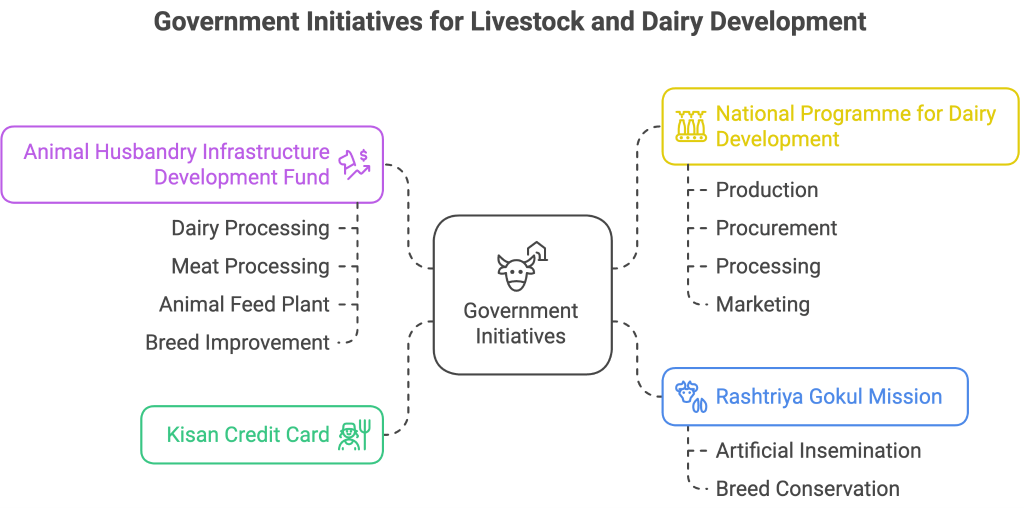
- Boost Productivity: Improve breeds through Artificial Insemination (AI), In-Vitro Fertilisation (IVF), and preservation of indigenous genetics. Provide balanced nutrition and quality fodder.
- Strengthen Infrastructure: Expand cold chains, chilling centres, bulk milk coolers, and modern collection systems.
- Expand Cooperatives: Increase farmer participation in organized collection and marketing networks.
- Climate Adaptation: Develop heat-tolerant breeds and conduct vaccination drives.
- Women Empowerment: Promote women-led cooperatives and training programs for rural women dairy farmers.
Conclusion:
India’s dairy sector is a global leader and a key pillar of rural livelihoods. However, sustaining growth will require productivity enhancement, better infrastructure, climate resilience, and inclusive policies to maintain both domestic supply and export competitiveness.
CEDING OF ACADEMIC FREEDOM IN UNIVERSITIES
TOPIC: (GS2) INDIAN POLITY: THE HINDU
Concerns have been raised over growing restrictions on academic freedom in Indian universities, affecting teaching, research, and free expression, with implications for democracy and knowledge development.
Importance of Academic Freedom
- Universities are spaces for critical thinking, debate, and independent inquiry.
- Knowledge progresses when existing ideas are questioned.
- Students should have the right to raise questions; faculty should challenge established views.
- Institutions must decide what to teach without external interference.
- Freedom to invite speakers without restrictions is vital for learning.
- Research priorities should be set by universities and faculty, with funding based on unbiased peer review.
- Encouraging dissent and unconventional thinking fuels intellectual growth.
Current Situation in India
- Curricula and reading lists are tightly regulated by external authorities.
- Certain readings are excluded for political or ideological reasons.
- Non-mainstream research, especially in social sciences and humanities, faces obstacles.
- Research funding is often influenced by central government agencies.
- Students and faculty face curbs on debates critical of ruling governments.
- Social media activity can lead to disciplinary or legal action.
- Even participation in overseas conferences requires undertakings restricting political expression.
- Similar pressures are extending to private universities due to risk-averse managements.
Autonomy and Accountability
- University autonomy is essential for academic excellence and democracy.
- Roles of universities:
- Drive innovation, technology, and policy ideas in the economy.
- Act as public intellectuals and conscience-keepers in society.
- Promote accountability in governance through critical assessment.
- Public funding should not be a pretext for government control.
- Accountability should be ensured via institutional governance systems and transparency, not political intervention.
- Rankings, despite flaws, offer a form of accountability to society.
Global Perspective
- Academic freedoms are curtailed in democracies like Argentina, Hungary, Türkiye.
- Severely restricted under authoritarian regimes (e.g., China, Russia, Vietnam).
- Even in the U.S., funding cuts and restrictions have emerged under political pressures.
Key Takeaways
- Governments often seek to control universities due to fear of criticism and desire for ideological conformity.
- Dependence on state funding makes institutions vulnerable.
- Loss of academic freedom harms teaching, learning, research, creativity, and ultimately damages society, economy, and democracy.
Conclusion
Safeguarding academic freedom is essential for fostering independent thought, innovation, and a vibrant democracy. Curtailing it not only weakens universities but also undermines societal progress and the nation’s intellectual capital.
WALLACEAN HOMINIDS
TOPIC: (GS1) HISTORY: TIMES OF INDIA
Recent archaeological discoveries in Sulawesi Island, Indonesia, have revealed possible artefacts belonging to the oldest known Wallacean hominids. These findings challenge earlier theories that prehistoric humans in the region were limited in their migration and sea-crossing abilities.
Findings in Sulawesi
- Small chipped stone tools were found in Soppeng, South Sulawesi, used for cutting small animals and shaping rocks.
- These tools are believed to have been made by Homo erectus, predating modern humans (Homo sapiens).
- The discovery suggests early humans might have crossed significant sea barriers earlier than previously thought.

About Wallacean Hominids
- Homo erectus were the earliest known humans in Wallacea, previously found only in Flores Island (Indonesia) and Luzon Island (Philippines) around 1.02 million years ago.
- Earlier theories suggested they were incapable of long-distance sea voyages, making the Sulawesi evidence significant for understanding human migration patterns.
Key Facts about Wallacea
- Geographical region in Eastern Indonesia including Sulawesi, Lombok, Flores, Timor, Sumbawa.
- Lies between Borneo & Java and Australia & New Guinea.
- Named after Alfred Russel Wallace, a pioneer in evolutionary biology.