
Table of Contents
ToggleWASHINGTON CONSENSUS AND EMERGING ALTERNATIVES
TOPIC: (GS2) INTERNATIONAL RELATIONS: THE HINDU
The Washington Consensus often worsened inequality, debt crises, and social unrest, while limiting policy space for industrial growth and domestic development strategies.
Washington Consensus
- Origin and Context: The term Washington Consensus was coined by John Williamson in 1989.
- It emerged during the 1980s debt crises in Latin America and other developing regions, when international financial institutions sought uniform policy solutions.
- The Washington Consensus was a late20thcentury framework of economic reforms built on marketoriented policies like liberalisation, privatisation, and deregulation.
Core Policy Prescriptions
- Fiscal Discipline: strict control of government deficits and public debt.
- Reordering Public Expenditure: shifting spending toward health, education, and infrastructure rather than subsidies.
- Tax Reform: broadening the tax base and lowering marginal tax rates.
- Interest Rate Liberalisation: allowing market forces to determine lending rates.
- Competitive Exchange Rates: avoiding overvalued currencies to boost exports.
- Trade Liberalisation: reducing tariffs and barriers to international trade.
- Foreign Direct Investment Liberalisation: opening domestic markets to global capital.
Legacy and Criticism
- Origins: Rooted in Reaganomics and Thatcherite reforms. Adopted during debt crises of the 1980s.
- Failure: Asian Financial Crisis (1997) and Global Financial Crisis (2008) exposed systemic flaws. WTO breakdowns (Seattle 1999, Cancún 2003) highlighted North–South divides.
- Industrial Strategy Rejection: WC discouraged stateled industrial policies. TRIMs, TRIPS, and subsidy rules restricted developing nations’ policy space.
- Social Impact: Structural Adjustment Programmes worsened inequality in Africa and Latin America. growth would “trickle down” proved unrealistic.
Global Backlash Against the Washington Consensus
- Public Resistance in Developing Nations In the 1990s, largescale protests across the Global South reflected anger against austerity, privatisation, and deregulation imposed through structural adjustment programmes.
- Political Shift Towards Protectionism The failures of liberalisation fuelled antiglobalisation movements, later manifesting in events like Brexit and MAGA politics, where economic nationalism replaced freemarket orthodoxy.
- Contradiction in Industrialisation Models Nations that successfully industrialised such as the US, Japan, South Korea, Taiwan, and Singapore relied on stateled strategies and infant industry protection, not the rigid prescriptions of the Consensus.
Emerging Alternatives
- PostWashington Consensus: Emphasises social safety nets, redistribution, accountability. Focus on education, health, infrastructure, and climate resilience.
- Beijing Model: Stateled intervention, targeted industrial policy, limited political liberalisation. Example: China’s rise through selective protection and industrial planning.
- Current Trends (2020s): Protectionism and tariffs used for national security (e.g., Trump’s trade wars). Supply chains reconfigured for geopolitical dominance rather than efficiency.
Conclusion
The Washington Consensus has lost its universal appeal. Today’s world demands contextsensitive, flexible policies balancing growth, equity, and security.
WEST ASIA CRISIS AND MANGO PULP TRADE DISRUPTION
TOPIC: (GS3) ECONOMY: THE HINDU
Escalating tensions in West Asia have disrupted mango pulp exports from Chittoor district, Andhra Pradesh, one of India’s largest mango processing hubs.
Background
- Chittoor region is a major mango pulp processing cluster, catering to global food and beverage industries.
- The Strait of Hormuz closure has halted shipments to Muscat, Kuwait City, and Dubai. Damage to port infrastructure in West Asia has worsened the crisis.
Mango Export Trends
- India is among the largest exporters of mango pulp, with Chittoor contributing significantly.
- Major buyers include West Asia, Europe, and North America.
- Seasonal exports generate thousands of jobs and support mango farmers.
Current Challenges
- Export Blockage: ₹300 crore worth of pulp stuck at West Asian ports. ₹1,000 crore worth of pulp barrels ready in Chittoor but unable to ship.
- Supply Chain Disruption: Industry depends on aseptic barrels and packaging bags imported from Europe. Imports of these materials have been delayed, affecting storage and transport.
- Impact on Farmers: The pulp industry buys Totapuri mangoes from local farmers. Prolonged disruption may reduce procurement, hurting farmer incomes.
- Seasonal Sensitivity: February–April is a critical export window. Any delay risks pulp quality and trade commitments.
Way Forward
- Diversify Export Markets: Explore new destinations beyond West Asia to reduce dependency.
- Strengthen Domestic Logistics: Improve cold storage and warehousing to preserve pulp quality during delays.
- Boost Indigenous Packaging: Encourage local production of aseptic barrels and bags to reduce reliance on imports.
- Government Support: Provide relief measures, trade facilitation, and diplomatic engagement to reopen supply routes.
Conclusion
The West Asia crisis highlights the vulnerability of India’s agroexports to geopolitical tensions. timely policy support, diversification of markets, and strengthening of domestic supply chains are essential to protect exporters.
NOFAULT VACCINE COMPENSATION
TOPIC: (GS2) POLITY: THE HINDU
The Supreme Court has directed the Union government to frame a nofault compensation policy for individuals who suffered serious side effects or deaths after receiving Covid19 vaccines.
Background
- Petitions were filed by families of young adults (18–40 years) who died due to rare complications like blood clotting after Covishield and Covaxin doses in 2021.
- Petitioners argued lack of informed consent and that vaccination, though officially voluntary, was effectively mandatory due to restrictions on the unvaccinated.
Government’s Defence
- Vaccines underwent rigorous regulatory approval and India has a robust Adverse Events Following Immunisation (AEFI) monitoring system.
- Claimed vaccinerelated deaths were extremely rare (0.001 per lakh doses for clotting disorders).
- Suggested families could seek compensation through civil or consumer courts by proving negligence.
Supreme Court’s Observations
- Rejected the idea of individual litigation, noting it would burden families with complex scientific evidence and lead to unequal outcomes.
- Invoked the principle of “nofault liability”, already present in Indian law (e.g., motor accident compensation).
- Highlighted global practice: countries like UK, Japan, Australia have vaccine injury compensation schemes.
- Based its ruling on Article 21 (Right to Life and Health), stressing the State’s duty to act as guardian of welfare during a public health programme.
Earlier Reference
- Jacob Puliyel vs Union of India (2022): Court upheld vaccine approval process and AEFI monitoring, while affirming that vaccination cannot be forcibly imposed.
- Gaurav Kumar Bansal vs Union of India (2021): Court directed NDMA to provide ₹50,000 ex gratia for Covid deaths, showing precedent for compensation in pandemic cases.
Conclusion
By adopting a nofault compensation scheme, India aligns with global best practices and ensures justice, equality, and dignity for families affected by rare vaccine injuries.
PRICE PRESSURES AND INFLATION IN INDIA
TOPIC: (GS3) ECONOMY: THE HINDU
Retail inflation in India rose to a 10month high of 3.2% in February 2026, mainly due to food prices and precious metals.
Current Inflation Trends
- New Consumer Price Index (CPI) series shows food has 36.75% weight in overall inflation.
- Food Inflation: Rose to 3.35% in February 2026 from 2.1% in January.
- Tomatoes: +45% inflation.
- Onions: –28% contraction.
- Potatoes: –18% contraction.
- Precious Metals: Gold jewellery inflation: 48.2% in February (up from 46.8% in January). Silver jewellery inflation: 160%+ in both January and February.
Drivers of Inflation
- Food Prices: Climate scientists predict El Niño return during monsoon, risking weak rainfall and higher food costs.
- Fertilizer production hit by West Asia conflict and natural gas shortages, affecting crop output.
- Global Uncertainty: Rising demand for safehaven assets like gold and silver amid geopolitical tensions.
- Energy Costs: Oil, LPG, and LNG shortages raising industrial input costs, which will be passed on to consumers.
Policy Challenges
- RBI’s Dilemma: Inflation is supplydriven, so raising interest rates may not ease prices but could hurt growth.
- Government’s Role: Must focus on alternative energy sources (solar, wind, green hydrogen) to reduce dependence on volatile fossil fuels.
- Strengthen agriculture resilience through irrigation, crop diversification, and fertilizer security.
Government Measures to Tackle Inflation
Monetary Measures (RBI)
- Repo Rate Adjustments: Raising repo rate to reduce liquidity and demand.
- Cash Reserve Ratio (CRR): Increasing CRR to absorb excess money from banks.
- Open Market Operations: Selling government securities to reduce money supply.
Fiscal Measures (Government)
- Reducing Fiscal Deficit: Controlling government borrowing and spending.
- Rationalising Subsidies: Targeted subsidies to avoid excess demand.
- Import/Export Controls: Importing essential commodities (like pulses, edible oil) to ease shortages.
SupplySide Measures
- Boosting Agricultural Output: Ensuring irrigation, crop diversification, and buffer stocks.
- Strengthening Logistics: Improving cold storage and transport to reduce wastage.
- Price Stabilisation Fund: Used to intervene in markets for essential commodities.
Inflation
Inflation means a continuous increase in prices across the economy. It reduces the value of money, the same amount buys fewer goods and services.
Measurement in India
- Consumer Price Index (CPI) – measures retail inflation affecting households.
- Wholesale Price Index (WPI) – tracks price changes at the wholesale/producer level.
Types of Inflation
- DemandPull Inflation – When demand exceeds supply. Example: Festive season demand for gold raises prices.
- CostPush Inflation – When production costs rise. Example: Increase in crude oil prices raises transport costs.
- Imported Inflation – When global price hikes affect domestic markets. Example: Higher LNG prices increase cooking gas costs in India.
- Structural Inflation – Caused by supply bottlenecks. Example: Poor monsoon leading to food grain shortages.
Conclusion
India’s inflation pressures highlight the need for sustainable energy solutions, resilient agriculture, and diversified supply chains. Tackling food and fuel shocks proactively will be crucial to ensure price stability and inclusive growth in the coming years.
VAN ALLEN PROBE A
TOPIC: (GS3) SCIENCE AND TECHNOLOGY: THE HINDU
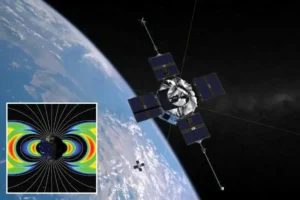
NASA’s Van Allen Probe A satellite (600 kg) is reentering Earth’s atmosphere, raising concerns about possible risks to people on the ground.
About the Mission
- Launch: August 30, 2012.
- The mission had already ended in 2019 after fuel exhaustion, but its reentry highlights issues of space debris management.
- Design: Two identical spacecraft (Probe A and Probe B) used together to study Earth’s radiation belts.
- Duration: Planned for 2 years, but operated successfully for almost 7 years (2012–2019).
- Objective: To study the Van Allen radiation belts, rings of charged particles trapped by Earth’s magnetic field.
Scientific Importance
- The radiation belts act as a shield against cosmic rays, solar storms, and solar wind, protecting humans and technology.
- By flying through the belts, the probes helped scientists understand:
- How particles are added or lost in the belts.
- The physical dynamics of radiation belts over time and space.
- Having two spacecraft with identical instruments allowed comparative measurements, giving unprecedented insights into space weather.
End of Mission
- NASA ended the mission in 2019 when both spacecraft ran out of fuel and could no longer orient toward the Sun.
- The satellites were left to gradually descend into Earth’s atmosphere, where they would eventually burn up.
INTERNATIONAL ATOMIC ENERGY AGENCY (IAEA)
TOPIC: (GS3) SCIENCE AND TECHNOLOGY: THE HINDU
The Director General of the IAEA recently held talks with the head of Rosatom (Russia’s nuclear energy corporation) amid rising concerns over nuclear nonproliferation.
Background
- Established in 1957 after the “Atoms for Peace” proposal at the UN in 1953.
- Functions as an autonomous body within the UN system, reporting to both the General Assembly and the Security Council.
- Headquarters: Vienna, Austria.
- Membership: 180 countries.
- Known globally as the “Atoms for Peace and Development” organisation.
Institutional Structure
- General Conference: All member states meet annually to approve budgets and set broad policy directions.
- Board of Governors: 35 members meet several times a year to oversee safeguards, statutory functions, and appoint the Director General.
- Secretariat: Led by the Director General, responsible for daily operations and implementation of programmes.
Functions
- Promoting Peaceful Uses of Nuclear Energy: Encourages nuclear technology for medicine, agriculture, energy, and industry. Supports sustainable development goals.
- Safety and Security: Sets international safety standards. Provides technical assistance to ensure nuclear facilities operate securely.
- Verification and Safeguards: Conducts inspections and monitoring to ensure nuclear material is not diverted for weapons. Plays a central role in implementing the Nuclear NonProliferation Treaty (NPT).
Conclusion
The IAEA remains the world’s foremost nuclear watchdog, ensuring that nuclear energy contributes to peace and development while preventing its misuse for weapons.
PEPTIDES
TOPIC: (GS3) SCIENCE AND TECHNOLOGY: THE HINDU
Peptidebased medicines are gaining global attention in research and clinical practice, making them a key area in biotechnology and healthcare.
What are Peptides?
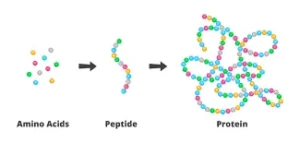
- Peptides are short chains of amino acids linked by peptide bonds.
- They are naturally present in the body and perform diverse biological functions.
- Traditionally defined as molecules with 2–50 amino acids.
- Proteins are larger molecules made up of multiple peptide subunits (polypeptides).
Peptides vs Proteins
- Peptides: Smaller, simpler, less structured.
- Proteins: Larger, complex structures (secondary, tertiary, quaternary).
- Proteins can be broken down into peptide fragments by enzymes.
Functions of Peptides
- Act as hormones (e.g., insulin, glucagon).
- Support muscle growth, antiinflammatory, and antiaging processes.
- Involved in cell signalling, immunity, and metabolism.
- Many peptides are now used in supplements and therapeutics, either derived from food or synthesized in labs.
Amino Acids – Building Blocks
- Proteins and peptides are made of 20 amino acids.
- Essential amino acids (9) must be obtained from diet: histidine, isoleucine, leucine, lysine, methionine, phenylalanine, threonine, tryptophan, valine.
- Sequence of amino acids in a peptide/protein is encoded by genes.
Applications of Peptides
- Medical Use: Peptide drugs for diabetes, cancer, and cardiovascular diseases.
- Cosmetics: Antiaging creams use peptides to stimulate collagen.
- Nutrition: Supplements for muscle recovery and immunity.
- Research: Used in biotechnology for drug design and molecular studies.
Conclusion
Peptides are vital biological molecules bridging the gap between basic life processes and modern therapeutics. Their growing role in medicine and biotechnology makes them an important area for scientific research and policy focus.
NEVADO OJOS DEL SALADO
TOPIC: (GS1) GEOGRAPHY: THE HINDU
Why in News?
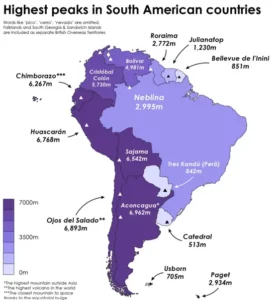
A professor from the Indian Institute of Science (IISc) recently successfully summited Nevado Ojos del Salado, drawing attention to the peak.
Location and Geographical Setting
- The mountain lies in the Andes mountain range, specifically in the Atacama Region of Chile and Catamarca Province of Argentina.
- It is part of the Central Volcanic Zone of the Andes, a region known for intense volcanic activity due to subduction of the Nazca Plate beneath the South American Plate.
- The volcano rises close to the Atacama Desert, one of the driest places on Earth, which significantly influences its climatic conditions.
- Due to its border location, the mountain is shared between Chile and Argentina, though the highest summit lies within Chilean territory.
- The surrounding region consists of volcanic peaks, salt flats, and high-altitude deserts.
Major Physical Features
- Highest Active Volcano: Nevado Ojos del Salado holds the record as the tallest active stratovolcano in the world.
- Volcanic Formation: The mountain formed through the accumulation of repeated lava flows, ash deposits, and pyroclastic material over thousands of years.
- Crater System: The summit area includes multiple craters and elongated volcanic ridges, indicating past volcanic eruptions.
- High-altitude Crater Lake:
- A permanent crater lake is located at an altitude of around 6,390 metres.
- It is considered one of the highest lakes in the world.
- Volcanic Activity: Though considered active, the volcano has not experienced major recent eruptions, with activity mainly limited to fumaroles and minor geothermal activity.
Climate and Environmental Conditions
- The region experiences a high-altitude desert climate due to its proximity to the Atacama Desert.
- Temperature variation is extreme, with daytime temperatures sometimes reaching around 18°C, while nighttime temperatures can fall to –10°C or lower.
- Precipitation is extremely low, making the mountain one of the driest high peaks in the world.
- Snow cover is limited, usually remaining only near the summit during winter months.
- Strong winds, low oxygen levels, and arid conditions make climbing the peak challenging.
Scientific and Mountaineering Significance
- Nevado Ojos del Salado is an important site for studying high-altitude volcanism and extreme environments.
- Scientists use the region to understand planetary conditions similar to Mars, due to its dry climate and volcanic terrain.
- The mountain is a popular destination for high-altitude mountaineers because it is considered one of the highest climbable volcanoes without technical ice climbing.
- It also helps researchers study glacial remnants and climate patterns in the Andes.