
FEDERAL BALANCE AS A KEY INDICATOR OF DEMOCRACY
TOPIC: (GS2) INDIAN POLITY: THE HINDUS
Tamil Nadu Chief Minister M.K. Stalin has raised concerns about the Union government’s increasing centralisation of powers, revenue devolution shortfalls, and interference in State matters, arguing that it undermines India’s federal structure and unity.
Background
- India’s independence was achieved through a nationwide struggle involving all regions, languages, and communities.
- The Constitution defines India as a Union of States, ensuring diversity and shared governance.
- Federalism was meant to empower States while maintaining national unity.
FEDERAL STRUCTURE IN THE CONSTITUTION
- Division of Powers:
- Union List – Defence, External Affairs, Currency.
- State List – Subjects under State control.
- Concurrent List – Shared jurisdiction.
- Cooperative Federalism: Idea of States and Union working together for development.
- Linguistic Reorganisation: States created on language lines to protect cultural identity.
Concerns Raised by Tamil Nadu CM
Erosion of State Powers
- Gradual shift of subjects from State and Concurrent Lists to Union List.
- Governors in some States delaying assent to Bills, despite Supreme Court rulings.
Revenue Devolution Issues
- 15th Finance Commission recommended 41% share of Union tax revenue to States.
- Actual transfer over 4 years: only ~33%, causing financial strain.
- Demand for increasing share to 50%.
Conditional Funding & Policy Pressure
- Denial of ₹2,200 crore under Samagra Shiksha Abhiyan due to language policy differences.
- Linking unrelated schemes (e.g., PM SHRI with SSA) to push policy compliance.
Financial Burden on States
- Union often delays or reduces its share in centrally sponsored schemes.
- States forced to bear extra costs, impacting welfare spending.
Neglect of Announced Projects
- Example: AIIMS in Madurai announced in 2015 remains incomplete after six years.
Tamil Nadu’s Performance Indicators
- Economic Growth: 11.19% in 2024–25 — highest among large States.
- Exports: Electronics exports grew ninefold in four years.
- Employment: Nearly 1 crore new EPFO registrations in 5 years.
- Goal: $5 trillion State economy by 2047.
Way Forward
- True Federal Spirit: Union to limit role to core national subjects.
- Fair Revenue Sharing: Adhere to or raise Finance Commission norms.
- Strengthen Cooperative Federalism: Respect diversity in policy-making.
- Implement High-Level Committee Recommendations: Ensure States’ autonomy is constitutionally protected.
Conclusion:
A healthy federal balance is essential for preserving India’s unity in diversity and ensuring equitable growth across States. Strengthening cooperative federalism will help uphold democratic values and empower all regions equally.
DEBATE ON INTRODUCING ‘CREAMY LAYER’ FOR SC/ST RESERVATIONS
TOPIC: (GS2) INDIAN POLITY: INDIAN EXPRESS
The Supreme Court has issued a notice to the Centre on a plea seeking to introduce a “creamy layer” concept within Scheduled Caste (SC) and Scheduled Tribe (ST) reservations, similar to the rule already applied to Other Backward Classes (OBCs). The move aims to ensure fair distribution of reservation benefits among the most disadvantaged, but has sparked legal and social debate.
BACKGROUND
- India provides caste-based reservations in education and government jobs to SCs, STs, OBCs, and Economically Weaker Sections (EWS).
- Current quotas: 15% for SCs, 7.5% for STs, 27% for OBCs, and 10% for EWS (under the 103rd Constitutional Amendment).
- The 50% reservation ceiling rule (Indra Sawhney case, 1992) generally applies, though EWS quota has pushed total reservations in some states to 60%.
CREAMY LAYER CONCEPT
- Introduced by the Supreme Court in 1992 (Indra Sawhney case) for OBCs.
- Excludes the economically and socially better-off members within a backward category from availing reservation benefits.
- Determined using income, education, and occupation criteria.
- Objective: To ensure benefits reach the most disadvantaged within the group.
SUPREME COURT’S STANCE ON SUB-CLASSIFICATION OF SCs/STs
- 2024 Judgment: Upheld sub-classification of SCs to ensure equitable distribution of benefits.
- Overruled 2004 E.V. Chinnaiah case, which treated SCs as a homogeneous category.
- Rationale: Equality means treating equals equally, but allows differentiation where some groups are more disadvantaged.
- Criteria for sub-classification:
- Quantifiable evidence of backwardness.
- Proof of inadequate representation in public services.
- Empirical data to justify the classification.
ARGUMENTS IN FAVOUR
- Unequal backwardness: Some SC castes remain underrepresented despite decades of reservation.
- Not homogeneous: SC list is a legal recognition of disadvantage, but not all castes within it are equally placed.
- Constitutional provisions: Articles 15(4) and 16(4) allow targeted affirmative action.
- Effective representation: Ensures inclusion goes beyond mere numbers.
- Evidence-based policy: Allows targeting the neediest.
ARGUMENTS AGAINST
- Article 341: Only the President can modify the SC list — sub-classification by states may breach this.
- Social fragmentation: Risk of increasing caste divisions within SC communities.
- Complex criteria: Difficult to set fair and accurate measures of disadvantage.
- Historical discrimination: Even wealthy SCs face stigma, so excluding them may weaken protection.
WAY FORWARD
- Ensure policies align with Articles 14, 15(4), 16(4) without altering the Presidential List.
- If creamy layer is applied to SC/STs, use distinct criteria from OBCs.
- Support reservations with measures like education, skill training, and anti-discrimination laws.
- Promote awareness to maintain unity within SC communities while ensuring fairness in benefits.
Conclusion
The creamy layer debate for SC/STs sits at the intersection of equity and social justice — seeking to ensure that affirmative action benefits those most in need, while safeguarding constitutional protections.
GOVERNORS AS CHANCELLORS IN STATE UNIVERSITIES
TOPIC: (GS2) INDIAN POLITY: THE HINDU
Recent controversies in Tamil Nadu and Kerala have reignited debates over the role of Governors as Chancellors of State universities, amid concerns that such powers are being used for political and ideological purposes, affecting higher education governance.
Background
- Colonial Legacy – During British rule, Governors served as ceremonial heads (Chancellors) of universities to give institutions prestige and maintain colonial oversight.
- Post-Independence Continuation – Role retained to safeguard national unity and prevent separatism.
- State Laws – Many State legislations still keep Governors as Chancellors, despite changes in governance needs.
Recent Flashpoints
Tamil Nadu
- Governor R.N. Ravi referred the Kalaignar University Bill to the President instead of granting assent.
- Earlier, the Supreme Court ruled against Governors delaying or withholding Bills indefinitely, setting timelines for assent.
Kerala
- Governor Rajendra Vishwanath Arlekar directed State universities to observe Partition Horrors Day (Aug 14), triggering criticism over alleged ideological motives.
- His predecessor, Arif Mohammed Khan, had withheld multiple university-related Bills, leading to governance deadlocks.
Core Issues
- Political & Ideological Clashes: Governors, appointed by the Centre, are seen by some State governments as acting as political proxies, particularly in opposition-ruled States.
- University Autonomy vs. Central Influence: Draft UGC Regulations propose giving Chancellors complete authority over Vice-Chancellor appointments, reducing State government say. This contradicts NEP 2020 goals of academic and financial autonomy for institutions.
- Changing Role of University Heads: Modern universities need leaders with fundraising, managerial, and academic expertise — not just ceremonial authority.
Way Forward
- Professional Leadership – Appoint experienced educationists or administrators as both ceremonial and executive heads instead of Governors.
- Clear Legal Framework – Define timelines and procedures for Bill assent to avoid legislative deadlocks.
- Balance in Governance – Ensure academic autonomy while maintaining accountability.
- Political Neutrality – Keep higher education governance free from partisan influence.
POWERS OF THE GOVERNOR
Executive Powers
- Appoints the Chief Minister and other ministers.
- Appoints the Advocate General, State Election Commissioner, and members of State Public Service Commission.
- Can remove ministers, Advocate General, and certain officials.
- Allocates portfolios to ministers.
- Ensures laws are implemented in the state.
Legislative Powers
- Summons, prorogues, and dissolves the State Legislative Assembly.
- Can address the first session of the legislature each year.
- Gives assent to bills passed by the legislature or withholds it.
- Can reserve certain bills for the President’s consideration.
- Nominates members to the Legislative Council (if the state has one) and one member from the Anglo-Indian community to the Assembly (if needed).
Financial Powers
- Ensures the State Budget is laid before the legislature.
- Money bills can be introduced only with his/her prior permission.
- Can sanction advances from the Contingency Fund of the State.
Judicial Powers
- Can grant pardons, reprieves, respites, or remissions of punishment for offences against laws under the state’s jurisdiction.
Discretionary Powers
- Can act without the advice of the Council of Ministers in certain situations (e.g., hung assembly, reservation of a bill for the President).
- Can report to the President if the state government cannot be carried on as per the Constitution (President’s Rule under Article 356).
Conclusion
The Governor’s role as Chancellor is a holdover from colonial times, but present-day higher education needs professional and neutral leadership. Reforming this arrangement can safeguard university autonomy, reduce political friction, and align governance with the vision of NEP 2020.
MANDATORY HIV/AIDS TESTING BEFORE MARRIAGE
TOPIC: (GS3) HEALTH: THE HINDU
The Meghalaya government has proposed making HIV/AIDS testing compulsory before marriage, similar to an earlier move in Goa. The proposal has triggered debate over health benefits, human rights, consent, and stigma.
Background
- HIV in India: Spread mainly through unprotected sex, injecting drug use, and mother-to-child transmission.
- Legal Safeguards: The HIV and AIDS (Prevention and Control) Act, 2017, ensures voluntary testing, informed consent, confidentiality, and protection from discrimination.
- Proposal in Meghalaya: Aims to control rising infections, especially in high-prevalence areas.
Arguments Against Mandatory Testing (N. Kumarasamy’s view)
- Violation of Rights – Forcing testing breaches the 2017 Act and individual autonomy.
- Confidentiality Concerns – Legal mandate requires privacy; breach can lead to social harm.
- Scientific Advances – Antiretroviral therapy (ART) can reduce viral load to undetectable levels within months, preventing sexual transmission.
- Risk of Stigma – Mandatory testing could worsen discrimination and discourage voluntary testing.
- Better Alternative – Widespread voluntary testing with proper counselling and linkage to treatment.
Arguments in Favour of Mandatory Testing (Jahnabi Goswami’s view)
- Prevention of Transmission in Marriage – Protects spouses from unknowingly contracting HIV.
- Protection of Children – Reduces chances of mother-to-child transmission.
- Cases of Concealment – Many HIV-positive individuals hide their status before marriage, especially in high-risk areas like the north-east.
- Cultural Analogy – Similar to horoscope matching, health compatibility checks can ensure family well-being.
- Practical Reality – In many cases, HIV testing is already being done informally before certain medical procedures.
Implementation Challenges
- False Security – A negative test may ignore the “window period” when infection is undetectable.
- Non-Uniform Social Acceptance – Cultural resistance in some communities against safe sex practices like condom use.
- Enforcement Feasibility – Goa’s similar proposal was never fully implemented due to legal and rights-based objections.
Stigma and Social Perception
- Origins of Stigma – Linked to associations with sex work, drug use, and multiple partners.
- Impact – HIV is seen as a behavioural “fault” rather than a health issue, unlike cancer or diabetes.
Way Forward:
- Public education on “U=U” (Undetectable = Untransmittable).
- Use of HIV-positive role models to normalise discussion.
- Better quality counselling to encourage openness.
HIV/AIDS
- HIV (Human Immunodeficiency Virus) is a virus that attacks the immune system, especially CD4 cells.
- AIDS (Acquired Immunodeficiency Syndrome) is the advanced stage of HIV infection when immunity becomes very weak.
- It spreads mainly through unprotected sex, sharing contaminated needles, blood transfusions, and from mother to child during pregnancy, birth, or breastfeeding.
- Early symptoms may include fever, fatigue, swollen lymph nodes, but in many cases, it remains symptomless for years.
- There is no permanent cure, but ART (Antiretroviral Therapy) helps control the virus and improves lifespan.
- Prevention includes safe sex practices, using clean needles, and screening blood before transfusion.
Conclusion
Mandatory HIV testing before marriage raises ethical, legal, and social concerns. While the aim is to protect public health, solutions must respect consent, confidentiality, and dignity. Expanding voluntary testing, improving awareness, and reducing stigma offer a more sustainable and rights-compliant path.
CRACKDOWN ON ILLEGAL IMMIGRANTS AFFECTING CITIZENS
TOPIC: (GS2) INDIAN POLITY: THE HINDU
Recent crackdowns in some BJP-ruled States to identify undocumented Bangladeshi immigrants by targeting Bengali speakers have led to wrongful detention and deportation of Indian citizens, sparking political and social tensions.
Background
- Illegal Immigration Issue – People from Bangladesh have historically entered India for jobs, safety, and better living conditions.
- Colonial Borders – Present-day boundaries stem from partition and colonial-era politics, leading to cross-border cultural and linguistic overlap.
- Government Action – Current drives aim to detect and expel undocumented immigrants, but some measures bypass due legal process.
Recent Developments
Language-Based Identification
- Police in some States have targeted Bengali speakers, mistakenly treating the language as an indicator of foreign origin.
- In Delhi, police even listed “Bangladeshi” as a language — a factual and procedural error.
Wrongful Deportations
- Cases have emerged of Indian citizens being pushed across the border into Bangladesh.
- Some were later brought back after court or State government intervention.
Impact on Citizens
- Harassment has forced many Bengali-speaking migrant workers from West Bengal to leave jobs in other States.
- Even those granted citizenship under the India-Bangladesh Land Boundary Agreement (2015) have faced detention.
Political & Social Impact
- In West Bengal – The Trinamool Congress calls this an “attack on Bengali identity” and has launched a language protection campaign.
- Electoral Risk for BJP – Action against Bengali speakers could alienate voters ahead of the 2026 Assembly polls.
- Risk of Social Division – Could inflame identity-based tensions and lead to violence.
Concerns & Challenges
- Due Process Bypass – Deportations without proper verification harm citizens’ rights.
- Economic Disruption – Loss of livelihoods for migrant workers.
- Identity Conflict – Targeting a language risks alienating communities.
- Security vs. Rights Balance – Need to protect borders without violating constitutional protections.
Conclusion
While curbing illegal immigration is important for national security, actions must follow legal safeguards to prevent harm to Indian citizens. Language should not be used as a simplistic test for nationality. A balanced, lawful, and sensitive approach is vital to protect both sovereignty and citizens’ rights.
ONLY UNITED ACTION CAN STOP THE HYACINTH’S INVASION
TOPIC: (GS3) ENVIRONMENT: THE HINDU
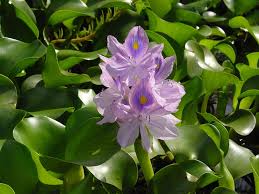
The spread of invasive water hyacinth in Kerala’s backwaters, especially Vembanad Lake, is severely affecting agriculture, fisheries, biodiversity, and livelihoods, prompting calls for coordinated policy action and sustainable utilisation.
Background
- Origin – Water hyacinth (Eichhornia crassipes), introduced during colonial times as an ornamental plant.
- Current Spread – Now covers over 2 lakh hectares of inland waters in India.
- Main Concern – Dense growth blocks waterways, harms aquatic life, and impacts economy.
Impact in Kerala
- Agriculture Losses: In Kuttanad (rice bowl of Kerala), hyacinth mats block irrigation canals, raise cultivation costs, and reduce yields. Water flow obstruction damages paddy fields and increases labour requirements.
- Fisheries Disruption: Dense vegetation restricts boat movement, damages nets, and limits fishing access. Fish breeding areas are destroyed, lowering native fish populations.
- Ecological Damage: Blocks sunlight and oxygen from reaching water, suffocating aquatic plants and animals. Disrupts food chains and reduces biodiversity in wetlands like Vembanad Lake (Ramsar site).
- Climate Impact: Decaying hyacinth releases methane, a greenhouse gas far stronger than CO₂.
Current Efforts & Innovations
Grassroots Solutions
- Odisha – Women’s self-help groups make baskets, furniture, and crafts.
- Assam & West Bengal – Use in paper-making and biogas production.
Limitations
- Efforts remain small-scale and scattered.
- Lack of national policy and poor coordination between departments (agriculture, fisheries, irrigation, environment).
Proposed Solutions
- Policy & Coordination: Create single-point accountability for invasive plant control. Develop region-specific strategies for removal and utilisation.
- Technology & Mechanisation: Use scientific removal methods and machinery suited to labour-scarce areas like Kerala.
- Value Addition & Industry Linkages: Support entrepreneurs and researchers to develop products like biofuels, compost, textiles, and crafts. Encourage public-private partnerships for processing and marketing.
- Awareness & Research: Conduct community campaigns and promote local knowledge. Universities and institutions to lead in pilot projects, R&D, and dissemination.
INVASIVE SPECIES
Invasive species are plants, animals, or microorganisms that are not naturally found in an area but have been introduced (intentionally or accidentally).
- They spread quickly and harm the local environment, economy, or human health.
- They compete with native species for food and space, sometimes causing the native species to decline or disappear.
Examples
- Water hyacinth – A fast-growing aquatic plant that blocks sunlight, reduces oxygen in water, and kills fish.
- Lantana camara – A shrub that spreads in forests, reduces grass growth, and harms grazing lands.
- Prosopis juliflora (Vilayati babul) – A hardy tree that invades farmland and depletes soil moisture.
- Common myna – A bird that drives away native bird species.
- African catfish – An aggressive fish that eats local fish species and affects aquatic biodiversity.
Conclusion
Water hyacinth is more than an environmental nuisance — it is a threat to livelihoods, food security, biodiversity, and climate resilience. With united action involving governments, communities, researchers, and businesses, it can be transformed from a destructive weed into an economic resource, ensuring healthier waterways and sustainable livelihoods.
HONOUR INDIA’S LEGACY, DEFEND ITS DEMOCRACY
TOPIC: (GS2) INDIAN POLITY: THE HINDU
Kerala Chief Minister Pinarayi Vijayan, in an Independence Day message, emphasised protecting constitutional values, federalism, and democratic freedoms, warning against divisive politics and centralisation of power.
Background
- Independence Day Significance – Marks freedom from British colonial rule and commitment to democracy, secularism, harmony, and social justice.
- Founders’ Vision – Nation-building aimed at equality before law, dignity for all, and upliftment of the most disadvantaged.
Concerns Highlighted
Socio-Economic Inequalities
- Economic growth benefits are concentrated in the hands of a small elite.
- Inflation, unemployment, malnutrition, and agrarian distress affect the larger population.
- Market-driven competition sidelines weaker sections; farmers face severe challenges.
Dissent and Nationalism
- Genuine criticism of government policies is often branded as “anti-national.”
- Divisive ideologies fuel polarisation, targeting minorities and restricting freedoms.
- The legacy of inclusive nationalism is threatened by communal politics.
Federalism Under Strain
Constitutional Balance
- Constitution envisaged cooperative federalism: Centre and States working together.
- Centre responsible for defence, foreign affairs; States for health, education, agriculture.
- Current trend shows increasing centralisation, eroding State autonomy.
‘One Nation, One Election’ Debate
- Proposal may shorten State Assembly terms, undermining State voters’ mandate.
- Risks making States subordinate to central executive rather than equal partners.
Use of Central Agencies
- Agencies like the Election Commission, Enforcement Directorate, and Governors’ offices are alleged to be politicised against Opposition-ruled States.
Governor’s Role and State Autonomy
- Governors delaying or withholding assent to Bills passed by State legislatures.
- Particularly affecting higher education: recruitment freezes, cancelled appointments, and stalled reforms.
- Governor’s office acting as a political veto rather than a neutral constitutional bridge.
Way Forward
- Recommit to constitutional democracy, secularism, and federal balance.
- Protect freedom of expression and dissent as essential democratic rights.
- Ensure constitutional offices act impartially to uphold democratic functioning.
Conclusion
India’s independence was meant to create a union of equal citizens and empowered States, united by shared ideals rather than coercion. Preserving federalism, pluralism, and constitutional values is essential to keep the republic vibrant for future generations.
UTTARAKHAND FREEDOM OF RELIGION (AMENDMENT) BILL, 2025
TOPIC: (GS2) INDIAN POLITY: THE HINDU
The Uttarakhand Cabinet has cleared the Freedom of Religion (Amendment) Bill, 2025, which proposes harsher penalties for forced religious conversions — including life imprisonment in extreme cases.
Background
- Original Freedom of Religion Act enacted in 2018 to safeguard the right to freely practise and manage religious affairs under Articles 25–28 of the Constitution.
- First amendment made in 2022.
- Aim: Prevent conversions through force, fraud, or inducement while ensuring religious harmony.
Key Provisions of the 2025 Amendment
- Enhanced Punishments: General forced conversion: 3–10 years imprisonment. Mass conversions or foreign-funded conversions: 7–14 years.
- Human trafficking or threat to life linked to conversion: 20 years to life imprisonment.
- Definition of “Allurement” Expanded: Includes gifts, monetary benefits, jobs, material gains, invoking divine displeasure, or glorifying one religion over another.
- Marriage-Related Provisions: False promise of marriage or hiding religion for marriage: 3–10 years imprisonment and ₹3 lakh fine.
- Rationale: Prevent misuse of economic, emotional, or social vulnerabilities to induce conversion. Address rising concerns over “coercive” or “deceptive” religious conversions.
Implications
- Makes Uttarakhand’s law among the strictest in India for anti-conversion offences.
- May raise debates over the balance between freedom of religion and state regulation.
Conclusion
The Amendment Bill reflects the State’s intent to curb forced and deceptive conversions with stringent penalties. While it strengthens safeguards for vulnerable groups, its implementation will require careful adherence to constitutional freedoms to avoid misuse or targeting of legitimate religious practices.