
Daily Current Affairs 17-July-2025

Share this Post

PM DHAN-DHAANYA KRISHI YOJANA (PMDDKY)

TOPIC: (GS3) ECONOMY: THE HINDU

The Union Cabinet has approved PM Dhan-Dhaanya Krishi Yojana, a new farm programme launched by merging 36 schemes from 11 ministries, with an annual budget of ₹24,000 crore for six years, aiming to improve farm productivity and promote sustainable farming practices.
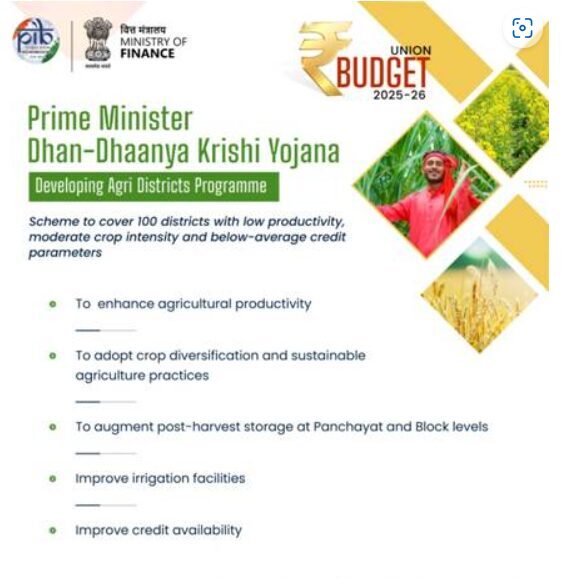
PM Dhan-Dhaanya Krishi Yojana

  • Announced in the Union Budget 2025-26.
  • Aimed at boosting agricultural growth and resilience, especially in low-performing districts.
  • Inspired by the Aspirational District Programme model.

Key Features of the Scheme

  • Merging of 36 schemes from 11 ministries to ensure convergence.
  • ₹24,000 crore/year outlay for 6 years starting from FY 2025-26.
  • Targets 1.7 crore farmers across the country.

Objectives

  • Increase agricultural productivity and cropping intensity.
  • Promote natural and organic farming.
  • Strengthen soil health and water conservation.
  • Enhance post-harvest storage and irrigation at village/block level.
  • Provide long-term and short-term farm credit.

District Selection

  • 100 districts to be chosen based on: Low productivity, Low cropping intensity, Low credit flow
  • Every State/UT to have at least one district selected, based on Net Cropped Area and operational holdings.

Implementation Mechanism

  • District-level committees (Dhan-Dhaanya Samitis) to prepare and monitor implementation plans.
  • Plans will align with national goals like self-sufficiency, climate resilience, and value addition in agriculture.

Conclusion

PMDDKY is a significant step to rejuvenate under-performing farm areas by merging efforts across departments and focusing on sustainable, inclusive agricultural development.

SEXUAL VIOLENCE IN WORKPLACES AND EDUCATIONAL INSTITUTIONS

TOPIC: (GS2) INDIAN POLITY: THE HINDU

A 20-year-old B.Ed student in Odisha’s Fakir Mohan Autonomous College died by suicide after her complaints of sexual harassment by a senior teacher were ignored. Her tragic death has exposed major gaps in the safety and grievance redressal systems in educational institutions.

Background and Recent Incidents

  • Across Odisha, West Bengal, Karnataka, and Delhi, several shocking cases of sexual violence have been reported recently.
  • The Odisha student had reported harassment but received no support from authorities, even after reaching out to the Chief Minister’s office.
  • In West Bengal, a law student was gang-raped on campus; in Mangaluru, lecturers were arrested for raping a student; and in Delhi, a 9-year-old girl was raped and murdered.
  • These cases show that even traditionally “safe spaces” like schools, colleges, and workplaces are failing to protect women and girls.

Legal Framework in India

POSH Act, 2013

  • The Sexual Harassment of Women at Workplace (Prevention, Prohibition and Redressal) Act, 2013, mandates:
    • Creation of Internal Complaints Committees (ICCs) in all workplaces and institutions.
    • A proper grievance redressal mechanism and confidential handling of complaints.
    • Sensitization programmes and employer responsibility to prevent harassment.

Indian Penal Code (IPC) Provisions

  • Section 354A: Sexual harassment.
  • Section 376: Rape.
  • Section 509: Words or acts intended to insult the modesty of a woman.

CRIME DATA ON VIOLENCE AGAINST WOMEN

  • According to NCRB 2022:
    • 4.45 lakh cases of crimes against women were registered.
    • 31.4% under cruelty by husband or relatives.
    • 18.7% under assault with intent to outrage modesty.
    • 7.1% under rape.
  • Many incidents remain unreported due to fear, social stigma, or lack of faith in the system.

Core Issues and Failures

  • Institutional Negligence: ICCs often do not exist or are poorly functioning. Victims face bureaucratic delays and insensitive handling.
  • Behavioral and Cultural Aspects: Society still harbors deep-rooted patriarchy, leading to victim-blaming. Silence and shame culture prevents many women from coming forward.
  • Lack of Accountability: No system in place to audit or monitor ICCs. Delayed justice or no action at all reinforces a culture of impunity.

Impact on Victims

  • Victims may suffer from mental health issues, trauma, depression, and even take extreme steps.
  • Survivors lose trust in institutions and justice systems.
  • Education or career may be disrupted permanently.

Steps Taken by Government

  • After the Odisha incident, the State Government mandated ICC formation in all colleges within 24 hours.
  • Central and State governments have launched gender sensitization drives and training workshops in workplaces and schools.

Way Forward: Systemic Reforms Needed

  • Strengthen ICCs: Make ICC formation mandatory and time-bound in all institutions. Include external experts and gender specialists for fair decisions.
  • Legal and Institutional Action: Fast-track courts for sexual violence cases in educational spaces. Strengthen police response with gender-sensitive training.
  • Behavioural Change: Start gender equality education from school level. Encourage open conversations about consent, respect, and personal boundaries.

Conclusion

The rise in sexual violence in spaces meant to empower—schools, colleges, and offices—shows that laws alone are not enough. There must be a shift in mindset, stronger institutions, and a society that stands with survivors, not against them. As we remember past tragedies like Nirbhaya, we must act before another life is lost due to silence and neglect.

NEW NCERT CLASS 8 TEXTBOOK’S COVERAGE OF COLONIAL EXPLOITATION

TOPIC: (GS2) INDIAN POLITY: THE HINDU

The NCERT has released a new Class 8 Social Science textbook for the 2025-26 academic year. It presents a stronger narrative on how colonial powers, especially the British, drained India’s wealth and caused long-term damage.

Key Features of the New Textbook

  • The book is titled Exploring Society: India and Beyond.
  • Chapter 4 discusses how Britain’s industrial growth was partly funded by the wealth taken from India.
  • The phrase “stolen wealth” is attributed to U.S. historian Will Durant.
  • It highlights that colonial rule meant plunder, forced trade dominance, cultural disruption, and religious interference.

Recent Updates in Curriculum

  • An entire new chapter on Marathas has been added.
  • Earlier books gave limited focus to the Maratha Empire, but the new text says the British defeated Marathas more than the Mughals to gain control of India.
  • A note of caution is added stating that the present generation should not be blamed for past colonial actions.

Why Was This Missing Earlier?

  • Earlier NCERT books focused on neutral or colonial-beneficial narratives.
  • British contributions like railways and education were highlighted, while resource exploitation and destruction of local industries were underplayed.

Impact on School Education

  • Helps students understand the true economic and cultural impact of colonialism.
  • Encourages critical thinking and a balanced view of history.
  • Builds awareness of India’s indigenous strengths and historical injustices.

What the Curriculum Should Aim For

  • Provide well-rounded history, showing both positives and negatives.
  • Use authentic sources and highlight voices from India.
  • Include regional histories like those of Marathas, Ahoms, etc., to offer broader perspectives.

Conclusion:

The updated textbook is a step towards honest historical education, encouraging students to understand colonialism’s deep impact on India’s development.

THAILAND PM PAETONGTARN SHINAWATRA SUSPENDED

TOPIC: (GS2) INTERNATIONAL RELATIONS: THE HINDU

Thailand’s Prime Minister Paetongtarn Shinawatra was suspended on July 1, 2025, after a leaked phone call with former Cambodian PM Hun Sen caused political uproar, accusations of military disrespect, and coalition withdrawal, leading to domestic instability.

Background of the Controversy

  • On June 15, Paetongtarn called Hun Sen to ease border tensions after a Cambodian soldier was killed near Preah Vihear, a disputed temple area.
  • During the 17-minute conversation, she called a Thai general an “opponent“, aiming to de-escalate conflict.
  • She also referred to Hun Sen as “uncle“, which critics saw as deferential and undermining Thai sovereignty.
  • The call was leaked online and later shared by Hun Sen himself.

Reactions and Fallout

  • Thai Army and opposition parties criticized the Prime Minister, viewing her words as disrespectful to the military.
  • Her largest coalition partner, Bhumjaithai Party, withdrew support, weakening her government.
  • Public protests followed, demanding her resignation.
  • The Constitutional Court suspended her pending further legal review.
  • Military denied coup rumors but issued a strong statement on upholding sovereignty.

Cambodia’s Role & Intentions

  • Hun Sen, now Cambodian Senate head, claimed he leaked the audio to avoid “misunderstanding.”
  • He later said insulting a military general was like insulting the Thai King, invoking Thailand’s strict lèse-majesté law.
  • Analysts suggest Hun Sen may be deflecting attention from international criticism over scam call centres in Cambodia.

Historical Context of the Dispute

  • The border region, especially around the Preah Vihear temple, has long been disputed.
  • Despite a 2013 ICJ ruling giving Cambodia control over the temple, the surrounding 4.6 sq km area remains contested.
  • Border tensions have been used by both governments to stir nationalism and distract from internal issues.

Strategic Implications

  • Thailand and Cambodia have a complex past with territorial claims, Cold War rivalries, and mutual political interference.
  • The Shinawatra–Hun Sen relationship spans decades, often involving political maneuvering and shared interests.

Conclusion

This issue highlights the fragility of regional diplomacy, influence of military in Thai politics, and the dangers of external interference in domestic affairs, especially in countries with volatile civil-military relations.

INDIA’S CLEAN ENERGY CAPACITY VS. ELECTRICITY SHARE

TOPIC: (GS3) ECONOMY: THE HINDU

India has achieved 50% of its installed power capacity from non-fossil fuel sources, five years ahead of its Paris Agreement goal. However, the share of clean energy in actual electricity use remains below 30%, raising concerns about low energy output from renewables.

Installed Capacity vs. Electricity Generation

  • As of June 2025, non-fossil fuel sources (solar, wind, hydro, biomass, nuclear) make up 50% of India’s installed capacity (484 GW total).
  • In 2014, this was only 30%.
  • But in terms of actual power generated, the share of clean energy is just 28% (up from 17% in 2014-15).

Reason for the Gap: Low Capacity Utilisation

  • The Capacity Utilisation Factor (CUF) measures how much of the installed capacity is actually used.
  • Solar CUF is about 20%, and wind is 25-30%, while coal has 60% and nuclear 80%.
  • Despite high installation, low CUF limits how much power is generated from clean sources.

Continued Dependence on Coal

  • Coal continues to meet about 75% of base load demand, providing round-the-clock electricity.
  • Solar energy helps reduce coal use during the day, especially in summer, but evening demand still relies on coal.

Way Forward:

  • Battery storage and smart grids are needed to improve renewable energy use during peak hours.
  • Experts suggest differential electricity pricing (like cheaper day-time rates) to encourage better usage patterns.
  • Hybrid projects (mix of solar, wind, hydro + storage) can supply reliable 24×7 power.

Conclusion

India’s clean energy journey is progressing, but better storage, pricing, and smart infrastructure are essential to boost actual renewable electricity supply.

MAOIST CASUALTIES AND GOVERNMENT MEASURES AGAINST LEFT-WING EXTREMISM

TOPIC: (GS3) SECURITY: THE HINDU

According to Bastar IGP P. Sundarraj, a recent document released by the CPI (Maoist) acknowledged that 357 of its members were killed in encounters with security forces across India in the past year. This shows a major blow to Maoist operations, especially in core conflict areas like Bastar and Dandakaranya.
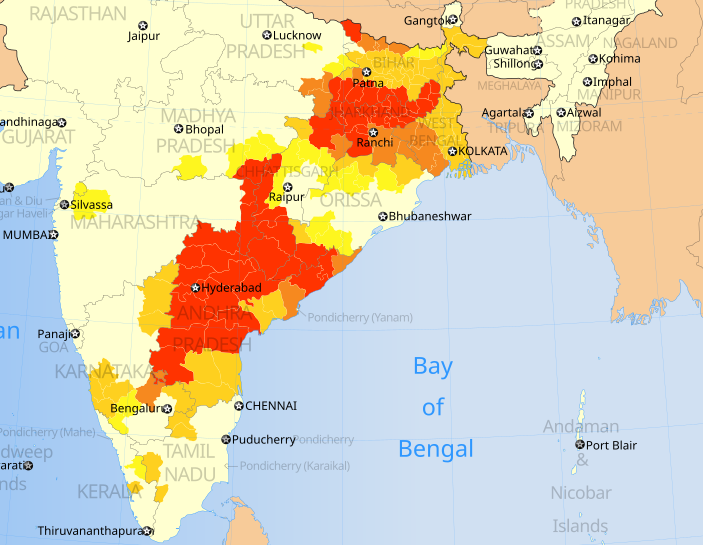
MAOIST CASUALTIES AND GOVERNMENT MEASURES AGAINST LEFT-WING EXTREMISM

Background of Maoist Movement

  • The Communist Party of India (Maoist) is a banned organization involved in armed insurgency, mainly in central and eastern India.
  • It operates in remote tribal and forested areas, known as the “Red Corridor.”
  • Maoists aim to overthrow the democratic government through armed revolution.

Recent Developments

  • A 24-page booklet by CPI (Maoist)’s central committee admits the death of 357 cadres in the last year.
  • Among those killed:
    • 4 Central Committee leaders
    • 15 State-level commanders
    • 136 were women Maoists
  • Major loss occurred in the Dandakaranya region (includes parts of Chhattisgarh and Maharashtra).
  • Security forces have intensified operations, including during monsoon months—unlike earlier years.
  • High-profile leader Nambala Keshav Rao (Basavaraju), CPI (Maoist) General Secretary, was neutralized in May 2025 in Narayanpur, Chhattisgarh.

Government Strategy

  • Union Home Minister Amit Shah has set March 31, 2026 as the target to end Maoist violence.
  • A “pro-people and development-focused” approach is being followed along with security action.

Measures Taken by Government

  • Security Operations: Frequent and intensified combing operations. Special forces like CoBRA, CRPF, and DRG are deployed in affected areas.
  • Infrastructure Development: Improved roads, telecom, and electricity in Maoist-affected zones. Setting up security camps in remote villages.
  • Welfare Schemes: Focus on tribal welfare, employment schemes (MGNREGA), education, and healthcare. Surrender and rehabilitation policy for Maoist cadres.
  • Coordination Among States: Joint operations across State borders with better intelligence sharing.

BUILDING EARTHQUAKE RESILIENCE IN INDIA

TOPIC: (GS3) DISASTER MANAGEMENT: THE HINDU

A mild earthquake of 4.4 magnitude struck Delhi on July 10, 2025, highlighting the city’s and the country’s growing vulnerability to seismic risks, especially due to unsafe buildings and poor infrastructure compliance with earthquake-resistant norms.

India’s Seismic Profile

  • India is divided into four seismic zones (II to V) based on earthquake risk.
  • Zone V (very high risk) includes parts of the Northeast, J&K, Uttarakhand, Himachal Pradesh, Andaman & Nicobar, and Gujarat’s Kutch region.
  • Delhi lies in Zone IV, a high-risk area with a Peak Ground Acceleration (PGA) of 0.24g.
  • The IS 1893:2016 code provides safety standards for earthquake-resistant structures.
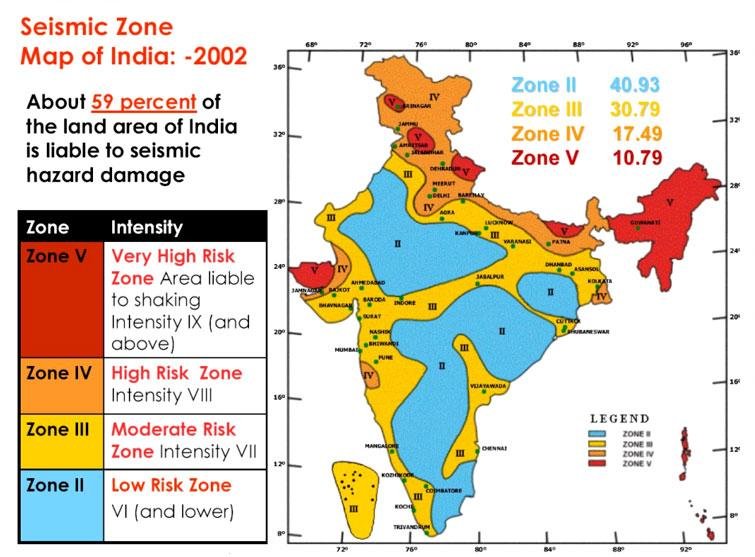
BUILDING EARTHQUAKE RESILIENCE IN INDIA

Earthquake Risk & Rising Concerns

  • India sits on the active Indian Plate, colliding with the Eurasian Plate at 4–5 cm/year, raising the risk of a major Himalayan quake (magnitude 8+).
  • Over 300 million people live in zones that could be impacted.
  • The recent tremor exposed serious weaknesses in Delhi’s urban planning—80% of buildings are non-compliant with seismic safety codes.
  • More than 5,000 high-rises are on liquefaction-prone soil, making them prone to collapse.

Global Trends and Urban Risk

  • Increased tectonic activity has been observed globally (Myanmar, Greece, Chile, etc.).
  • India’s rapid urban growth—especially in cities like Delhi, Guwahati, Bhuj—is outpacing safety compliance.
  • Public knowledge of tools like IndiaQuake early warning system remains limited.

Key Measures to Improve Resilience

  • Policy & Enforcement: Enforce IS 1893:2016 rigorously. Retrofit old buildings using steel jacketing, base isolation, and shear walls. Prohibit construction on vulnerable floodplains and soft soil.
  • Infrastructure & Technology: Require deep foundation systems in risky areas. Equip critical buildings (hospitals, schools) with base isolation.Expand early warning systems nationwide.
  • Local Government & Planning: Urban bodies like DDA must conduct compliance drives. Form District Disaster Response Committees. Integrate seismic safety into Smart Cities Mission.
  • Community & Education: Include earthquake preparedness in school curricula. Conduct community evacuation drills and awareness drives.

Conclusion

Earthquake resilience must become a national mission. India needs urgent reforms in building norms, urban planning, and public awareness. Earthquake safety is not just a technical issue—it’s a human and moral imperative to safeguard lives.


ADOPTION CRISIS IN INDIA

TOPIC: (GS2) INDIAN POLITY: THE HINDU

As of July 2025, India has over 36,000 prospective adoptive parents but only about 2,650 children legally free for adoption, leading to long wait times of over 3.5 years and concerns about illegal adoptions.

The Growing Gap: Demand vs Availability

  • In 2021, there were 11 waiting parents per child; in 2025, this increased to 13 parents per child.
  • Only 2,652 children are legally available for adoption, while over 22,000 children live in Child Care Institutions (CCIs).
  • States like Maharashtra, Tamil Nadu, Karnataka, and West Bengal contribute to over half the prospective adoptive parents.

Delays in the Adoption Process

  • Average wait time has grown from 1 year in 2017 to 3.5 years in 2025.
  • Juvenile Justice Act (2021) mandates a time-bound process to declare children legally free for adoption, but implementation is weak.
  • Lack of coordination between CCIs and adoption agencies is a major hurdle.

Structural & Social Barriers

  • Many children in CCIs have guardians on paper who rarely visit, complicating legal clearance.
  • Older children (14–18) and children with special needs are less likely to be adopted.
  • Adoption is still not widely seen as a mainstream parenting option in India.

Suggested Reforms

  • Better enforcement of timelines under the JJ Act.
  • Capacity building for CCI staff and adoption authorities.
  • Encourage adoption of older and special needs children through awareness and incentives.
  • Regular audits and accountability in processing adoption cases.

Conclusion

India’s adoption system needs urgent reform to bridge the gap between thousands of waiting parents and children in need of families, ensuring every child gets the right to grow up in a home.

Write a Review

Your email address will not be published. Required fields are marked *