Daily Current Affairs 18-July-2025

Share this Post

INDIA WARNS AGAINST U.S. PRESSURE OVER RUSSIAN OIL TRADE

TOPIC: (GS2) INTERNATIONAL RELATIONS: THE HINDU

India has expressed concern over proposed U.S. legislation that aims to impose heavy tariffs on countries buying oil from Russia. The government criticized the possible move as a display of “double standards,” highlighting energy security as its top priority.

Background of the Issue

  • A new U.S. Bill called the Russian Sanctions Act, 2025 has been introduced by Senator Lindsey Graham.
  • The proposed law threatens secondary sanctions, including tariffs up to 500% on countries continuing to trade Russian oil.
  • NATO Secretary-General Mark Rutte also warned nations like India, China, and Brazil to stop oil trade with Russia or face consequences.

India’s Stand and Response

  • The Ministry of External Affairs (MEA) said India is watching the situation and will act based on its national interest.
  • MEA spokesperson Randhir Jaiswal stressed that energy needs of Indian citizens are crucial, and procurement is based on market conditions.
  • He also pointed out the double standards, as some Western nations continue to import oil and gas from Russia.

Petroleum Minister’s Remarks

  • Union Minister Hardeep Singh Puri stated that India will address any sanctions once they become law.
  • He noted that India now imports oil from 40 different countries, compared to 27 earlier, diversifying its energy sources.

Context of Energy Imports

  • As of February 2025, India gets about 38% of its oil from Russia, while China imports about 50%.
  • EU countries, though under sanctions, still buy processed petroleum products from Indian refineries with Russian links.

Other Related Issues

  • India still avoids importing oil from Iran, despite pressure from Iran to resume trade.
  • U.S.-India talks also involve tariffs on agriculture, GM products, and deportation of illegal Indian migrants (1,563 deported in 2025 so far).

POSTUKRAINE WAR OIL IMPORT TRENDS

  • Sharp Rise in Imports
    • Since Russia invaded Ukraine (February 2022), India’s imports of Russian crude surged from under 1% to roughly 40% of its total oil imports
    • This represents a 1,500% increase in Russian oil imports by mid2023
  • Recent Monthly Highs
    • In May 2025, Russia supplied nearly 1.96 million barrels per day (bpd), a 10-month peak
    • In June 2025, imports rose to 2.08 million bpd, highest since July 2024
  • Major Buyers and Export Strategy
    • Private refiners like Reliance and Nayara Energy accounted for almost half the purchases; Indian Oil Corp used spot markets
    • Some refineries refined Russian crude into diesel and petrol and exported to Europe and G7 nations, leveraging a loophole around sanctions

Conclusion

India emphasized it will continue to prioritize energy security and condemned any attempt to penalize selective countries, calling for fairness in global sanctions.

Read Detailed Article ➡️ Click Here

A BETTER TERROR FIGHT WITH EMPOWERED J&K POLICE

TOPIC: (GS2) INDIAN POLITY: THE HINDU

On June 16, 2025, the Lieutenant Governor of J&K emphasized the importance of using technology and local police in tackling terrorism. This has revived discussions about placing the J&K Police (JAKP) under the control of an elected government to improve efficiency and community trust.

Role of Local Police in Counter-Terrorism

  • Local police play a central role in fighting terrorism, unlike central forces that can only provide support.
  • JAKP officers are familiar with the terrain, people, and local dynamics, which enhances intelligence gathering.
  • Their connection with residents helps in receiving timely inputs on terrorist activities and overground workers.

Need to Address Intelligence Gaps

  • The April 22, 2025 Pahalgam attack highlighted a serious lapse in human intelligence (HUMINT).
  • Without local-level inputs, such attacks can go undetected.
  • Enhancing community-based policing is key to preventing future terror incidents.

Restoring Democratic Control over Police

  • It is important to place the JAKP under the control of elected governments to improve transparency and accountability.
  • Locals feel more confident sharing sensitive information with elected representatives like sarpanches or MLAs rather than with central officers.
  • Elected leaders are vital in bridging the gap between citizens and law enforcement.

Reviving Participatory Governance in J&K

  • J&K has seen high turnout in local body elections, indicating strong democratic spirit.
  • However, elected representatives have been kept away from real decision-making, especially in security matters.
  • All levels of governance—from panchayats to Parliament—must be included in the security structure.

Encouraging Police-Community Partnership

  • Structured interaction between police and local leaders can improve trust, gather intelligence, and address community fears.
  • Counter-terrorism must account for the regional differences within J&K, which need local solutions, not uniform strategies.
  • Police stations (thanas), being grassroots units, are ideal for working with local bodies.

Way Forward

  • Holding elections is a good first step, but empowering elected officials and restoring JAKP control to them is necessary.
  • Inclusive governance ensures that people’s choices are respected, leading to better policing and security.

Who is the Lieutenant Governor & What is His Role?

The Lieutenant Governor (LG) is the constitutional head of certain Union Territories (UTs) in India. He is appointed by the President of India under Article 239 of the Constitution. The LG is similar to a Governor but functions in UTs instead of States.

Constitutional Role of LG in UTs

  • Administers Union Territories:
    • The LG represents the President and governs the UT on behalf of the Central Government.
  • Executive Authority:
    • In UTs without a legislature (e.g., Andaman & Nicobar Islands, Ladakh), the LG has full executive powers.
  • With Legislative Assembly:
    • In UTs with legislature (like Delhi and Puducherry), LG shares powers with the elected government.
    • However, in Delhi, the LG can act independently in matters of police, public order, and land (Article 239AA).
  • Acts on Aid and Advice:
    • Where an elected government exists, the LG usually acts on the advice of the Council of Ministers, except in matters where he is allowed to act at his discretion.
  • Can Refer Matters to President:
    • If there’s a conflict with the Council of Ministers, the LG can refer the issue to the President, and can withhold action till a decision is made.

Conclusion

A collaborative model between police and elected representatives will help create a stronger and community-driven fight against terrorism in Jammu and Kashmir.

Read Detailed Article ➡️ Click Here

DEBATE ON AGE LIMIT FOR POLITICAL LEADERS

TOPIC: (GS2) INDIAN POLITY: THE HINDU

RSS Chief Mohan Bhagwat recently suggested that leaders should retire at 75, sparking discussions. The comment is seen as significant since Prime Minister Narendra Modi will turn 75 in September 2025.

Are Political Systems Biased Towards Older Leaders?

  • In many countries, including India, top political roles are often occupied by older leaders.
  • Young leaders struggle to rise due to lack of control over party funds, structure, or influence.
  • Older politicians tend to retain power for long, as seen with figures like Lalu Prasad and Mulayam Singh Yadav.
  • Even globally, under 10% of elected representatives are below 35. In India, the average age of MPs has increased since 1952.

Do Voters Prefer Older or Younger Leaders?

  • While younger MLAs or MPs are acceptable, most voters still prefer senior leaders for key roles like Chief Minister or Prime Minister.
  • There’s no strong public demand for young leadership at the top, possibly due to belief in older leaders’ experience.

Does Younger Leadership Mean Better Governance?

  • Countries like the U.K. have had dynamic young leaders, but no fixed pattern shows younger leaders always perform better.
  • In India, older MPs show higher parliamentary attendance and ask more questions than younger ones.
  • Research shows younger leaders focus more on jobs and infrastructure, while older ones may focus more on social schemes.

Should There Be a Retirement Age or Health Norms?

  • There is no law on retirement age for political leaders in India.
  • Public has the right to know about their leader’s health, especially if it affects governance, but transparency is rare.
  • Constitutional provisions allow Governors to seek health reports of Chief Ministers, but such steps are rarely taken.
  • Fixed age or term limits may not always solve the issue—as seen in countries like the U.S.

CONSTITUENT ASSEMBLY DEBATES

Minimum Age for Candidature Fixed

    • The Constituent Assembly agreed that a person must be at least 25 years old to contest Lok Sabha elections and 30 years for Rajya Sabha.
    • These age limits were set in Article 84 of the Constitution.
    • This was to ensure maturity and political awareness in representatives.

Dr. B.R. Ambedkar’s View

    • Dr. Ambedkar, during debates, supported not setting a maximum age but only minimum eligibility.
    • He said: “Let us not disqualify a man merely because he is too young, unless he is so young that he cannot be said to have sufficient discretion.”

K.T. Shah’s Proposal on Upper Age Limit

    • Member K.T. Shah suggested an upper age limit of 60 or 65 for politicians, warning against aged leaders dominating politics.
    • However, his proposal was not accepted, as the Assembly believed voters should decide whether a candidate was too old.

Conclusion

While good health and mental clarity are vital for leadership, setting a retirement age alone won’t bring change. A mix of internal party reforms, youth empowerment, and transparency is needed for a more balanced political structure.

Read Detailed Article ➡️ Click Here

STEPPING STONE FOR GAGANYAAN MISSION

TOPIC: (GS3) SCIENCE AND TECHNOLOGY: THE HINDU

Indian astronaut Shubhanshu Shukla returned after a 14-day training mission to the International Space Station (ISS) under a NASA-Axiom-ISRO collaboration. This mission is seen as a key step in preparation for ISRO’s upcoming human spaceflight mission Gaganyaan, expected in 2027.

Background of the Mission

  • Shubhanshu Shukla was part of a 4-member crew aboard a NASA-Axiom Space mission to the ISS.
  • Though ISRO has not officially detailed the purpose, it is widely seen as training for Gaganyaan.
  • ISRO reportedly paid over ₹500 crore to Axiom Space for this mission.

GAGANYAAN MISSION

Significance of NASA-Axiom-ISRO Collaboration

  • ISRO Chairman stated this partnership was cost-effective compared to training astronauts independently.
  • The mission helped overcome earlier fears about U.S. export restrictions on space-related tech under ITAR (International Traffic in Arms Regulations).
  • Marks a milestone in international cooperation for India’s human spaceflight ambitions.

Concerns Over Communication

  • ISRO has not been transparent in sharing mission details, despite Gaganyaan’s ₹20,000 crore budget.
  • Public outreach is lacking, though astronauts could inspire the youth and increase awareness.
  • Better communication can improve India’s soft power and support for space missions.

GAGANYAAN MISSION (INDIA’S FIRST HUMAN SPACEFLIGHT PROGRAM)

  • India’s First Manned Space Mission:
    • Launched by ISRO, Gaganyaan aims to send Indian astronauts (Gagannauts) into low-Earth orbit (around 400 km altitude) for up to 3 days.
  • Developing Indigenous Capabilities:
    • Includes a crew module, launch vehicle (GSLV Mk-III), environment control system, and astronaut training.
    • Human-rated launch vehicle is under preparation.
  • International Collaboration – Link to Axiom Mission:
    • Indian astronaut(s) are undergoing spaceflight training with NASA, with one astronaut set to fly aboard Axiom Mission (Ax-3) to the International Space Station (ISS).
    • This experience will support ISRO in preparing for crew safety, mission readiness, and life-support systems in Gaganyaan.

Conclusion

The mission strengthens Gaganyaan preparations, but ISRO must improve public engagement to fully benefit from such achievements.

Read Detailed Article ➡️ Click Here

CHINA’S RENEWABLE ENERGY LEADERSHIP

TOPIC: (GS3) ENVIRONMENT: THE HINDU

China installed more wind and solar power capacity in 2024 than all other countries combined. This highlights its growing global leadership in renewable energy, backed by state-driven planning, manufacturing dominance, and strategic investment.

China’s Green Energy Transformation:

  • China has emerged as the top global player in wind, solar, and battery production.
  • In 2024, it invested $940 billion in the clean energy sector, starting from just $10.7 billion in 2006.
  • China now controls entire renewable supply chains, including vital materials like lithium and polysilicon.

What Drove This Shift?

  • Air pollution crisis in the 2000s made cities unliveable and pushed public pressure on the government.
  • Energy insecurity from rising oil imports and frequent power shortages encouraged energy independence.
  • The Renewable Energy Law (2005) and the 11th Five-Year Plan (2006–2010) turned clean energy into a national priority.

Role of State-Owned Enterprises (SOEs)

  • SOEs like State Grid, Huaneng, and Genertec executed projects at unmatched speed using public funds and policy backing.
  • Public sector banks provided easy loans and the state ensured subsidies and risk coverage.
  • SOEs dominate both domestic installations and global green infrastructure, forming 55% of global renewable investments.

Challenges Faced

  • Early on, China’s grid couldn’t handle the new energy, causing energy wastage in areas like Inner Mongolia.
  • Over-subsidisation led to unplanned, inefficient expansion.
  • Reforms later focused on grid readiness, efficient planning, and better transmission infrastructure.

China’s Global Strategy

  • Through the Belt and Road Initiative (BRI), China exported solar panels and built clean energy plants across Asia, Africa, and Latin America.
  • State-backed companies created global partnerships, ensuring influence in over 60 countries.
  • Now focusing on green hydrogen, smart grids, and nuclear innovation, with the same aggressive strategy.

Lessons for India and the World

  • Centralised planning, SOE leadership, and long-term investment were key to China’s success.
  • Western democracies face challenges due to higher costs, slower decisions, and private-sector-led models.
  • The future energy contest will revolve around who shapes the global energy rules, not just production numbers.

CONCLUSION:

This model may offer insights for India’s energy security and climate goals, with adaptations suited to democratic structures.

Read Detailed Article ➡️ Click Here

AKASH PRIME AND BALLISTIC MISSILES

TOPIC: (GS3) SCIENCE AND TECHNOLOGY: THE HINDU

The Indian Army recently conducted successful high-altitude trials of the Akash Prime missile in Ladakh. The Ministry of Defence also confirmed successful tests of Prithvi-II and Agni-I ballistic missiles from Odisha.
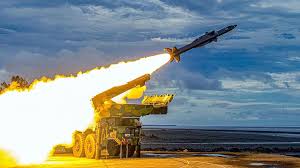
Akash Prime Missile Trial

Akash Prime Missile Trial

  • The Akash Prime is an upgraded medium-range, surface-to-air missile developed by the DRDO.
  • It was tested by the Army Air Defence Corps in coordination with DRDO scientists.
  • The test was conducted over two days at an altitude of 15,000 feet in eastern Ladakh.
  • The missile hit two fast-moving aerial targets with precision, showcasing its capability in high-altitude, low-oxygen conditions.
  • It will be part of the 3rd and 4th regiments of Akash systems in the Indian Army.

Prithvi-II and Agni-I Tests

  • The Strategic Forces Command oversaw the successful launch of Prithvi-II and Agni-I missiles in Odisha.
  • These are short-range ballistic missiles designed for quick response.
  • The tests confirmed that all technical and operational standards were met.

WHAT IS A BALLISTIC MISSILE?

  • Path of Travel (Ballistic Trajectory):
    A ballistic missile is a missile that is launched into the sky and follows a curved path (like a ball thrown into the air) before falling back to hit its target.
    Example: Agni-V follows this path to strike distant targets.

BALLISTIC MISSILE

  • High Speed, Long Range:
    These missiles travel at very high speeds and can hit targets from hundreds to thousands of kilometers away.
    Example: Prithvi-II is a short-range ballistic missile (~350 km), while Agni-IV can reach over 4,000 km.
  • Used for Strategic Defence:
    Ballistic missiles are mainly used to deliver warheads (like explosives or nuclear weapons) during conflicts or for deterrence.
    Example: Agni series (I to V) are part of India’s strategic missile forces under the Strategic Forces Command.

Conclusion

These successful trials enhance India’s air defence and missile readiness in both high-altitude and coastal areas.

Read Detailed Article ➡️ Click Here

WEST BANK ISSUE

TOPIC: (GS2) INTERNATIONAL RELATIONS: INDIAN EXPRESS

The United Nations has warned of mass displacement in the West Bank, reaching levels not seen since Israel’s occupation of the area nearly six decades ago.
The worsening situation reflects rising tensions and humanitarian concerns in the region.

WEST BANK ISSUE

Location of West Bank

  • Located to the west of the Jordan River.
  • Borders: Israel (west), Jordan (east), and Jerusalem (southwest).
  • Major cities: Ramallah (administrative capital of Palestinian Authority), Hebron, Nablus, Jenin, and Bethlehem.

Historical Background

  • 1948 Arab-Israeli War: After the war, Jordan occupied the West Bank and later annexed it (1949–1967).
  • 1967 Six-Day War: Israel captured the West Bank from Jordan, and it has remained under Israeli control since then.
  • Ongoing dispute over legal status and control between Israel and Palestine.

Oslo Accords (1993–1995)

  • The Oslo Peace Agreements aimed at resolving the Israel-Palestine conflict.
  • Created the Palestinian Authority (PA) to govern parts of the West Bank.
  • Divided the territory into three administrative zones:
    • Area A: Full control by Palestinians (civil + security).
    • Area B: Palestinian civil control, joint Israeli-Palestinian security.
    • Area C: Entirely under Israeli control (~60% of the territory).

Current Issue

  • Increasing violence, settlements, and displacements are threatening peace and stability.
  • The UN highlights the worsening humanitarian conditions and risk of further escalation.

Read Detailed Article ➡️ Click Here

EUTHANASIA IN INDIA

TOPIC: (GS2) GOVERNANCE: THE HINDU

The Kerala government has decided to allow local authorities to carry out euthanasia of stray dogs suffering from serious diseases, using provisions under the Prevention of Cruelty to Animals Rules, 2023. This decision has sparked debate on the ethical and legal aspects of euthanasia in India.

What is Euthanasia?

  • Euthanasia means intentionally ending the life of an individual to relieve pain and suffering due to incurable or terminal illness.
  • It can only be performed by a medical professional and is classified into two types:
    • Active Euthanasia: Deliberate use of substances or means (like lethal injection) to end life.
    • Passive Euthanasia: Withholding or withdrawing medical treatment or life support to let death occur naturally.

EUTHANASIA IN INDIA

Legal Provisions in India

  • Section 8 of the Animal Husbandry Rules (2023) allows euthanasia for animals that are severely ill, injured, or pose a threat of spreading disease.
  • A licensed veterinarian must confirm that keeping the animal alive would cause more suffering.

Supreme Court Judgments

  • 2011: In the Aruna Shanbaug case, the Supreme Court allowed passive euthanasia in specific cases.
  • 2018: The Court upheld the “Right to Die with Dignity” under Article 21, legalizing passive euthanasia for terminal patients.
  • It laid down rules for advance directives and for doctors to decide withdrawal of life support in genuine cases.

Conclusion

Euthanasia in India is legally permitted only in passive form, under strict medical and legal oversight, to safeguard the dignity of terminally ill individuals or animals.


Read Detailed Article ➡️ Click Here

Write a Review

Your email address will not be published. Required fields are marked *