

The Union Budget 2026 announced a ₹20,000 crore carbon credit programme, but confusion has arisen over whether it is meant for industrial carbon capture technologies (CCUS) or for farmers through sustainable agriculture practices.
The Industrial Focus – CCUS
- The Budget allocation is anchored in the R&D Roadmap for Carbon Capture, Utilization, and Storage (CCUS) released by the Department of Science and Technology in December 2025.
- Target sectors include power, steel, cement, refineries, and chemicals, labelled as “hardtoabate” industries.
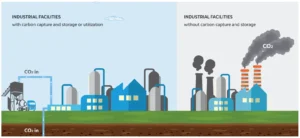
- CCUS involves capturing carbon dioxide from factory emissions and either storing it underground or using it industrially.
- Agriculture is not included in CCUS because its emissions (methane, nitrous oxide) are diffuse and biologically mediated, not pointsource.
Carbon Credits in Agriculture
- Regenerative Practices as Carbon Sinks: Farmers can earn carbon credits by adopting regenerative practices like soil carbon storage, biochar use, and agroforestry, which help capture carbon and improve soil fertility.
- Voluntary Carbon Market Linkage: These credits are linked to the voluntary carbon market, where agriculture and forestry projects already generate tradable credits for buyers seeking to offset emissions.
- Pilot Projects in India: Pilot projects in States such as Madhya Pradesh and Maharashtra are testing models where farmers are paid for increasing soil organic carbon, showing practical feasibility.
- Economic Potential for Farmers: With 140 million hectares of farmland, India has huge potential; global estimates suggest farmers could earn ₹3,000–₹5,000 per acre annually depending on carbon credit prices.
- Policy Perspective and NetZero Goals: A structured national policy on carbon farming could integrate soil health and climateresilient agriculture into India’s climate strategy, supporting both netzero 2070 goals and farmer incomes.
Root of the Confusion
- The Budget used the term “carbon credit programme”, which blurred lines between CCUS (industrial decarbonisation) and carbon farming (agriculturebased credits).
- While the DST roadmap is clear about industrial focus, the wording led to expectations of a farmercentric scheme.
- Analysts see this as both a communication gap and a policy opportunity.
Policy Implications
- The ₹20,000 crore CCUS programme is vital for industrial decarbonisation, as heavy industries contribute nearly a quarter of India’s emissions.
- At the same time, India’s vast agricultural lands hold immense potential for carbon sequestration.
- A separate, structured policy for carbon farming could create a trusted domestic carbon market and provide farmers with a new income stream.
Conclusion
Budget 2026 has firmly invested in industrial CCUS to meet netzero goals. India must clearly distinguish between smokestack solutions (CCUS) and soilbased solutions (carbon farming), while advancing both with equal ambition.
India’s regional navigation system NavIC has suffered another setback after the atomic clock on IRNSS1F failed, reducing positioning capability. This comes soon after the NVS02 satellite failed to reach its intended orbit, raising concerns about India’s GPS ambitions.
About NavIC (IRNSS)
- NavIC stands for Navigation with Indian Constellation, India’s regional satellite navigation system.
- Designed to provide accurate positioning services over India and up to 1,500 km beyond its borders.
- Planned as a sevensatellite constellation, similar to GPS, with accuracy of about 10 metres.
- Signals are stronger in India’s terrain because satellites are positioned directly above the region.
Current Status of Satellites
- Operational satellites: IRNSS1B, IRNSS1C, IRNSS1I, and NVS01.
- IRNSS1F lost positioning data due to atomic clock failure.
- IRNSS1A is nearly defunct after earlier clock failures.
- Many satellites have crossed their 10year design life.
- Replacement missions faced issues: IRNSS1H failed in 2017, IRNSS1I succeeded in 2018.
NVS02 Satellite Failure
- Launched in January 2025 on GSLVF15, ISRO’s 100th mission.
- Failed to move into operational orbit due to electrical malfunction in the engine ignition system.
- Review found a connector disengagement broke the circuit, preventing orbit transfer.
Challenges in NavIC Programme
- Atomic Clock Failures: Critical for precise time measurement and navigation accuracy.
- User Segment Delays: CAG report (2018) noted receiver development began late, slowing adoption.
- Aging Satellites: Several early satellites nearing end of life.
Advancements in NewGeneration NavIC
- Indigenous Atomic Clocks: Developed by ISRO to reduce dependence on foreign systems.
- Extended Mission Life: New satellites designed for 12 years.
- Addition of L1 Frequency Band: Improves interoperability with GPS and usability in smartphones.
- Enhanced Applications: Aviation, shipping, railways, and consumer devices already using NavIC signals.
Global Context
- Global GNSS systems: GPS (USA), GLONASS (Russia), Galileo (EU), BeiDou (China).
- Regional systems: NavIC (India), QZSS (Japan).
- Global systems use 20+ satellites in Medium Earth Orbit; regional systems rely on fewer satellites in geosynchronous orbits for regional accuracy.
Conclusion
NavIC is strategically vital for India’s selfreliance in navigation and security and satellite deployment highlight the need for robust technology upgrades, timely replacements, and stronger user adoption.
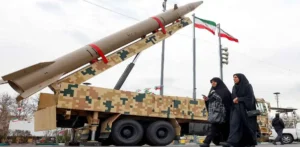
Iran has reportedly deployed its Sejjil ballistic missile in the ongoing Middle East conflict.
Sejjil Missile
- Developed by Iran in the early 1990s, first tested in 2008.
- It is a twostage, solidfuel mediumrange ballistic missile (MRBM).
- Nicknamed the “dancing missile” due to its ability to manoeuvre at high altitudes and evade missile defence systems.
- This missile is considered one of Iran’s most advanced weapons, capable of carrying both conventional explosives and nuclear warheads.
Features
- Design and Dimensions
- Length: ~18 metres; Diameter: ~1.25 metres.
- Weight: ~23,600 kilograms.
- Fuel Advantage
- Solidfuel propulsion allows faster launch readiness compared to older liquidfuel Shahab missiles.
- Provides strategic flexibility in battlefield conditions.
- Range and Payload
- Estimated range: ~2,000 kilometres.
- Payload capacity: ~700 kilograms, capable of carrying both conventional and nuclear warheads.
- Strategic Role
- Designed to target regional adversaries and deter external intervention.
- Its manoeuvrability makes it harder to intercept by missile defence systems.
Significance in Geopolitics
- Enhances Iran’s regional deterrence capability against rivals in West Asia.
- Raises concerns about nuclear proliferation and regional stability.
- Demonstrates Iran’s progress in indigenous missile technology, reducing dependence on foreign suppliers.
Researchers recently discovered two ancient petroglyphs (rock carvings) inside a rock shelter near Beerappa Temple in Manchirevula, Telangana, highlighting India’s rich prehistoric heritage.
Petroglyphs
- Petroglyphs are rock engravings or carvings, created by removing material from the rock surface using tools harder than the rock.
- Techniques include pecking, incising, abrading, polishing, drilling, and scratching.
- They differ from petrographs, which are simply painted or drawn images on rocks.
- The word “petroglyph” comes from Greek: ‘petros’ (stone) and ‘glyphein’ (to carve).

Characteristics
- Appear as scratches or deeper indentations on rock surfaces.
- Found across the world except Antarctica, with major concentrations in Africa, Americas, Siberia, Australia, and Europe.
- In India, a famous site is the Edakkal Caves in Wayanad, Kerala.
Significance
- Earliest Form of Art – Petroglyphs are considered one of the oldest artistic expressions of humankind.
- Communication Tool – Ancient communities used them to mark territorial boundaries, record events, or convey messages.
- Astronomical and Mapping Role – Some carvings served as star markers, calendars, or maps.
- Cultural Practices – Certain petroglyphs were used as musical instruments (“rock gongs”), showing their role in rituals and daily life.
Importance of Recent Discovery
- The Telangana finding adds to India’s archaeological record of prehistoric art.
- It highlights the cultural continuity of early human settlements in the Deccan region.
- Such discoveries help understand social organisation, belief systems, and artistic traditions of ancient populations.
Conclusion
Petroglyphs are not just carvings but windows into prehistoric life, reflecting art, communication, and spirituality. The Telangana discovery strengthens India’s position as a land of diverse and ancient cultural heritage, valuable for both archaeology and history.
Why in News
India has submitted its First National Report (NR1) on the implementation of the Nagoya Protocol to the CBD Secretariat.
Nagoya Protocol
- The Nagoya Protocol is a global agreement under the Convention on Biological Diversity (CBD) focusing on fair and equitable sharing of benefits arising from genetic resources.
About India’s National Report (NR1)
- Prepared by the Ministry of Environment, Forest and Climate Change (MoEFCC) in collaboration with the National Biodiversity Authority (NBA).
- Covers implementation progress from 2017 to 2025.
- Highlights regulatory, institutional, and operational achievements in ABS.

Key Data
- 12,830 ABS approvals granted during the period.
- 5,913 by NBA
- 6,917 by State Biodiversity Boards (SBBs)/UT Biodiversity Councils
- India issued 3,500+ Internationally Recognized Certificates of Compliance (IRCCs), contributing to a major share globally (~60%).
Nagoya Protocol: Key Features
- Adopted in 2010 (Nagoya, Japan) and came into force in 2014.
- Ensures:
- Access to genetic resources through Prior Informed Consent (PIC)
- Benefit sharing via Mutually Agreed Terms (MAT)
- Covers:
- Monetary benefits (royalties, fees)
- Non-monetary benefits (technology transfer, research collaboration)
- Aims to prevent bio-piracy and promote sustainable utilization.
India’s Legal and Institutional Framework
- Based on Biological Diversity Act, 2002 (aligned with the Protocol).
- Supported by:
- Biological Diversity Rules, 2024
- ABS Regulations, 2025
Three-Tier Structure
- National Biodiversity Authority (NBA) – Approval for foreign access, high-value resources
- State Biodiversity Boards (SBBs) – Regulate domestic access
- Biodiversity Management Committees (BMCs) – Local-level implementation
Supporting Tools
- People’s Biodiversity Registers (PBRs) for documentation
- Digital systems for ABS approvals and monitoring