
Daily Current affairs 20 March 2026

Daily Current Affairs 20-March-2026

Share this Post

AI-POWERED TAX GOVERNANCE IN INDIA

TOPIC: (GS3) SCIENCE AND TECHNOLOGY: THE HINDU

At the India AI Impact Summit (Feb 2026), experts highlighted India’s use of Artificial Intelligence (AI) in tax administration, particularly through the Income Tax Department’s Project Insight (PI).

Background

  • India’s tax-GDP ratio (2001–22 average: 16.36%) is among the lowest in emerging economies.
  • Annual tax evasion costs India about 4.3% of revenues.
  • To address this, the ITD launched Project Insight (2017, operational in 2019) using AI and data analytics.

Benefits of Project

  • Encourages voluntary compliance via behavioural nudges (SMS/email reminders).
  • Builds 360° taxpayer profiles using data from banks, property, GST, credit cards, etc.
  • Detects inconsistencies between declared income and actual financial activity.
  • Automates routine tasks, freeing officials for complex cases.
  • Improves taxpayer services (chatbots, faster refunds).

Outcomes So Far

  • Since 2020–21: 1 crore revised returns filed, yielding ₹11,000 crore extra tax.
  • Foreign Income NUDGE campaign: 62% taxpayers corrected returns; overseas assets worth ₹29,208 crore declared.
  • Political donation claims corrected: ₹963 crore false deductions removed.
  • Refund processing time reduced from 93 days to 17 days.
  • AI detected ₹70,000 crore suppressed sales turnover by restaurants (2019–20 onwards).
  • Similar AI-enabled systems used in Australia, UK, Italy, U.S. with success.

Challenges

  • Data Quality & Provenance: AI depends on reliable data; errors or complex family finances may trigger false positives.
  • Algorithmic Bias: Models may replicate socio-economic/geographic biases (e.g., Dutch childcare scandal).
  • Explainability & Due Process: Taxpayers must know why they are flagged and have a clear appeal mechanism. Human-in-the-loop review is essential.
  • Privacy & Security: Sensitive financial data creates risks of misuse or cyberattacks.
  • Lack of Ombudsman: No independent AI ombudsperson or external audits of risk-scoring models.

Conclusion

AI-driven tax governance has boosted compliance and revenue mobilisation in India, but without strong safeguards, it risks becoming a surveillance tool that undermines trust.

HOW FAR SHOULD GOVERNMENTS GO IN USING AI?

TOPIC: (GS3) SCIENCE AND TECHNOLOGY: THE HINDU

Recently, debates on the safe use of Artificial Intelligence (AI) in governance gained momentum after a dispute between the U.S. Pentagon and AI firm Anthropic, which refused to ease safeguards that prevent mass surveillance and autonomous weapon deployment.

Potential Benefits of AI in Governance

  • Data Analysis & Access: Helps governments process large datasets for better decision-making.
  • Healthcare: AI-assisted diagnostics (e.g., COVID-19 lung infection detection).
  • Public Services: Chatbots, faster grievance redressal, improved efficiency.
  • Tax & Welfare Systems: Detect fraud, streamline benefits, reduce leakages.
  • National Security: Predictive analysis, logistics, and monitoring (with caution).

Risks and Concerns

  • Privacy & Data Misuse: Citizens often lack informed consent. Welfare data may be repurposed for policing or surveillance.
  • Algorithmic Bias: AI trained on historical data may replicate socio-economic or regional biases. Risk of unfair targeting of certain communities.
  • Lack of Transparency & Accountability: Citizens may not know why they are flagged or how decisions are made. Absence of clear appeal mechanisms undermines trust.
  • Sovereignty & Dependence: Reliance on global AI companies risks technological lock-in. Indigenous capability weakens if infrastructure is controlled by foreign firms.
  • Ethical Concerns: Use in surveillance, facial recognition, or autonomous weapons raises human rights issues. Efficiency claims often mask labour substitution and exclusion risks.

Way Forward

  • Define Clear Objectives: Adopt AI only where necessary and proportionate. Apply a “Do No Harm” principle in sensitive areas.
  • Strengthen Safeguards: Build privacy protections at the design stage. Ensure transparency, explainability, and human-in-the-loop oversight.
  • Treat Data Responsibly: Public datasets should be seen as citizens’ rights, not commercial assets. Avoid handing over sensitive data to private actors without safeguards.
  • Institutional Framework: Establish independent regulators or ombudsman for AI governance. Mandate algorithmic impact assessments and external audits.

Conclusion

Without strong safeguards, transparency, and indigenous capacity, AI risks becoming a tool of surveillance and dependency rather than empowerment. India must pursue ethical, sovereign, and citizen-centric AI governance.

OIL, POWER, AND POLITICS OF DISRUPTION

TOPIC: (GS3) ECONOMY: THE HINDU

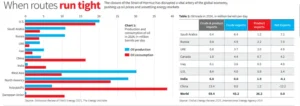
Recently, Iran blocked shipping through the Strait of Hormuz following U.S.–Israel military action, disrupting global oil flows and triggering sharp price increases.

Importance of Strait of Hormuz

  • Narrow passage (33 km wide at some points) connecting Persian Gulf to Arabian Sea.
  • Nearly 20% of global oil trade passes through it.
  • Closure impacts global energy supply chains and raises prices.
Oil, Power, and Politics of Disruption

Global Energy Flows

  • Oil & natural gas: ~50% of global energy supply (IEA, 2024).
  • Producers: Saudi Arabia, UAE, Iran (West Asia).
  • Consumers: China, India, Japan (East & South Asia).
  • Heavy dependence on imports through Hormuz due to limited reserves in Asia.

America and West Asia

  • U.S.: both major producer and consumer; per capita energy supply 10× India, 2.4× China.
  • Historical interventions: Gulf War (1990–91), Iraq War (2003–11), Venezuela (2026), current Iran conflict.
  • Shift since 1950s: control moved from Western firms to national oil companies.
  • U.S. boosted domestic shale oil production since mid-2000s, becoming world’s largest producer.
  • Venezuela & Iran: together hold 39% of proven oil reserves, making them strategically vital.
  • Closure of Hormuz disrupted U.S. plans, indirectly benefiting Russia.

Russia and India

  • Russia: isolated post-Ukraine war (2022), but now crucial due to West Asian disruptions.
  • India:
    • 2nd largest importer, 3rd largest consumer of crude oil.
    • Russian oil imports rose from 2.5% (2021) → 39% (2023).
    • India refines imported crude and exports products (petrol, diesel, LPG).
    • Discounted Russian oil stabilised global prices despite Western sanctions.

Current Strain

  • Oil prices crossed $110/barrel after Hormuz closure.
  • U.S. now indirectly encouraging greater purchases of Russian oil to calm markets.
  • Energy geopolitics shifting rapidly, with Russia emerging as a key supplier outside West Asia.

Challenges for India

  • Rising import bill → inflationary pressures.
  • Strategic dependence on volatile West Asian supply routes.
  • Balancing ties with U.S., Russia, and Gulf states amid sanctions and conflicts.

Way Forward

  • Diversify Energy Sources – expand LNG imports, renewable energy, and domestic exploration.
  • Strengthen Strategic Reserves – build larger oil storage capacity to cushion supply shocks.
  • Enhance Diplomacy – balance relations with U.S., Russia, and Gulf producers.
  • Boost Refining & Exports – leverage refining capacity for economic gains.
  • Accelerate Energy Transition – invest in solar, wind, hydrogen to reduce oil dependence.

Conclusion

The closure of the Strait of Hormuz highlights how energy supply shocks reshape global politics. For India, managing oil dependence while diversifying energy sources and strengthening strategic partnerships will be crucial to safeguard economic stability and national security.

PM POSHAN SCHEME EXPANSION PROPOSAL

TOPIC: (GS2) POLITY: THE HINDU

Recently, a Parliamentary Standing Committee on Education recommended expanding the PM POSHAN Scheme to include breakfast and extend coverage up to Class 12, highlighting the importance of adolescent nutrition.

PM POSHAN Scheme

  • Launched in 2021 as a restructured version of the Mid-Day Meal Scheme.
  • One of the largest school nutrition programmes globally.
  • Objectives:
    • Improve nutritional levels of children.
    • Increase enrolment, retention, and attendance.
    • Reduce dropouts, especially among disadvantaged groups.
    • Promote social equity by encouraging children to eat together.

Coverage & Beneficiaries

  • Provides one cooked meal per day.
  • Beneficiaries: Students of government and aided schools from Class 1–8.
  • Current nutritional standards:
    • Primary (Class 1–5): 450 calories, 12 g protein.
    • Upper Primary (Class 6–8): 700 calories, 20 g protein.
  • Budget (2021–26): ₹1.3 lakh crore, shared by Centre and States.
  • Coverage: ~11.8 crore children, serving 100+ crore meals per month.

Committee Recommendations

  • Breakfast Inclusion: Provide light breakfast along with midday meal. Morning nutrition improves concentration, memory, and cognitive performance.
  • Expansion of Coverage: Immediate extension up to Class 10. Gradual expansion up to Class 12 within five years.
  • Link Between Nutrition & Education: Proper nutrition enhances learning outcomes. Board exam years (Class 10 & 12) require higher focus and stamina.
  • Other Suggestions: Extend PM-SHRI benefits to more schools. Ensure timely release of funds under Samagra Shiksha.

Challenges

  • Funding Limitations: Expanding the scheme to cover breakfast and higher classes requires significant additional financial resources.
  • Infrastructure Deficit: Many schools lack adequate kitchens, storage facilities, and trained staff to manage larger-scale meal preparation.
  • Quality & Hygiene Concerns: Ensuring nutritious, safe, and hygienic meals across millions of schools remains a major challenge.
  • Monitoring & Accountability: Preventing leakages, corruption, and misuse of funds demands stronger real-time monitoring and transparent systems.

Way Forward

  • Phased Expansion: start with Class 10, gradually extend to Class 12.
  • Strengthen Monitoring: use technology for real-time checks.
  • Community Involvement: promote school nutrition gardens, local food sourcing.
  • Gender Focus: ensure adolescent girls receive adequate nutrition.
  • Integration with Health Schemes: link with anaemia reduction and adolescent health programmes.

Conclusion

The proposed expansion of PM POSHAN reflects the recognition that nutrition and education are inseparable. Extending meals to adolescents and adding breakfast can reduce malnutrition, improve learning outcomes, and strengthen India’s human capital.

ISRO’S NAVIC CONSTELLATION

TOPIC: (GS3) SCIENCE AND TECHNOLOGY: THE HINDU

ISRO’s NavIC satellite navigation system is facing operational distress, with only three satellites currently functional. The failure of atomic clocks and launch setbacks have raised concerns about India’s ability to maintain its indigenous GPS alternative.

Background

  • NavIC (Navigation with Indian Constellation): India’s regional navigation system, launched since 2013.
  • Designed to provide Position, Navigation, and Timing (PNT) services over India and surrounding regions.
  • Origin: U.S. refusal to share GPS data during Kargil War (1999) prompted India to develop its own system.
  • Managed by ISRO, primarily for defence and strategic use.
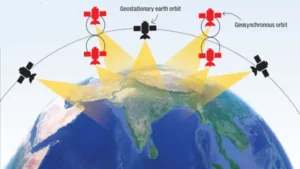
ISRO Navic Constellation

Current Issues

  • Out of 11 satellites launched, only 3 remain functional.
  • A minimum of 4 satellites are required for PNT services.
  • IRNSS-1F’s atomic clock failed in March 2026, just after completing its 10-year design life.
  • Earlier satellites used Swiss-made rubidium clocks (SpectraTime), known for failures.
  • NVS-02 launch failed due to wrong orbit placement.
  • Indigenous rubidium clocks introduced in NVS-01 (2023), but procurement challenges remain.

Challenges

  • Technical Failures: Frequent atomic clock malfunctions. Poor replenishment rate of satellites.
  • Institutional Gaps: No dedicated body like GPS Directorate (U.S.) or EUSPA (EU) to manage NavIC. ISRO overburdened as both designer and operator.
  • Budgetary Constraints: Limited funds spread across human spaceflight, earth observation, and rocket R&D. Insufficient allocation for maintaining a PNT constellation.
  • Launch Bottlenecks: PSLV issues and slow launch rate. Dependence on start-ups still learning orbital launches.

Way Forward

  • Strengthen Satellite Reliability: Equip each satellite with five atomic clocks instead of three. Improve indigenous clock technology and procurement.
  • Institutional Reform: Create a dedicated NavIC Directorate for operations and management. Reduce ISRO’s burden by separating design and operational roles.
  • Increase Launch Capacity: Accelerate PSLV upgrades and support private launch firms. Ensure timely replenishment of satellites.
  • Policy & Legal Framework: Enact a national space law to define roles, accountability, and commercialisation.
  • Global Interoperability: Promote L1 band support for better integration with GPS. Encourage adoption by electronics manufacturers and armed forces.

Conclusion

To secure India’s navigation independence, ISRO must fix systemic issues, strengthen satellite technology, and establish robust governance mechanisms before the next generation of satellites is launched.
AUTONOMOUS DISTRICT COUNCILS (ADCS)

TOPIC: (GS2) POLITY: THE HINDU

Recently, the Meghalaya Government extended the tenure of the Garo Hills Autonomous District Council (GHADC) by six months, bringing focus back to the functioning of ADCs under the Sixth Schedule.

Constitutional Basis

  • Provided under the Sixth Schedule of the Indian Constitution.
  • Covers 10 tribal areas: Assam (3), Meghalaya (3), Tripura (1), Mizoram (3).
  • Each tribal area is declared an autonomous district with its own council.

Membership & Tenure

  • 30 members in each council.
    • 26 elected through adult franchise.
    • 4 nominated by the Governor.
  • Tenure: 5 years from constitution date.

Functions of ADCs

  • Legislative Powers:
    • Make laws on land, forest management (except reserved forests).
    • Appointment of traditional chiefs and headmen.
    • Regulate inheritance, marriage, divorce, and village courts.
  • Administrative Powers:
    • Establish/manage schools, dispensaries, markets, ferries, fisheries, roads.
    • Control money lending and trading by non-tribals (with Governor’s assent).

Revenue Sources

  • Taxes on professions, trades, employment.
  • Taxes on animals, vehicles, boats.
  • Entry tax on goods in markets, tolls on ferries.
  • Taxes for maintenance of schools, dispensaries, and roads.

Significance

  • Protects tribal autonomy and culture.
  • Promotes self-governance in tribal areas.
  • Balances development with traditional institutions.

Conclusion

Autonomous District Councils are a unique constitutional mechanism to safeguard tribal rights and self-rule in the Northeast. While they empower local governance, challenges of funding.

BHARAT AUDYOGIK VIKAS YOJNA (BHAVYA)

TOPIC: (GS2) POLITY: THE HINDU

Recently, the Union Cabinet approved the Bharat Audyogik Vikas Yojna (BHAVYA), a major initiative to boost industrial infrastructure and accelerate India’s manufacturing growth.

BHAVYA

  • Aim: Develop world-class industrial infrastructure to unlock India’s manufacturing potential.
  • Target: Establish 100 plug-and-play industrial parks across the country.
  • Implementation: In partnership with states and private sector players.

Key Features

  • Financial Scale:: Total outlay: ₹33,660 crore. Support up to ₹1 crore per acre for park development.
  • Plug-and-Play Ecosystem: Ready-built factory sheds, testing labs, underground utilities. Enables industries to move quickly from “intent to production.”
  • Infrastructure Scope: Core utilities (power, water, IT connectivity). Value-added facilities like warehousing.
  • Connectivity & Logistics: Integrated with PM GatiShakti for multimodal transport. External infrastructure support up to 25% of project cost.

What is Plug-and-Play Industrial Infrastructure?

  • Industrial parks equipped with all utilities and regulatory clearances before investors arrive.
  • Reduces delays, improves ease of doing business, and attracts global manufacturers.

Challenges

  • Funding Constraints: Ensuring adequate resources for large-scale expansion.
  • Coordination Issues: Effective collaboration between Centre, states, and private sector.
  • Land Acquisition: Securing land without social or environmental conflicts.
  • Sustainability Concerns: Balancing industrial growth with ecological safeguards.
  • Implementation Delays: Past industrial corridor projects faced slow execution.

Way Forward

  • Robust Monitoring: Ensure timely completion with strict accountability.
  • Private Sector Participation: Encourage PPP models for efficiency and innovation.
  • Skill Development: Train workforce to match industrial demand.
  • Balanced Growth: Promote parks in Tier-2 and Tier-3 cities to spread development.
  • Green Manufacturing: Integrate renewable energy and eco-friendly practices.

Conclusion

By combining plug-and-play facilities, sustainable practices, and strong connectivity, the scheme can transform India into a manufacturing hub, strengthen exports, and generate employment.

STOCKHOLM WATER PRIZE

TOPIC: (GS3) ENVIRONMENT: THE HINDU

Recently, Kaveh Madani has been announced as the 2026 recipient of the Stockholm Water Prize, considered the most prestigious global award for water-related work.

About the Prize

  • Established in 1991, awarded annually.
  • Recognised as the “Nobel Prize for Water”.
  • Presented by the Stockholm Water Foundation in collaboration with the Royal Swedish Academy of Sciences.
  • Patron: H.M. King Carl XVI Gustaf of Sweden, who presents the award during World Water Week (August).

Eligibility & Nomination

  • Open to individuals or organisations contributing to water conservation, protection, and sustainable use.
  • Recognises extraordinary achievements in safeguarding water resources and improving human well-being.
  • Nominations can be submitted by anyone, but self-nominations or those by close associates are not allowed.

Significance

  • Promotes global awareness of water challenges.
  • Encourages innovation in water management, conservation, and sustainability.
  • Strengthens international cooperation on water security and environmental protection.

Conclusion

The Stockholm Water Prize highlights the critical role of water in sustainable development. Honouring pioneers like Kaveh Madani reinforces the urgency of protecting water resources for future generations.

Write a Review

Your email address will not be published. Required fields are marked *