...
Daily Current affairs 28th January 2026

Daily Current Affairs 28-January-2026

Share this Post

UGC EQUITY REGULATIONS 2026

TOPIC: (GS2) POLITY: THE HINDU

The University Grants Commission (UGC) has notified the Promotion of Equity in Higher Education Institutions Regulations, 2026 to curb caste-based and other forms of discrimination. The move follows Supreme Court intervention after petitions linked to the deaths of Rohith Vemula (2016) and Payal Tadvi (2019).

Background

  • India’s higher education system has faced repeated allegations of caste bias and exclusion.
  • Earlier regulations (2012) were largely advisory and lacked enforcement mechanisms.
  • The new rules aim to create a mandatory, structured framework for equity and inclusion across campuses.

Key Features of the 2026 Regulations

Equal Opportunity Centre (EOC)

  • Every institution must set up an EOC to oversee policies for disadvantaged groups.
  • Coordinates with district administration and police; facilitates legal aid.
  • Composed of five faculty members (no reservation quota).

Equity Committee

  • A 10-member committee chaired by the head of the institution.
  • At least five members from reserved categories (SC, ST, OBC, women, PwDs).
  • Must meet within 24 hours of a complaint and submit report in 15 days.
  • Head of institution to act within 7 days of report submission.

Equity Squads & Helpline

  • Mobile squads to monitor campuses and prevent discrimination.
  • 24-hour helpline for reporting bias.
  • Appointment of Equity Ambassadors to spread awareness.

Aspect

2012 Rules

2026 Rules

Nature of Provisions

Advisory in character; institutions were guided but not legally compelled.

Mandatory and legally enforceable; compliance is binding on institutions.

Enforcement Powers

No clear penalty structure for non-compliance.

UGC empowered to impose penalties, including debarring institutions from grants, academic privileges, or schemes.

Institutional Mechanism

Equal Opportunity Cells existed but with limited clarity on structure and functions.

Structured multi-tier mechanism with clearly defined authorities, procedures, and timelines.

Coverage of Beneficiaries

Focused mainly on SC/ST students.

Broader inclusion of OBCs, women, Persons with Disabilities (PwDs), and other disadvantaged groups.

Concerns Raised

  • Critics fear misuse due to no penalty for false complaints.
  • Allegations that rules may harass general category students.
  • Risk of deepening caste divisions within campuses.
  • Debate over balancing equity with academic freedom.

Significance

  • Strengthens protection for vulnerable groups in higher education.
  • Ensures time-bound grievance redressal.
  • Promotes inclusivity and addresses judicial concerns.
  • Reflects India’s commitment to social justice and constitutional values.

Conclusion

The UGC Equity Regulations 2026 mark a shift from advisory to enforceable rules, aiming to eliminate discrimination in higher education. While they enhance accountability and inclusion, success will depend on fair implementation that avoids misuse and ensures genuine equity across campuses.

INDIA–EU FREE TRADE AGREEMENT (FTA)

TOPIC: (GS2) INTERNATIONAL RELATIONS: THE HINDU

At the India–EU Leaders’ Summit, India and the European Union announced the successful conclusion of negotiations on the Free Trade Agreement (FTA). This marks a breakthrough in the strategic partnership at a time of global trade uncertainty, tariff wars, and supply chain disruptions.

Background

  • India and the EU together account for 25% of global GDP and over one-third of world trade.
  • The EU is India’s second-largest export market after the US.
  • The FTA complements India’s recent trade deals with the UK and EFTA, strengthening its trade diplomacy.

Key Features of the Agreement

  • Strategic Partnership: Supported by strong people-to-people ties: 1.7 million Indian diaspora in the EU and over 1.2 lakh Indian students.
  • Economic Complementarity: India (4th largest economy) and EU (2nd largest economy) are complementary, not competitive.
  • Diversification & Supply Chain Resilience: Reduces dependence on China-centric supply chains. Critical amid US–China trade tensions and rising protectionism.
  • Gains for India: Major benefits in labour-intensive sectors: textiles, gems & jewellery, leather, footwear.

Safeguarding Agriculture

  • Sensitive sectors like dairy, cereals, meat, fruits, and vegetables excluded.
  • Protects farmers and food security concerns.

Auto Sector Opening

  • EU automakers allowed entry mainly in premium segments.
  • Encourages Make in India and technology transfer.

Carbon Border Adjustment Mechanism (CBAM)

  • FTA provides most favoured treatment and technical dialogue.
  • EU to support India’s climate transition.

Services as Growth Driver

  • Boost to digital trade, professional mobility, and social security coordination.
  • Certainty of market access for Indian IT and service firms.

Living Agreement

  • Includes review clauses and consultation mechanisms for emerging technologies.
  • Designed as a flexible, evolving framework.

Challenges Ahead

  • Managing adjustment costs in sensitive sectors.
  • Aligning regulatory standards and compliance.
  • Addressing CBAM-related competitiveness issues.
  • Ensuring benefits for MSMEs and small farmers.

Conclusion

By balancing market access with domestic sensitivities and embedding flexibility through a living framework, the agreement positions India as a reliable global partner in an era of uncertainty, reinforcing its commitment to open, rule-based trade diplomacy.

VEHICLE-TO-VEHICLE (V2V) COMMUNICATION

TOPIC: (GS3) SCIENCE AND TECHNOLOGY: THE HINDU

India continues to record the highest road accident fatalities worldwide, with over 1.77 lakh deaths in 2024. In response, the Ministry of Road Transport and Highways (MoRTH) is preparing to introduce Vehicle-to-Vehicle (V2V) communication technology under its Intelligent Transport Systems (ITS) framework to strengthen road safety and traffic management.

What is V2V Technology?

  • A wireless communication system enabling vehicles to share real-time data such as speed, braking, and location.
  • Part of Vehicle-to-Everything (V2X) technology within ITS.
  • Inspired by aviation safety, where aircraft continuously broadcast position and speed to avoid collisions.

Policy Developments in India

  • Spectrum Allocation: 30 GHz band reserved by DoT.
  • Joint Task Force: Collaboration between MoRTH and DoT with OEMs.
  • Standardisation: National standards being drafted for rollout.
  • Road Safety Mission: V2V identified as a priority initiative.

Working of V2V

  • On-Board Unit (OBU): Cost ₹5,000–₹7,000, range ~300 metres.
  • Rollout Strategy:
    • Phase 1 – Mandatory in new vehicles.
    • Phase 2 – Retrofitting in older vehicles.
    • Spectrum cost free to reduce compliance burden.

Global Experiences

  • USA: Pioneer in V2V regulation and pilot projects.
  • Europe: Germany, France, UK integrating into smart mobility.
  • Japan: ITS Connect programme for real-time alerts.
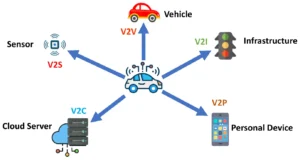
Vehicle to vehicle(V@V) Communication

Challenges

  • Technology Limits: Frequency bands may not suit all vehicles.
  • Privacy Concerns: Risks of surveillance and misuse of driver data.
  • Cybersecurity Risks: Vulnerability to hacking and system hijacking.
  • Regulatory Gaps: Need clarity on liability, accountability, and data ownership.

Way Forward

  • Formulate comprehensive V2V standards aligned with global best practices.
  • Integrate with Digital Public Infrastructure and upcoming data protection laws.
  • Conduct regular cybersecurity audits.
  • Ensure phased adoption across commercial and private vehicles.
  • Build capacity in enforcement agencies and run awareness campaigns.

Conclusion

The rollout of V2V technology represents a transformative step in India’s road safety governance. If implemented effectively with strong regulation and safeguards, it can significantly reduce accidents, align India with global road safety targets, and pave the way for smart, safe, and sustainable mobility.

TRUMP, DE-DOLLARISATION, AND THE GLOBAL GOLD RUSH

TOPIC: (GS3) ECONOMY: THE HINDU

Gold prices have crossed $5,000 per ounce for the first time, while the US dollar has weakened sharply. Central banks worldwide, including the RBI, are increasing gold holdings, reflecting a broader trend of de-dollarisation in global finance.

About De-dollarisation

  • De-dollarisation refers to countries reducing reliance on the US dollar in trade, reserves, and investments.
  • Triggered by US sanctions, trade wars, and geopolitical use of the dollar.
  • Gold, being politically neutral and sanction-free, has re-emerged as a preferred reserve asset.

Drivers of the Shift

  • Trump’s Policies: Heavy use of tariffs, sanctions, and dollar dominance as a geopolitical tool.
  • Trust Deficit: Dollar seen as unreliable after US froze Russia’s reserves in 2022.
  • Multipolar World: Countries diversifying reserves to reduce vulnerability.
  • Currency Weakness: US dollar fell ~9% in 2025, its steepest decline in a decade.

India’s Position

  • RBI Reserves: Nearly one-third of forex reserve growth in 2025 came from gold value appreciation.
  • Gold Share: Rose from 12% to 17% of total reserves in one year.
  • US Treasuries: RBI reduced holdings from $234 bn (2024) to $186 bn (2025).
  • Reflects India’s cautious diversification strategy.

Global Trends

  • Central Banks Buying Gold: Poland, Kazakhstan, Brazil among top buyers in 2025.
  • IMF Data: Dollar’s share in global reserves fell to 58.5% in 2024, lowest in 30 years (from 71% in 1999).
  • Institutional Investors: Danish pension funds and European banks reducing US debt exposure.
  • EU Holdings: Europe holds ~$10.4 trillion in US assets but faces pressure to diversify.

Implications

  • For US: Weakens Washington’s ability to influence global trade and finance.
  • For Global System: Gold regains importance as a hedge against currency debasement and geopolitical risk.
  • For India: Strengthens reserve stability but raises challenges in managing CAD and external shocks.
  • Weaponisation of Capital: Financial flows increasingly used as geopolitical leverage.

Way Forward

  • Countries must balance diversification with stability, as the dollar still dominates 89% of forex turnover.
  • India should continue building gold reserves while deepening rupee trade mechanisms.
  • Global financial governance needs reforms to reduce overdependence on any single currency.

Conclusion

De-dollarisation reflects a structural shift in global finance, accelerated by US policies under Trump. While the dollar remains dominant, the rising role of gold and alternative currencies signals a gradual move towards a multipolar monetary order, reshaping global economic power balances.

DRDO’S HYPERSONIC MISSILE

TOPIC: (GS3) SCIENCE AND TECHNOLOGY: THE HINDU

At the 77th Republic Day Parade, DRDO unveiled the Long Range Anti-Ship Hypersonic Missile (LR-AShM) for the first time. This highlights India’s growing focus on hypersonic weapon systems, a critical frontier in modern strategic and tactical warfare.

About Hypersonic missiles

  • Hypersonic missiles travel at speeds above Mach 5 and are extremely difficult to detect or intercept.
  • India’s LR-AShM represents a major step in indigenous development of next-generation missile technology.
  • It strengthens India’s position among a select group of nations pursuing hypersonic glide and cruise missile programmes.
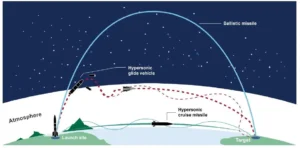
DRDO's Hypersonic Missile

Features of LR-AShM

  • Range: Capable of striking targets up to 1,500 km, with extended versions under development (up to 3,500 km).
  • Flight Profile: Quasi-ballistic trajectory; initial boost to Mach 10, sustained average Mach 5.
  • Two-Stage Propulsion:
    • Stage I – solid rocket motor for hypersonic velocity.
    • Stage II – burnout followed by unpowered hypersonic glide with controlled manoeuvres.
  • Aerodynamic Efficiency: Generates lift with minimal drag, ensuring longer range and higher accuracy.
  • Payload Flexibility: Can carry multiple warheads for diverse missions.

Strategic Significance

  • Sea Denial Capability: Designed to neutralise all classes of warships, enhancing India’s dominance in the Indian Ocean Region.
  • Rapid Strike: Covers 1,500 km in ~15 minutes, reducing adversary reaction time.
  • Multi-Service Potential: Army, Air Force, and ship-launched variants under consideration.
  • Survivability: Low altitude, extreme speed, and manoeuvrability make detection by enemy radars very difficult.

India’s Parallel Hypersonic Efforts

  • Hypersonic Glide Vehicle (HGV): Rocket-launched, glides through atmosphere at Mach 5+.
  • Hypersonic Cruise Missile: Powered by scramjet engines, sustaining hypersonic speeds within atmosphere.

Challenges Ahead

  • Technological Complexity: Scramjet design and sustained hypersonic flight remain difficult.
  • Global Competition: U.S., Russia, and China already advancing operational hypersonic systems.
  • Integration: Requires robust testing, platform adaptation, and production scaling.

Conclusion

The unveiling of LR-AShM marks a milestone in India’s defence modernisation, showcasing indigenous capability, Effective development and deployment will enhance strategic deterrence, maritime security, and technological self-reliance.

RARE-EARTH ELEMENTS (REES)

TOPIC: (GS3) SCIENCE AND TECHNOLOGY: THE HINDU

Rare-earth elements (REEs) are gaining global attention as countries worry about supply risks in critical technologies.

What Are Rare-Earth Elements?

  • A group of 17 metallic elements: 15 lanthanides (Lanthanum to Lutetium), Plus Scandium and Yttrium
  • Known for special magnetic, light-emitting, and electrical properties
  • Widely used in advanced modern technologies

Why the Name “Rare” Is Misleading

  • REEs are not actually scarce in the Earth’s crust
  • They are called “rare” because: They are not found in rich, concentrated deposits, They are mixed together, making separation difficult
  • Common minerals containing REEs include monazite and bastnäsite
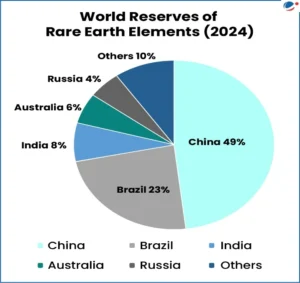
Rare-Earth Elements (REES)


Why Are Rare-Earth Elements So Important?

  • Technology and Energy: Used in powerful permanent magnets for: Electric vehicles, Wind turbines, Motors and generators
  • Optical and Industrial Uses: Used in LED lights, screens, lasers, and medical imaging, Important for catalysts, ceramics, and glass polishing
  • Defence Applications: Needed in missiles, radar systems, fighter jets, and communication devices

Why Is Separation So Difficult?

  • REEs have very similar chemical properties
  • Most exist as +3 charged ions, making them hard to distinguish
  • Separation requires: Hundreds of stages of chemical processing, Large use of solvents, energy, and time
  • High-tech industries require extremely pure forms, increasing cost

How REE Processing Differs from Oil Refining

  • Oil can be separated by boiling points
  • REEs cannot be separated easily like that
  • Instead, they need complex chemical extraction methods
  • Scaling up production increases waste, water use, and pollution

Environmental Concerns

  • Mining and processing produce toxic waste
  • Often associated with radioactive elements like thorium
  • Uses strong acids and chemicals, causing pollution risks
  • Strict environmental rules make production expensive

Why China Dominates

  • China leads in mining, refining, and magnet production
  • Has strong processing infrastructure, not just mineral reserves
  • Past low environmental costs helped it grow faster
  • This gives China strategic influence over global supply

Conclusion

Rare-earth elements are vital for modern technology and green energy, but their real challenge lies in complex processing, not availability. Control over refining and manufacturing will shape future economic and geopolitical power.

STRATEGIC ASSET ALLOCATION AND RISK GOVERNANCE (SAARG) COMMITTEE

TOPIC: (GS2) GOVERNANCE: THE HINDU

The Pension Fund Regulatory and Development Authority (PFRDA) has set up the SAARG Committee to review and modernise the investment framework of the National Pension System (NPS).

About the SAARG Committee

  • Constituted by PFRDA as a high-level panel of investment experts.
  • Objective: Improve long-term investment architecture of NPS by enhancing diversification, risk management, and investment options.
  • Scope: Review guidelines for both government and non-government NPS sectors.

Key Tasks of the Committee

  • Strategic Asset Allocation: Suggest frameworks for balanced and diversified portfolios.
  • Asset Class Review: Examine introduction of new asset classes and valuation standards.
  • Performance & Accountability: Recommend systems for measuring fund performance and ensuring transparency.
  • Risk Governance: Strengthen asset-liability management (ALM), portfolio stability, and liquidity optimisation.
  • Sustainability Integration: Explore inclusion of ESG (environmental, social, governance) factors in investment decisions.
  • Global Benchmarking: Compare India’s pension framework with leading international systems.

Composition

  • Chairperson: Shri Narayan Ramachandran, former CEO of Morgan Stanley India.
  • Members: Nine experts from capital markets, asset management, and securities law.
  • Timeline: Committee to submit recommendations within 9 months.

Significance

  • Enhances credibility and efficiency of NPS investments.
  • Aligns India’s pension system with global standards.
  • Expands investment choices for subscribers while ensuring better risk governance.
  • Supports long-term financial security for millions of pension contributors.

Conclusion

The SAARG Committee reflects India’s push towards a modern, transparent, and globally benchmarked pension investment system. Its recommendations will be crucial for balancing growth, risk, and sustainability in the NPS framework.

CHATERGALA PASS

TOPIC: (GS3) SEQURITY: THE HINDU

The Border Roads Organisation (BRO) recently carried out a high-altitude rescue and road restoration operation under Project Sampark at Chatergala Pass in Jammu & Kashmir, highlighting its strategic and logistical importance.

About Chatergala Pass

  • Location: Situated at 10,500 ft on the Bhaderwah–Chatergala axis in Jammu region of J&K.
  • Connectivity: Links Bani (Kathua district) with Bhaderwah (Doda district).
  • Geography: Part of the Chamba–Doda ranges of the Greater Himalayas.
  • Terrain: Surrounded by alpine meadows, snow-clad peaks, and dense forests.
  • Fauna: Habitat for Himalayan monal, ibex, and musk deer.
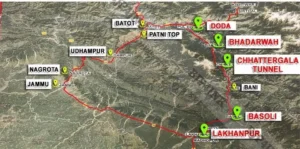
Chatergala Pass                

Border Roads Organisation (BRO)

  • Role: Road construction force supporting the Indian Armed Forces and infrastructure in border areas.
  • Establishment: Formed on 7 May 1960; brought fully under the Ministry of Defence in 2015.
  • Functions: Builds and maintains road networks in border regions and friendly neighbouring countries.
  • Structure:
    • Headed by Director General Border Roads (DGBR), a Lieutenant General rank officer.
    • Staffed by General Reserve Engineer Force (GREF) and deputed officers from the Army’s Corps of Engineers.
    • Employs over 2 lakh local workers, generating livelihood in remote areas.
  • Motto: Shramena Sarvam Sadhyam – “Everything is achievable through hard work.”

Significance

  • Enhances connectivity and mobility in high-altitude border regions.
  • Supports defence preparedness and local development.
  • Recent rescue operation shows BRO’s role in disaster response and strategic infrastructure management.
Write a Review

Your email address will not be published. Required fields are marked *

Seraphinite AcceleratorOptimized by Seraphinite Accelerator
Turns on site high speed to be attractive for people and search engines.