Table of Contents
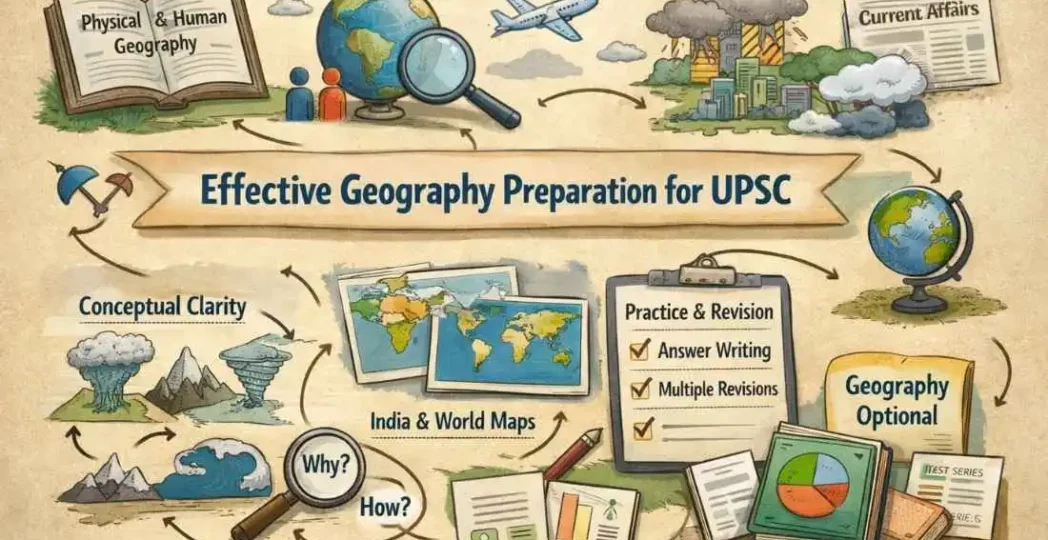
ToggleGeography is one of the most versatile and high-utility subjects in the UPSC Civil Services Examination. It features prominently in General Studies, overlaps strongly with current affairs, and is also a popular optional choice among aspirants. Despite this, many candidates find Geography challenging due to its vast scope and conceptual nature. Covering the Geography syllabus effectively requires a structured approach that balances understanding, application, and revision.
Aspirants guided through structured IAS coaching often find Geography easier to manage when it is approached methodically rather than through scattered reading.
Understanding the Scope of Geography in UPSC
Why Geography Requires a Planned Strategy
Geography is tested across multiple dimensions:
- Physical processes and natural phenomena
- Human-environment interactions
- Indian geographical features and regional issues
- Application of concepts to contemporary events
This multidimensional nature makes it essential to study Geography as a concept-driven subject rather than a fact-based one.
Break the Geography Syllabus into Logical Segments
Segmentation for Better Coverage
To cover Geography effectively, aspirants should divide the syllabus into:
- Physical Geography
- Human Geography
- Indian Geography
- Environment-related geographical issues
Studying these segments sequentially helps in building clarity and avoids conceptual confusion later.

Build Strong Conceptual Foundations First
Understanding Over Memorisation
Topics like geomorphology, climatology, and oceanography demand clarity of basic processes. Aspirants should focus on:
- Cause–effect relationships
- Interconnections between landforms, climate, and ecosystems
- Application of theory to real-world situations
Strong fundamentals reduce dependency on rote learning and improve answer quality.
Integrate Geography for Prelims and Mains
One Subject, Two Perspectives
Instead of studying Geography separately for prelims and mains, aspirants should adopt an integrated approach where:
- Concepts are learnt in depth
- Objective facts are revised periodically
- Analytical dimensions are developed alongside
This approach saves time and ensures continuity in preparation.
Importance of Maps and Diagrams
The Scoring Advantage in Geography
Geography is one of the few subjects where maps and diagrams can significantly enhance answers. Effective preparation involves:
- Regular practice of India and world maps
- Labelling major physical and human features
- Using simple diagrams to explain processes
Even average content, when supported by neat diagrams, can score well in the Mains examination.
Link Geography with Current Affairs
Making Geography Dynamic
Static Geography becomes relevant when linked with:
- Climate change events
- Natural disasters
- Resource management issues
- Urbanisation and migration trends
This integration strengthens analytical ability and helps tackle unpredictable questions.
Geography Optional Subject: A Special Dimension
Why Geography Is a Popular Optional
The Geography optional subject is chosen by many aspirants because of:
- Syllabus overlap with General Studies
- Availability of diagrams and maps
- Logical and scientific structure
However, optional preparation requires greater depth, answer enrichment, and continuous practice beyond GS-level study.
Role of Geography Optional Coaching
Why Guidance Matters for Optional Preparation
Geography optional coaching helps aspirants by:
- Structuring a vast syllabus into manageable units
- Explaining advanced concepts with clarity
- Training students in diagram-based answer writing
- Providing evaluated test practice
Optional preparation is a long-term process and benefits greatly from systematic mentoring.
Course Structure and Learning Formats
Foundation and Advanced Preparation
A well-designed Geography foundation course supports beginners by:
- Building concepts from scratch
- Integrating map work from the beginning
- Introducing answer writing gradually
For aspirants with limited time, weekend batches allow focused learning sessions while maintaining consistency through self-study during weekdays.
Revision and Answer Writing Practice
Consolidation Is Non-Negotiable
Effective Geography preparation requires:
- Multiple revision cycles
- Topic-wise answer writing
- Feedback-based improvement
Revision helps retain conceptual clarity, while writing practice improves presentation and articulation.
Common Mistakes to Avoid in Geography Preparation
Where Aspirants Often Go Wrong
Some frequent errors include:
- Ignoring maps and diagrams
- Studying topics in isolation
- Delaying writing practice
- Treating optional and GS Geography separately
Avoiding these mistakes can significantly improve performance.
How EKAM IAS Academy Supports Geography Preparation
Focused Geography Preparation at EKAM IAS Academy
EKAM IAS Academy supports aspirants in covering the Geography syllabus effectively through:
- Concept-focused teaching
- Integrated GS and optional preparation
- Emphasis on maps, diagrams, and answer writing
- Regular evaluation and mentoring
The approach is designed to help aspirants build confidence and score consistently in both General Studies and the optional paper.
Conclusion
Covering the Geography syllabus effectively for UPSC is less about reading more and more about studying smartly. With strong conceptual foundations, integration with current affairs, consistent map practice, and disciplined revision, Geography can become a reliable scoring area.
With structured self-study and the right guidance from a trusted UPSC coaching institute, aspirants can transform Geography into one of their strongest subjects in the Civil Services Examination.
How to Cover Geography Syllabus Effectively for UPSC - FAQs Answered
How to cover the Geography syllabus effectively for UPSC?
To cover the Geography syllabus for UPSC, aspirants should build strong concepts, use maps and diagrams, integrate current affairs, and revise regularly.
Is Geography important for both UPSC Prelims and Mains?
Yes, Geography for UPSC Prelims and Mains is important due to syllabus overlap, conceptual questions, and application-based answers.
How should beginners start Geography preparation for UPSC?
Beginners should start Geography preparation for UPSC with NCERT-based concepts, map practice, and gradual answer writing.
Why is Geography a popular optional subject in UPSC?
The Geography optional subject is popular due to syllabus overlap with GS, diagram-friendly answers, and strong conceptual structure.
Does Geography optional coaching help in UPSC preparation?
Geography optional coaching helps by providing structured syllabus coverage, map-based answer writing, and continuous evaluation support.