Table of Contents
TogglePreparing for the Civil Services Examination requires structured practice, continuous assessment, and strategic refinement. One of the most important tools in serious preparation is a UPSC Prelims test series. Aspirants who enroll in UPSC coaching in Hyderabad or elsewhere often hear this term repeatedly, but many beginners are unsure about its real purpose and impact.
A well-designed Prelims test program is not merely a collection of mock papers; it is a scientifically structured evaluation system that simulates the actual examination pattern, builds accuracy, and strengthens conceptual clarity.
Understanding the Structure of UPSC Prelims
The Preliminary Examination consists of two objective papers:
- General Studies Paper I
- CSAT (Civil Services Aptitude Test)
Paper I determines merit and cutoff, while CSAT is qualifying in nature. Questions are analytical, concept-based, and increasingly application-oriented. Therefore, regular testing becomes essential to train the mind to think like the examination demands.
A structured test module offered by the Best IAS Academy in Hyderabad typically includes:
- Full-length simulated exams
- Subject-wise sectional tests
- Current affairs integrated assessments
- Performance analytics and ranking
Why is a UPSC Prelims Test Series Important?
Concept Reinforcement
Reading books and notes is passive learning. Solving questions transforms passive knowledge into active recall. A quality test program forces aspirants to apply static concepts in dynamic contexts.
Time Management Mastery
Prelims is a race against time. Solving 100 questions within two hours demands speed, clarity, and elimination techniques. Regular practice under timed conditions builds exam temperament.
Negative Marking Strategy
UPSC follows negative marking. Guesswork without strategy can reduce overall scores. Through repeated mock practice, aspirants learn intelligent elimination methods and risk management.
Trend Analysis
Modern Prelims questions are interdisciplinary. Environment connects with geography, economy links with polity, and science integrates with current affairs. A structured series helps decode these evolving trends.
Institutes known as Top UPSC Coaching in Hyderabad design tests after deep analysis of previous year questions to match the real examination standard.
Components of a High-Quality Test Series
Subject-Wise Tests
These focus on individual subjects such as:
- Indian Polity
- Modern History
- Geography
- Economy
- Environment & Ecology
- Science & Technology
They strengthen foundational clarity before full-length simulations begin.
Full-Length Simulated Papers
These replicate actual exam difficulty, pattern, and question framing. Practicing these tests builds psychological readiness.
Current Affairs Integration
Modern Prelims questions are heavily influenced by recent developments. A good program integrates monthly and yearly compilations into the tests.
Detailed Explanations
Quality matters more than quantity. Each question should have:
- Conceptual explanation
- Source reference
- Elimination logic
- Cross-topic linkage
This approach converts mistakes into learning opportunities.
Role of Coaching Institutes in Test Series
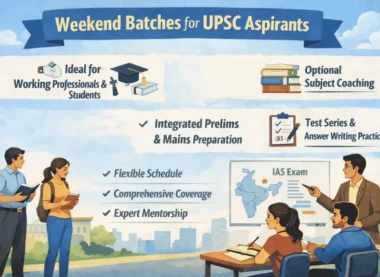
A well-structured IAS Coaching in Hyderabad typically integrates its classroom courses with a Prelims testing framework. Students preparing through regular batches or weekend batches receive synchronized practice aligned with syllabus completion.
Many academies also align the test program with their integrated preparation model covering prelims and mains, ensuring conceptual continuity across stages.
Optional subjects such as:
- Anthropology
- Geography
- Sociology
- Public Administration
- Political Science & International Relations
may not directly appear in Prelims, but conceptual overlap often influences General Studies questions. Hence, strong optional foundations indirectly help in objective papers as well.
How a Test Series Improves Score Over Time
Performance Tracking
These focus on individual subjects such as:
- Indian Polity
- Modern History
- Geography
- Economy
- Environment & Ecology
- Science & Technology
They strengthen foundational clarity before full-length simulations begin.
Revision Discipline
Frequent testing compels systematic revision. Instead of random reading, aspirants revise according to mistakes observed in mock tests.
Confidence Building
Repeated exposure to exam-like conditions reduces anxiety and builds mental resilience.
Difference Between Self-Practice and Structured Testing
While aspirants can solve previous year questions independently, a professionally designed Prelims module offers:
- Updated current relevance
- Comparative benchmarking with peers
- Structured timetable
- Faculty-guided analysis sessions
This structured approach creates competitive pressure, which is crucial for a highly competitive examination like UPSC.
Who Should Join a Prelims Test Series?
- First-time serious aspirants
- Repeaters aiming to improve cutoff margin
- Working professionals preparing through part-time schedules
- Students enrolled in foundation or integrated programs
Even advanced candidates benefit from disciplined testing cycles.
How Ekam IAS Academy Designs Its Prelims Test Series
At Ekam IAS Academy, the UPSC Prelims test series is designed with a structured academic philosophy:
- Progressive difficulty levels
- Integration of static and dynamic portions
- Detailed classroom discussion after every test
- Individual feedback sessions
- All-India benchmarking system
- The academy aligns testing with its academic calendar so that students preparing through foundation programs or integrated modules receive synchronized revision support.
Ekam also conducts orientation sessions explaining how to attempt objective papers strategically, helping aspirants avoid common mistakes such as over-attempting or under-attempting.
Common Mistakes Aspirants Make Without a Test Series
- Delaying practice until the last month
- Ignoring CSAT preparation
- Over-reliance on theory
- Lack of performance tracking
- Inability to manage exam pressure
Structured testing minimizes these risks.
Final Thoughts
A UPSC Prelims test series is not just a practice tool; it is a strategic preparation mechanism that transforms knowledge into exam-ready performance. It builds speed, accuracy, confidence, and decision-making skills.
Serious aspirants preparing through reputed institutes understand that consistent testing is the backbone of success in the Preliminary stage. When combined with disciplined revision and conceptual clarity, it significantly increases the probability of clearing the first hurdle of the Civil Services Examination.
In competitive exams where margins are narrow, structured assessment often becomes the decisive factor between qualification and near-miss.