Table of Contents
ToggleWhat is the UPSC Personality Test and what does it evaluate?
The final stage of the Union Public Service Commission Civil Services Examination is the UPSC Interview, also known as the Personality Test. Therefore, aspirants must understand that this stage is not about knowledge alone but about personality, clarity, and confidence.
Moreover, many candidates in UPSC preparation Hyderabad find this stage challenging because it tests real-life application of knowledge. Hence, preparing strategically for the UPSC Interview becomes essential.
Why UPSC Interview is Crucial for Final Selection
Firstly, the UPSC Interview carries significant weight in the final merit list. Additionally, it evaluates communication skills, decision-making ability, and overall personality.
Furthermore, aspirants in a UPSC coaching institute in Hyderabad often perform better when they undergo mock interviews and receive feedback. Therefore, understanding the expectations of the UPSC Interview helps in better preparation.
Key Components of UPSC Interview Preparation
1. Personality Assessment in UPSC Interview
The board evaluates not just what you know, but how you think. For example, your attitude, honesty, and clarity of thought are closely observed.
Moreover, your responses should reflect balanced thinking and awareness of current issues.
How to Prepare for UPSC Interview Effectively
Preparation should be systematic and focused. Firstly, thoroughly analyze your Detailed Application Form (DAF), as most questions are based on it.
Secondly, stay updated with current affairs and national issues. Additionally, practicing mock sessions improves confidence and communication skills.
Institutes like Ekam IAS Academy provide structured interview guidance. We Ekam IAS Academy help aspirants refine their personality and approach.
Common Mistakes to Avoid
However, many aspirants make mistakes such as:
- Overconfidence or lack of confidence
- Giving vague or irrelevant answers
- Ignoring body language
- Not preparing DAF properly
Therefore, avoiding these mistakes is crucial for success in the UPSC Interview.
Importance of Communication Skills
Communication plays a key role in this stage. Aspirants must express their thoughts clearly and confidently.
Additionally, practicing in front of mentors or peers helps improve articulation. Candidates in civil services coaching Hyderabad often benefit from structured mock sessions.
Role of Mock Interviews
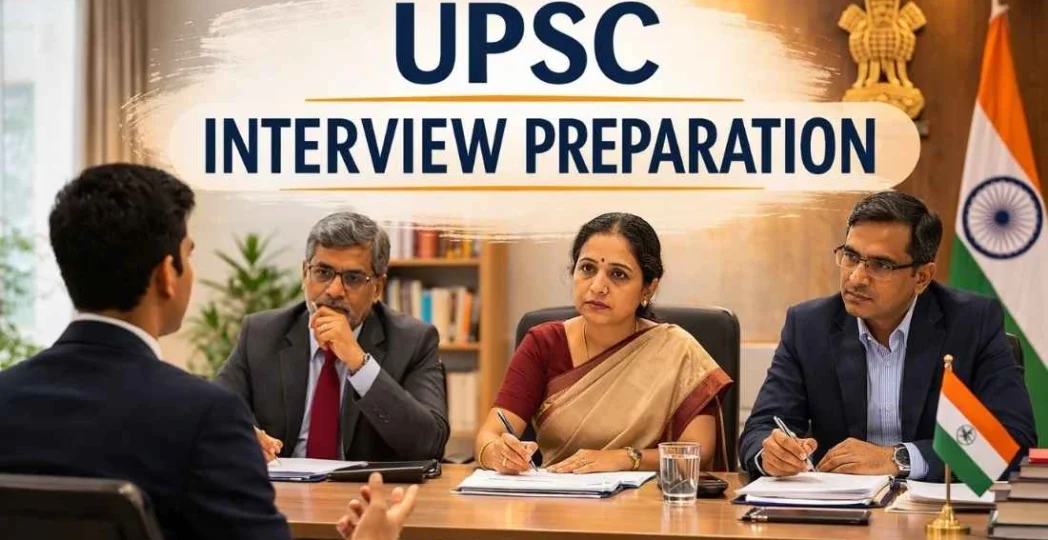
Mock interviews simulate real exam conditions. For instance, they help in understanding panel behavior and improving responses.
Moreover, feedback from experts helps in identifying weaknesses. Hence, practicing mocks is essential for improving performance.
Advanced Tips to Crack UPSC Interview
To perform well, aspirants should:
- Be honest and authentic
- Maintain a calm and confident attitude
- Support answers with examples
- Stay updated with current affairs
Thus, a balanced approach improves chances of success in the UPSC Interview.
Conclusion
In conclusion, the UPSC Interview is not about testing knowledge but evaluating personality and suitability for civil services. Therefore, aspirants must focus on communication, clarity, and confidence.
With proper preparation, guidance, and practice, candidates can perform well. Additionally, support from a best IAS academy in Hyderabad can further enhance preparation.



UPSC Interview Preparation-FAQ's
What is the UPSC Interview?
The UPSC Interview is the final stage of the exam that evaluates personality, communication skills, and decision-making ability.
How should I prepare for UPSC Interview?
Focus on DAF analysis, current affairs, and mock interviews to improve confidence and clarity.
What kind of questions are asked in UPSC Interview?
Questions are usually based on your background, current affairs, and situational judgment.
Is coaching necessary for UPSC Interview?
Coaching is not mandatory, but mock interviews and guidance can improve performance.
How important is body language in UPSC Interview?
Body language is very important as it reflects confidence and personality.