
Table of Contents
ToggleRAINFALL DEFICIT IN INDIA
TOPIC: (GS1) GEOGRAPHY: THE HINDU
The India Meteorological Department (IMD) has forecast an 8% belownormal monsoon (June–September 2026), raising concerns of droughtlike conditions due to El Niño impact.
Reasons for Rainfall Deficit
- El Niño Effect: Heating of the central Pacific Ocean (>1°C) often weakens Indian monsoon; historically linked to 9 out of 16 deficient monsoons since 1950.
- Timing of El Niño: Stronger impact if warming coincides with monsoon months (Aug–Sept).
- Indian Ocean Dipole (IOD): May partly offset El Niño, but uncertainty remains.
- IMD Forecast Reliability: Past records show India often faces drought when IMD predicts “below normal” rainfall in April.
Implications
- Agriculture: Reduced rainfall → lower sowing of kharif crops (rice, pulses, oilseeds). Shortage of irrigation water in reservoirs.
- Food Security: Possible rise in food inflation due to poor harvest.
- Farmers’ Sentiment: Weak rains + shortage of fertilizer/gas imports could worsen rural distress.
- Economy: Agriculture contributes ~18% of GDP; monsoon deficit impacts rural demand and growth.
- Social Impact: Water scarcity, migration, and stress on vulnerable communities.
Challenges
- Reservoir Stress: Equitable water distribution needed; many reservoirs already below average storage.
- Fertilizer Supply: Global shortages (due to West Asia conflict) may compound the crisis.
- Policy Gaps: Lack of timely advisories and weak crop insurance coverage.
- Climate Variability: Increasing unpredictability of monsoon due to global warming.
Way Forward
- Advance Planning: Stockpile fertilizers and ensure timely distribution.
- Water Management: Prioritize reservoir allocation; promote microirrigation and rainwater harvesting.
- Farmer Advisories: Issue regionspecific guidance on crop choices and sowing practices.
- Diversification: Encourage droughtresistant crops and mixed farming.
- Insurance & Support: Strengthen crop insurance schemes and direct benefit transfers for affected farmers.
- Climate Preparedness: Integrate monsoon variability into longterm agricultural and disaster management policies.
What is El Niño?
- Definition: Periodic warming of sea surface temperatures in the central/eastern Pacific Ocean.
- Cycle: Occurs every 2–7 years, lasting 9–12 months.
- Global Impact: Alters atmospheric circulation, disrupting rainfall and temperature patterns worldwide.
- Opposite Phase: La Niña (cooling of Pacific waters) usually strengthens Indian monsoon.
Impact on India
Monsoon Rainfall:
- IMD forecast for 2026: 6% below normal rainfall (817 mm vs average 868 mm).
- Weak rains expected in July–August, crucial sowing months.
Agriculture:
- Reduced sowing of rice, pulses, and oilseeds.
- Higher risk of crop failure and food inflation.
Water Availability:
- Reservoir levels may fall, stressing irrigation and drinking water supply.
Heat Waves:
- El Niño years often coincide with hotter summers in India.
Conclusion
With El Niño looming, proactive measures in fertilizer supply, water management, and farmer support are essential to mitigate risks and safeguard livelihoods.
WOMEN’S RESERVATION AND DELIMITATION SHOULD BE DELINKED
TOPIC: (GS2) POLITY: THE HINDU
Parliament is set to debate the Constitution (131st Amendment) Bill, 2026 and the Delimitation Bill, 2026, which link women’s reservation to seat redistribution based on the 2011 Census — a move criticized for delaying women’s representation.
Background
- The Nari Shakti Vandan Adhiniyam (106th Amendment, 2023) promised onethird reservation for women in Parliament and State Assemblies.
- However, its implementation was tied to delimitation and Census completion, delaying the reform.
- The 131st Amendment Bill retains these linkages and adds a third — increasing Lok Sabha seats to 850.
Why Women’s Reservation Must Be Independent
- Standalone Reform: Women’s reservation should be implemented directly, without being tied to Census data or seat expansion.
- Separate Constitutional Issues: Delimitation and increase in parliamentary seats are distinct matters that require independent debate and legislation.
- Strengthening Democracy: Immediate implementation of reservation would enhance gender equality and democratic representation without disturbing the federal balance.
Key Concerns
- Unnecessary Linkages:
- Women’s reservation is being made conditional on delimitation and Census, which could take years.
- The 2010 Women’s Reservation Bill passed by the Rajya Sabha had no such linkages and could have been implemented immediately.
- Decline in Representation:
- After the 2024 elections, women MPs fell from 78 to 74 (13.6%).
- In 10 State elections (2024–25), only 123 women (under 10%) were elected out of 1,276 seats.
- Use of Outdated Data:
- The Bill proposes using the 2011 Census, ignoring population changes and SC/ST proportions.
- This could reduce reserved seats for marginalized communities, including SC/ST women.
- Political Manipulation Risk:
- Past delimitation exercises (Assam, J&K) faced criticism for biased boundary redrawing.
- Linking women’s reservation to such a process risks politicizing gender justice.
Conclusion
Women’s reservation is a historic democratic reform, not a bargaining tool for political or demographic adjustments. To ensure timely empowerment, Parliament should amend the 106th Constitution Amendment to remove the delimitation clause and implement onethird reservation immediately, independent of Census or seat redistribution.
LOAN APPS AND REGULATORY CONCERNS IN INDIA
TOPIC: (GS3) ECONOMY: THE HINDU
A dental student’s suicide in Kerala has been linked to harassment by loan app recovery agents, highlighting the urgent need for stricter regulation of digital lending platforms.
Necessity for Regulation
- Predatory Practices: Apps promise instant credit but hide fees, deduct disbursals, and impose exorbitant interest rates.
- Data Exploitation: Extract contacts, photos, and GPS data, later misused for harassment.
- Psychological Harm: Multiple suicides reported in Kerala; over 35 complaints registered in Thiruvananthapuram Rural since Jan 2026.
- Financial Literacy Gap: High smartphone penetration but limited awareness of safe borrowing practices.
Challenges
- Regulatory Grey Area: RBI regulates NBFCs/banks, but apps operate in the app/data layer beyond direct RBI oversight.
- Fake Partnerships: Apps claim NBFC ties but often route funds through opaque gateways.
- Crossborder Operations: Call centres traced to other States or overseas, limiting local police jurisdiction.
- Relaunch Loophole: Apps removed from stores quickly reappear under new names.
RBI’s Regulation Efforts
- Digital Lending Guidelines (2022):
- Mandated disclosure of interest rates and fees.
- Required direct disbursal of loans into borrower’s bank accounts.
- Barred automatic access to phone data without consent.
- Limitations: Enforcement weak; many apps operate outside RBI’s regulated entities.
Way Forward
- Legislation: Enact strict laws with prison sentences and heavy fines for illegal digital lending.
- Technical Safeguards: Mandatory cryptographic certification linking apps to RBIregulated banks/NBFCs.
- Transparency: Rigorous disclosure of effective interest rates and fees.
- Recovery Conduct: Strict rules against abusive calls and reputational harassment.
- Payment Aggregators: Stronger KYC norms and risk flags on UPI IDs linked to high complaint rates.
- State Role: Kerala considering legislation to empower local police against rogue apps.
Conclusion
Stronger laws, technical safeguards, and strict RBIlinked certification are essential to protect vulnerable borrowers and ensure safe, transparent digital lending.
MINIMUM WAGE CRISIS AND WORKER PROTESTS IN INDIA
TOPIC: (GS3) ECONOMY: THE HINDU
Thousands of workers in Noida protested violently demanding higher minimum wages, better working conditions, and overtime pay, following Haryana’s 35% wage hike and rising living costs.
What is Minimum Wage in India
- Defined under the Code on Wages, 2019 (yet to be fully implemented).
- Two components:
- Base wage – revised every 5 years.
- Cost of Living Allowance (DA) – linked to CPIIW, revised twice a year.
- Current confusion: Centre announced ₹783/day (₹20,358/month) for unskilled workers in certain sectors (2024), but state governments set wages for most establishments, leading to disparities.
How Workers are Being Exploited
- Delayed Revisions: Haryana revised after 10 years; UP last revised in 2012.
- Mismatch with Inflation: CPIIW inflation rose 24.8% (2021–26); NCR regions saw ~27% rise. Wage growth lagged: Haryana (15%), Delhi (20.6%), UP (24.6%).
- Living Costs: LPG cylinders in black markets up to ₹4,000. Rising rents and food prices burden migrant workers.
- Work Hours Confusion: New labour codes allow flexible shifts (e.g., 12hour), risking overwork.
- Weak Collective Bargaining: Labour codes leave union recognition to states, reducing worker protection.
Role of EPFO Regulations in Protection
- Provident Fund Contributions: Ensures retirement savings and social security.
- Universal Coverage: Mandatory for establishments with ≥20 workers.
- Compliance Monitoring: EPFO can penalize employers for wage underreporting.
- Social Security Benefits: Pension, insurance, and withdrawal facilities provide financial cushion.
- Challenge: Many informal workers and contract labourers remain outside EPFO coverage.
Challenges
- Fragmented Implementation: Labour codes not uniformly enforced across states.
- Regional Disparities: Different wage levels create inequality.
- Global Disruptions: US tariffs, West Asia war, and Strait of Hormuz crisis raise input costs, delaying wage hikes.
- Worker Expectations vs Reality: Misinterpretation of central wage notifications caused unrest.
Way Forward
- Timely Base Wage Revision: Strict 5year cycle adherence.
- Indexation to Inflation: Ensure wages rise in line with CPIIW.
- Uniform Implementation of Labour Codes: Centre and states must finalize rules quickly.
- Expand EPFO Coverage: Include gig workers, contract labour, and small establishments.
- Strengthen Collective Bargaining: Recognize trade unions uniformly to protect worker rights.
- Targeted Subsidies: Control essential commodity prices (LPG, food grains) for lowincome households.
Conclusion
Strengthening EPFO coverage, timely wage updates, and collective bargaining is essential to protect workers and ensure fair compensation in a rapidly changing economy.
RIGHT TO VOTE VS RIGHT TO CONTEST
TOPIC: (GS2) POLITY: THE HINDU
The Supreme Court denied interim relief to 34 lakh individuals removed from electoral rolls in West Bengal after the Summary Intensive Revision (SIR), highlighting how voter exclusion affects electoral participation and candidacy.
Background
- Case of C. Geetha (Tamil Nadu): Her name was deleted after filing nomination; plea rejected as rolls were frozen.
- Case of Motab Shaikh (West Bengal): Prompt appeal led tribunal to restore his name via supplementary list.
- Contrast: Timing of appeal and rigid procedures determine eligibility, raising fairness concerns.
Court’s Position
- Right to vote = expression of citizenship and patriotism.
- Pending appeals do not restore voting rights; excluded individuals cannot vote until tribunal orders inclusion.
- Consistency in electoral process prioritized over interim relief.
Legal Framework
- Rule 23(5), Registration of Electoral Rules, 1960: Names added only after tribunal approval.
- Rule 23(3): No temporary restoration during appeals.
- Procedural Deviations: SIR deletions often lacked prior notice and hearing (Rules 19 & 20).
Right to Vote vs Right to Contest
- Statutory Rights: Neither is a fundamental right (SC in Ram Chandra Choudhary v Roop Nagar Dugdh Utpadak Sahakari Samiti Ltd, 2024).
- Vote: Right to exercise franchise as per electoral rolls.
- Contest: Separate statutory right, subject to eligibility and disqualification rules.
- Eligibility vs Disqualification: Losing elector status = loss of eligibility, not punishment.
Implications for Candidates
- Representation of the People Act: Candidate must be a registered voter in the State.
- Loss of Elector Status: Even without disqualification, deletion bars contesting.
- Precedents:
- Jyoti Basu v Debi Ghosal: Contesting elections is purely statutory.
- K. Krishna Murthy v Union of India: Political participation rights subject to statutory limits.
Concerns in Voter Roll Deletions
- Massive Scale of Exclusion: The Summary Intensive Revision (SIR) exercise led to largescale deletions, leaving lakhs of voters unaware until after nominations closed.
- Democratic Participation at Risk: Removal from rolls directly blocks both the right to vote and the right to contest, undermining fairness in elections.
- Procedural Gaps: Lack of prior notice and opportunity to appeal before deletion raises serious questions about due process and transparency in electoral management.
Conclusion
The SIR controversy shows how procedural rigidity in electoral roll management can disenfranchise lakhs of voters and candidates. While the Supreme Court upheld consistency, the issue underscores the need for timely notice, transparent procedures, and safeguards to protect both the right to vote and the right to contest in India’s democracy.
CRITICAL MARITIME CHOKEPOINT
TOPIC: (GS2) INTERNATIONAL RELATIONS: THE HINDU
The Strait of Hormuz has become the centre of a global energy crisis after U.S.–Iran tensions and naval blockades disrupted oil tanker movement, reducing daily transits drastically.
What is a Maritime Chokepoint?
- A narrow sea passage where global trade is concentrated due to geography.
- No easy alternative routes → disruption here impacts global supply chains.
- Around 70–80% of world’s oil moves by sea, much of it through chokepoints.
- Even a single incident can raise energy prices, shipping costs, and cause inflation.
Why is the Strait of Hormuz Critical?
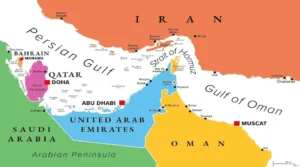
- Connects Persian Gulf → Gulf of Oman → Indian Ocean.
- World’s most important chokepoint for energy flows.
- Narrowest width: 21 nautical miles (38 km).
- Normal traffic: ~21 million barrels/day (≈20% of global oil consumption).
- Also carries LNG exports from Qatar and UAE.
- Nearly 80% of flows go to Asia → India, China, Japan, South Korea highly dependent.
Other Key Global Chokepoints
- Strait of Malacca: Between Malay Peninsula & Sumatra; vital for Asia trade.
- Bab elMandeb Strait: Gateway to Red Sea → Suez Canal → Europe.
- Suez Canal: Artificial waterway in Egypt linking Red Sea & Mediterranean.
- Panama Canal: Cuts across Panama, linking Atlantic & Pacific Oceans.
International Law Framework
- Governed by UN Convention on the Law of the Sea (UNCLOS).
- Principle of “transit passage”: Ships/aircraft of all nations can pass continuously without obstruction.
- Coastal States can regulate for safety/environment, but cannot block or selectively restrict passage.
- Enforcement in practice depends on naval strength and cooperation.
Challenges
- Energy Security: Disruption raises oil/gas prices globally.
- Geopolitical Risks: Blockades or conflicts can weaponize chokepoints.
- Asian Dependence: India and East Asia most vulnerable to Hormuz disruptions.
- Global Inflation: Shipping delays → higher costs → supply chain stress.
Way Forward
- Diversify energy routes (pipelines, alternative shipping lanes).
- Strategic oil reserves to cushion shocks.
- Strengthen international cooperation under UNCLOS.
- Enhance naval presence for freedom of navigation.
Conclusion
As the world’s most vital chokepoint, its stability is crucial for India’s energy security and global economic balance, making international law and cooperative enforcement indispensable.
ANUSANDHAN NATIONAL RESEARCH FOUNDATION (ANRF)
TOPIC: (GS3) SCIENCE AND TECHNOLOGY: THE HINDU
The Union Minister of State for Science & Technology announced that ANRF is developing an AIbased platform ‘SARAL AI’ to simplify and spread scientific knowledge in multiple Indian languages.
About ANRF
- Establishment: Created under the Anusandhan National Research Foundation Act, 2023.
- Parent Body: Functions under the Department of Science & Technology (DST).
- Merger: The Science and Engineering Research Board (SERB) has been integrated into ANRF.
- Objective:
- Promote research and innovation culture in universities, colleges, labs, and institutions.
- Provide strategic direction to scientific research as per the National Education Policy (NEP).
- Funding Target: Mobilise ₹50,000 crore (2023–28) through multiple streams — ANRF Fund, Innovation Fund, Science & Engineering Research Fund, and Special Purpose Funds.
- Collaboration Role: Acts as a bridge between industry, academia, research institutions, and government departments.
SARAL AI Platform
- Nature: AIbased digital tool.
- Purpose: Convert complex research into simple social media content (podcasts, short videos).
- Languages: Dissemination in 18 Indian languages for wider reach.
- Impact: Enhances scientific communication and public awareness, making research accessible to common citizens.
Significance
- Strengthens India’s R&D ecosystem.
- Encourages inclusive participation in science and technology.
- Supports knowledge dissemination in regional languages, aligning with NEP’s vision of democratizing education.
Conclusion:
ANRF is India’s new apex body for research promotion, aiming to transform the country’s innovation landscape by combining funding, collaboration, and outreach tools like SARAL AI.
SUDAN
TOPIC: (GS2) INTERNATIONAL RELATIONS: THE HINDU
A recent UN Women report highlighted a sharp rise in sexual violence against women and girls during Sudan’s ongoing conflict, raising global concern about human rights violations.
About Sudan
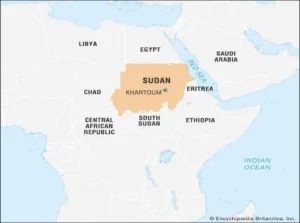
- Location: Northeast Africa.
- Borders: South Sudan, Ethiopia, Eritrea, Egypt, Libya, Chad, Central African Republic.
- Maritime Access: Shares coastline with the Red Sea.
- Capital: Khartoum.
Geographical Features
- Terrain: Vast plains and plateaus drained by the Nile River and its tributaries.
- Climate:
- North → Desert, very little rainfall.
- Central → Semiarid.
- South → Tropical savannah.
- Highest Point: Jabal Marrah.
- Major River: Nile River system, running south to north.
- Natural Resources: Petroleum, gold, silver, mica, zinc, copper, chromium ore, tungsten, hydropower potential.
Current Concerns
- Conflict Impact: Ongoing civil strife has worsened humanitarian conditions.
- Human Rights: Rising cases of sexual violence and displacement.
- Resource Strain: Petroleum and mineral wealth remain underutilized due to instability.
Significance for India & World
- Strategic location near the Red Sea, a key global trade route.
- Rich in natural resources, especially oil and gold.
- Ongoing conflict poses risks for regional stability and global energy flows.
Conclusion:
Sudan’s geography and resources make it strategically important, but internal conflict and human rights violations have created a severe humanitarian crisis, demanding international attention and support.