Table of Contents
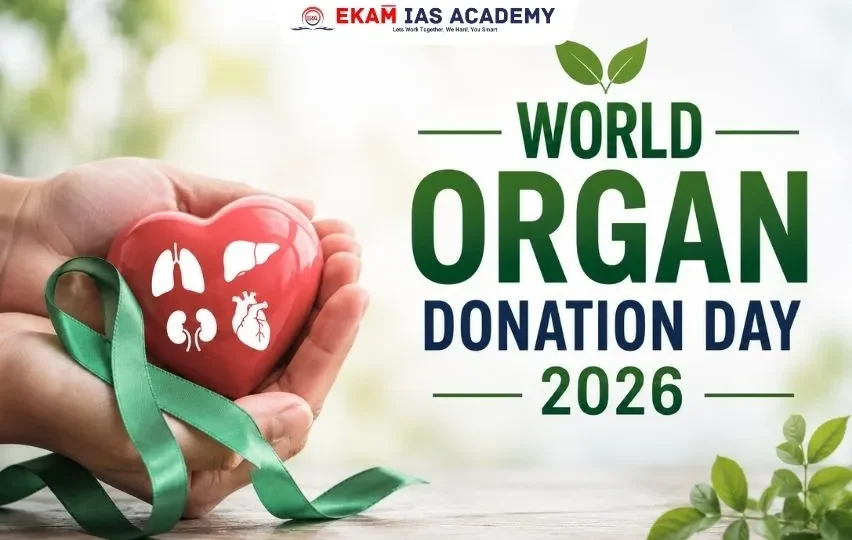
ToggleWorld Organ Donation Day 2026 will be observed on 13 August 2026 to create awareness about the importance of organ and tissue donation and encourage people to voluntarily pledge their organs.
The day highlights how organ transplantation can provide a second chance at life for patients suffering from organ failure and emphasises the need to bridge the gap between the demand and availability of donor organs.
It also promotes ethical donation practices, informed consent and greater public participation in organ donation programmes.
About World Organ Donation Day
World Organ Donation Day is an international awareness initiative dedicated to promoting voluntary organ and tissue donation.
The observance aims to:
- Educate people about the importance of organ transplantation.
- Encourage individuals to register as organ donors.
- Recognise the contribution of organ donors and their families.
- Promote safe, transparent and ethical transplantation practices.
The day encourages discussions within families regarding organ donation decisions and highlights the role of donors in saving multiple lives.
Note: World Organ Donation Day is not an officially designated observance of the United Nations (UN) or the World Health Organization (WHO). India separately observes National Organ Donation Day on 3 August.
History of World Organ Donation Day
World Organ Donation Day developed as a global awareness campaign led by healthcare organisations and transplant communities.
The initiative emerged due to the increasing gap between:
- Growing demand for organ transplants.
- Limited availability of donor organs.
With advancements in transplant technology and greater recognition of deceased organ donation, the campaign evolved into an annual platform to:
- Encourage donor registration.
- Recognise the contribution of donors.
- Promote awareness about transplantation.
- Strengthen public participation in saving lives.
Significance of World Organ Donation Day
Organ donation plays a crucial role in improving survival chances and quality of life for patients suffering from irreversible organ failure.
The day highlights:
Addressing Organ Shortage
It spreads awareness about the shortage of donor organs worldwide and encourages more people to become donors.
Promoting Voluntary Donation
The observance encourages informed decisions, family discussions and voluntary donor registration.
Supporting Ethical Transplantation
It promotes transparent and fair organ allocation systems while preventing illegal organ trade.
Recognising Donors and Healthcare Workers
The day honours donors, donor families, doctors and healthcare professionals involved in transplantation.
What is Organ Donation?
Organ donation refers to the voluntary process of giving healthy organs or tissues from a living or deceased person for transplantation into individuals suffering from organ failure or serious medical conditions.
Organ transplantation can be life-saving for patients suffering from failure of vital organs such as:
- Heart
- Kidney
- Liver
- Lungs
Tissue donation can also help restore functions such as vision and repair damaged body tissues.
Types of Organ Donation
Living Organ Donation
A healthy person voluntarily donates certain organs or parts of organs during their lifetime.
Examples include:
- One kidney.
- A portion of the liver.
- In selected cases, parts of the lung, pancreas or intestine.
Deceased Organ Donation
In this process, organs are donated after a person is declared brain-stem dead according to medical and legal procedures.
A single deceased donor can potentially save several lives by donating multiple organs.
Tissue Donation
Even when organ donation is not possible, tissues can be donated after death.
Commonly donated tissues include:
- Corneas
- Skin
- Bones
- Tendons
- Heart valves
Organs and Tissues That Can Be Donated
Organs
- Heart
- Kidneys
- Liver
- Lungs
- Pancreas
- Intestine
Tissues
- Corneas
- Skin
- Bone
- Tendons
- Heart valves
Status of Organ Donation in India
India has witnessed significant growth in organ transplantation over the last decade.
Key developments include:
- India performed more than 20,000 organ transplants in 2025, crossing an important milestone.
- According to NOTTO, around 20,019 organ transplants were conducted in 2025.
- Nearly 89,839 patients were on the national waiting list for major organ transplants as of March 2026.
- India has recorded more than 5 lakh organ donation pledges, reflecting growing awareness.
However, deceased organ donation contributes only around 18% of total transplants, indicating continued dependence on living donors.
Legal Framework for Organ Donation in India
Transplantation of Human Organs and Tissues Act (THOTA), 1994
THOTA is the primary legislation regulating organ and tissue donation in India.
The Act:
- Regulates removal, storage and transplantation of human organs and tissues.
- Recognises brain-stem death as a legal basis for deceased organ donation.
- Prohibits commercial trading of human organs.
- Establishes procedures for ethical donation and transplantation.
Transplantation of Human Organs and Tissues (Amendment) Act, 2011
The amendment strengthened the legal framework by:
- Including tissues within the regulatory framework.
- Strengthening safeguards against illegal organ trade.
- Simplifying procedures for donation and transplantation.
Transplantation Rules, 2014
The rules provide operational guidelines for:
- Hospitals.
- Transplant centres.
- Authorisation committees.
They ensure proper monitoring and ethical implementation of transplantation procedures.
Institutional Framework for Organ Donation in India
National Organ and Tissue Transplant Organisation (NOTTO)
NOTTO functions as the apex organisation under the Ministry of Health and Family Welfare.
Its functions include:
- Maintaining national waiting lists.
- Coordinating organ allocation.
- Developing policies.
- Conducting awareness programmes.
Regional Organ and Tissue Transplant Organisations (ROTTOs)
ROTTOs coordinate organ sharing and transplantation activities among groups of States and Union Territories.
State Organ and Tissue Transplant Organisations (SOTTOs)
SOTTOs manage:
- Organ donation activities.
- Allocation within States.
- Awareness campaigns.
Institutional Framework for Organ Donation in India
The Government of India implements the National Organ Transplant Programme (NOTP) to strengthen transplantation facilities across the country.
Major Objectives of NOTP
- Develop transplant infrastructure in government hospitals.
- Strengthen NOTTO, ROTTO and SOTTO networks.
- Maintain transparent organ allocation systems.
- Promote deceased organ donation.
- Train transplant coordinators and healthcare professionals.
- Support organ retrieval and preservation facilities.
Challenges in Organ Donation in India
Despite progress, several challenges continue to affect organ transplantation.
Demand-Supply Gap
A large number of patients remain on waiting lists, while available donor organs remain insufficient.
Low Deceased Organ Donation
India continues to depend heavily on living donors due to limited deceased donation.
Lack of Awareness
Many families are unaware of:
- Brain-stem death.
- Organ donation procedures.
- Legal provisions.
This often leads to refusal of donation.
Regional Inequality
States with stronger healthcare networks perform better, while many regions lack adequate transplant facilities.
Infrastructure Limitations
Challenges include:
- Lack of organ retrieval centres.
- Shortage of trained transplant coordinators.
- Limited intensive care facilities.
Organ Trafficking
Preventing illegal commercial exploitation of organs remains a major regulatory challenge.
Way Forward
To strengthen organ donation in India, the following measures are required:
- Increase awareness regarding brain-stem death and deceased donation.
- Integrate organ donation counselling into intensive care units.
- Strengthen NOTTO, ROTTOs and SOTTOs.
- Improve digital monitoring of waiting lists and organ allocation.
- Expand organ retrieval centres across districts.
- Strengthen green corridor systems for faster organ transportation.
- Encourage donor pledge campaigns in schools, colleges and workplaces.
- Improve reporting and transparency among transplant hospitals.
Conclusion
World Organ Donation Day highlights the transformative power of organ donation in saving lives and improving healthcare outcomes.
India has made significant progress through legal reforms, institutional mechanisms and awareness initiatives. However, increasing deceased organ donation, strengthening infrastructure and improving public awareness remain crucial for creating an equitable and efficient transplant ecosystem.
A stronger organ donation culture can help ensure that more patients receive timely life-saving transplants and move India towards a more compassionate healthcare system.


World Organ Donation Day 2026 – FAQs
What is World Organ Donation Day?
World Organ Donation Day is observed on 13 August to raise awareness about organ and tissue donation and encourage voluntary donor registration.
What is the difference between living and deceased organ donation?
Living donation involves donating certain organs or parts of organs while alive, such as one kidney or part of the liver. Deceased donation occurs after a person is legally declared brain-stem dead.
Which law regulates organ donation in India?
The Transplantation of Human Organs and Tissues Act (THOTA), 1994 provides the primary legal framework for organ and tissue donation and transplantation in India.
What is NOTTO?
The National Organ and Tissue Transplant Organisation (NOTTO) is the apex organisation under the Ministry of Health and Family Welfare responsible for coordinating organ donation, allocation and transplantation activities at the national level.
What are the major challenges to organ donation in India?
Major challenges include the demand-supply gap, low deceased organ donation rates, lack of public awareness, regional healthcare disparities, inadequate infrastructure and the risk of organ trafficking.